
What Sales Appointment Setting Services Cost In 2026 (And Why The Sticker Price Hides The Real Math)


In this post:
You can safely ballpark appointment setting services cost between $1,500 to $20,000 per month, depending on your needs, industry, and the approach you choose.
The moment you click “get a quote”, you’re staring at a menu of pricing models and wondering which one won’t drain your budget or your sanity.
We’ve seen every appointment setting service pricing model under the sun, and they mostly fall in the following categories:
You pay per‑meeting: $300–$1000 each, depending on seniority level. This typically sounds simple until you realize not all meetings are remotely qualified.
You sign a contract for a monthly retainer: $2K–$15K+, often with minimum commitments.
You agree on a hybrid success fee: part‑monthly, part-performance.
Choosing the right pricing model for your business is key to aligning costs with your budget, sales targets, and long-term growth objectives.
The most important factor here is that each model isn’t just about how much money you pay. The model also dictates how much control you have, whether you’re paying for quality or quantity, and how predictable your pipeline becomes.
But we’d like to fild the conversation around for a minute.
When you hire an appointment setting agency, what you are paying for is a small team of SDRs to do the manual sales work your in-house team is too busy or too expensive to do themselves.
The work itself typically gets packaged with big and sexy marketing words but it boils down to research, enrichment, sequence writing, calling, and routing meetings to your AEs. The agency wraps a retainer around it and bills you monthly.
The trade made sense in 2018 when those tasks needed humans. Most of those tasks no longer need humans doing them.
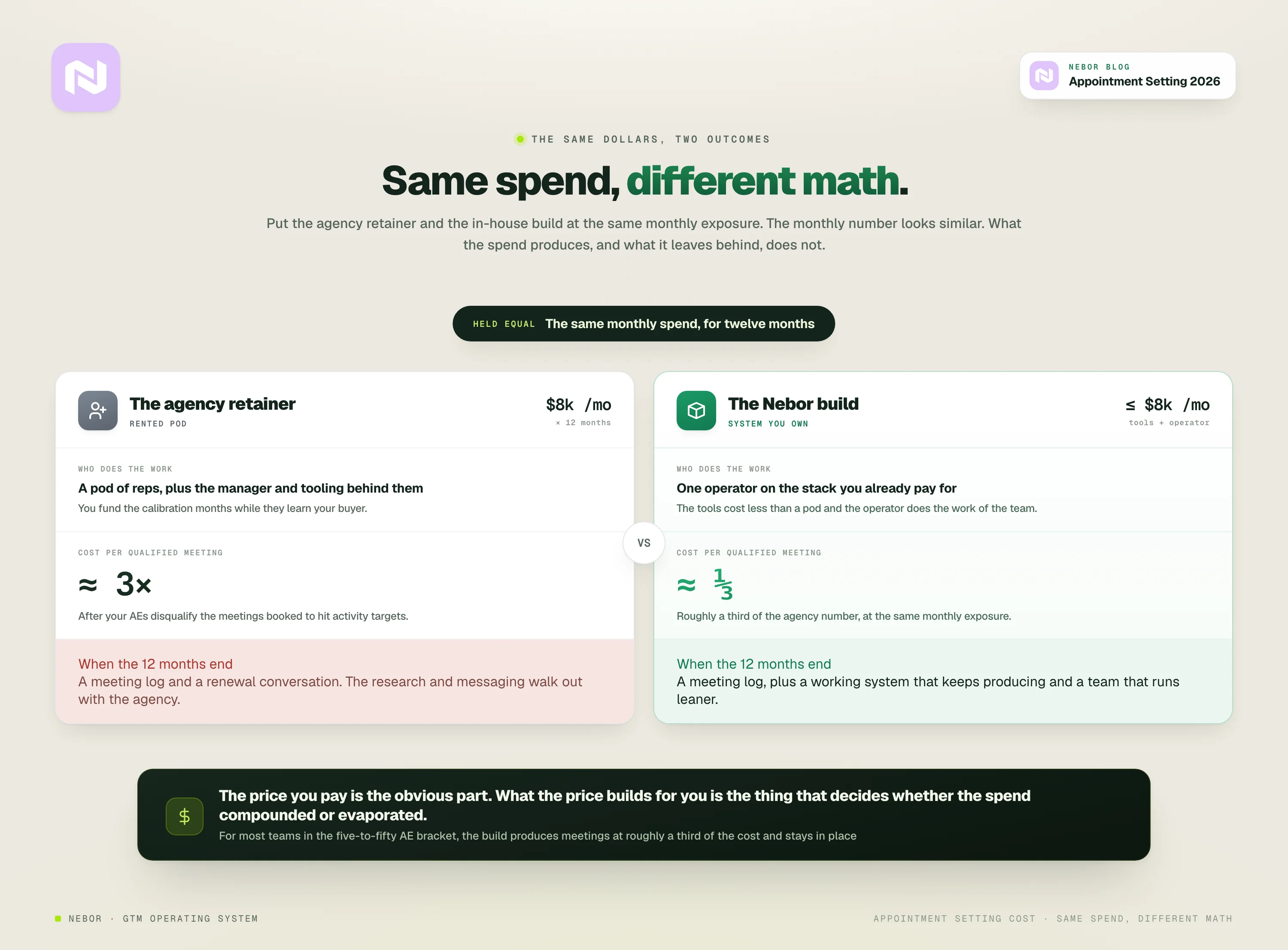
AI and the tools have caught up far enough that one operator on your team, with the right stack, can do the same work for a third of the cost per qualified meeting and keeps the system after the engagement.
In this post, we’ll walk you through what appointment setting services cost in 2026, and what the alternative looks like. We’ll start with the alternative, which is what we do at Nebor.
Let’s get started.
Note: Per-meeting fees and monthly retainers both hide the same number, which is what a qualified meeting really costs you once the unqualified ones are taken out.
We do GTM engineering and RevOps. We build the prospecting, enrichment and routing that produces those meetings on a stack you mostly already pay for, and we build it in your own accounts.
Book a 15-minute call with your current spend, and we'll work out your real cost per meeting against what a build would cost.
TL,DR
Here’s why you should prioritize automation over the traditional agency retainer model.
How we handle appointment setting at Nebor (and what we take off your team’s plate)
The traditional way to handle appointment setting is to hire an agency. The agency gives you a dedicated SDR or a small pod, the team writes sequences, sends emails and LinkedIn messages, makes calls, and books meetings on your calendar.
You pay a monthly retainer for the rep’s hours and the team around them.
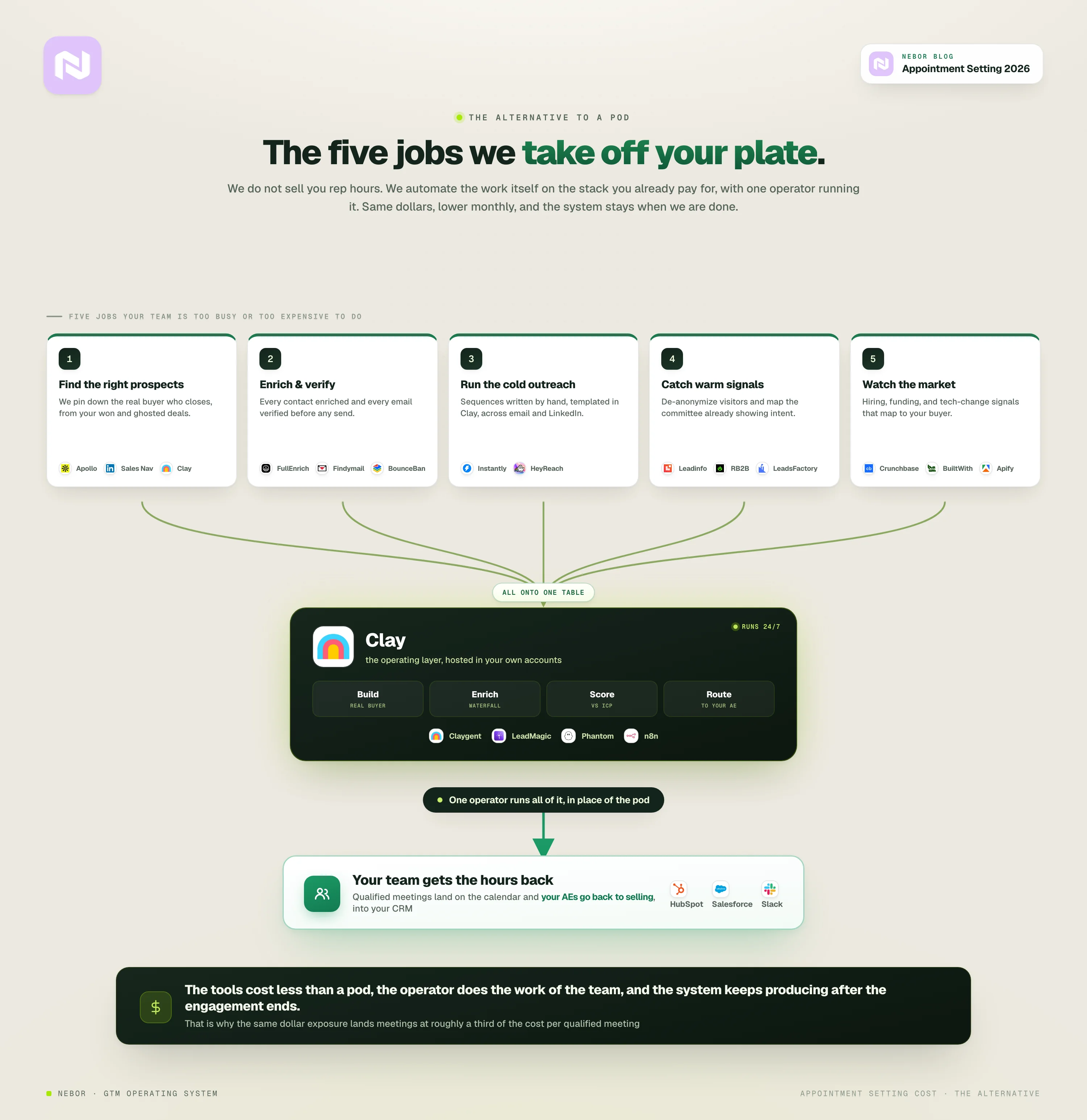
We do not sell that at Nebor. We automate the work itself, on the stack you already pay for, with one operator on your team steering it. After the engagement, the system keeps producing meetings on the stack you already paid for.
We are salespeople first and automation people second. We ran outbound for B2B companies for more than a decade before we ever sold our automation work to clients, and the operating principle is the same now as it was then.
The tools are the easy part of the work. Understanding which buyer you are actually trying to reach, and how they make decisions, is the hard part, and that is where most agencies fall short.
The 5 main sales functions we usually take off your team’s plate and how it makes us more valuable than an appointment setting service agency
Every B2B team comes to us with a different version of the same list.
Some of the items are jobs nobody on the team has time for, some are jobs nobody knows how to do well, and some are jobs that should not be human jobs in 2026 anyway.
Here is what we usually take off.
Finding the right prospects for your business and eliminating the prospecting work your team has to do
The first job most teams want off their plate is prospect research. We sit with your founder, your Head of Sales, and your top AEs to find the real buyer who closes deals with you.
We work through your CRM, the deals that closed and the deals that ghosted, and we pin down the firmographic, technographic, and behavioral signals and patterns that separate the two.
That work becomes a Clay table built around your real buyer instead of the typical generic ICP filters. The table becomes the operating layer for everything else we build on top.
Enriching and verifying every contact before outreach goes live
Once the table knows what to look for, we enrich and verify every contact in it. FullEnrich and LeadMagic, and a few other tools do the primary enrichment, Findymail picks up what they miss, and BounceBan or DeBounce verifies every email address before any send.
We also check every contact against your CRM and your suppression list, which removes the largest single source of wasted enrichment credits we see across new engagements.
Sending the cold outreach across email and LinkedIn to generate b2b leads for you team
We write the sequences by hand and template them in Clay so the personalization can pull in the specific buyer signal that put the contact on the list. The outreach goes out through Instantly for email and HeyReach for LinkedIn, both off the same Clay table.
When a prospect replies in a way that signals real interest, the system routes them to the right AE on your team with the full context attached, into your HubSpot, your Slack or your Salesforce.
We built this kind of system for ExpoGenie, a California SaaS for event organizers. They had a three-person research team manually sending around 30 emails a day.
We built Clay scrapers that pull events from directories, check sponsor activity, and detect whether each event uses a competitor’s interactive floor plan or an old PDF one.
First qualified responses came in within 72 hours of launch, and the system now drives 30 percent of their total lead inflow.
Catching the warm signals already coming through your channels
This is a service you won’t get from any sales appointment service or agency.
Most B2B teams already have buyers showing up. Engagement events like someone hitting your pricing page twice in three days, a senior decision-maker watching half of a webinar replay, or a target account opening a third email in a sequence your team forgot they sent. The signals are there, but they stay scattered across analytics, marketing automation, and the rep’s inbox.
We pull every one of those signals into one place. We deanonymize your website visitors with Leadinfo or RB2B, score the activity against your ICP, identify the rest of the buying committee using LeadsFactory.io, PhantomBuster, and LinkedIn Sales Navigator, and push qualified accounts into your HubSpot or Salesforce with the full activity history and the next action attached.
We have written more about how the routing logic comes together in our piece on building an inbound meeting workflow.
Watching the broader market for buying windows opening
This basically refers to intent data and buying signal monitoring workflows, in case you are more familiar with those terms. And oh, you won’t get this from the typical appointment setting service either.
So, the idea is that outbound and inbound both work on accounts that are already in motion. Thus, we add a third layer that finds the accounts about to enter the market, before they show up on any list someone is buying.
We set up monitoring for the signals that map to your specific buyer. That includes hiring posts on LinkedIn, recent funding on Crunchbase, tech changes BuiltWith picks up, regulatory windows opening in your category, and behavioral signals via Apify.
Each signal type triggers a different sequence at a different cadence, because what works the week after a funding round is not what works during a hiring spike.
We ran a version of this for a cleantech company selling aerodynamic skirts to European trailer makers.
Quite rare, the intent signal we built around was EU VECTO regulation, which requires trailer manufacturers to cut new-trailer energy consumption by 10 percent before 2030.
We targeted every major trailer OEM with messaging tied to the regulatory deadline, and ended up with meetings at all ten major European OEMs and €12 million in qualified pipeline.
Note: Per-meeting fees and monthly retainers both hide the same number, which is what a qualified meeting really costs you once the unqualified ones are taken out.
We do GTM engineering and RevOps. We build the prospecting, enrichment and routing that produces those meetings on a stack you mostly already pay for, and we build it in your own accounts.
Book a 15-minute call with your current spend, and we'll work out your real cost per meeting against what a build would cost.
How we mold Clay around your business to keep your sales, marketing, and RevOps teams in sync
The work above is the visible output of what we build, the meetings on the calendar, the qualified inbound in your CRM, and the alerts when an account heats up.
Underneath all of that, Clay is the operating layer that we mold to keep your sales team, your marketing team, and your RevOps function working off the same data.
Most B2B teams have the opposite of that. Sales lives in the CRM, marketing lives in the marketing automation tool, RevOps lives in a dashboard nobody else opens, and the leads passed between them lose context at every step.
The result is a marketing team that thinks it sent 500 qualified leads and a sales team that thinks it got 30 worth talking to, with no shared definition between them.
We use Clay as the central layer to close that gap. Marketing-generated leads flow into Clay first, pass through the same enrichment the outbound workflow uses, and only then move into the CRM for sales to action.
The lead arrives with the firmographic, technographic, and behavioral context attached, and the conversation between marketing and sales stops being a fight about quality.
The same shared layer catches the manual work your team has been doing for years. Your SDRs stop building lists, your AEs stop researching prospects before discovery calls, and your marketing ops manager stops cleaning duplicate accounts every quarter.
The hours those jobs used to take get spent on actual selling and actual messaging instead.
We also build the reporting layer most B2B teams know they should have but never get around to.
The dashboard shows what every signal produced, from trigger through meeting through opportunity through closed deal, and your sales leadership sees the same number your marketing leadership sees.
The end of the silo war between the two functions is one of the bigger uplifts of the build, and it tends to show up around month four of the engagement.
So, you get the idea. The five jobs above cover most B2B teams. The deeper work is in the custom builds we layer on top, because every team has unique functions that don’t fit standard workflows.
We have built:
free-trial scoring workflows that flag which trial signups are most likely to convert,
former-customer workflows that catch people who leave your existing clients for new companies,
CRM cleanup workflows that pull dirty data through enrichment and verification,
LinkedIn engagement workflows that turn post likes into qualified leads, and
event workflows that surface conference attendees in your TAM.
Why this costs less than hiring a standard appointment setting agency like you were thinking
Hiring an agency from the lineup you’ll see below means paying somewhere between $5,000 and $15,000 a month for a dedicated SDR or a small pod.
SalesRoads starts at $5,400 a month, EBQ costs $5,000 to $10,000, SalesHive tiers at $4,000, $8,000, and $12,000, Belkins lands in the same range, and CIENCE goes past $15,000 for the larger configurations.
The number on the proposal varies, but the underlying math is the same. You are paying for rep hours, plus the team and tooling behind them, every month for the life of the contract.
Working with us looks different on both ends of the engagement. You pay for the tools your operator needs, which is a known quantity in the low thousands a month for a small-to-mid team, plus our agency fees for building and supporting the system.
We have written about what the modern sales automation stack actually costs in more detail.
The monthly spend lands lower than an agency retainer at the same scope. The tools cost less than a pod, the operator does the work of the team, and our fees replace what the agency would have layered on top.
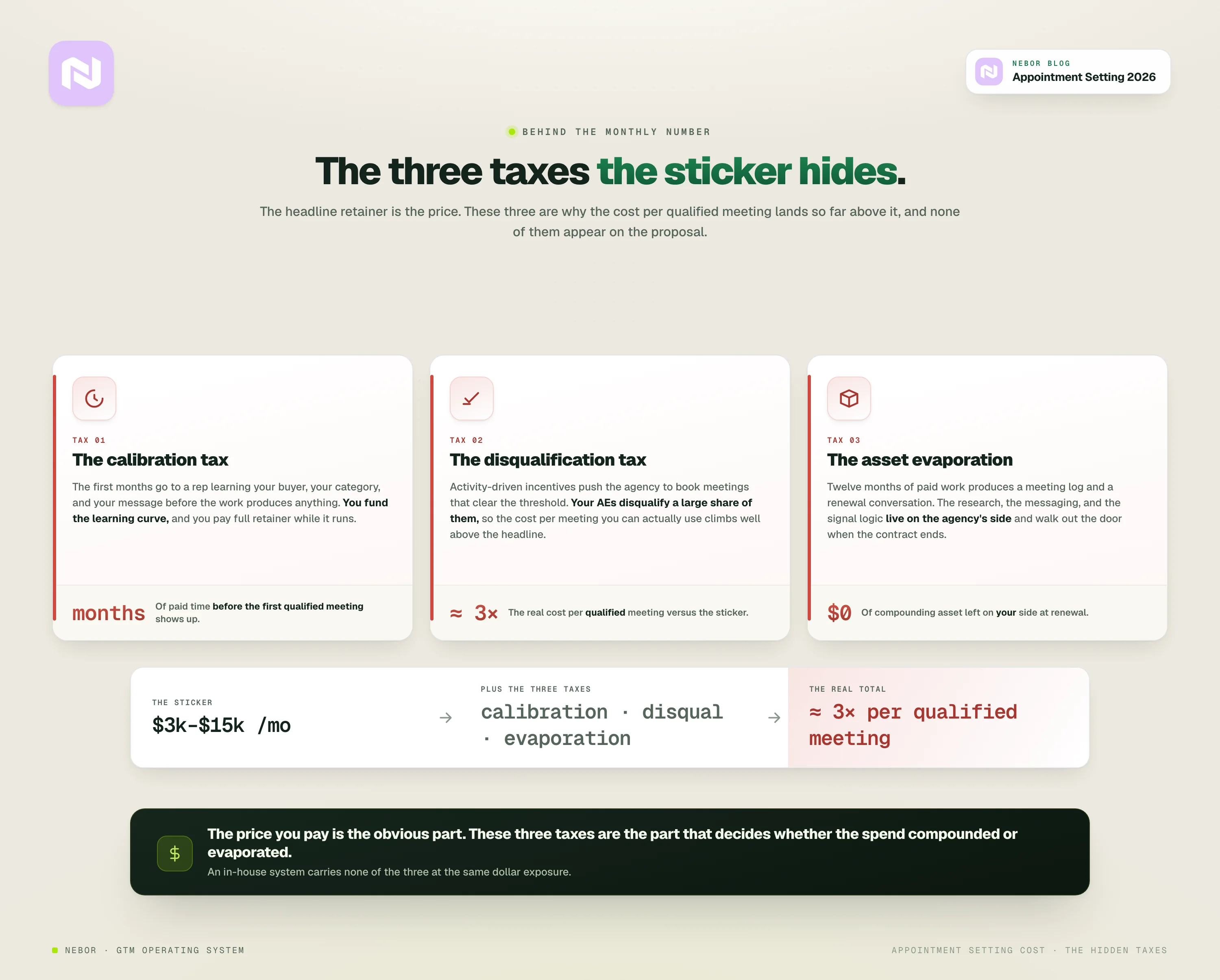
The bigger difference is what happens after the engagement ends. With an agency, 12 months of paid work produces a meeting log and a renewal conversation.
With us, the same twelve months produces a meeting log, a working system that keeps producing meetings and GTM engine that makes your internal team more efficient.
That is what the cost-per-meeting math does not always capture. The price you pay is the obvious part.
What the price builds for you is the harder thing to put a number on, and it is the thing that decides whether your spend compounded or evaporated when the engagement closed.
The four pricing models you will see when you shop the category
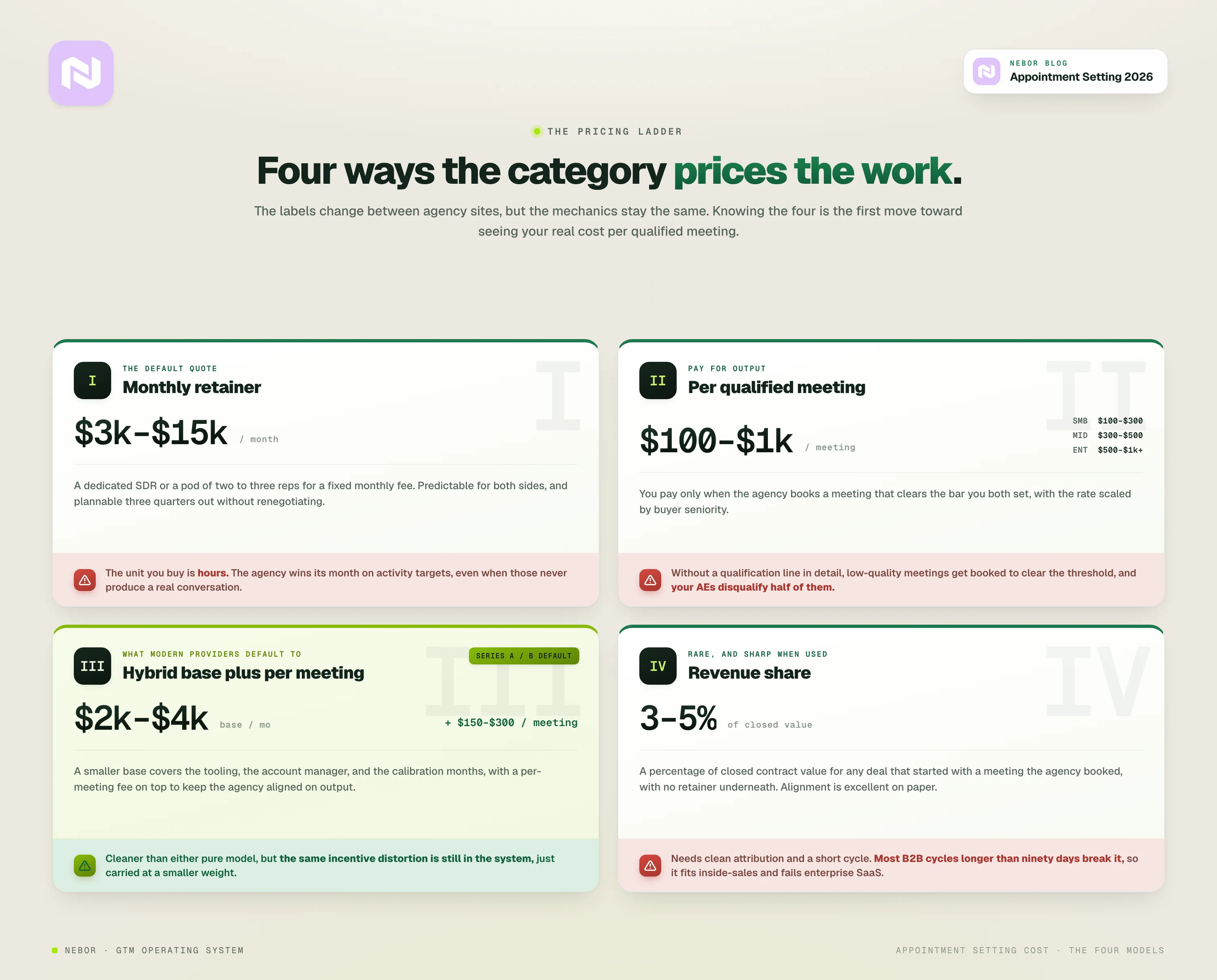
Almost every appointment setting service prices its work in one of four ways. The labels change between agency websites, but the underlying mechanics stay the same, and the public numbers across the category are consistent enough to treat as a working ladder.
Knowing the four models in detail is the first move toward seeing what your actual cost per qualified meeting will be, which is the number the proposals do not show you.
The monthly retainer model, $3,000 to $15,000 a month
The retainer is the default for the category and the model most agencies will quote you first. You sign for a dedicated SDR or a small pod of two to three reps and pay a fixed monthly fee for their time.
Pricing across the named providers lands between $3,000 a month at the lower end and $15,000 a month for a senior US-based pod with a full-time account manager attached.
The retainer rewards predictability on both sides of the table. You know what hits your card on the first of the month, the agency knows what it has to staff against, and both sides can plan three quarters out without renegotiating.
The trade is that the unit you pay for is hours, and the agency wins its month when the rep hits activity targets even when those targets never produce a real conversation.
We have written about why the rented-team math has weakened year over year, and the retainer model is where the gap shows up first.
This is the model the rest of the post mostly argues against, so we will come back to it in detail in the cost-per-qualified-meeting section.
Per qualified meeting, $100 to $1,000 a meeting
This is the model that looks like it solves the activity-versus-output problem. You pay only when the agency produces a meeting that meets the qualification criteria you both agreed on, with the per-meeting rate scaled by how senior the buyer is.
Public pricing across the category ranges from $100 to $300 a meeting for SMB targets, $300 to $500 for mid-market, and $500 to $1,000 or more for enterprise C-suite meetings.
A few providers quote $25 to $80 a meeting on the very low end, but those numbers belong to the offshore high-volume tier where the qualification bar tends to be loose.
Per-meeting pricing puts the risk on the agency, which sounds like a clean trade until the next problem shows up.
We have written about where pay-per-appointment lead generation actually works, and the short version is that the qualification line is where the model lives or dies.
If both sides do not write the line down in detail before the contract starts, the agency books low-quality meetings to clear the threshold and your AEs end up disqualifying half of them.
Hybrid base plus per meeting, $2,000 to $4,000 base plus $150 to $300 a meeting
This is the model the more modern providers default to, because it splits the risk in a way both sides can stomach. You pay a smaller base retainer of $2,000 to $4,000 a month that covers the team's overhead, plus a per-meeting fee of $150 to $300 on top.
The base covers the tooling, the account manager, and the calibration months when the rep is still learning your buyer.
The per-meeting fee keeps the agency aligned on the output you care about. The hybrid is cleaner than either pure model and is what most thoughtful Series A and B buyers default to when they shop the category in 2026.
The trade is that the same incentive distortion is still in the system, just at a smaller weight. The rep still has a per-meeting target and the same pressure to hit it.
Revenue share, three to five percent of closed contract value
Revenue share is rare in practice and worth naming because the agencies that use it tend to be sharp about why.
You agree on a percentage of closed contract value, commonly three to five percent, for any deal that originated from a meeting the agency booked, with no monthly retainer underneath.
The alignment is excellent on paper, because the agency only earns when you close and has every incentive to bring the kind of meeting your AE can actually win. The trade lives in the operational overhead the model demands.
You need attribution clean enough to track which meeting six or twelve months ago led to which closed deal, and the agency needs your sales cycle short enough that the cash-flow gap stays survivable.
Most B2B sales cycles longer than ninety days break the revenue-share model. We see it work in inside-sales-led motions with three- to six-week cycles, and we see it fail in enterprise SaaS where the agency has to wait a year to get paid.
Top 08 B2B appointment setting service providers to consider and what they charge
The list below is the public-pricing snapshot, not a ranking. These are the eight names that come up most often in buyer conversations at the mid-market and enterprise tier, and the ones with enough public information to compare honestly.
The names below are in alphabetical order, and the numbers come from each agency’s public materials or from public reviews on Clutch where the provider does not publish its own pricing.
Belkins
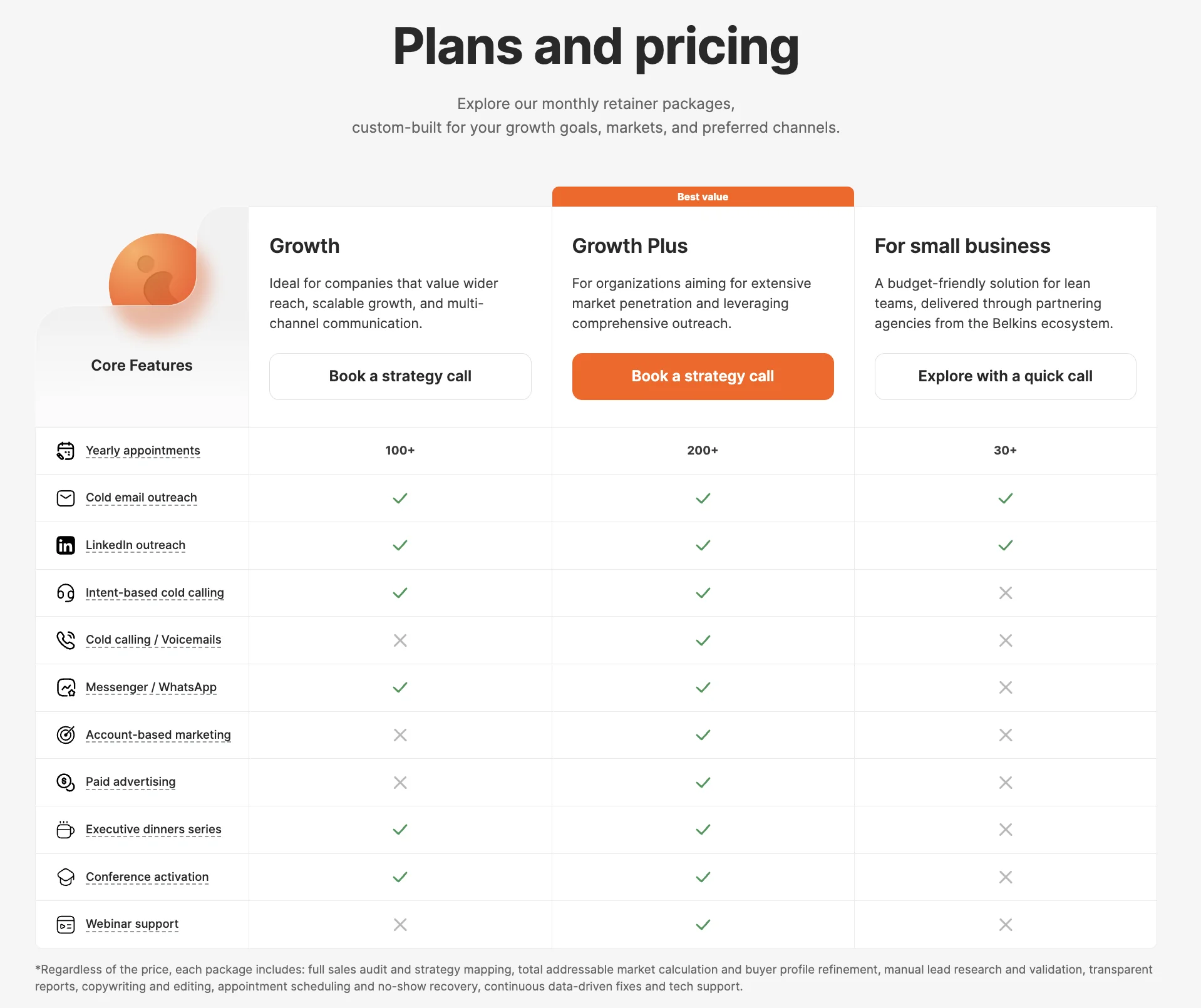
Belkins does not publish pricing on its own materials, so the working numbers come from peer reports and from buyers we have spoken to.
The floor for a multi-role engagement lands at $2,500 to $5,000 a month, and the standard pod configuration usually costs $5,000 to $10,000 a month before any tooling add-ons.
Callbox
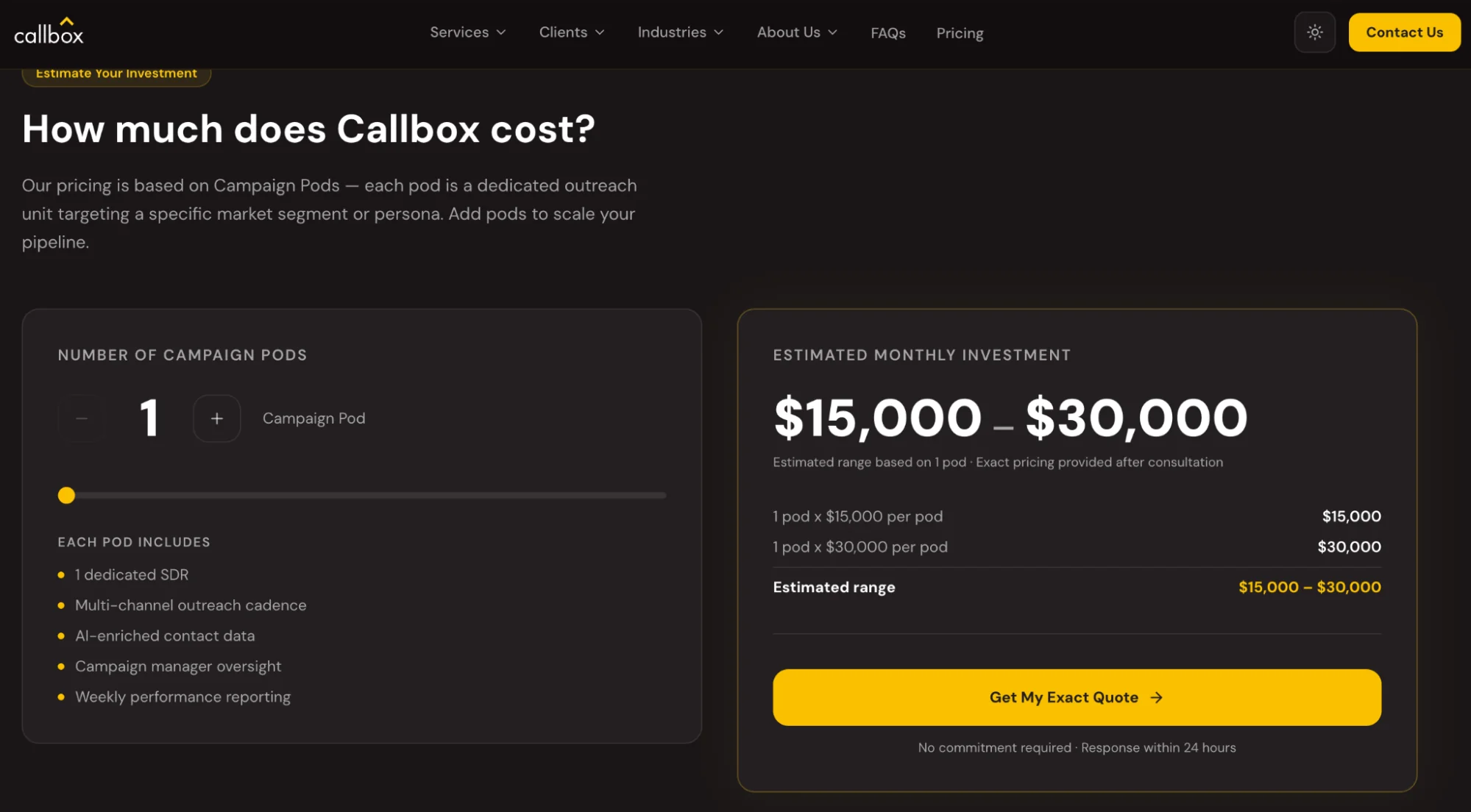
Callbox has the most geographically distributed model in this lineup, with offices across Asia-Pacific, Europe, and the Americas.
Pricing is custom rather than published, and Clutch reviews suggest most engagements start at $10,000 a month and scale up from there, which reflects the multi-region coverage you are paying for.
CIENCE
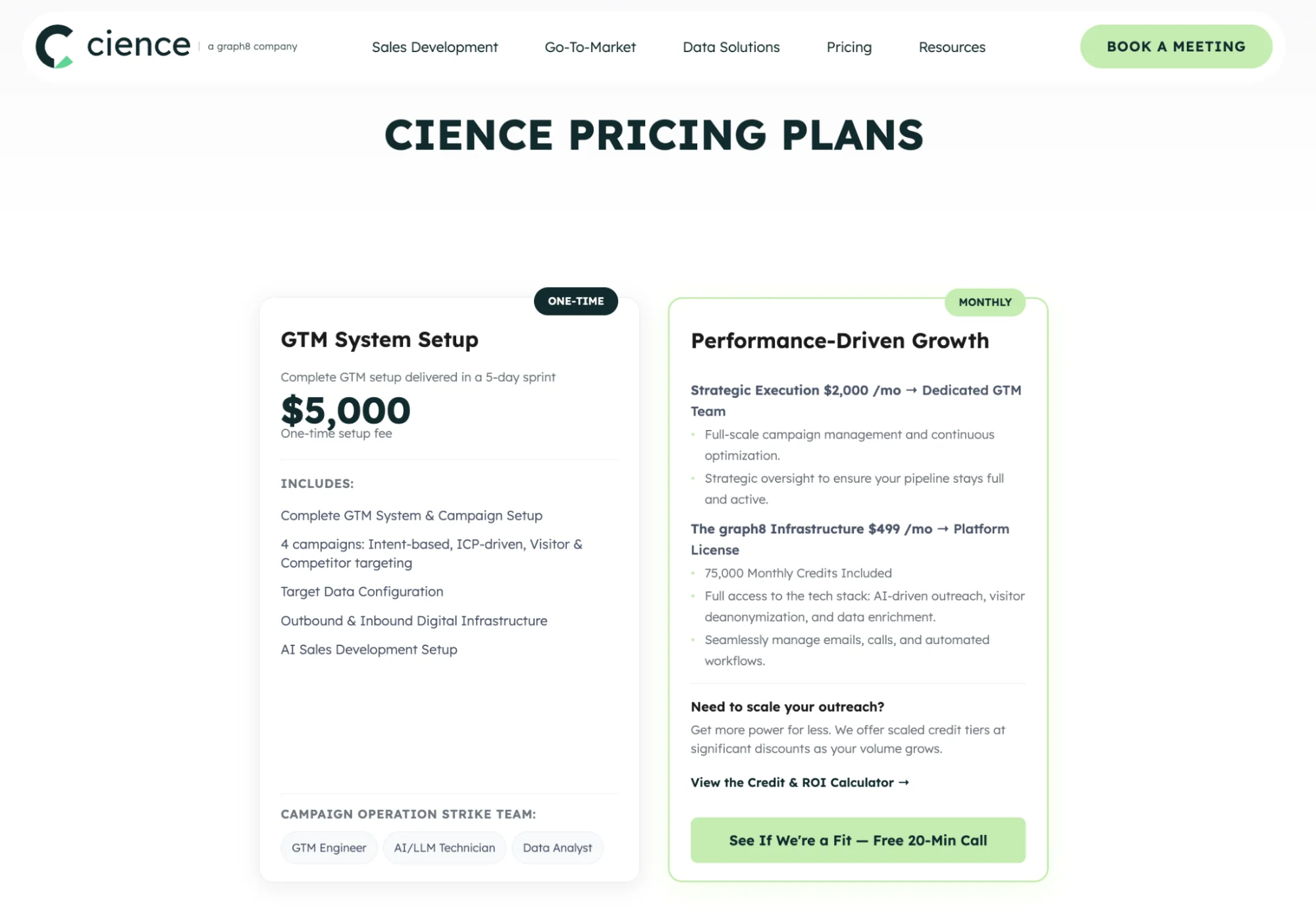
CIENCE bundles a managed SDR pod with their own outbound platform. Clutch lists project floors at around $1,000 for the smallest scopes and $25 an hour for tech-only access, but the configurations that justify the platform usually land in the $4,200 to $9,000 a month range, and larger enterprise engagements go past $15,000 a month.
EBQ
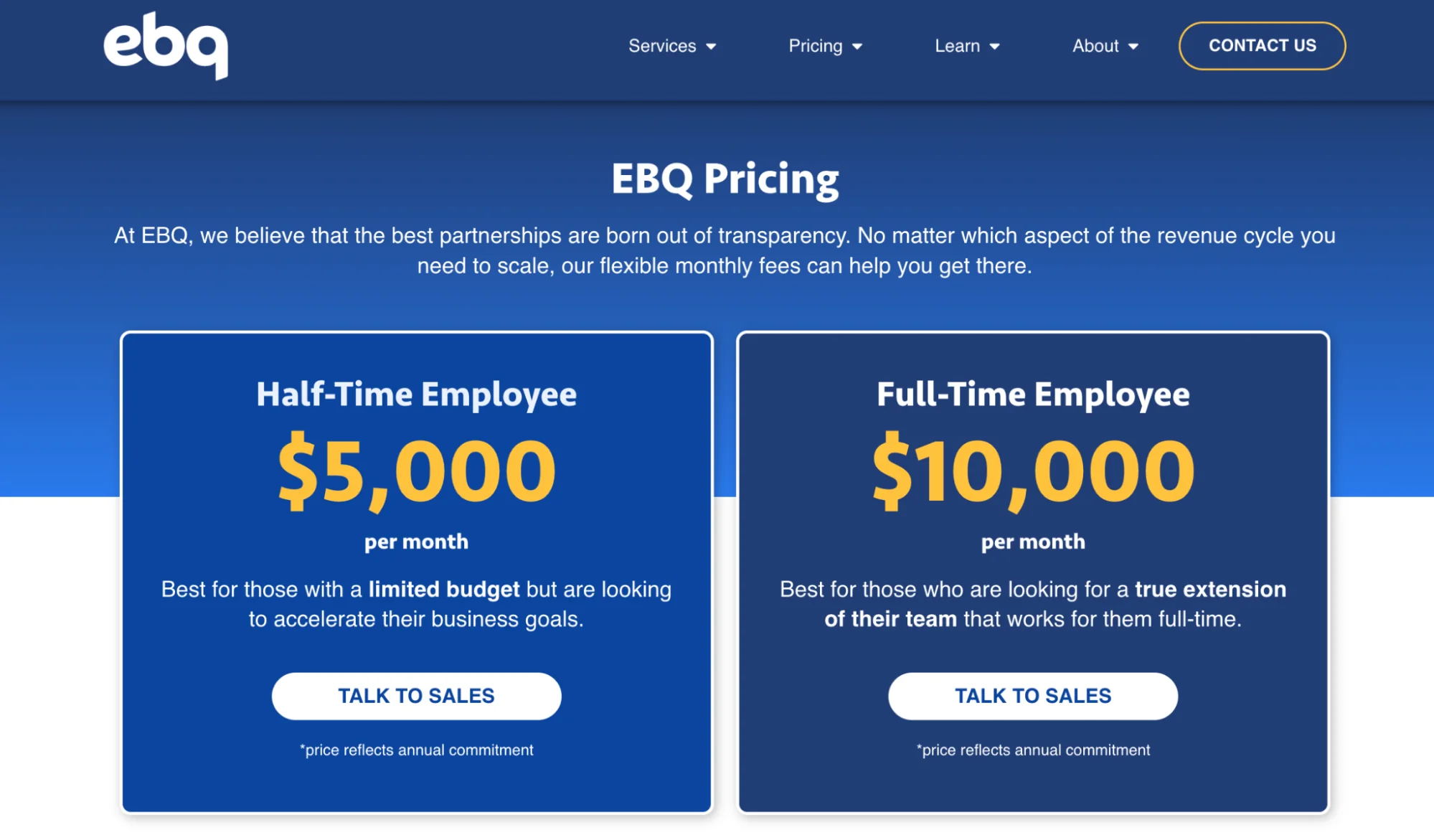
EBQ prices its embedded SDR work in two tiers, with half-time engagements starting at around $5,000 a month and full-time dedicated reps closer to $10,000.
The model includes the embedded weekly review loop, so the price reflects the calibration time the rep spends inside your team rather than only the rep's billable hours.
Leadium
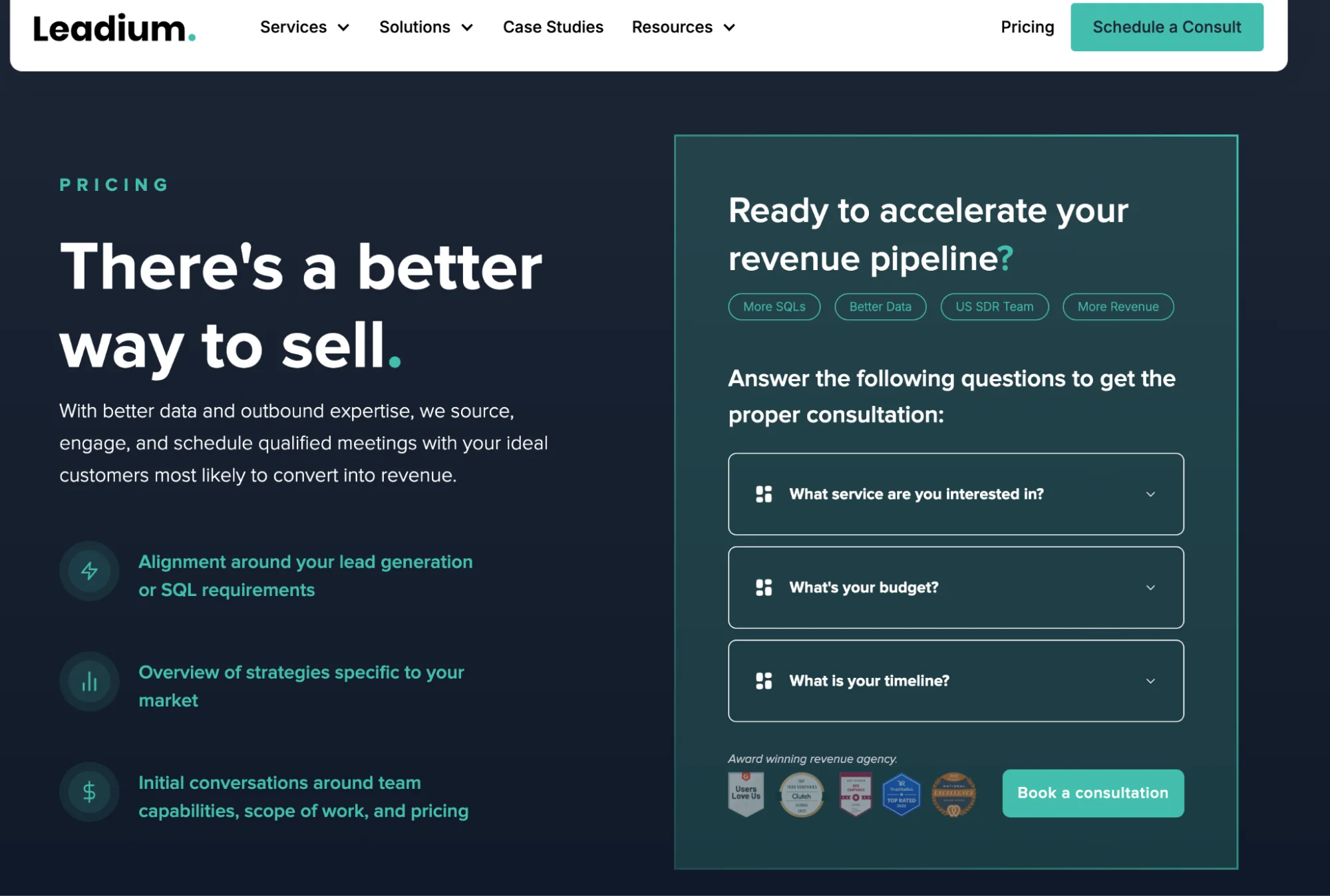
Leadium does not publish pricing on its site, so the working numbers come from buyer reports on Clutch.
The typical engagement lands at $5,000 to $9,000 a month, with most of the spend going to research depth rather than raw outreach volume. Buyers who already use Outreach.io or Salesloft tend to land at the lower end of that range because the agency works inside the existing tooling rather than insisting on its own.
Martal Group
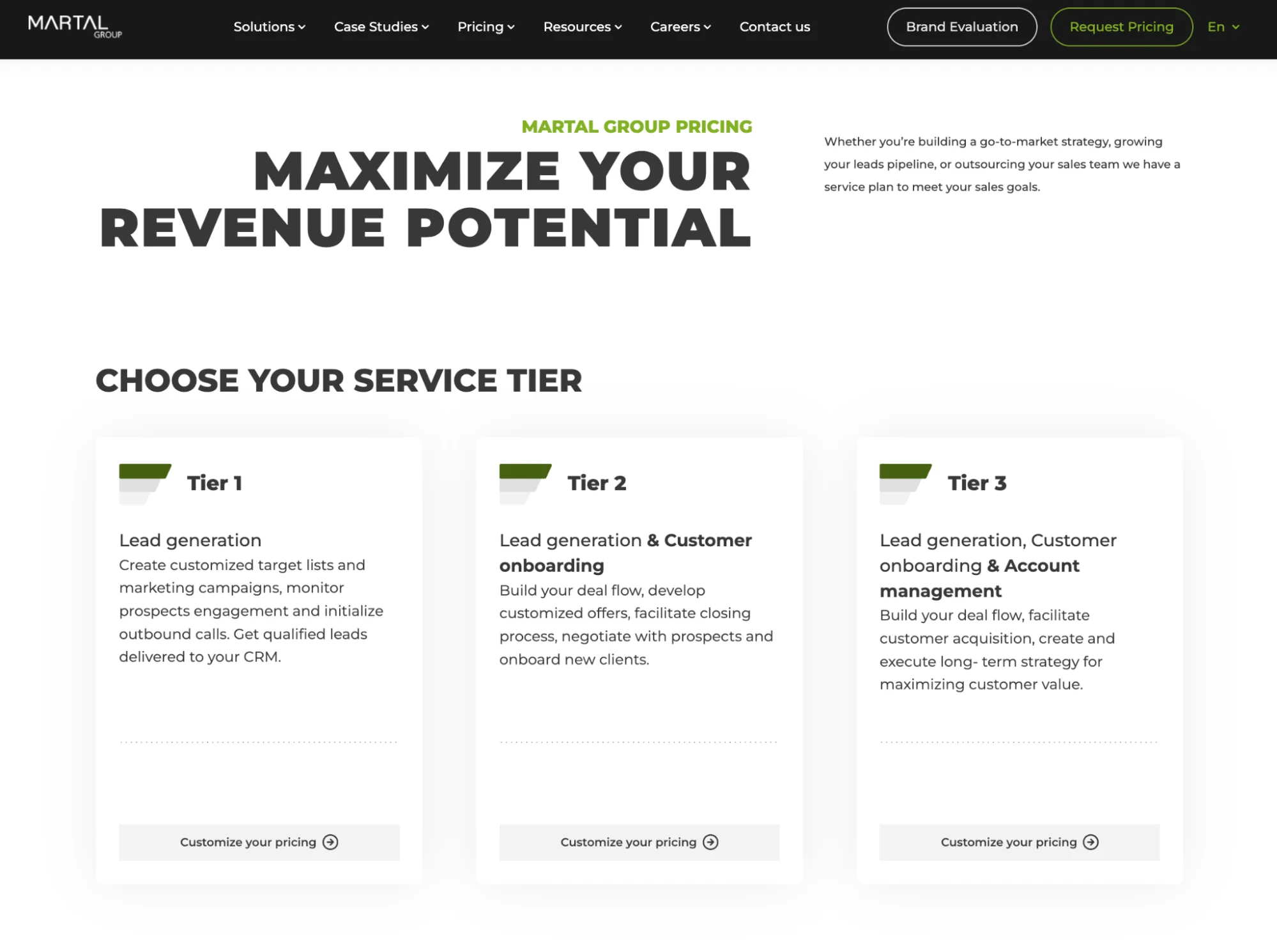
Martal Group bundles their AI sales engagement platform with a managed SDR pod. Pricing is not public, but engagements typically land between $5,000 and $10,000 a month for the standard pod, plus a platform fee on top for the larger configurations.
SalesHive
SalesHive has the cleanest public pricing tier in the lineup.
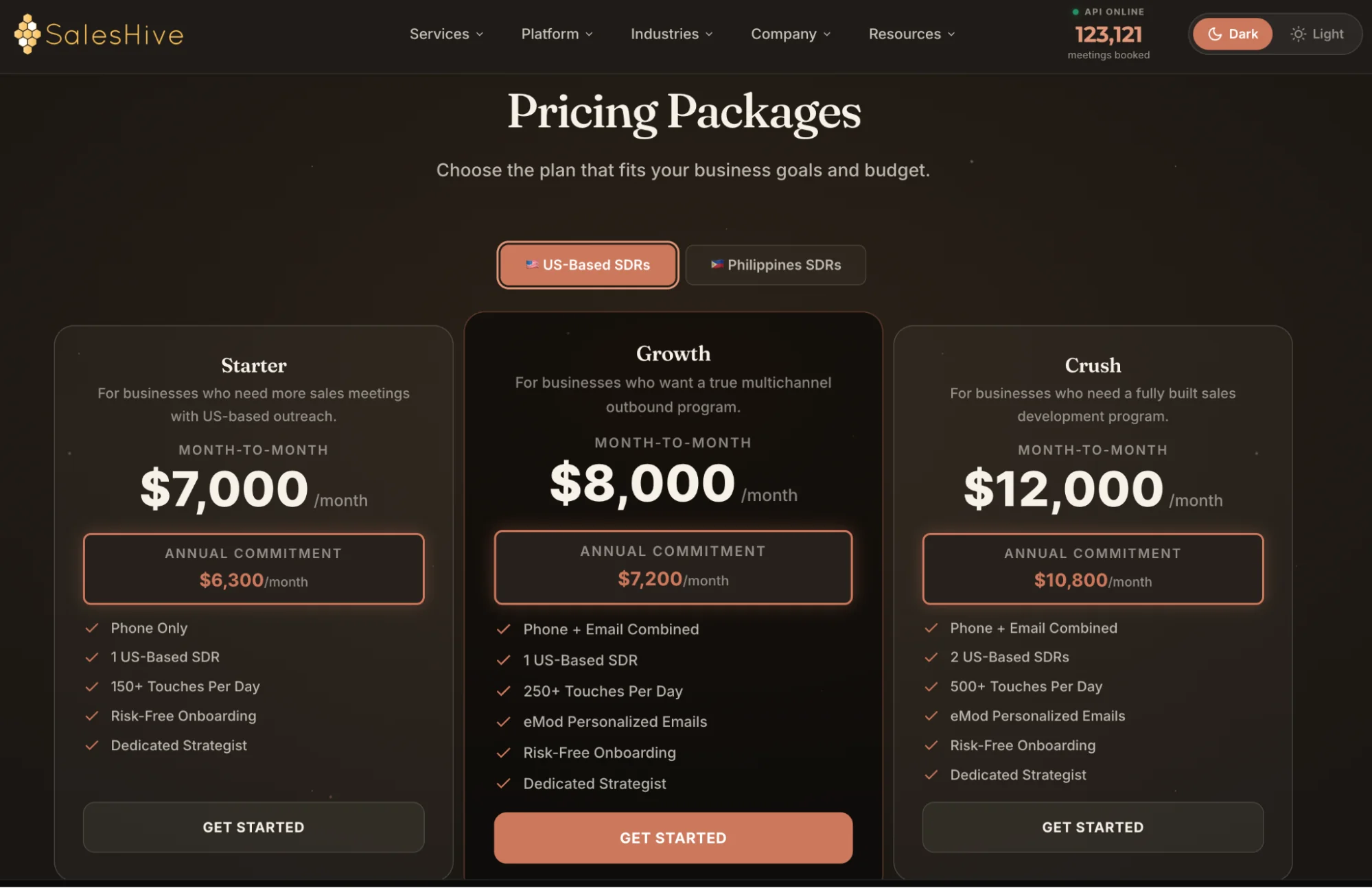
The Starter plan is $7,000 a month, the Growth plan is $8,000 a month, and the Crush plan is $12,000 a month, all month-to-month with no long-term contract. The flat-rate transparency is the part most buyers come for.
SalesRoads
SalesRoads starts at around $5,400 a month for the smallest US-based pod and goes north of $10,000 a month for the larger configurations.
The pod is dedicated rather than shared, and the senior-rep average of about seven years of SDR experience is part of why the floor is higher than the offshore providers we deliberately left off this list.
The 05 things that move the cost of appointment setting services
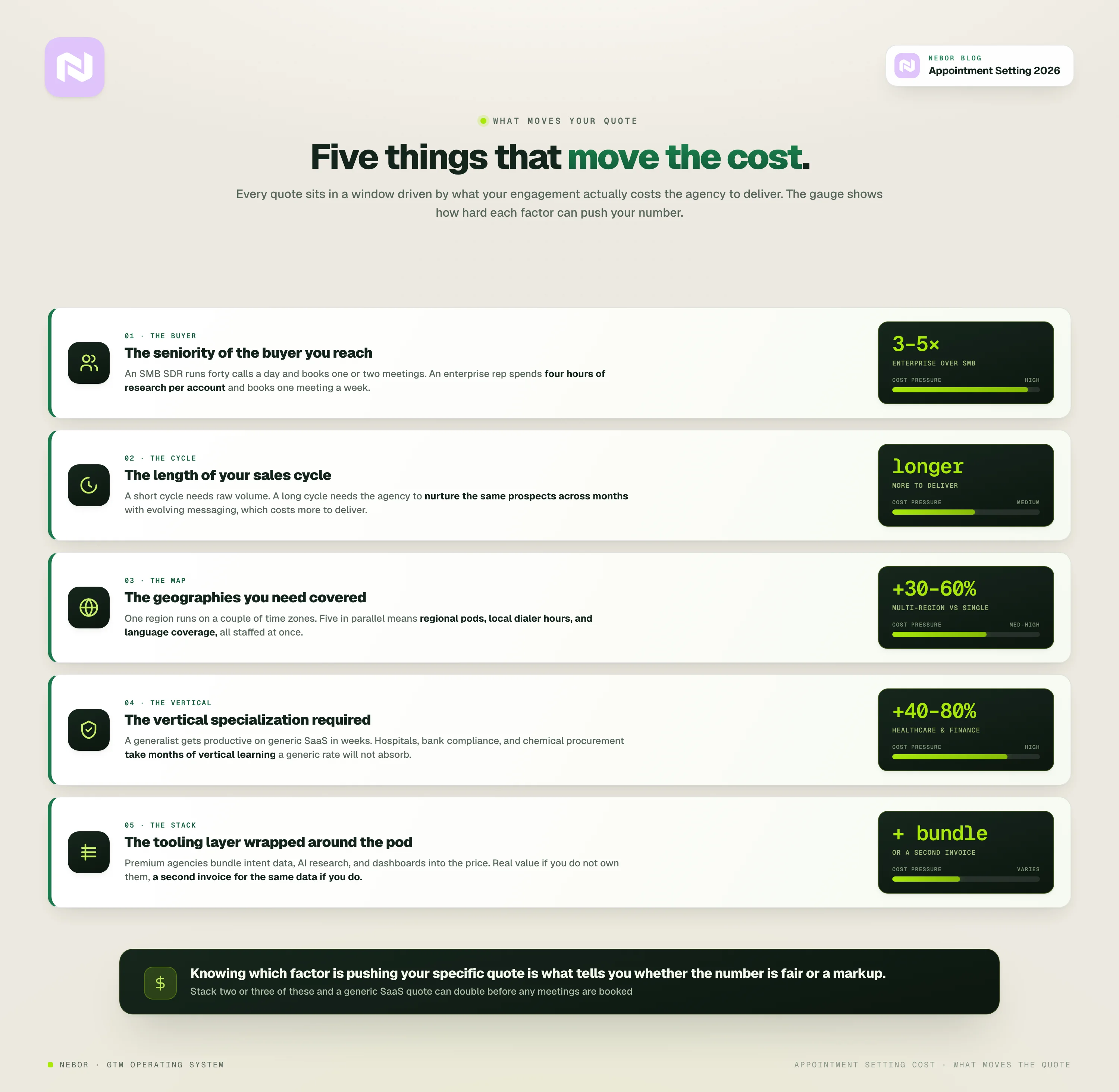
The pricing ladder above is the public ladder. The actual quote you get from any agency falls inside a window driven by five real factors that change what their delivery costs them, and therefore what they have to charge to make the engagement work.
Knowing which factors are pushing your specific quote is what tells you whether the number you are looking at is fair or a markup.
1. The seniority of the buyer you are trying to reach
Reaching a Director of Operations at a 200-person SaaS company is one job. Reaching a CFO at a Fortune 500 with three layers of gatekeepers is a different exercise entirely, and the work the agency has to do per meeting scales with the gap between the two.
A typical SMB SDR can make forty calls a day and book one or two meetings out of the activity. An enterprise rep working into a buying committee at a global bank spends four hours of research per account and books one meeting a week.
The cost-per-meeting math reflects the gap, and agencies that target the enterprise tier price three to five times higher than the SMB tier for the same hour of rep work.
2. The length of your sales cycle
A 30-day cycle and a 9-month cycle pull different things out of the appointment setting model.
The short-cycle motion needs raw meeting volume because the AE can do discovery, demo, and close inside a single quarter, and the agency only has to keep the rep in seat to keep meetings flowing.
The long-cycle motion needs the agency to nurture the same prospects across multiple touches over months, with messaging that evolves as the buyer’s situation shifts.
That is more expensive work to deliver, and it is the reason agencies that specialize in enterprise SaaS, finance, and healthcare price higher than the agencies that specialize in inside-sales motions for SMB tooling.
3. The geographies you need covered
The price scales with how many regions you need covered in parallel. An agency pushing campaigns into the US and one European country can keep one team on UTC and one on ET.
An agency pushing campaigns into the US, the UK, Germany, the Nordics, and APAC at the same time has to staff regional pods, time the dialer hours to local business hours, and pull in regional language coverage where it matters.
The all-in cost goes up by 30 to 60 percent for multi-region work compared to single-region work at the same meeting volume target, and that is before any per-region tooling overhead the agency layers in.
4. The vertical specialization the engagement requires
A generic B2B SaaS rep can be productive against a generic B2B SaaS ICP within a couple of weeks of training.
A rep working into hospitals, into compliance teams at banks, or into procurement leads at chemical manufacturers cannot get productive without months of vertical learning, and most agencies do not absorb that learning curve into a generic pod rate.
The vertical specialists charge a meaningful premium for the depth, with most healthcare and financial services SDR pods landing 40 to 80 percent above the generic SaaS quote.
The premium pays back in qualified meeting rate when the buyer is genuinely vertical-specific, and it does not pay back when the buyer is closer to a horizontal SaaS profile that a generalist could have handled.
The same pattern is the reason the better SDR agencies tend to be the ones that go deep on a single category.
5. The tooling layer the agency wraps around the pod
The basic appointment setting agency needs a sequencer, a dialer, a CRM connector, and a deliverability stack to do the work.
The premium agencies wrap intent data platforms, AI-assisted research, social signal monitoring, and account-based dashboards around the pod, and they price for the full bundle rather than the rep's hours alone.
The bundle is real value if you do not already pay for those tools yourself. It becomes a second invoice for the same data when you already do, which is the part most buyers miss until the renewal hits.
Our final thoughts on appointment setting services costs
The eight services in the lineup above all do the work their clients hire them to do, and most of them do it well.
The hard question is whether the rented retainer model itself, with the calibration tax, the disqualification tax, and the asset evaporation built in, still maps to what your B2B sales motion actually needs in 2026.
For three real situations the rented retainer is still the right spend. Those are high-volume phone-led outbound, net-new market entry without an internal team, and one-off motions where speed matters more than asset compounding.
For most other B2B teams in the five-to-fifty AE bracket, the in-house build at the same dollar exposure produces meetings at roughly a third of the cost per qualified meeting. The system stays in place after the engagement and keeps producing.
The clearest signal that the in-house move is right for you is the next twelve months. If you can imagine your team handling outbound, inbound, and intent as connected workflows with one operator inside your tooling, you are looking at a different category of spend than the eight retainer-based engagements above.
That category is what we built Nebor to be.
Note: Per-meeting fees and monthly retainers both hide the same number, which is what a qualified meeting really costs you once the unqualified ones are taken out.
We do GTM engineering and RevOps. We build the prospecting, enrichment and routing that produces those meetings on a stack you mostly already pay for, and we build it in your own accounts.
Book a 15-minute call with your current spend, and we'll work out your real cost per meeting against what a build would cost.


Related Articles
By clicking Sign Up you're confirming that you agree with our Terms and Conditions.