
The 20 Best Sales Appointment Setting Services in 2026 (And What Most B2B Teams Actually Need Instead)

In this post:
Most B2B sales teams start searching for sales appointment setting services when there is shared feeling within their organization that their pipeline is drying up.
The way it usually plays out is that the AEs are working the deals they have but those alone are not going to close the quarter, the SDR team is either small or already at capacity, and the leadership team has been trying to figure out what to do about it.
By the third revenue meeting in a row where the conversation keeps coming back to the calendar, hiring an appointment setting service vendor who can fill your calendar for you starts to feel like the obvious move for you.
The agencies on the list further down this post are mostly good operators, and for a few specific kinds of B2B companies the trade still works in 2026. We will get to those cases later in the post.
For most B2B companies in 2026 though, the trade does not hold the way it used to. Here is what we learned from doing outbound for our own team for a few years and then doing it for B2B clients.
A short pipeline almost never turns out to be a meeting shortage on the surface. It looks like one from the inside, especially when your meetings keep circling the same line. Underneath, it is almost always a time-allocation problem inside the team you already have.
What that means in practice is that the actual fix is taking the work that produces meetings off your team’s plate. When that work moves, the meetings start showing up as a side effect of your existing people getting their hours back.
We built Nebor to do that work. The first section of this post will walk you through what that looks like, why it matters more for your team than which sales appointment setting service agency you pick.
If you have decided the traditional model is the right one for you, the rest of the post gives you our honest read on the twenty best appointment setting agencies and a short set of questions to pressure-test any provider you end up evaluating.
Let’s get started.
TL,DR
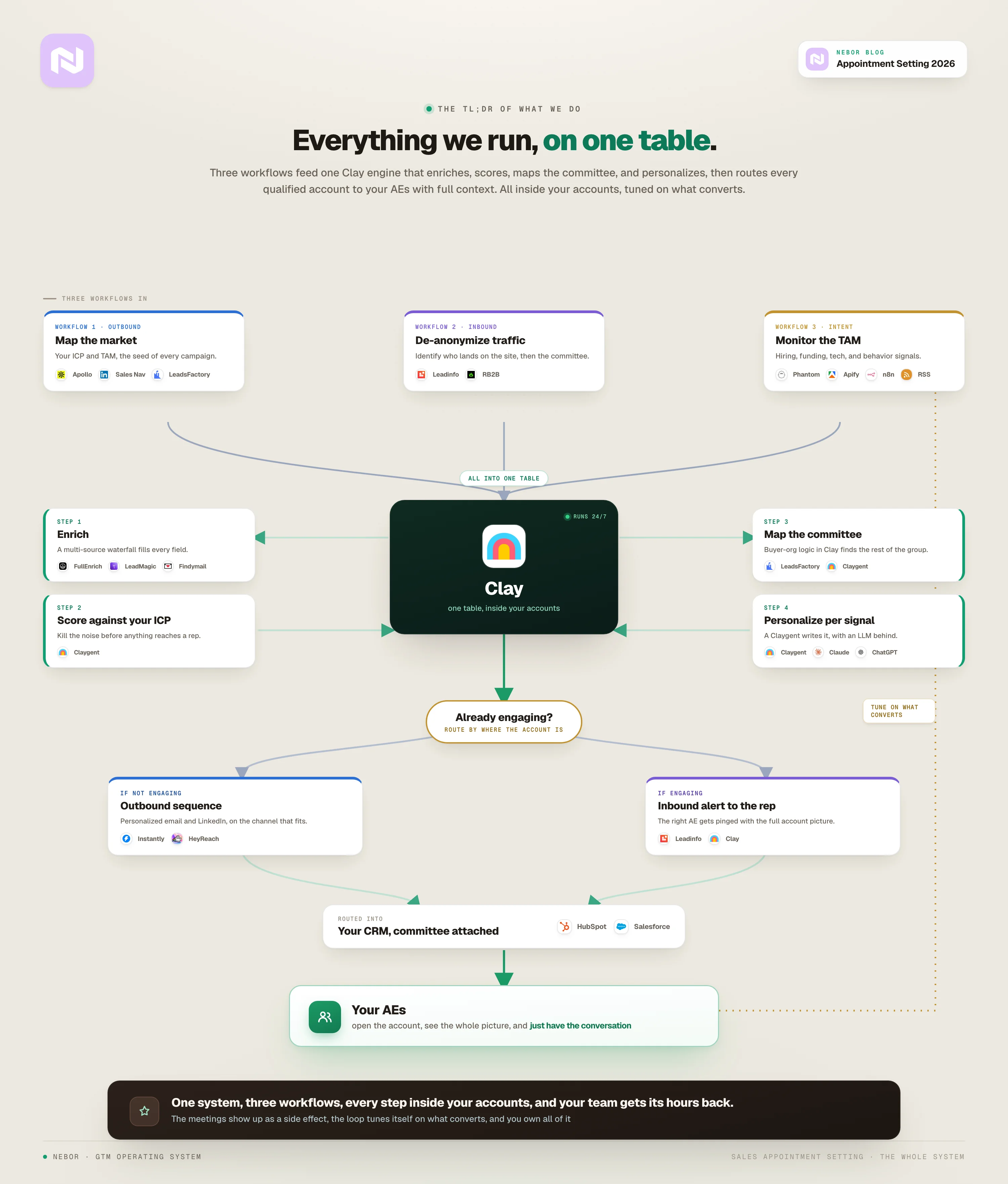
You don’t need to hire an SDR agency. Nebor can build you a personalized sales automation system that handles all your top of the funnel work and makes your team even more efficient. Click to zoom in and read better.
Agency | Best for | Where it breaks down |
Nebor | Teams who want a sales engine they own and operate, instead of an SDR pod they rent | Not for teams without a real revenue function in place yet |
SalesRoads | Mid-market and enterprise B2B wanting a senior US-based SDR pod | Pod model is expensive for early-stage motions still proving themselves |
Callbox | Global B2B needing multi-region SDR coverage in parallel | Breadth dilutes for single-industry, single-country ICPs |
LeadGeneration.com | Companies wanting one vendor covering outbound, paid media, SEO, and content together | Generalist agency where outbound is one of seven services |
Concept | Long enterprise cycles where one researched meeting is worth six figures | Slow and expensive for 30-60 day cycles that need volume |
Martal Group | B2B tech companies wanting SDRs paired with AI intent signals | Intent layer thins if you already have a RevOps stack handling intent |
Belkins | Mid-market and enterprise wanting multi-role outsourced teams | Cost-per-meeting math breaks at low monthly meeting volumes |
CIENCE | Scaling outbound to thousands of touches with a software platform underneath | Under $7K per month you are under-using the platform |
EBQ | Teams wanting SDR capacity embedded with their own sales function | Only pays off if you give the embedded rep real weekly feedback |
SalesHive | Early-stage US-based companies wanting month-to-month flat-rate SDR engagements | Offshore-free policy limits non-US buyer coverage |
Leadium | Smaller research-led agency for teams already invested in their own tooling | Lower meeting volume than high-volume providers |
Operatix | B2B software needing EMEA, APAC, and LATAM coverage alongside North America | Enterprise-priced, and not for single-region early-stage motions |
Pearl Lemon Leads | UK mid-market B2B wanting flexible LinkedIn-and-email outreach | Generalist coverage limits depth in narrow verticals |
memoryBlue | US-based B2B tech wanting senior SDR pods with strong training behind them | Limited depth outside software and SaaS |
LeadGenius | Enterprise B2B wanting hand-curated prospect research as the front end of outbound | Built for enterprise budgets, and overkill for generic SDR needs |
Abstrakt Marketing Group | Mid-market services and manufacturing wanting high-volume call-led outbound | Less suited to tech and SaaS where personalization matters more |
demandDrive | US-based SaaS wanting an SDR pod embedded with marketing | Assumes a real revenue function already in place |
Sopro | UK and European B2B wanting email-led prospecting at scale | Light on phone and LinkedIn, and the messaging stays more generic |
JumpCrew | Mid-market US B2B wanting one vendor covering marketing and outbound together | Bundled model hides which channel is actually producing pipeline |
Cleverly | Founders and small teams wanting low-cost LinkedIn-only outreach | Single-channel by design, with limited personalization depth |
ColdIQ | Companies wanting Clay-native outbound from a team using modern AI prospecting | Higher revenue threshold, and assumes a working revenue team |
Why Nebor is not a traditional appointment setting service, and what your team gets with us instead
When you search for the best sales appointment setting services, what comes back is more or less the same shape of company.
They hire a team of SDRs, they put a few of them on your account, they write outreach sequences, and they send those sequences to a list of prospects they scrape off platforms like Apollo.
The reps make cold calls, send cold emails and LinkedIn messages, they handle the replies, and when someone says yes to a meeting, they hand the calendar invite to your AE.
You pay a monthly retainer for the team’s time, and the work happens inside the agency’s accounts, on the agency’s tooling, against the agency’s playbook.
That model is not bad work in general. The agencies on the list further down this post are mostly good operators, the reps are usually solid, and for some companies the trade still works. We will get to those cases later.
The thing we want to flag up front is that this traditional model is one specific solution to the “we need more meetings” problem, and we built Nebor on a different one.
We start from the assumption that your existing revenue team, your AEs and your sales leaders and your one or two in-house SDRs, are perfectly capable of having sales conversations and closing deals.
What slows them down is everything that has to happen before the conversation lands on their calendar. Think about how the average week of your team actually goes.
Someone has to figure out which accounts to prospect this quarter, build the list, enrich it, validate the emails, check it against the CRM for duplicates, and a few other stuff. Someone has to write the sequences, then update them when the reply rate sags.
On top of that, the team has to watch for hiring signals, funding signals, and tech-stack changes across your TAM, catch the inbound that lands on the website and route it to the right rep, and keep the CRM up to date so the team can see every touch and tee up the next one.
Most B2B teams have two or three people doing all of that, and those people would much rather be on calls.
Nebor builds the system that does all of that work in the background, inside your own tools, so your existing team gets their hours back. We call it a revenue system, and several connected workflows live underneath the name.
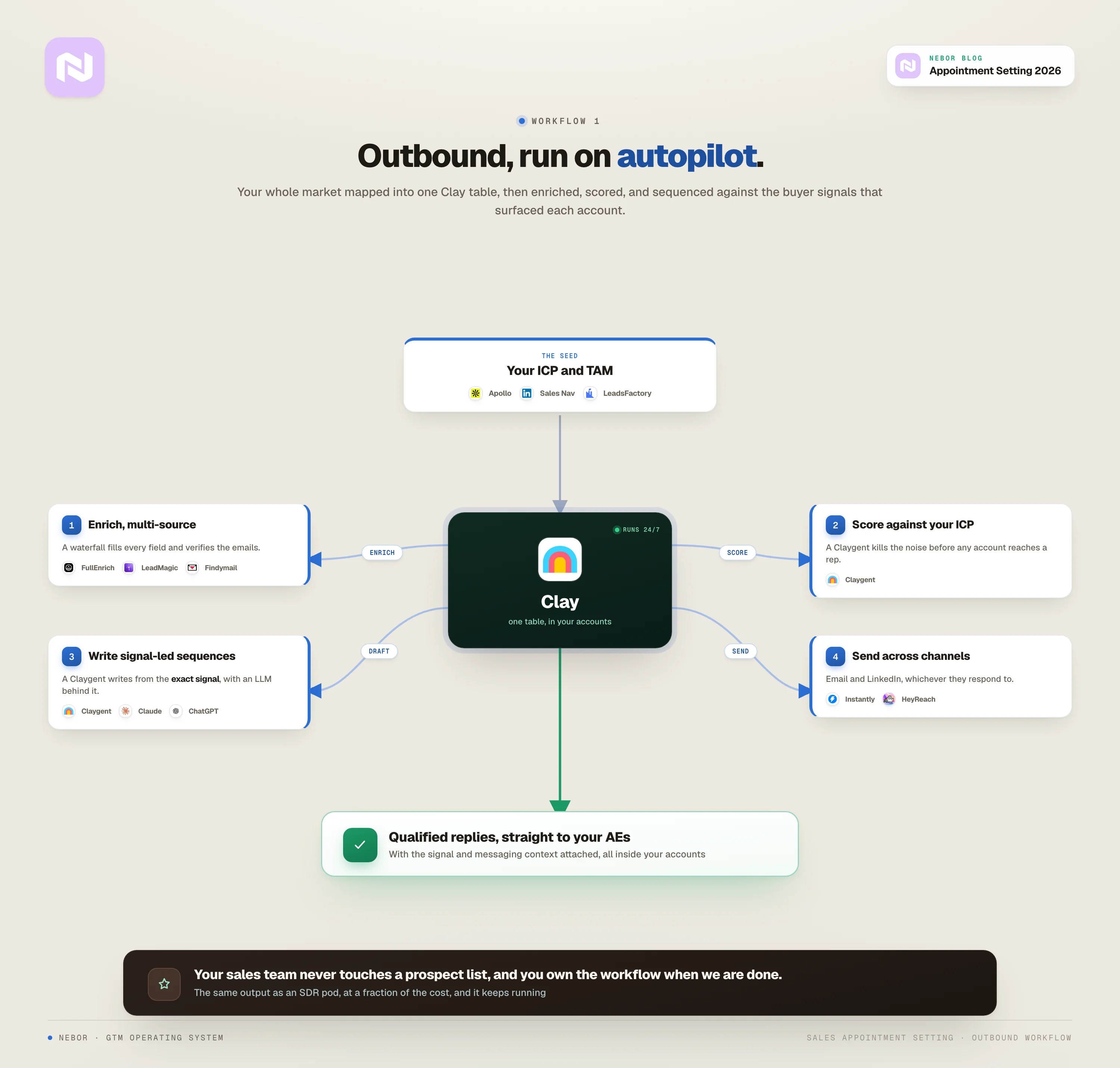
The first one is the outbound workflow, and we start by mapping your ICP and TAM into a Clay table, then building a multi-source enrichment waterfall using FullEnrich, LeadMagic, Findymail, and LeadsFactory, then writing sequences that pull in specific buyer signals rather than generic field merges.
Instantly handles the email side, HeyReach handles the LinkedIn side, and qualified replies route directly to your AEs with the full context attached, including what signal surfaced them and what messaging they responded to. The whole workflow lives inside your accounts, not ours.
Next comes the inbound workflow. We use Leadinfo and RB2B to de-anonymize the traffic hitting your website, push every visit into the same Clay table, and score it against your ICP and current pipeline.
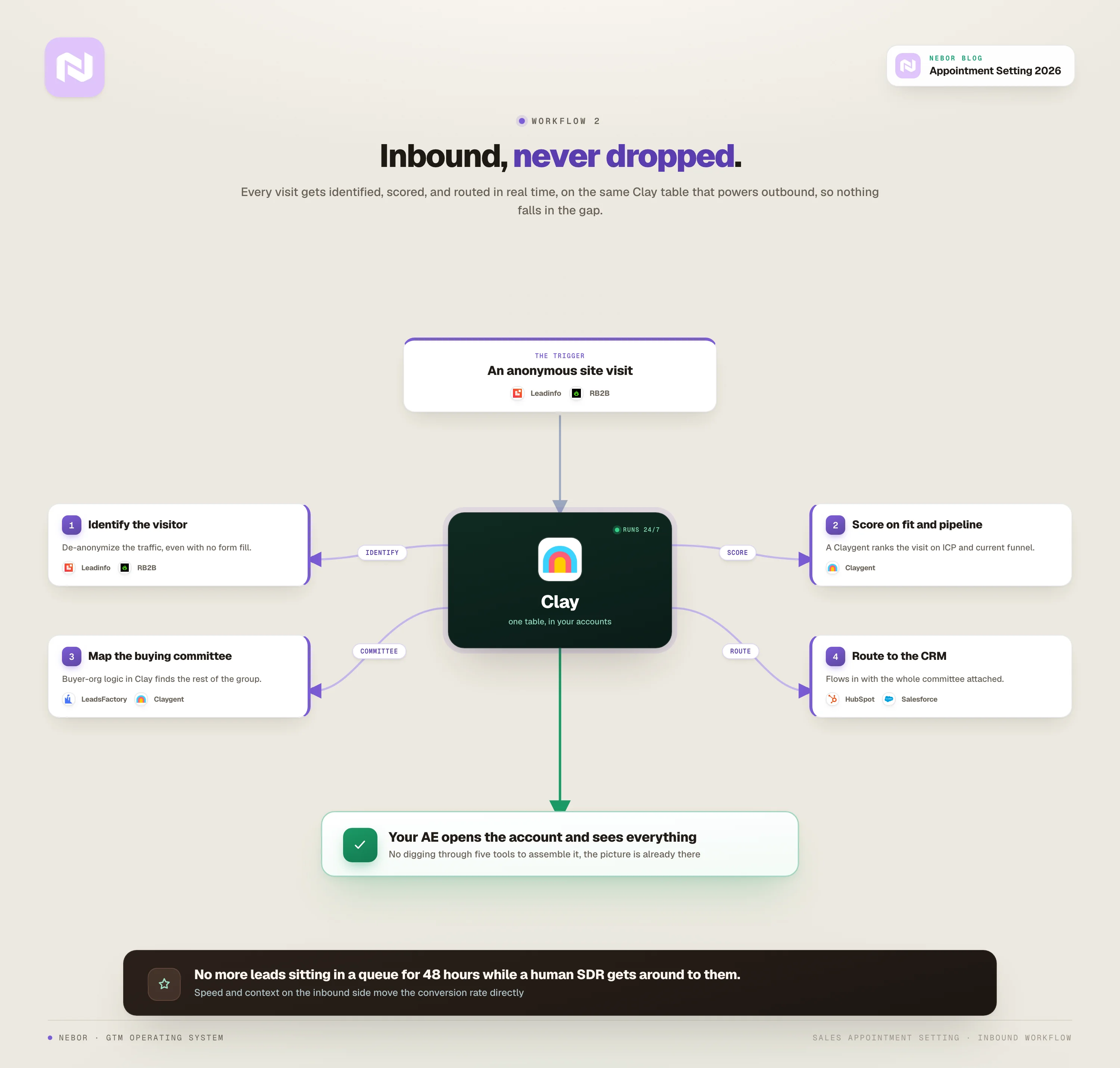
When a potential client engages,Apify and the buyer-org logic we set up in Clay, map the rest of the buying committee around them, and the qualified inbound flows into HubSpot or Salesforce with the committee already attached.
Your AE opens the account and sees the whole picture, instead of having to dig through five separate tools to assemble it.
We have written about the inbound meeting workflow in more detail if you want to see exactly how the routing logic looks.
The third one is the intent workflow, which keeps continuous monitoring across your full TAM for the signals that pertain to your category, things like new SDR or AE postings, recent funding rounds, technology changes, and behavioral data spikes.
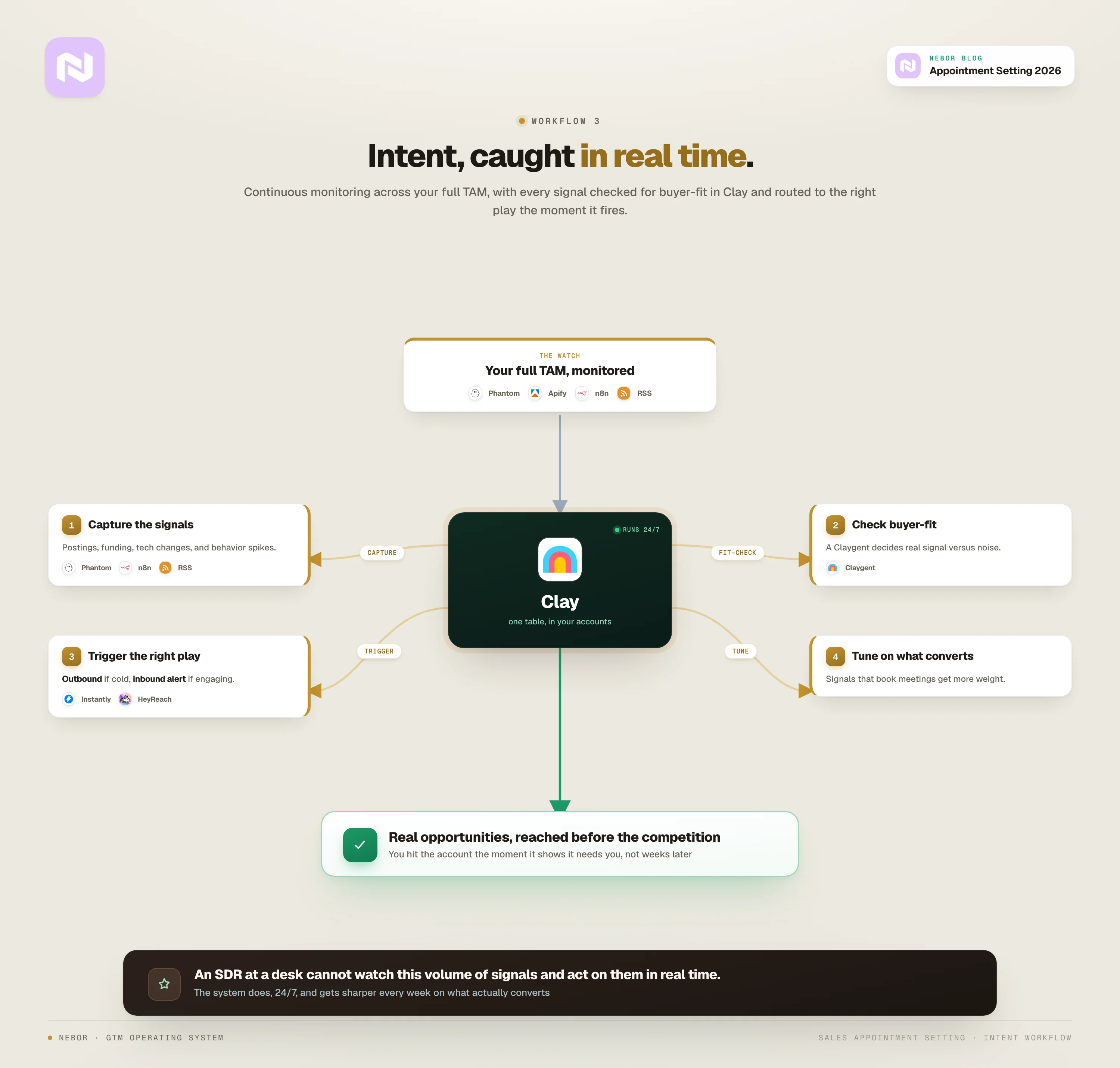
The signals pass through PhantomBuster, Apify, n8n, and RSS feeds into Clay, where the same buyer-fit logic checks each one.
When the system catches a real buying opportunity, it triggers either an outbound sequence or an inbound alert to your team, depending on whether the account is already engaging.
We tune the whole stack over time based on which signals actually produce meetings versus which ones turn out to be noise.
Here is what changes for your team after these three workflows are in place. The work your AEs do shrinks to the work AEs are actually good at, which is talking to real buyers about real problems.
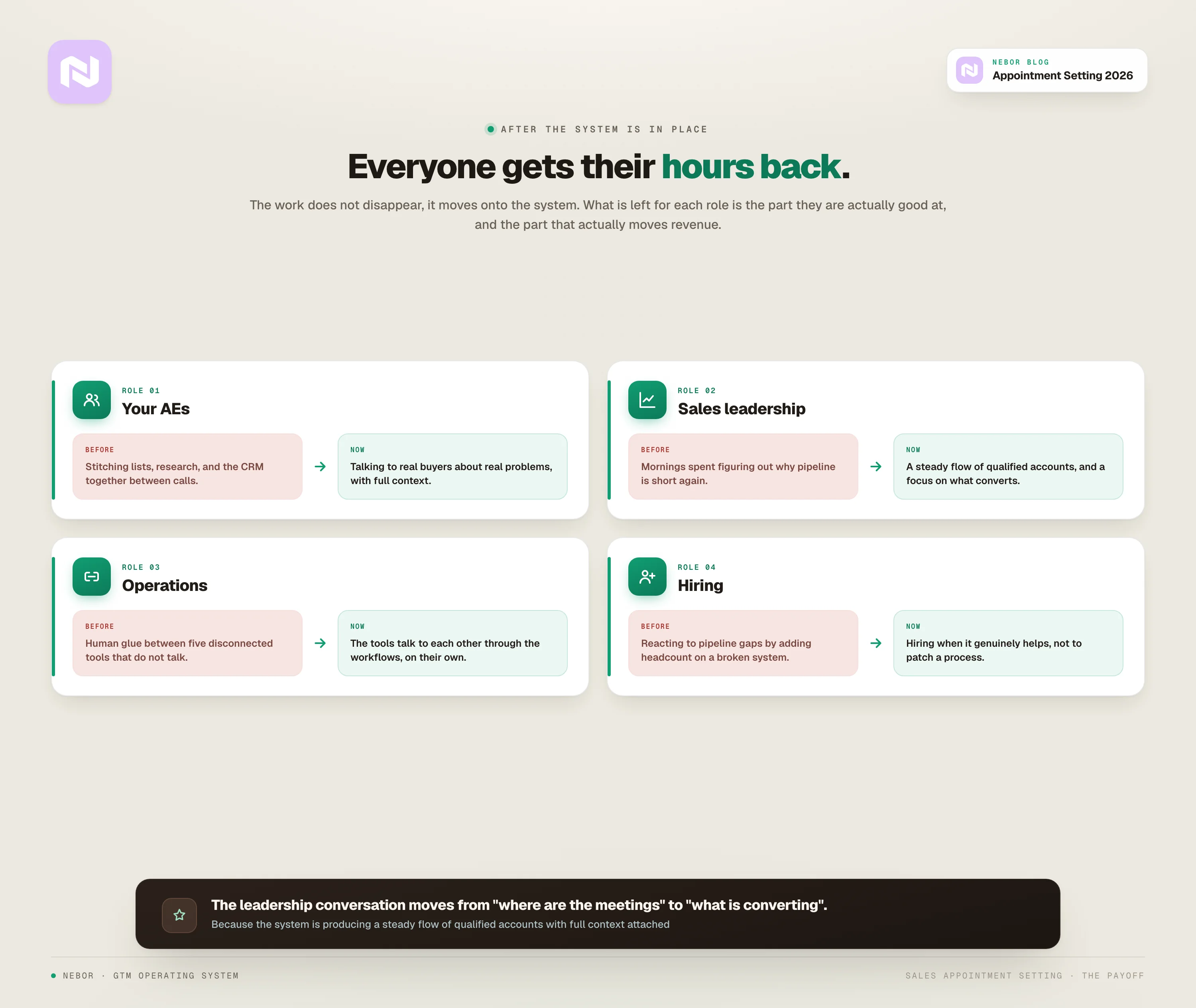
Your sales leadership stops spending mornings trying to figure out why pipeline is short, because the system is producing a steady flow of qualified accounts with full context, and the leadership conversation moves from “where are the meetings” to “what is converting and what is not”.
Operations stops being human glue between five disconnected tools, because the tools now talk to each other through the workflows.
And hiring decisions get easier, because you stop reacting to pipeline shortages by trying to add headcount on top of a broken system.
We want to flag the honest limit on this approach. The system makes sense when there is already a real revenue team on your side, and if you have no AEs yet and no plan to hire any in the next twelve months, this model is not the right one for you. One of the twenty agencies in the next section will probably serve you better.
We designed the system to make a real revenue team much more efficient, and to do that the team has to exist in the first place.
If your team is already producing and the bottleneck is everything that happens before the sales conversation, we are probably a better fit than any of the names below.
The 20 best sales appointment setting services in 2026
If your motion does not fit the system frame and an appointment setting agency is the right move, here is our read on the twenty best sales appointment setting services in 2026.
1. SalesRoads
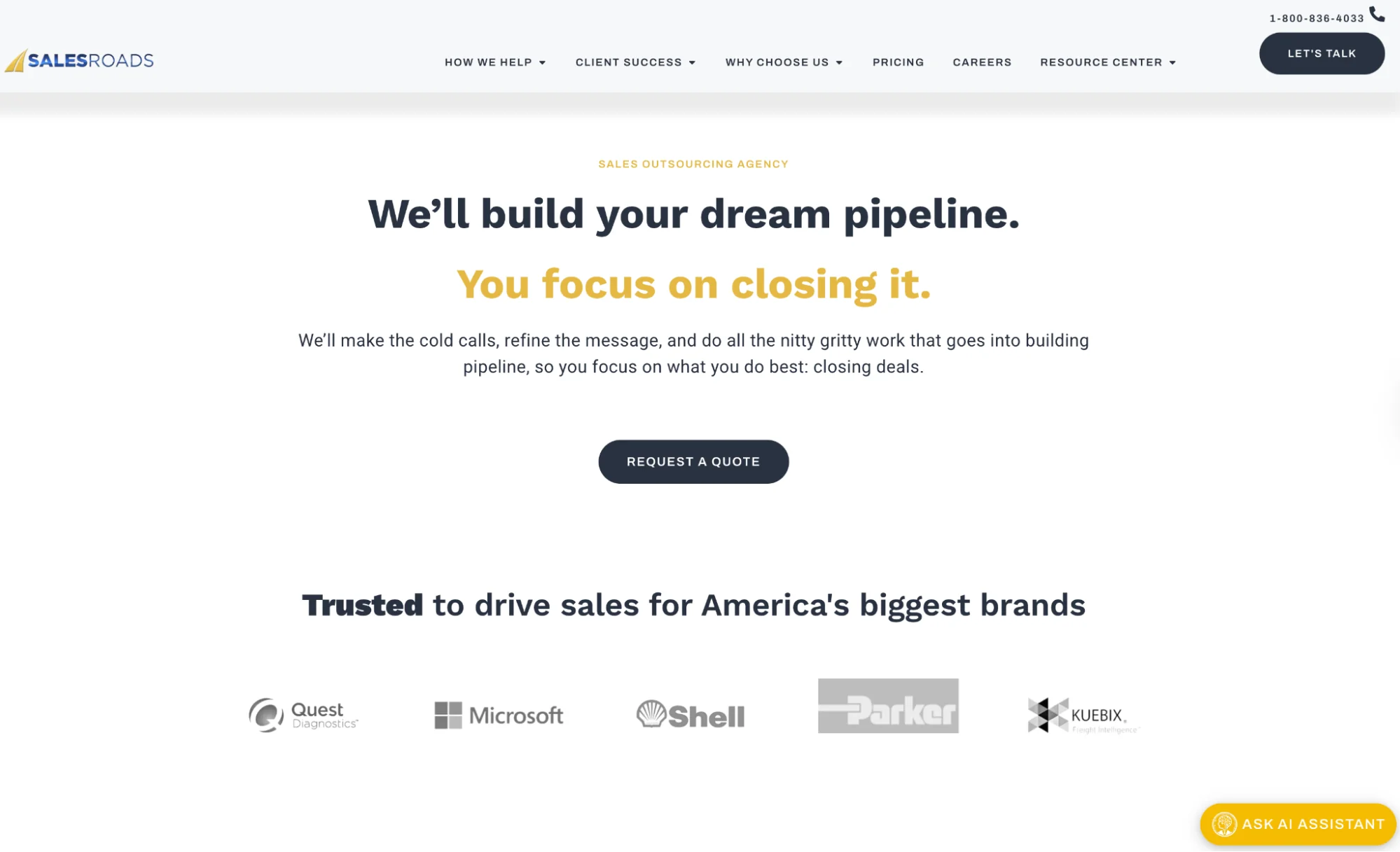
Best for: Mid-market and enterprise B2B companies that want a US-based dedicated SDR pod plugged into their CRM, with senior reps and weekly pipeline reporting.
SalesRoads is one of the more recognized names in the category. Their reps average around seven years of SDR experience, all US-based, and the team builds dedicated pods rather than rotating reps across accounts. Pricing starts around $5,400 per month for the smallest pod and goes north of $10,000 for bigger configurations.
Where it breaks down: The pod model is expensive enough that the math gets harder for early-stage companies still proving their motion. If your buyer is a 20-person company in a niche European vertical that needs deep category knowledge, the senior rep advantage compresses.
2. Callbox
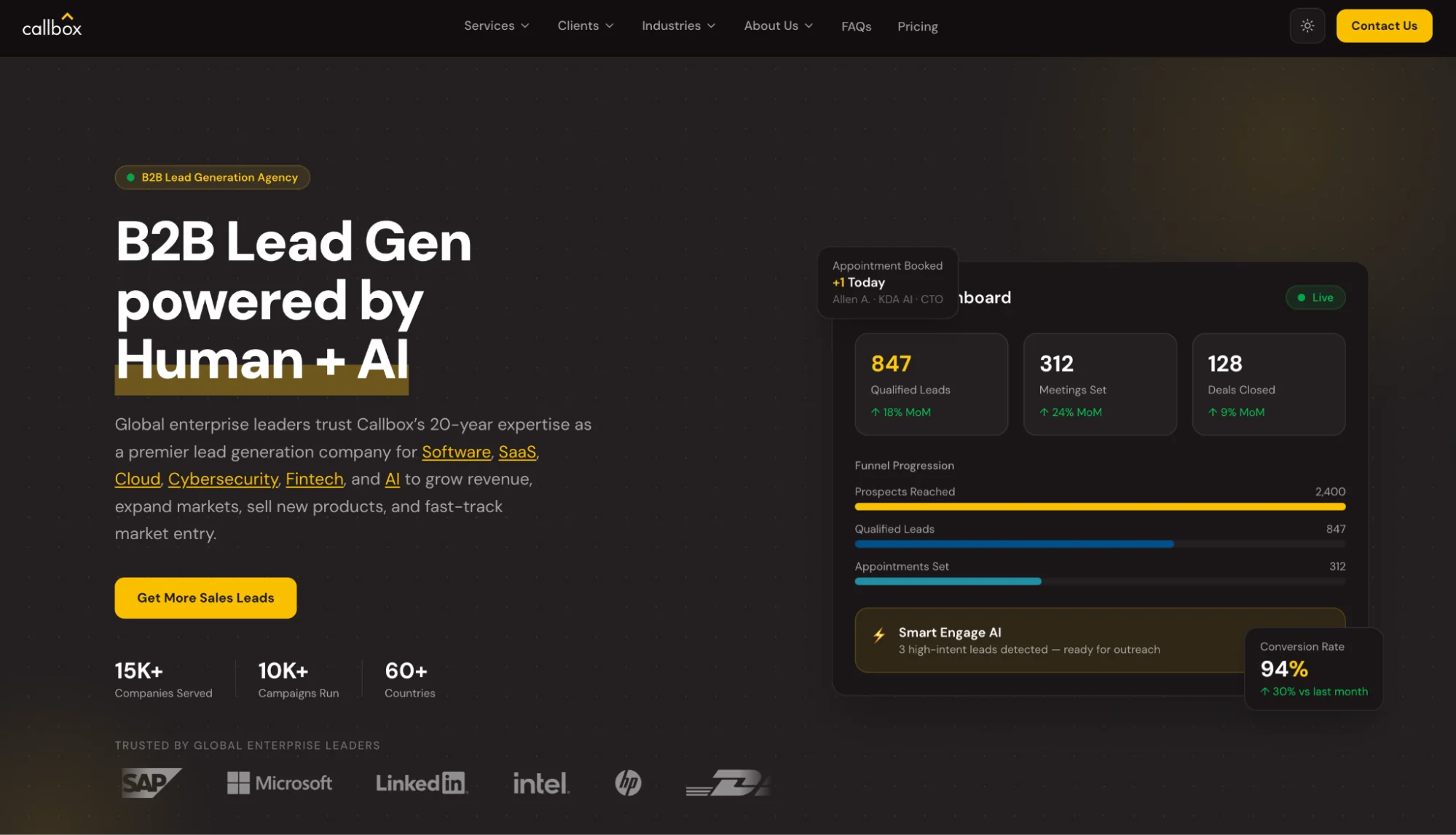
Best for: Global B2B companies that need outbound coverage across multiple regions in parallel and want one vendor coordinating calls, email, and event marketing.
Callbox is the closest thing the category has to a global default, with offices across Asia-Pacific, Europe, and the Americas.
The pitch is a single team delivering coordinated multi-touch campaigns into prospects worldwide, with live agents augmented by their own AI tooling. Pricing is custom, so expect the smallest engagement to land in the same range as the rest of this list.
Where it breaks down: The breadth that makes Callbox useful for global motions also makes it diluted for niche ones. If your ICP is a single industry in a single country, you are paying for a footprint you do not need.
3. LeadGeneration.com
Best for: Companies that want one vendor handling their entire outbound motion alongside their paid media, SEO, content, and landing-page work.
LeadGeneration.com is part of WebiMax, a digital agency that has been in business for over twenty years. The appointment setting work is one stream in a larger marketing operation that combines PPC, social ads, SEO, content marketing, landing-page optimization, and outbound under a single contract.
Where it breaks down: What you get is a generalist agency where outbound is one of seven services, and the depth of the SDR work tends to reflect that. If outbound is the channel you are trying to fix, a focused appointment setting service will get further on the same budget.
4. Concept
Best for: B2B companies with long, multi-stakeholder sales cycles in enterprise software, consulting, or professional services, where one well-researched conversation is worth a six-figure deal.
Concept positions itself as an extension of your sales team rather than an external vendor. Their reps research your ICP, write the cold outreach, have the first conversations, and hand the prospect over to your AE once interest is real. The founder's framing is "we open the door, you close the deal," and that describes the engagement fairly.
Where it breaks down: The depth that makes Concept useful for nine-month enterprise cycles makes it slow and expensive for shorter ones. If your sales cycle is 30-60 days and your AEs need volume to keep the pipeline moving, the consultative model will under-produce on raw meeting count.
5. Martal Group
Best for: B2B technology companies, especially SaaS and IT services, that want a vendor doing cold outreach against AI-detected intent signals.
Martal Group is one of the most-marketed names in the category. They staff a dedicated SDR pod for you, layered on top of their own AI Sales Engagement platform, which they sell as a way to detect which companies are actively researching your category and prioritize them in the rep's daily workload.
Where it breaks down: Martal’s platform competes with the same intent providers most enterprise sales teams already pay for, and the lift over a Cognism or 6sense subscription is not always large.
If you already have an in-house RevOps team handling intent through your CRM, paying Martal for a thin reframe of the same data is paying twice for one signal. We have written about Martal alternatives, you can find more about them.
6. Belkins
Best for: Mid-market and enterprise B2B companies that want a multi-role outsourced team doing email-led outbound at high volume, with proprietary deliverability tooling layered in.
Belkins is the largest name on this list by client count, with more than 1,000 logos, 200,000 booked meetings, and close to 5 million leads in their reported numbers.
The agency assigns each client a multi-role team that covers account management, SDR work, lead research, deliverability, and copywriting under one engagement.
They also built Folderly and Charge, which power inbox deliverability and Outlook outreach for their own campaigns.
Where it breaks down: Belkins is not the cheapest option, and the multi-role team means you pay for several specialists in parallel even on small engagements.
If your motion needs ten meetings a month rather than fifty, the cost-per-meeting math gets harder. We have written about Belkins alternatives, if you are a buyer in that bracket.
7. CIENCE
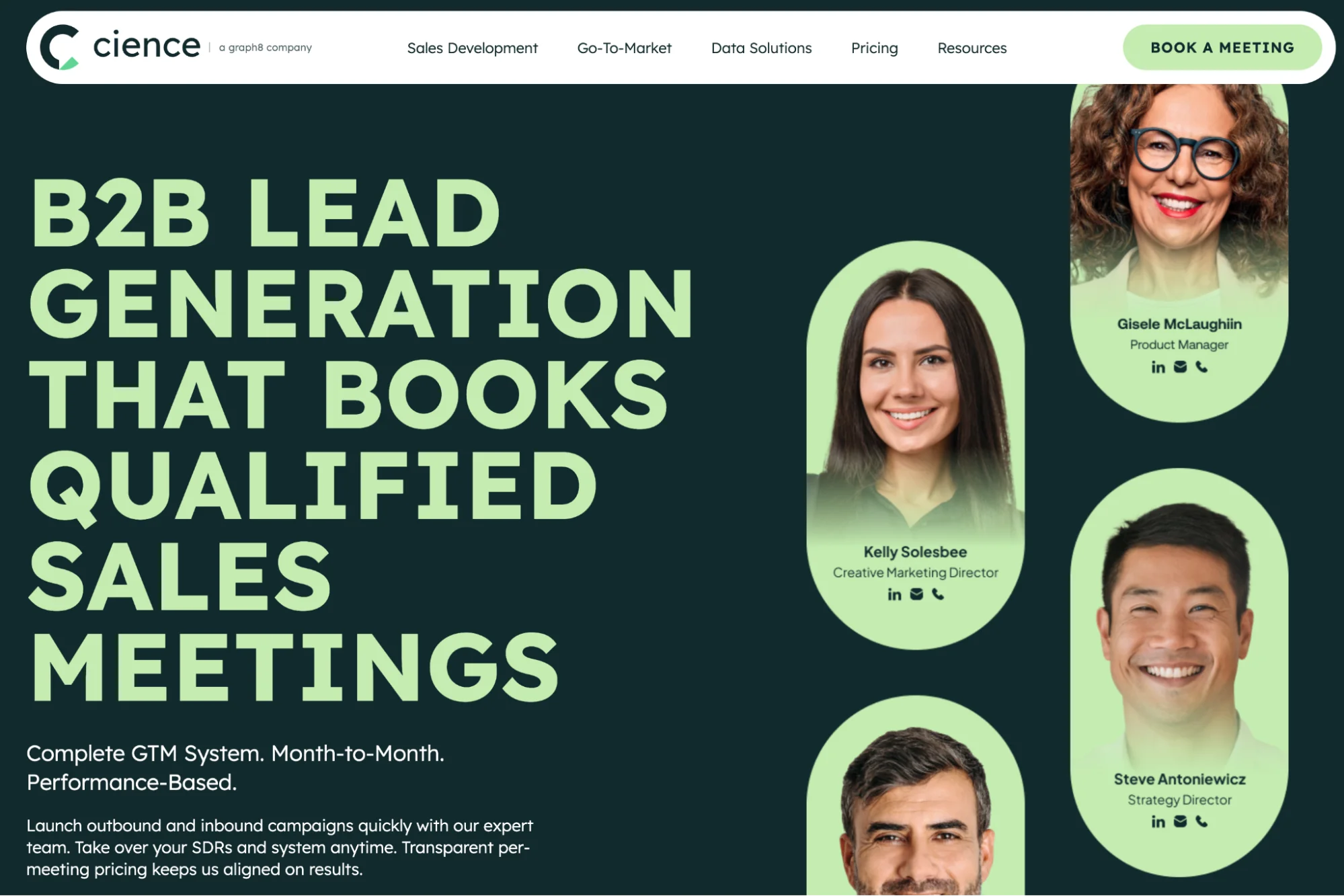
Best for: B2B companies scaling outbound to thousands of touches per month who want a managed SDR pod combined with a software platform that surfaces every campaign metric on a live dashboard.
CIENCE plays in the same league as Belkins and Martal Group, with a multi-channel motion that spans phone, email, social, web, and chat.
What sets them apart is their "GO" platform, which pulls prospect data, orchestrates sequences, and gives marketing leadership real-time visibility into the work.
Where it breaks down: Pricing is not public, and the configurations that justify the platform tend to land at the higher end of the category.
Under $7,000 a month you are likely under-using the platform. We have written about CIENCE alternatives, in case you want a similar shape at a lower commit.
8. EBQ
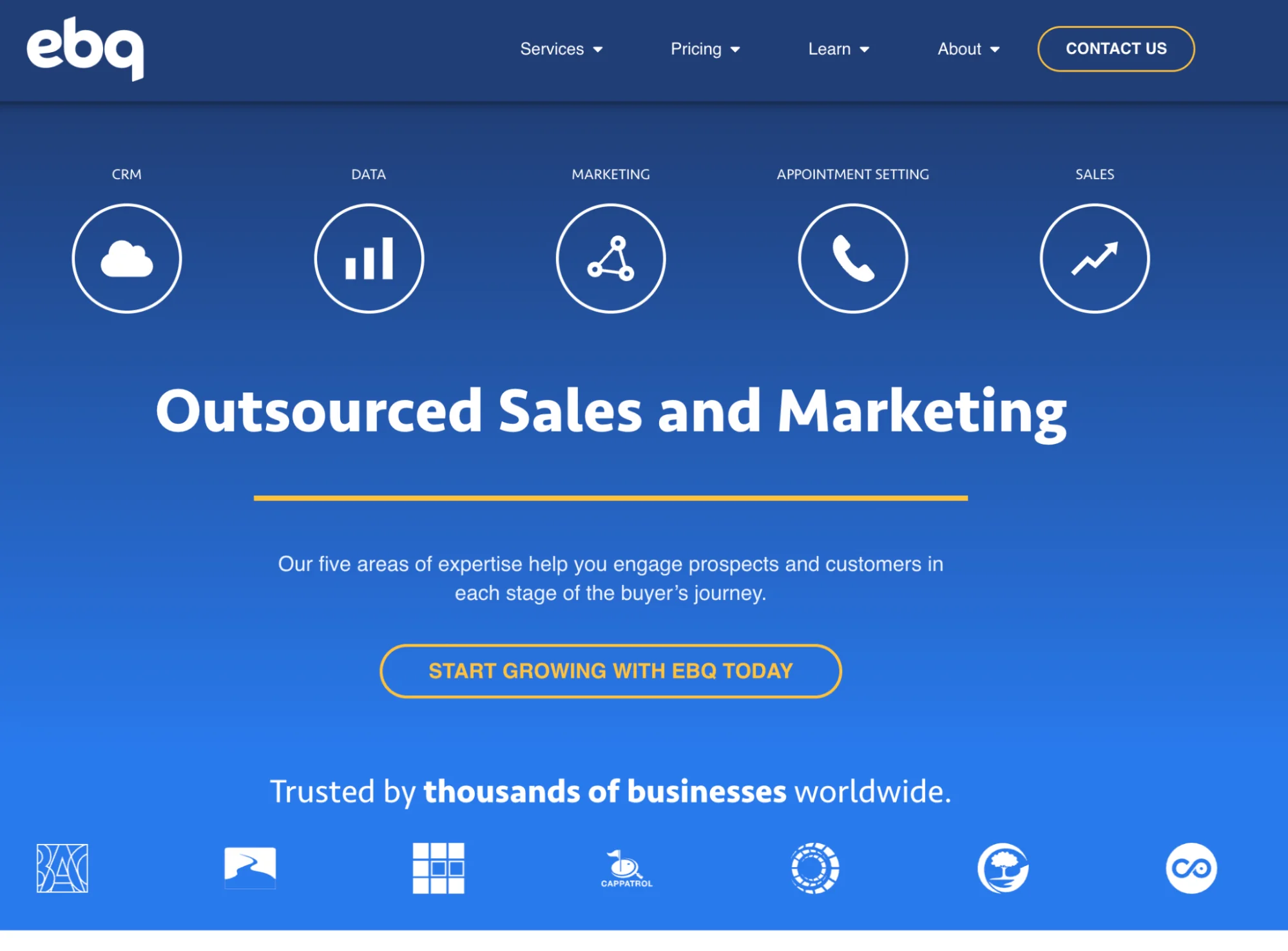
Best for: B2B companies in software, technology, healthcare, or professional services that want SDR capacity tightly embedded with their own team, sometimes physically alongside it.
EBQ offers an end-to-end sales and marketing service with appointment setting and CRM consulting as the anchor offerings.
The model centers on embedding the rep with your team rather than keeping them as a separate pod, with weekly improvement loops between the rep, the EBQ manager, and a stakeholder on your side.
Where it breaks down: The embedded model only pays off if you actually treat the rep as part of your team.
If your sales leadership is too thin to give weekly feedback, the model collapses to a more expensive version of a standard SDR pod. Pricing starts at around $5,000 per month for half-time and goes to $10,000 for full-time dedicated reps.
9. SalesHive
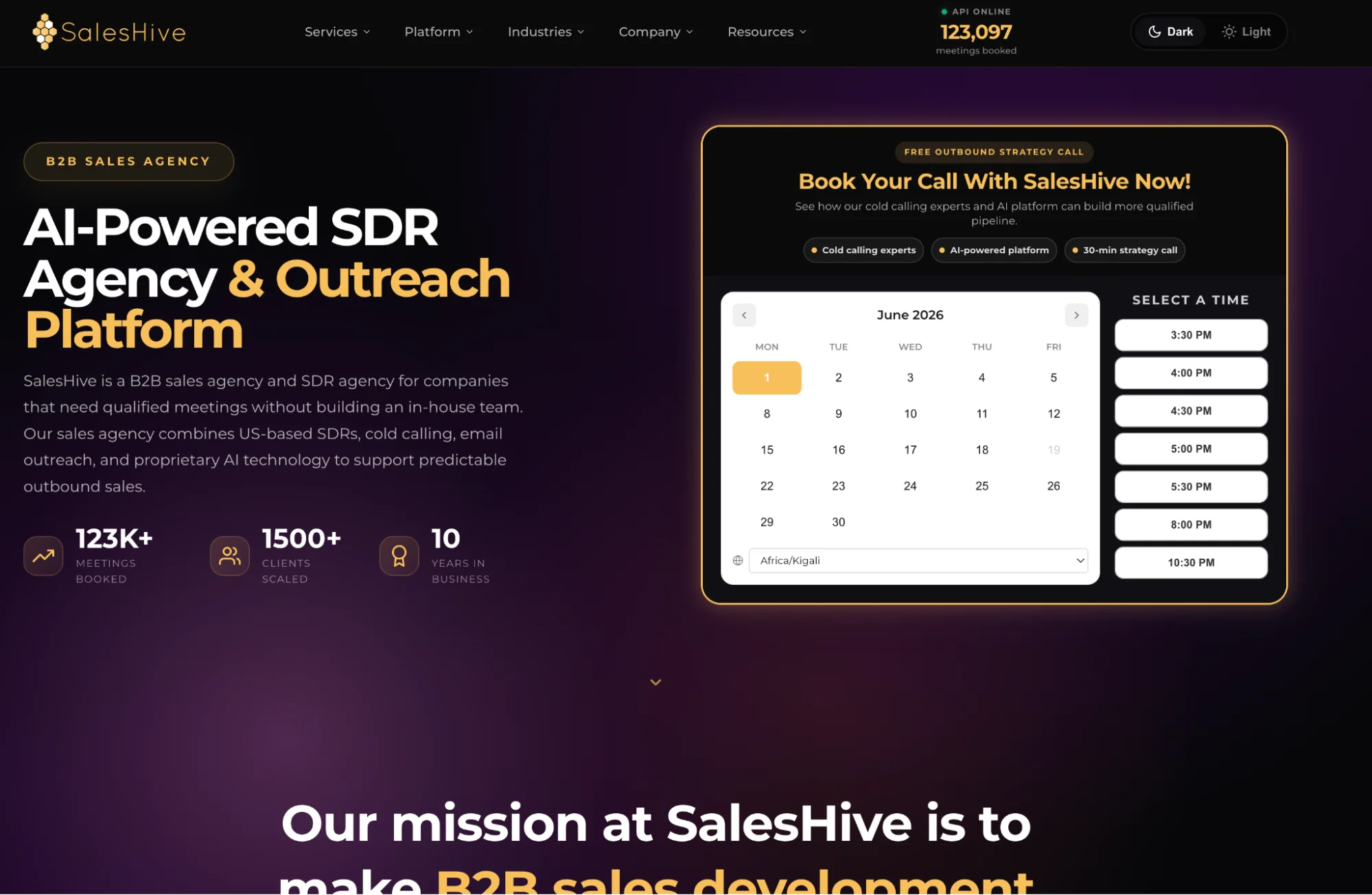
Best for: Early-stage and high-growth US-based companies that want a flexible, month-to-month outsourced SDR engagement at a flat rate, with no offshoring.
SalesHive started as a two-person operation in 2016 and now employs hundreds of US-based reps under a multi-channel SDR motion.
Their pitch is the contract structure, which is month-to-month with flat-rate pricing in a category where most competitors push twelve-month commits. The Starter plan costs around $4,000 a month, Growth $8,000, and Crush $12,000.
Where it breaks down: Here again, you get the flat-rate model that carries the same incentive problem as the broader category.
The agency hits its target when the rep hits activity numbers, while your team only wins when those numbers translate into qualified meetings. The offshore-free policy is also a constraint if your buyer is in a non-US region where local-language reps would help.
10. Leadium
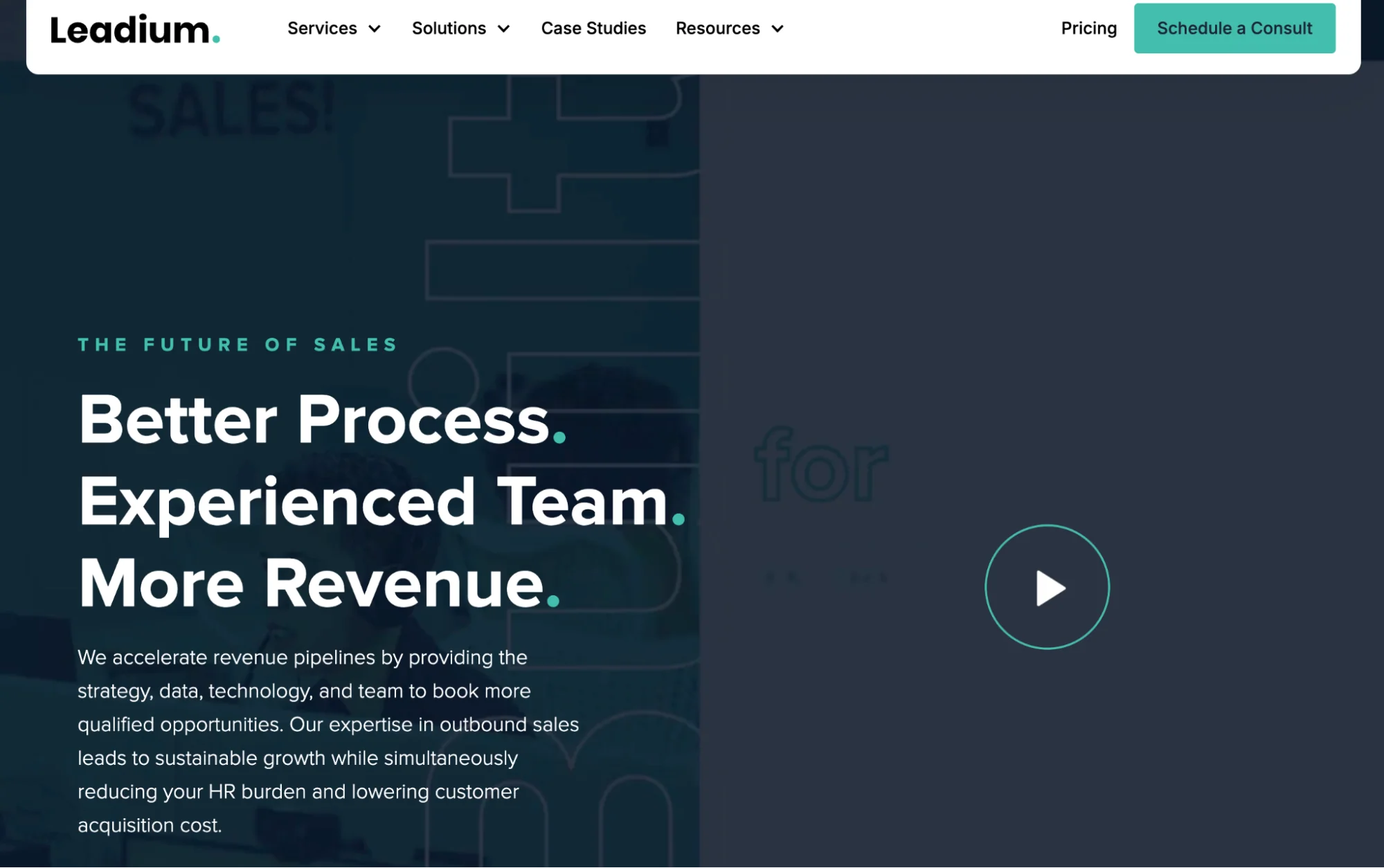
Best for: B2B technology and professional services companies that want a smaller, research-led agency that spends more time on prospect quality and less on raw outreach volume.
Leadium opened in 2015 with a positioning that has stayed consistent since.
They build quality-led campaigns with deep prospect research, using a mix of psychographic and technographic data to build the targeting layer rather than firmographic filters alone, and they tend to plug into your existing CRM and sequencer rather than insisting on their own platform.
Where it breaks down: The quality-over-quantity stance is real, but the meeting volume per month is lower than the high-volume providers above. If your AEs need fifty meetings a month, Leadium's pacing will frustrate them.
11. Operatix
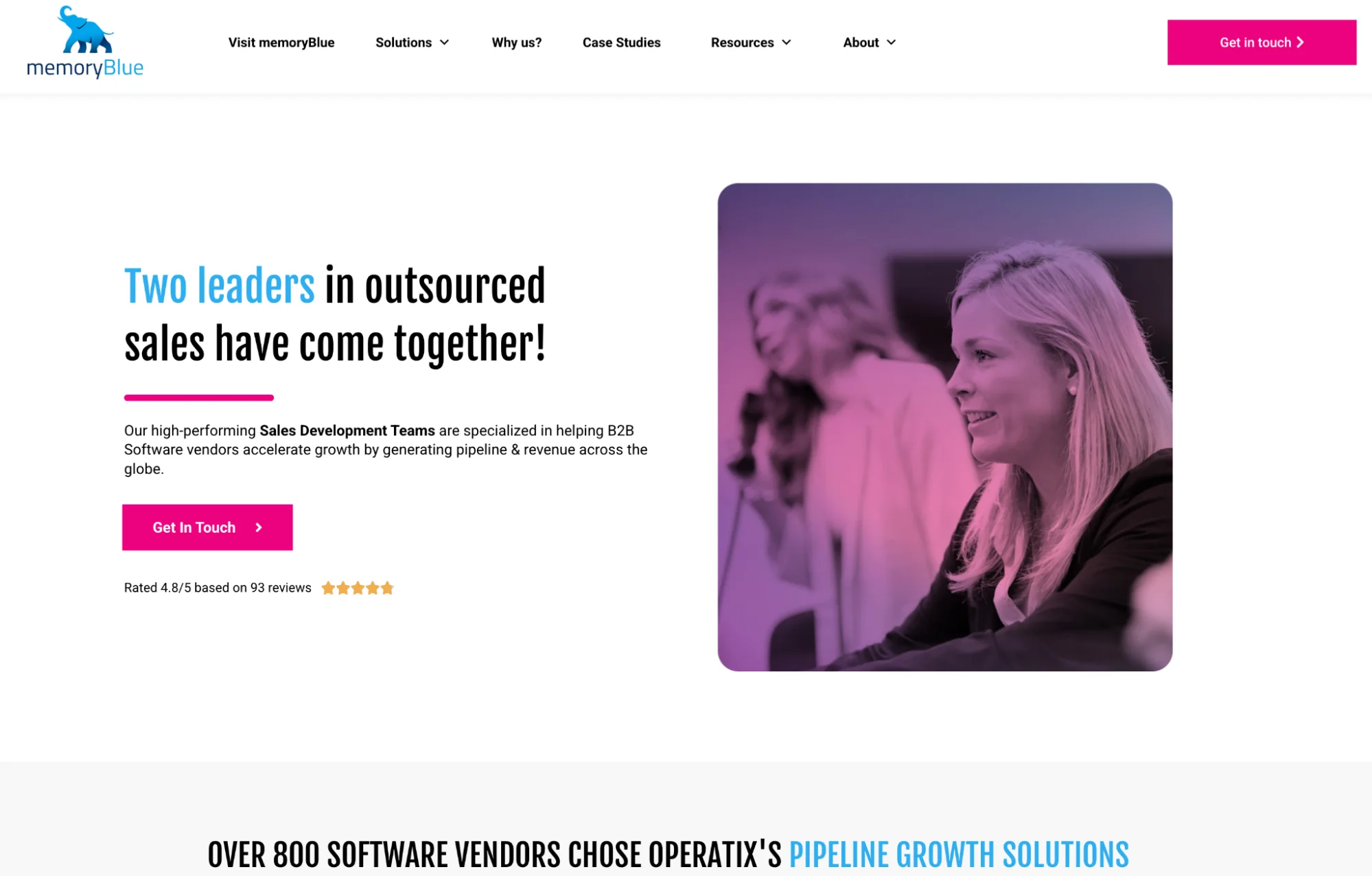
Best for: B2B software companies that need EMEA, APAC, and LATAM SDR coverage alongside North America, with native-language reps in each region.
Operatix has been providing outsourced SDR services for B2B software since 2012, with offices in the UK, Texas, California, and Singapore. memoryBlue acquired Operatix in 2023, so the combined entity now covers North America, EMEA, APAC, and LATAM through one engagement, though the Operatix brand still leads in the international markets.
Where it breaks down: Operatix is enterprise-priced, and the sweet spot is post-Series B SaaS expanding into new geographies. Early-stage companies with a single-region motion will pay for footprint they do not need.
12. Pearl Lemon Leads
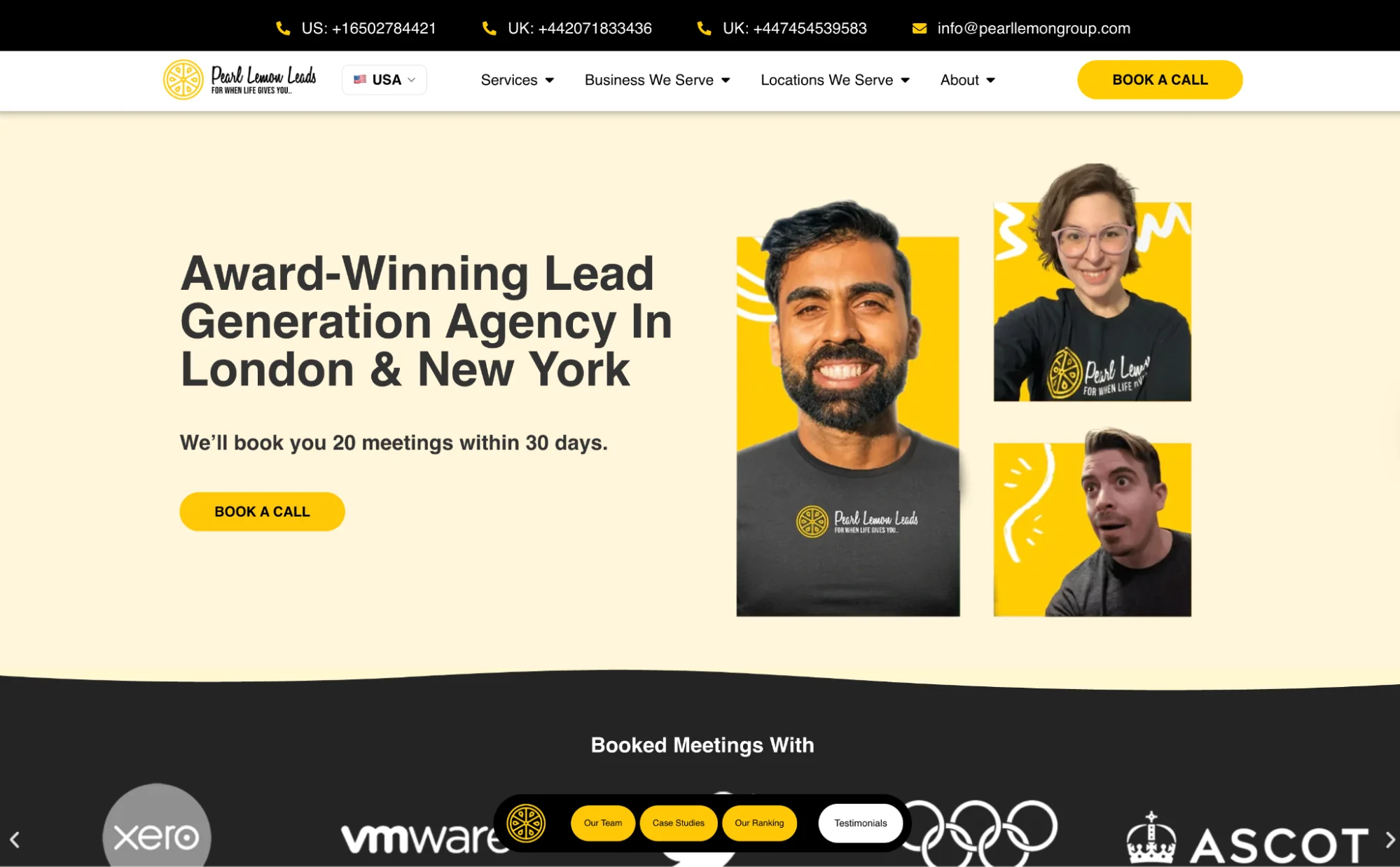
Best for: Mid-market and small-enterprise B2B companies, especially in the UK, that want a flexible LinkedIn-and-email outreach engagement without a long commitment.
Pearl Lemon Leads is one of the better-known UK appointment setting shops, founded in London in 2014, with a multi-channel motion that combines cold email, LinkedIn, and phone outreach.
The team leans towards research-first, using firmographic and technographic data to qualify accounts before any sequence goes live, and engagements are flexible enough to suit smaller B2B buyers. Reported volumes land around 8-15 meetings per month per SDR.
Where it breaks down: The team works across a wide range of industries, which is good for coverage but limits the buyer-language depth in any specific vertical. If your category is narrow and language-sensitive, a single-industry specialist will outproduce them.
13. memoryBlue
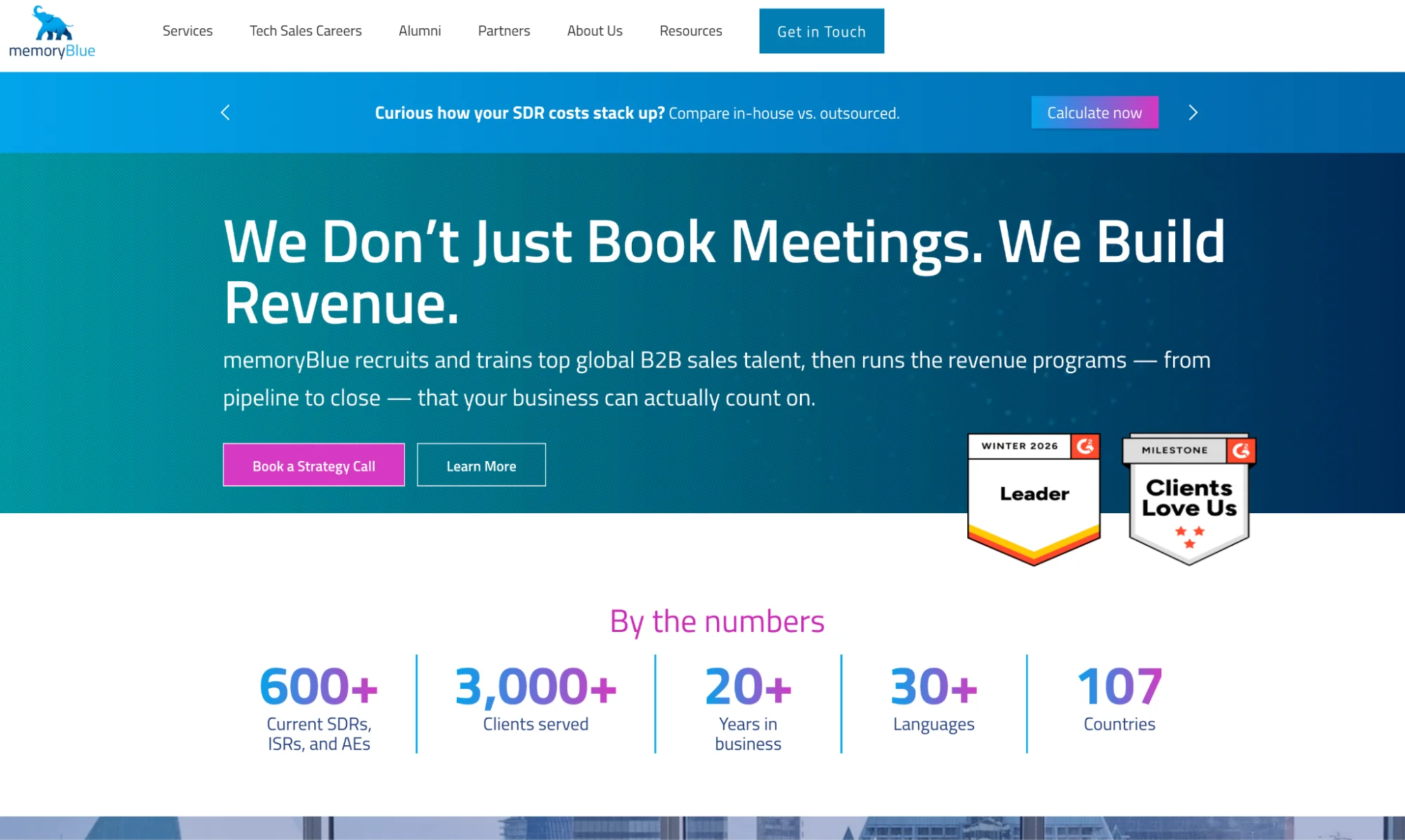
Best for: US-based B2B technology companies that want a senior SDR pod with a strong training program behind it, and a tight feedback loop with sales leadership.
memoryBlue has been in the SDR outsourcing space since 2002, and the training program inside the agency is the real differentiator.
Their reps come out of a sales-development boot camp that never stops, and the SDR-to-team-lead ratios are tighter than most competitors, which shows up in the quality of the work.
The combined memoryBlue and Operatix footprint now covers North America, EMEA, APAC, and LATAM through nine offices.
Where it breaks down: memoryBlue is not the cheapest option, and the engagement model assumes a real US-based revenue team on your side. The team's depth in non-tech B2B categories is shallower than in software and SaaS.
14. LeadGenius
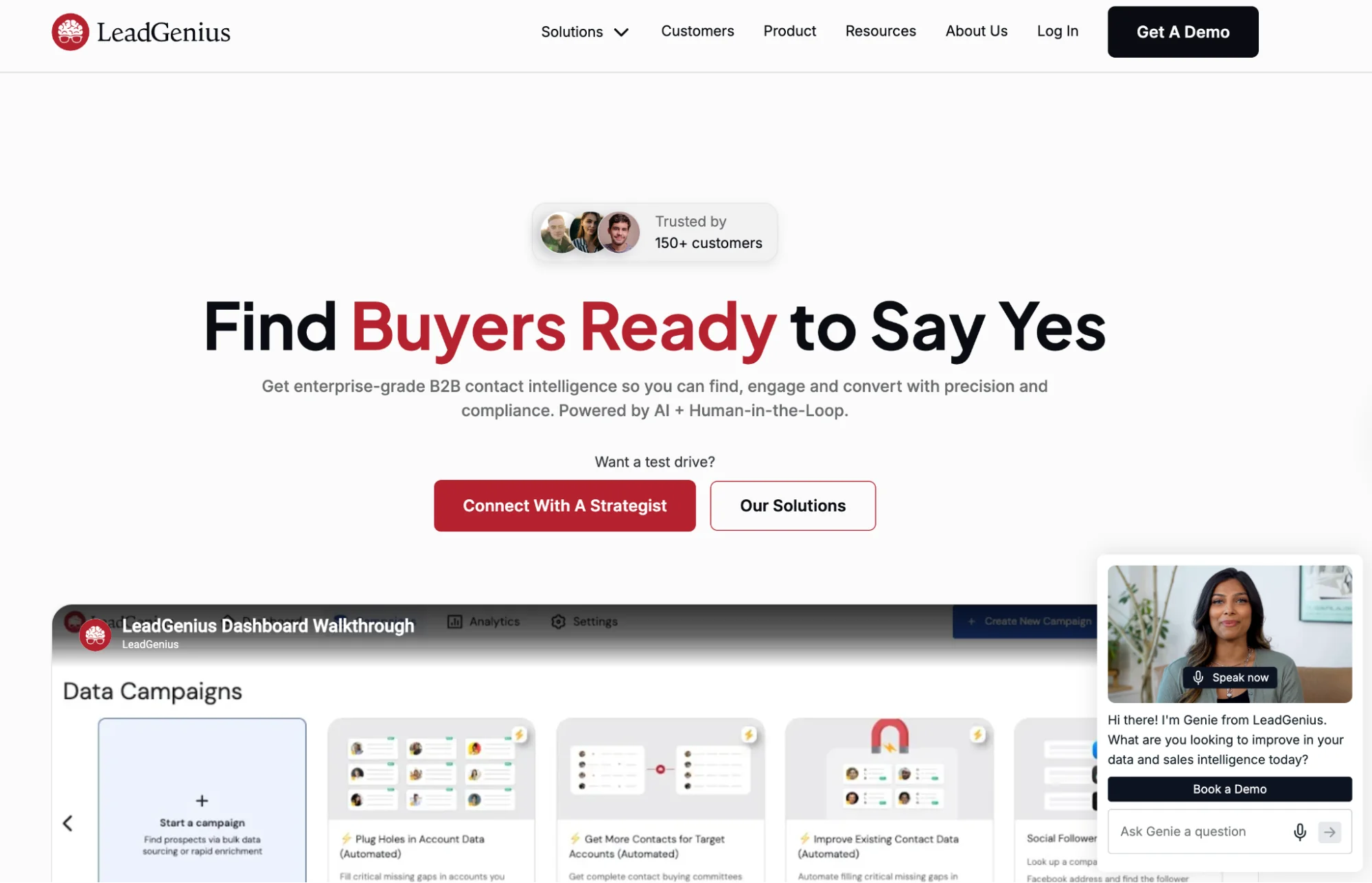
Best for: Enterprise B2B companies that want highly customized data and prospect research as the front end of an outbound motion, often combined with a managed SDR layer.
LeadGenius is closer to a data-and-research company than a pure appointment setting shop, with managed services layered on top of their AI-plus-human-in-the-loop research platform.
The fit case is an enterprise sales team that needs hand-curated prospect lists with deep firmographic and behavioral context, and that has the AE bench to actually take the meetings the data produces.
Where it breaks down: The custom-data model is built for enterprise budgets, and the smallest meaningful engagement lands at the high end of the category. If you need a generic SDR pod pushing standard sequences, this is overkill.
15. Abstrakt Marketing Group
Best for: Mid-market B2B services and manufacturing companies in the US that want a high-volume call-led outbound motion with steady pipeline output.
Abstrakt Marketing Group is a St. Louis-based agency that has been doing B2B appointment setting since 2009, with a 500-person team and a heavy emphasis on outbound calling combined with email and LinkedIn touches.
The team handles the full motion, from list building to call dialing to meeting confirmation, and they report into your CRM weekly.
Where it breaks down: The volume-led motion is a good fit for services and manufacturing buyers where dialer hours produce real conversations, but it is less well-suited to tech and SaaS where personalization and category depth matter more. The pricing also tends to lean enterprise.
16. demandDrive
Best for: US-based B2B SaaS companies that want a dedicated SDR pod embedded with marketing, with the appointment setting motion integrated into the broader funnel.
demandDrive is one of the more SaaS-focused names in the category, founded in 2011 and headquartered in Waltham, Massachusetts.
Their team plugs into your marketing automation, CRM, and sales tooling to build a motion that looks more like an extension of your in-house sales development team than a standalone vendor relationship, and they report delivering hundreds of programs producing more than 10,000 meetings a year.
Where it breaks down: demandDrive works best when there is an in-house marketing team they can integrate with, and the engagement model assumes a real revenue function already in place. For companies still building the basics, the integration overhead can be larger than the value.
17. Sopro
Best for: UK and European B2B companies that want a high-volume, email-led prospecting motion at scale, with the agency handling the deliverability and copy production.
Sopro is a UK-based agency that focuses on email-first prospecting at high volume, with the team handling list building, copy production, sending infrastructure, and inbox monitoring. They tend to fit companies that need predictable email-led top-of-funnel without owning the deliverability stack internally.
Where it breaks down: Sopro is heavy on email and lighter on phone and LinkedIn touches, so if your motion needs balanced multi-channel orchestration, this is half the picture. The volume-led approach also means messaging stays more generic than a research-heavy provider would deliver.
18. JumpCrew
Best for: Mid-market US B2B companies that want a single vendor covering marketing and sales appointment setting together, including content production and demand-gen alongside outbound.
JumpCrew is a Nashville-based agency that bundles marketing and outbound under a single engagement, with content production and demand-gen alongside SDR outreach.
Their dedicated SDR, BDR, and AE teams get white-labeled under your brand and deployed within roughly thirty days, and the agency reports more than $5B in pipeline driven for 450-plus clients since 2016.
Where it breaks down: The bundled model can hide which part of the motion is actually producing pipeline, and the trade-off is the same as LeadGeneration.com further up the list. If outbound is the channel you are trying to fix, a focused SDR provider will get further on the same budget.
19. Cleverly
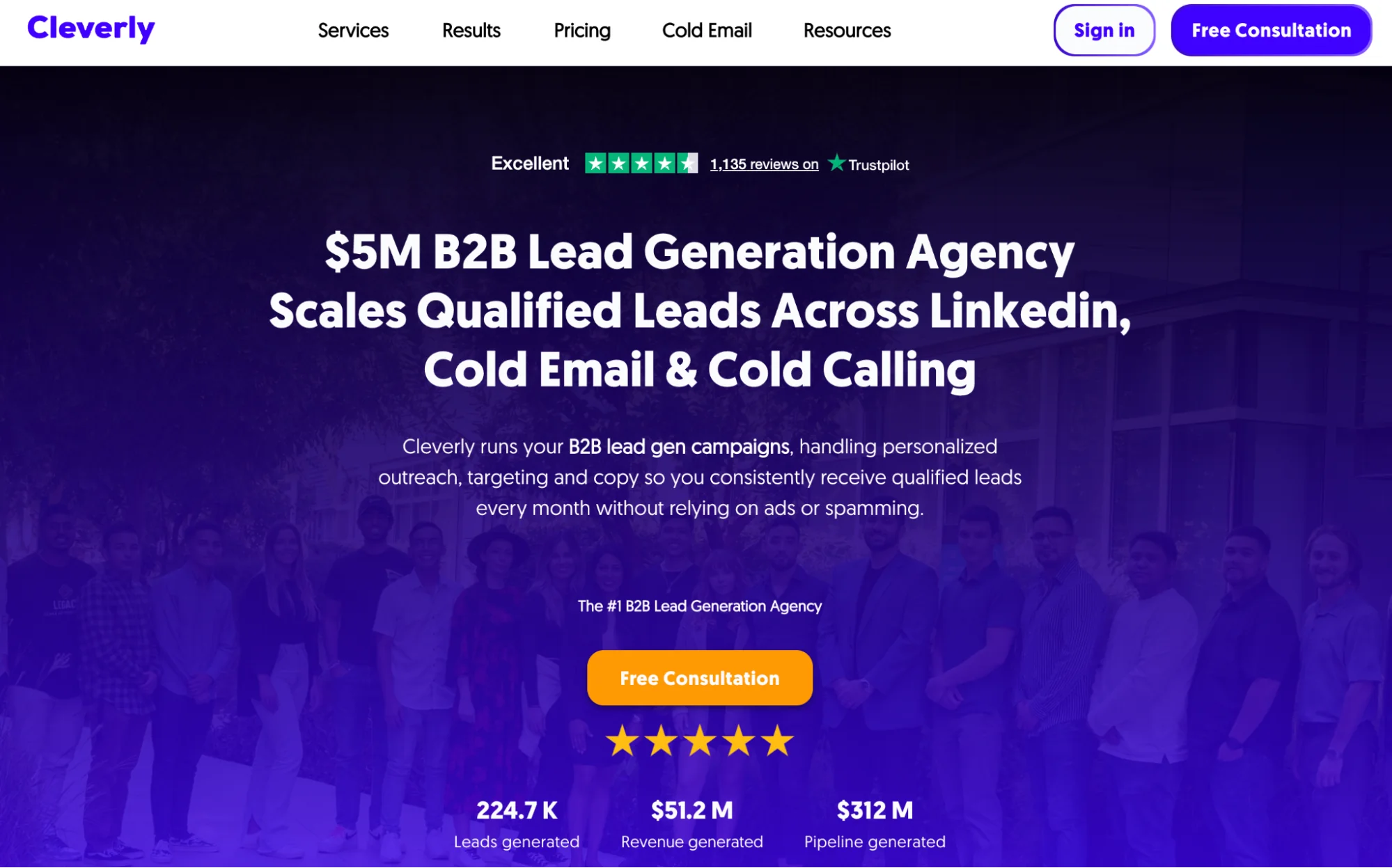
Best for: B2B founders and small teams who want a low-cost, LinkedIn-only outreach engagement to test whether LinkedIn is the right channel before committing more.
Cleverly is one of the most price-accessible options on this list, with LinkedIn-only outreach packages starting around $397 per month.
Their team handles connection requests, follow-ups, and reply management on your LinkedIn profile, and the model fits founders doing early-stage outbound on a tight budget.
Where it breaks down: Cleverly is single-channel by design, so this is not a substitute for a real multi-channel appointment setting engagement. The cheap entry point also means the personalization stays shallow compared to higher-tier providers.
20. ColdIQ
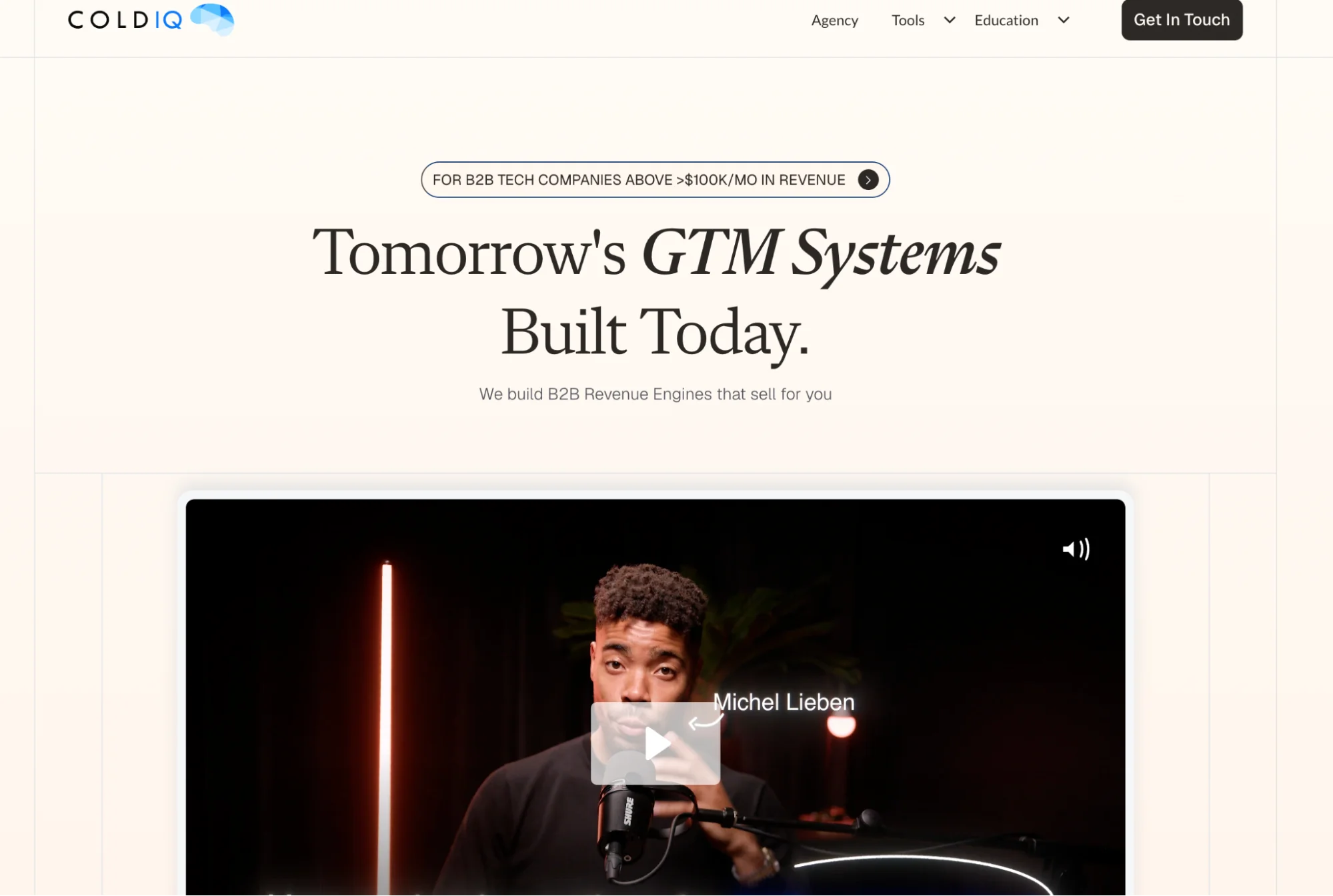
Best for: B2B companies that want a Clay-native outbound engagement delivered by a team that uses modern AI and signal-led prospecting rather than the traditional retainer-SDR model.
ColdIQ is one of the more modern names in the category, with a Clay-based motion that sends AI-personalized sequences against signal-detected accounts.
They deliver engagements directly and also teach the workflows so an in-house team can take them over, and the agency reports working with more than 300 B2B companies including three unicorns.
Where it breaks down: ColdIQ tends to take on companies above a certain revenue threshold, and the model assumes a working revenue team to absorb the meetings the system produces. If you want a vendor to fully own the outbound function with no internal team involvement, the rest of this list is a better fit.
How to evaluate any sales appointment setting service before you sign
If you have read this far and you are still leaning toward hiring one, the next step is a real evaluation conversation with the agencies on your shortlist.
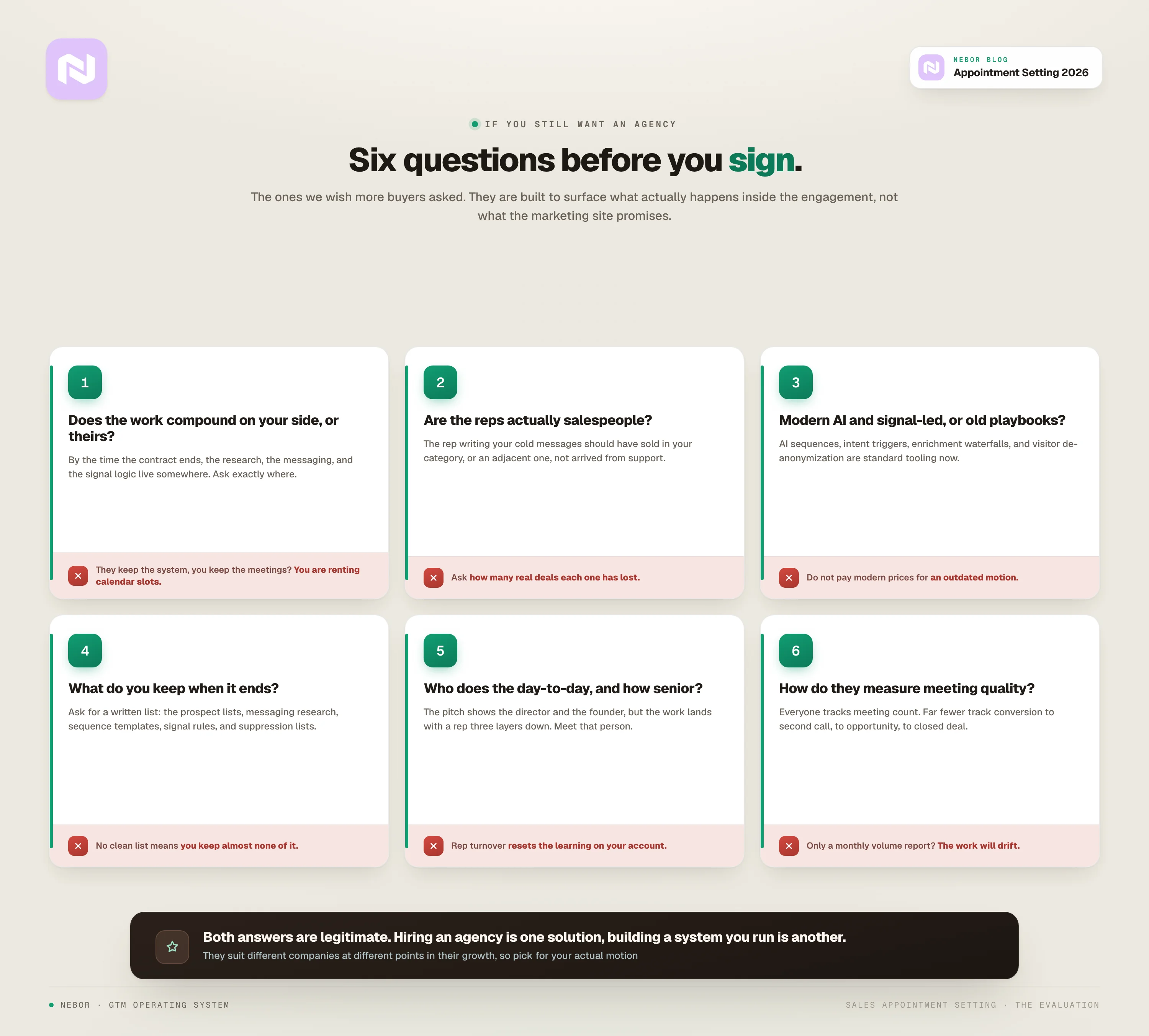
The six questions below are the ones we wish more buyers asked, mixed with the ones most evaluation guides already cover.
They are designed to surface what actually happens inside the engagement, not what the marketing site promises.
1. Will the work compound on your side, or on the agency’s
Most appointment setting engagements last nine to eighteen months, then end. The interesting question is what the work has produced by the time the engagement ends.
The meetings they booked live in your pipeline, but the research, the messaging iterations, the buyer-signal logic, the sequence templates, and the qualification rules behind those meetings live somewhere too.
Ask exactly where they live, what the agency hands over at the end of the contract, and what the next agency you hire would be starting from.
The outsourced-versus-in-house framing misses this question, but it is the one that determines whether the engagement compounds for you or for the agency.
If the answer is: the agency keeps the system and you keep the meetings; you are renting calendar slots rather than building anything you can use again.
2. Are the reps actually salespeople, or did they come up through a different path
This is the question that separates a sequence that resonates with your buyer from one that does not. The reps writing the cold messages should have sold in your category, or at least an adjacent one.
Many appointment setting agencies hire from customer support, generalist outreach, or non-sales backgrounds and then put those reps on B2B sales sequences after a two-week training.
Ask the team you are evaluating where their reps came from before joining the agency, how many actual sales calls each one has taken, and how many deals each one has lost.
3. Are they using modern AI and signal-led outbound, or leaning on proprietary playbooks
The category has changed a lot in the last two years. AI-personalized sequences against intent signals, signal-driven triggering on hiring and funding events, multi-source enrichment waterfalls, and de-anonymized website-visitor tracking are now standard tooling for any team doing outbound well.
You want to ensure they’re not stuck on an outdated motion at the same price as a modern one. Ask what their stack looks like, which Clay-style tooling they use, and how they decide which account to contact this week versus next week.
4. What do you actually walk away with when the engagement ends
This is the operational version of the first question, so get specific. Ask for a written list of the deliverables you keep when the contract ends, including the prospect lists, the messaging research, the sequence templates, the buyer-signal rules, the suppression lists, and the meeting feedback you have paid for over the course of the engagement.
If the agency cannot produce a clean list, the answer is that you do not keep most of it. That is fine if you are happy renting the function forever, and it is a real problem if you ever plan to bring it in-house.
5. Who is actually doing the work day-to-day, and how senior are they
The pitch will introduce you to the account director, the head of strategy, and maybe the founder, but the day-to-day work will land with a rep three layers down.
Ask to meet that person in the evaluation call, get an honest read on their experience level, and ask how long the agency typically keeps a rep on the same account before rotating them out.
Rep turnover inside the agency is one of the quiet killers of long engagements, because every rotation resets the learning your account has accumulated.
6. How does the agency measure meeting quality, and what changes when conversion drops
Every appointment setting agency in this category tracks meeting count. Far fewer track conversion from meeting to second call, conversion from second call to opportunity, and conversion from opportunity to closed deal.
Ask what they track, how often they review it, and what concretely changes in the campaign when the conversion rate drops.
If the only review cadence is a monthly meeting-volume report, the work will drift, because there is no feedback loop telling the agency which kinds of meetings to book more of.
Final thoughts
The twenty agencies in the list above are real, the work they do is real, and for some companies the rented-team model is genuinely the right call.
We have done our read on each one, with the caveat that any individual buyer might find one a much better or worse fit than the next based on their specific motion.
If the diagnosis at the top of the post resonated for you, the more important question is what kind of solution you actually need.
Hiring one of the twenty agencies is one solution, and building a system that takes the work off your team's plate and keeps it internal is another.
Both answers are legitimate for the right type of company. They suit different companies at different points in their growth.
If you want to talk through where your team actually stands and what the right move looks like for your specific motion, book a meeting with us.


Related Articles


By clicking Sign Up you're confirming that you agree with our Terms and Conditions.