

An enterprise AI digital-worker platform whose AI SDR Alice prospects and handles outbound, with Julian handling voice qualification by phone.
What is
11x
11x sells AI digital workers for go-to-market teams. Its main worker, Alice, is an AI SDR that prospects, sends outbound, and follows up at scale. A second worker, Julian, handles voice conversations and inbound qualification by phone, so the platform spans written and spoken channels rather than email alone, sold with a guided implementation. It is positioned as digital labor you hire, not a tool you operate. After onboarding, Alice researches accounts, builds and sends multichannel outreach, and manages replies, with targeting tuned to your ICP before any campaign launches. The buying motion is sales-led and the pricing lands at the enterprise end. This is the AI-worker model Nebor positions against, and the category has had public stumbles. 11x restated its revenue in 2025 after customer churn tied to hallucinated emails, which underlines the risk of handing an opaque agent the entire prospecting motion on an annual commitment. None of that means the technology has no use for a well-resourced team with real ops support. For most clients, the sounder move anchors lead data and routing in a system they own, then asks whether a digital worker earns a seat inside it. Renting the whole motion from one vendor is the opposite of an owned asset.
Integrations and the modern GTM stack
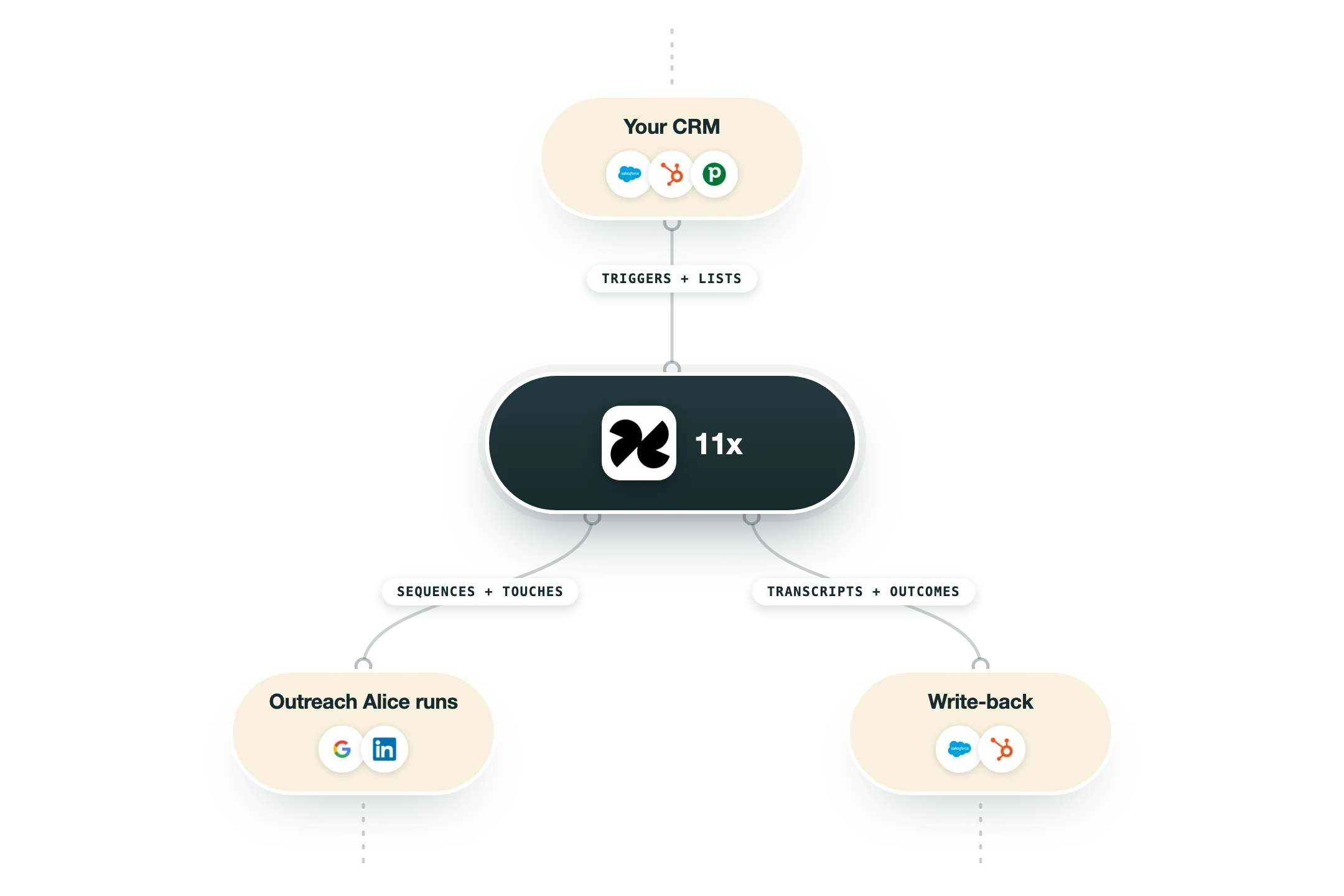
11x plugs its digital workers into the same systems a human SDR would use, starting with the CRM:
Salesforce | Native two-way sync: emails, replies and call transcripts write back to the fields you choose. |
HubSpot | Native as well, and CRM events can put the workers to work: a new lead arriving can trigger Alice's sequences or Julian's calls. |
Pipedrive and Zoho | Native connections with no middleware in between. |
Email and LinkedIn | Alice sends personalized sequences from connected inboxes and adds LinkedIn touches alongside. |
Calendar | Meeting requests route through your calendar and end as booked meetings. |
API | An API exists for connecting other CRMs, though there is no public developer portal, no webhooks and no MCP, so treat custom plans as a conversation with their team. |
Pro’s
Strong onboarding and responsive support during the implementation phase.
Targeting is solid once the ideal customer profile is clearly defined.
Julian adds real phone and voice capability beyond email, covering more of the funnel.
Enterprise-grade procurement, security, and implementation structure suit larger teams.
One digital worker can carry the prospecting load that would need several human reps.
Cons
Pricing is opaque and sales-led, with no self-serve signup or free trial.
Entry cost and minimum first-year contract are high, putting it out of reach for small teams.
Setup and configuration take meaningful time before campaigns can launch.
Messaging can read generic or robotic without careful tuning.
Analytics and usage visibility have drawn criticism from enterprise buyers.
Pricing
Alice (AI SDR)
Quote-based demo and custom quote required
Autonomous prospecting and outreach
Multichannel follow-up
ICP-tuned targeting
Julian (AI Phone)
Quote-based add-on to the platform
AI voice conversations
Inbound qualification by phone
Raises the base platform fee
Enterprise Platform
Custom annual contract, implementation fee
Multiple digital workers
Security, SSO, and procurement support
Guided onboarding and CRM integration
How it fits your stack
Alternatives




At a glance
Alice the AI SDR worker
Julian AI voice phone agent
Multichannel outbound outreach
Autonomous prospecting and follow-up
ICP-tuned targeting at setup
Guided enterprise onboarding
CRM integration
Inbound qualification by phone
Read some of our client stories
GTM Workflows
Learn how to use GTM tools in workflows
Guides and tutorials to get the most from your workflows
No items
Ready to get started?



By clicking Sign Up you're confirming that you agree with our Terms and Conditions.