
Top 12 Sales Automation Companies (The Best Agencies and Tools)

by
In this post:
We talk to a lot of salespeople. That includes sales team leaders and people leading revenue operations (RevOps). The patterns we hear are almost always the same.
Sales reps spend too much time on non-selling activities like data entry, lead enrichment, CRM updates, and email follow-ups instead of having real conversations and closing deals.
Hiring more SDRs does not scale, and it usually adds bottlenecks because most teams' workflows are still manual.
CRMs get bloated with duplicate data, half-finished records, and dead leads. Data hygiene drops. Reps stop trusting the system and shift their work into shadow processes (spreadsheets, sticky notes, side docs).
Prospecting volume drops, and outbound leads dry up because reps cannot balance personalization with volume by hand.
Most sales and revenue teams have no automated workflow for routing or qualifying inbound leads. The good ones get buried.
Teams take too long to act on a lead, and that lag costs real pipeline. Sometimes a great lead arrives when no one is online and never gets a reply.
Enterprise teams juggle too many disconnected tools across outreach platforms, data providers, CRMs, and reporting layers. The tools work in silos, and the monthly subscription bill keeps climbing.
These are a few of the patterns we see every week.
The biggest cost of all of this is simple. Your sales reps work themselves to burnout and have almost nothing to show for it.
If you are reading this, you probably recognize most of these patterns in your own team, and your leadership has stopped trusting your sales forecast.
This post covers the sales automation companies we think are worth knowing about. The list includes both software vendors and agencies you can hire to build automated lead generation for your sales process.
6 best sales automation services you can hire for automated outbound and lead generation
Here are the six agencies we think can build automated workflows that produce leads on autopilot.
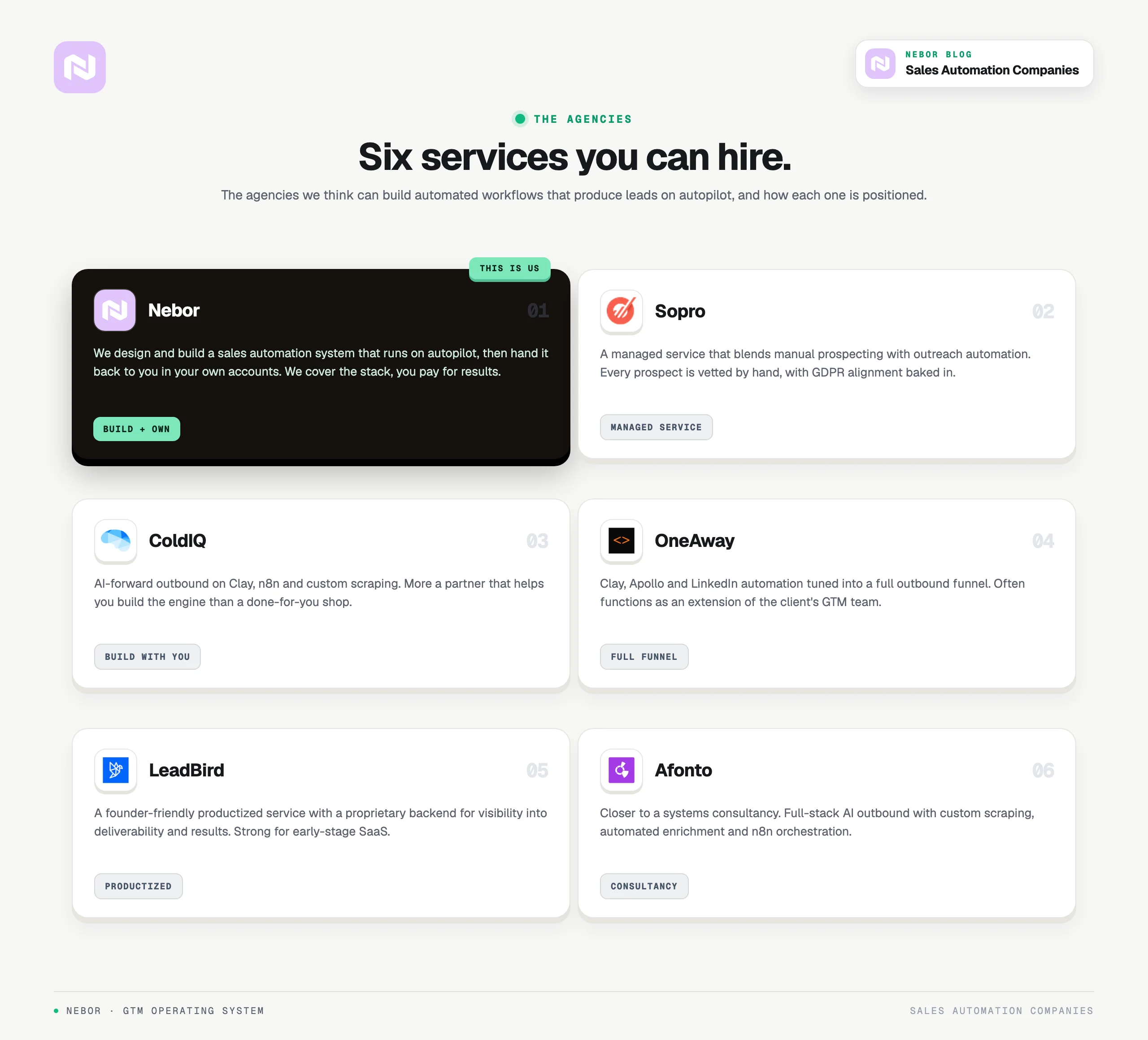
The list starts with our own, Nebor.
1. Nebor
Our work is built around one idea. We design and build a sales automation and lead generation system that works on autopilot and produces consistent results, and we hand the system back to you in your own accounts.
We used to work as sales reps for several companies. We lived inside the same broken sales process and the same operational drag that brought you to this article in the first place.
That history is why we built Nebor the way we did. We pair strategic targeting with operational depth so the work that used to consume your reps' calendar gets handled by a system instead.
Below is how we do it. We will walk you through the workflow, the thinking behind every step, and the tools that hold it all together. You will not pay for any of those tools when you work with us.
We cover the stack. You pay for results we deliver, not for tooling and not for hours of agency labor.
Before we go deeper, one note on the engine.
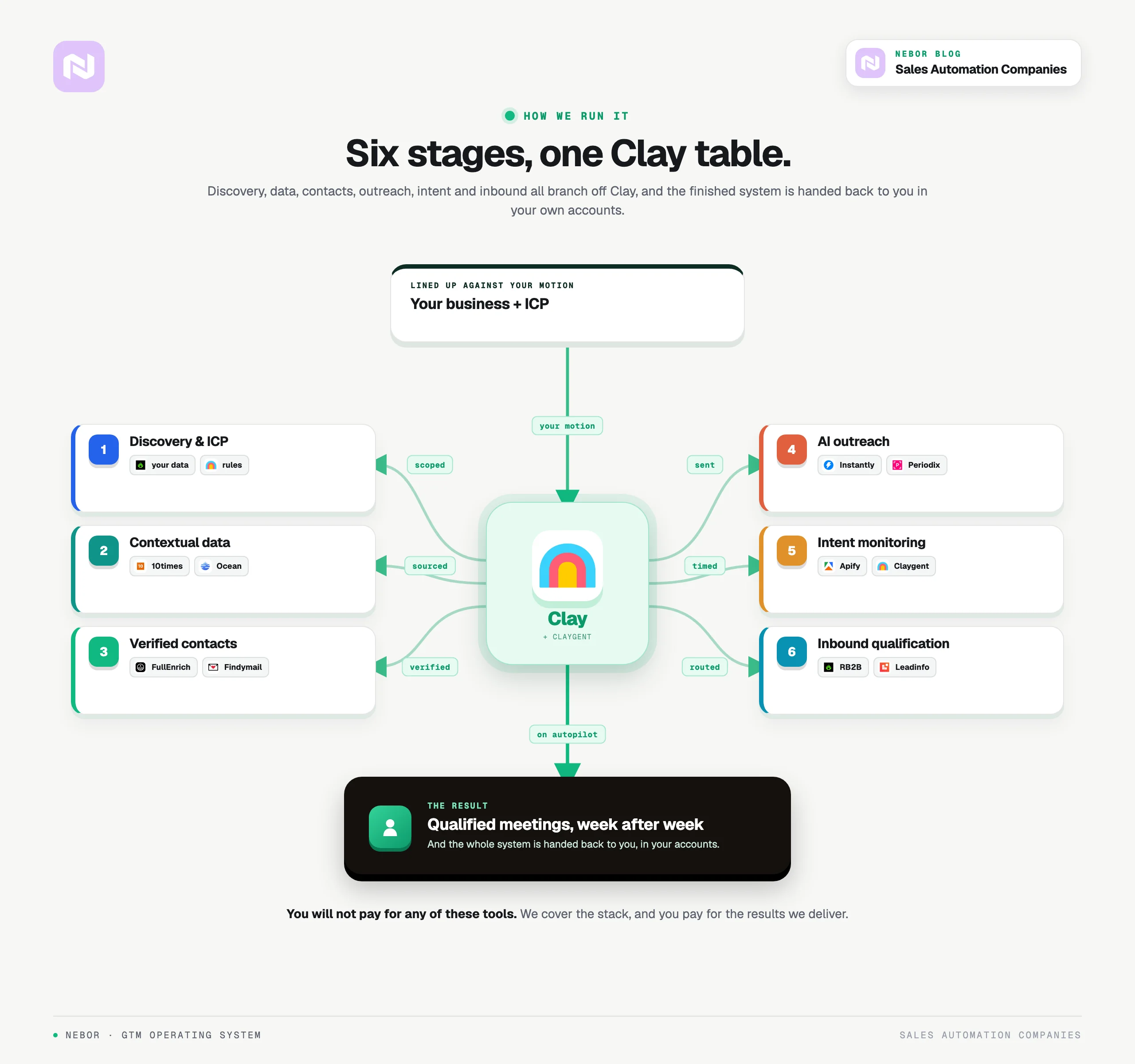
At the core of our system, we use Clay (with Claygent) as the central command center that connects every part of the outbound motion we build.
Every workflow we describe below ties back into that Clay table.
Three things Clay does for us as the spine of the system:
One place for every prospect record. Clay becomes your single source of truth, which kills the data silos that come with moving records between tools by hand.
Automated workflows that connect everything. Through native integrations or n8n, we wire up every step in the process so it happens without manual intervention.
Smart routing based on prospect behavior. The system adapts based on how prospects engage (or stay silent) with your outreach.
The result is that we never move data between systems by hand and we never lose track of where a lead is. Everything happens automatically with full visibility for us and your team.
Why Nebor is the right sales automation company for your needs (an overview of our process and how it works for you)
From the first step, we line everything up against your business and your ICP.
The groundwork is about understanding what you sell inside out and pinning down exactly who you are selling to.
We start by making sure only best-fit prospects ever enter your pipeline.
The early work is a discovery process. We are making sure you only go after the right audience.
We hold several working sessions with the people across your team who actually own the customer relationship.
Here is what those sessions cover.
We sit down with your team to understand your business and your ICP. The goal is to surface who your best customers actually are, why they buy, and what problem you are solving for them.
Most founders and revenue leaders we work with cannot define their ICP cleanly when we ask. That is where we start. We do a few rounds of discussion with the questions that pin down the actual ICP you should target.
We tap into the data you already have. Your website visitors, your LinkedIn followers, and your CRM contacts contain real signal about who is already paying attention.
We pull all of that into Clay as the central hub. Then we apply the criteria and rules from the discovery sessions on top of it, breaking down the ICP further from the people already in your orbit.
We use Zapmail.ai or ScaledMail to buy sending domains and mailboxes. We buy aged domains and look-alike domains for you, and warm them up.
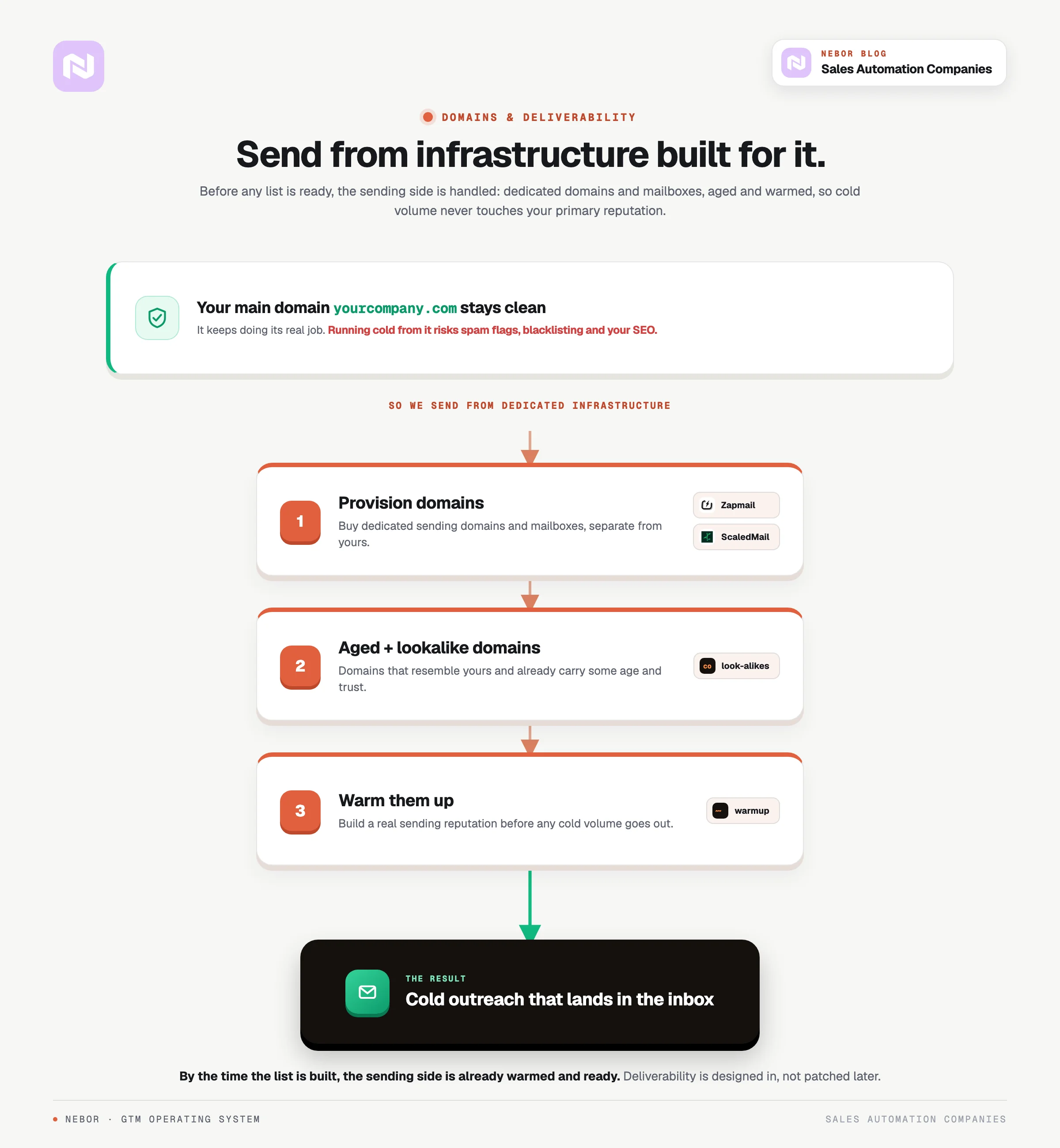
Sending cold outreach from your main domain creates serious deliverability risk, including spam flags and blacklisting that hurt your sending reputation and your SEO.
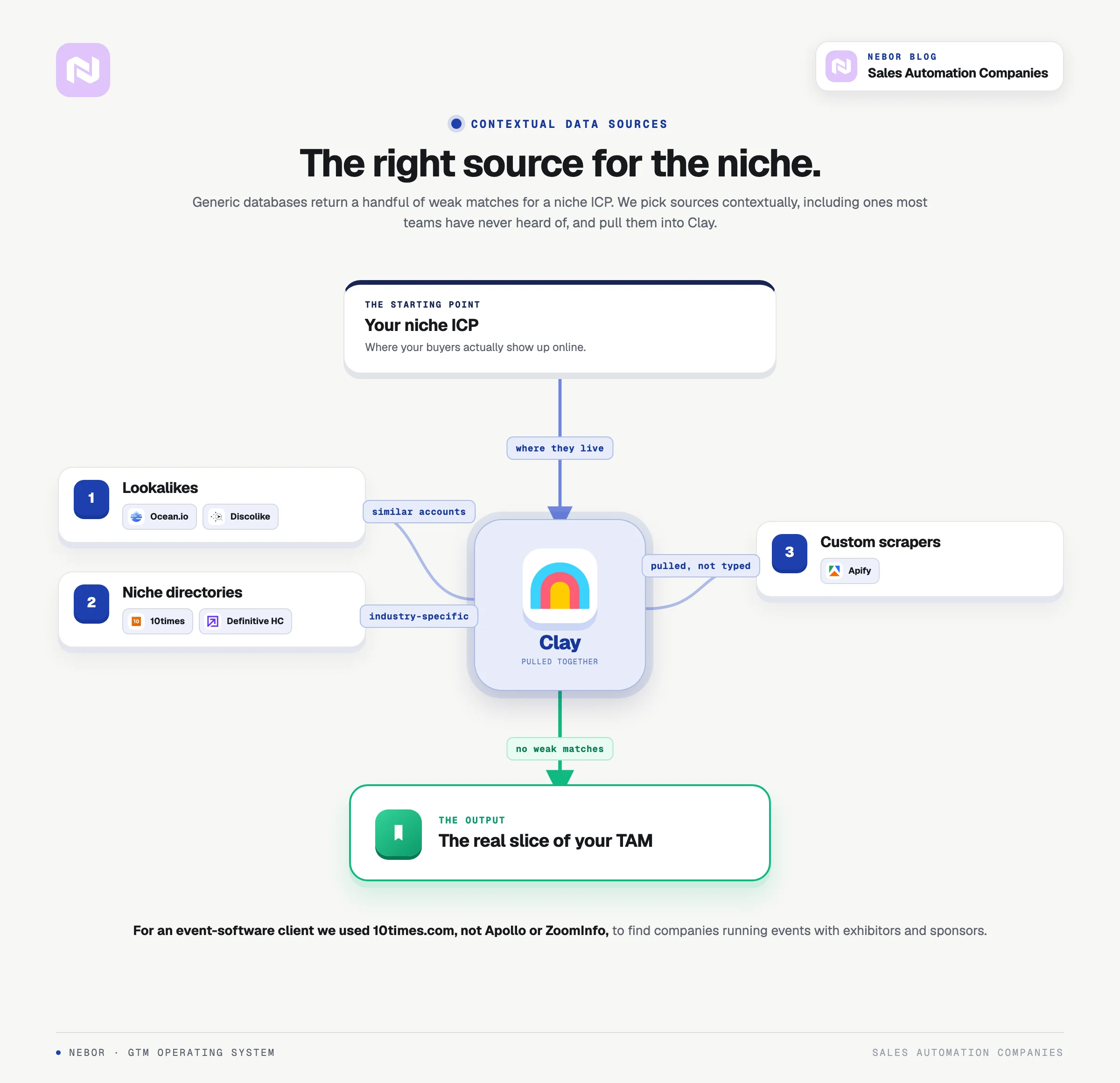
We pick data sources contextually, based on your industry and your ICP. Forget about generic databases like Apollo.io or ZoomInfo as a default.
Our outbound experience gives us specialized knowledge of data sources that fit specific industries, sources most teams have never heard of.
Most teams default to popular options here (ZoomInfo, Apollo, Lusha) by reflex. We do not. The wrong data source means going after the wrong people or missing a real chunk of your total addressable market (TAM).
Here is what that looks like in practice.
For a client selling event software, we did not use the typical sales database that everyone else uses. The ICP was companies organizing events with exhibitors and sponsors. That is a niche target, and Apollo or Lusha would only return a handful of weak matches.
So instead, we used a specialized event data source called 10times.com to find companies organizing events with exhibitors and sponsors. Then we used the Instant Data Scraper Chrome extension to pull the data so it never had to be done by hand.
When the targeting needs to get more specific, we layer in specialized tools.
To find companies that match your best customers, we use Ocean.io or Discolike to surface lookalikes with similar attributes and behaviors.
For niche industries like healthcare, we tap specialized databases like Definitive Healthcare for healthcare providers.
For every niche, we know the right tool or data source to pull from. The point is not just finding great leads. The point is putting your team's energy only on prospects likely to buy.
You connect with decision-makers who actually respond.
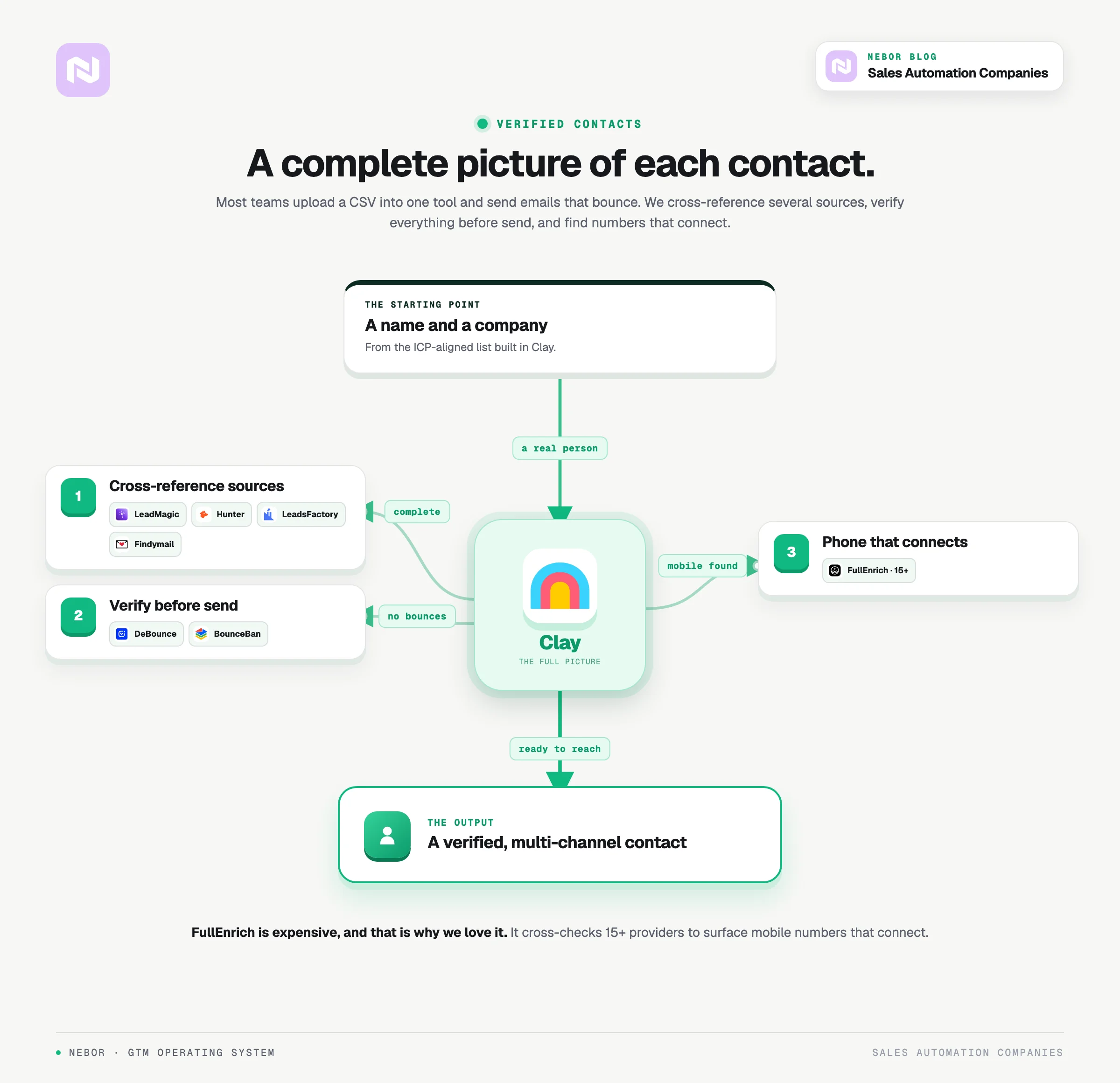
Most teams waste hours hunting for contact information by uploading CSVs into one tool. They then send emails that bounce, land in spam, or never get read.
At Nebor, we build contact lists that work, with verified information across multiple channels.
Three things make our approach different.
We cross-reference multiple data sources. A combination of LeadMagic, Hunter.io, LeadsFactory.io, Findymail, and FullEnrich (and a few more depending on the case) gives us a complete picture of each contact.
We verify everything before you hit send. We combine email verification tools like DeBounce and BounceBan to check each address and flag risky contacts before they touch your sending reputation.
We find phone numbers that actually work. FullEnrich is expensive, and that is the reason we love it. It cross-checks data from 15+ providers to surface mobile numbers that connect you directly to decision-makers.
By this point, your sending domains are warmed up and your ICP-aligned lead list is built. We have not done anything by hand outside of buying the domains and warming them.
We make all of those tools work together inside Clay through native integrations or through n8n. We will go deeper on the orchestration in a minute.
You get scalable outreach that does not sound generic or robotic.
Generic templates get ignored. Personalizing every message by hand takes too long. Both halves of that problem hit reps at the same time.
We solved it with a workflow that combines OpenAI's ChatGPT, Anthropic's Claude.ai, Instantly.ai, and HeyReach.io into a personalized outreach system that works with almost no manual input.
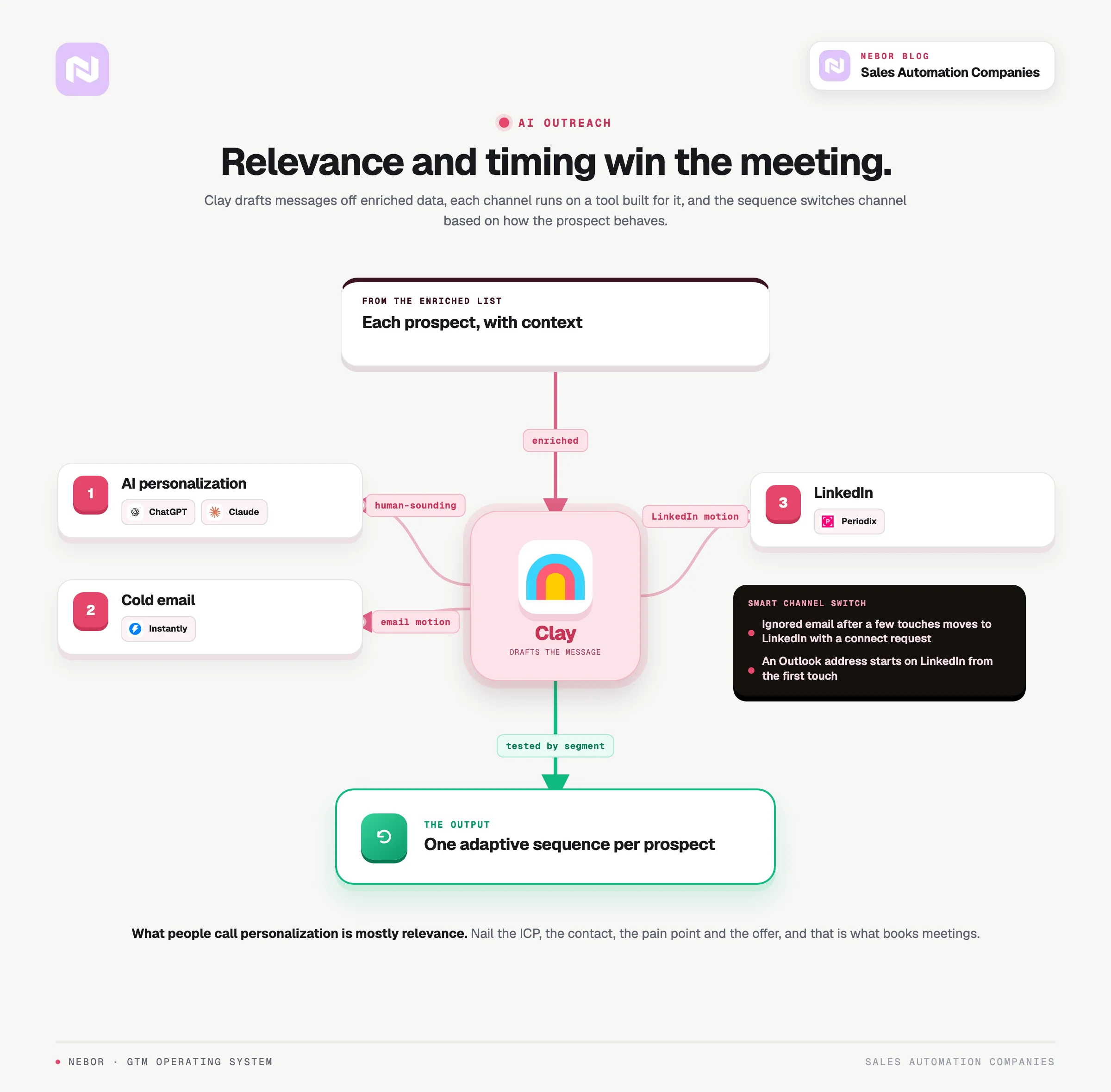
A note on how we think about personalization. What people call personalization is mostly just relevance. Relevance and timing are the two things that win.
If you nail the ICP, the contact, the pain point, and the offer, that is what books meetings. Heavy first-line personalization rarely moves the number on top of that foundation.
The offer matters as much as anything. We have worked with companies whose offer was so strong it needed almost no personalization. We have also worked with offers so weak that no amount of personalization would close the gap.
Inside that foundation, here is what makes the workflow work.
Messages that sound human. We use AI to draft personalized outreach based on each prospect's industry, role, and known pain points, with all of that data already enriched in Clay.
We test by segment, which means we generate different email subject lines, intro lines, calls to action, multi-step sequences, and follow-ups that reference earlier messages or objections.
After the first few rounds, when we know which segment and which messages convert, we move into batch automation.
Different motions for different channels. Instead of pushing a one-size-fits-all sequence across both, we use Instantly for email and Periodix for LinkedIn so each channel gets a tool built for it.
Inside Instantly, we send automated cold email sequences across multiple domains and inboxes, personalize emails with merge tags and AI, and track clicks, replies, bounces, and interested leads (we skip open tracking because it hurts deliverability).
Instantly also handles inbox rotation and warmup, and its dynamic customization lets us fork sequences based on enriched prospect data.
Periodix gives us the same workflow on LinkedIn that Instantly gives us on email.
Smart channel-switching. When a prospect ignores email after a few touches, the system kicks off a LinkedIn sequence and sends them a connection request automatically.
The system also detects when a prospect uses Outlook (where deliverability is weaker) and switches that contact to LinkedIn from the start.
Here is a snapshot of the full workflow with every tool wired together.
You catch prospects right when they need your solution through our intent and buying-signal monitoring.
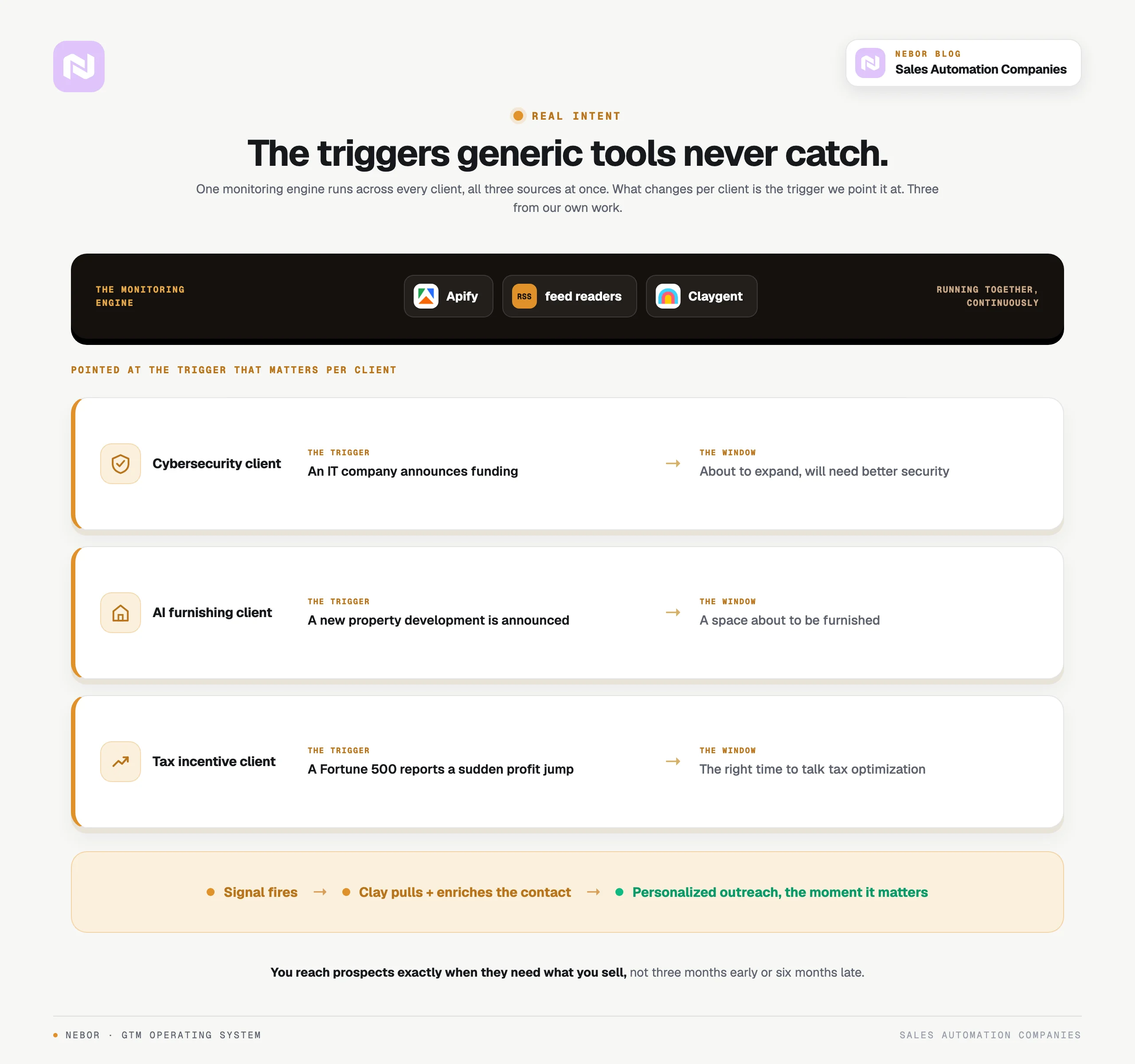
Beyond the initial campaigns, we build automated workflows that watch for buying signals and reach out to the right contacts the moment a signal appears.
Most teams claim to do intent, and most teams do it badly. They lean on tools like ZoomInfo or Cognism for surface-level signals (article views, website visits) and call that intent.
Article views are not intent. They tell you almost nothing about what the person is thinking or what they want to do next.
We take a different approach. We watch for specific events that show a prospect is actually ready to buy or is about to need what you sell.
Here is how it works.
We set custom triggers based on your business. We work with you to identify the non-obvious events that signal a buying window, the ones generic intent tools will never catch.
We keep automated monitoring across multiple sources. Once we agree on the trigger events, we use tools like PhantomBuster and Apify to scan for and pull those signals continuously, with no manual effort.
The prospect gets contacted when the signal appears. When a buying signal hits, the system pulls the prospect into our Clay table, enriches the contact (LeadMagic and the rest of the stack), and starts personalized outreach.
Three real examples of the thinking behind this.
For a cybersecurity client, we monitor funding announcements for IT companies through Apify. A funded IT company is about to expand the team and will need better security. We catch that signal, find the right person, and reach out.
For a client selling AI-powered furnishing solutions, we watch RSS feeds tracking property development announcements in their industry's trade press.
For an enterprise tax incentive client, we watch for Fortune 500 companies reporting sudden profit increases. That is the right window to talk about tax optimization, so we reach out then.
The whole point is that you contact prospects at the moment they actually need what you sell, not three months early or six months late.
We turn website visitors and social followers into sales conversations through automated inbound qualification and routing.
Your marketing engine (your site, your blog, your social) or the demand generation campaigns we build generate real awareness. It also creates a pile of inefficiency for your sales team.
The marketing layer builds brand and education. Your reps then face four problems trying to qualify the people that engagement attracts.
Timing uncertainty. You cannot tell when a prospect is ready to buy. Reps reach out too early or too late and miss either way.
Attention competition. The leads who are ready to act will not always come back to your site a second time.
Qualification complexity. Engaging with your content does not mean someone fits your ICP. Reps still spend time sorting, finding contacts, and reaching out to people who will never close.
Competitive vulnerability. Competitors with better detection systems will catch buying signals before you and intercept the prospect first.
The underlying problem is that your reps are forced to sift through everyone who downloads a piece of content or engages on social. That kills their time and produces outreach at the wrong moment.
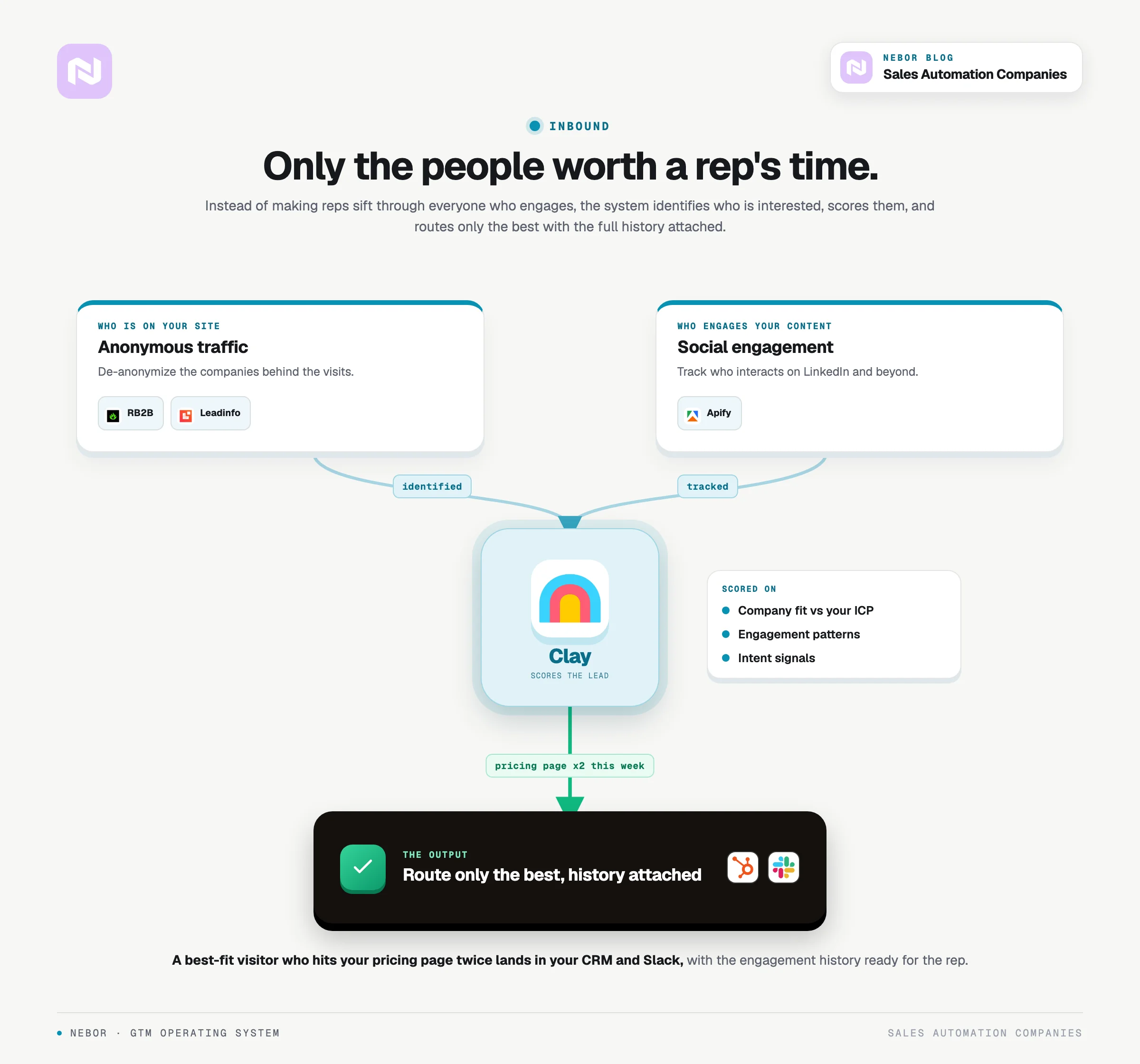
So we built an automated system that qualifies inbound interest and routes only the people who fit your ICP and look ready for a sales conversation.
Here is how it works.
We identify who is on your site. With RB2B or Leadinfo, we track and build a profile of the companies behind anonymous traffic.
We track engagement across platforms. We watch who is interacting with your content on LinkedIn and other channels with PhantomBuster.
We score leads, then route only the best ones. Our system scores leads on company fit, engagement patterns, and intent signals.
If someone fits the ICP and visits your pricing page twice in the same week, the system routes them straight into your CRM and Slack with the full engagement history attached, so the rep can pick up the conversation and close it.
Your reps only talk to prospects worth their time, and they walk in with the context already loaded.
2. Sopro
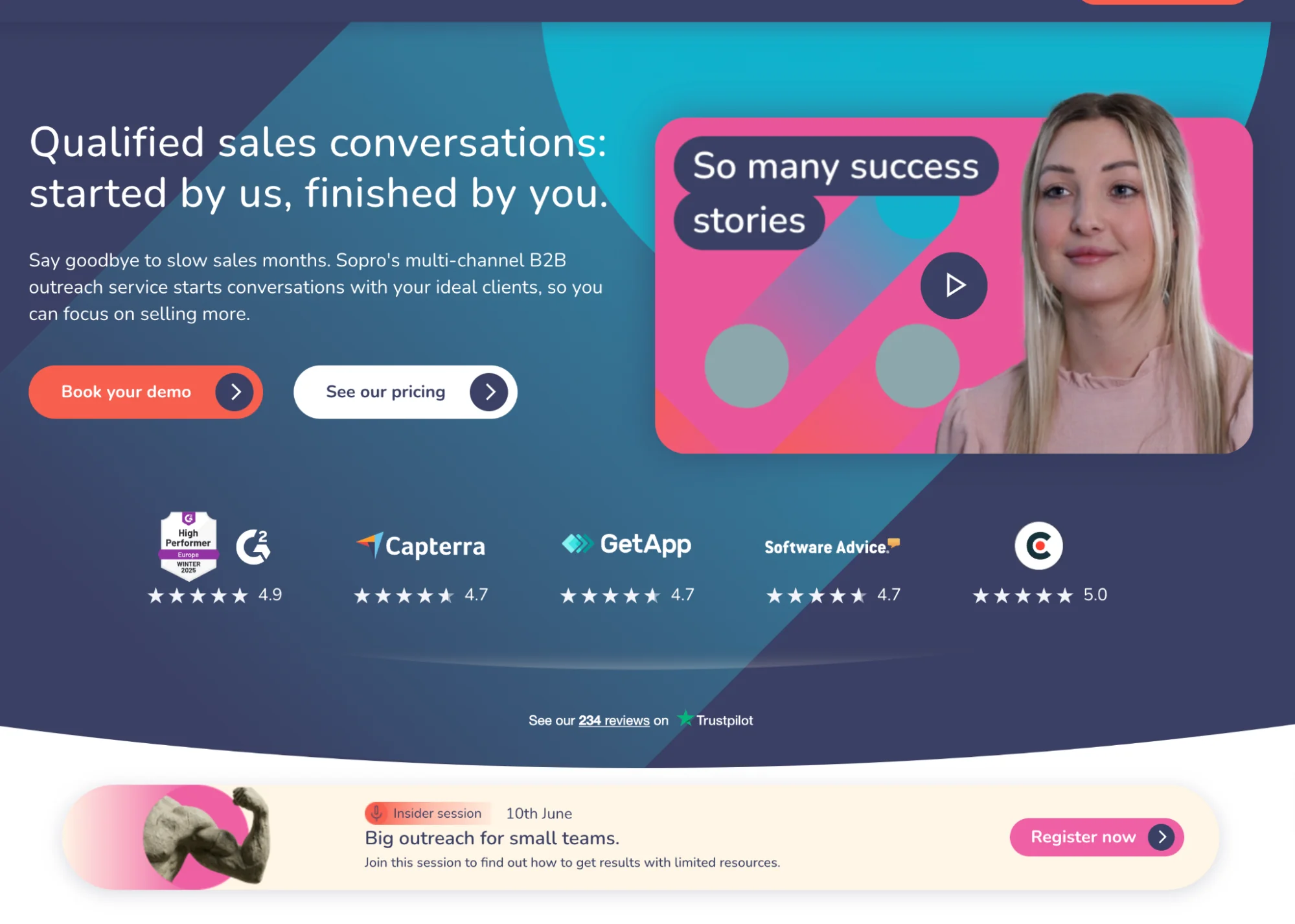
Sopro blends manual sales work with scalable automation, and that is what makes them an interesting comparison point for the rest of this list.
Instead of going fully AI or fully programmatic, they double down on a managed-service model. They combine manual prospecting with outreach automation and deliver leads directly to sales teams.
What sets Sopro apart is the emphasis on compliance and transparency. According to their site, every prospect gets researched and vetted by hand before contact, and GDPR alignment is baked into the workflow.
Compared to us, it is a more traditional approach, and for companies that are nervous about full automation, Sopro is a high-touch alternative with a strong operational backbone.
3. ColdIQ
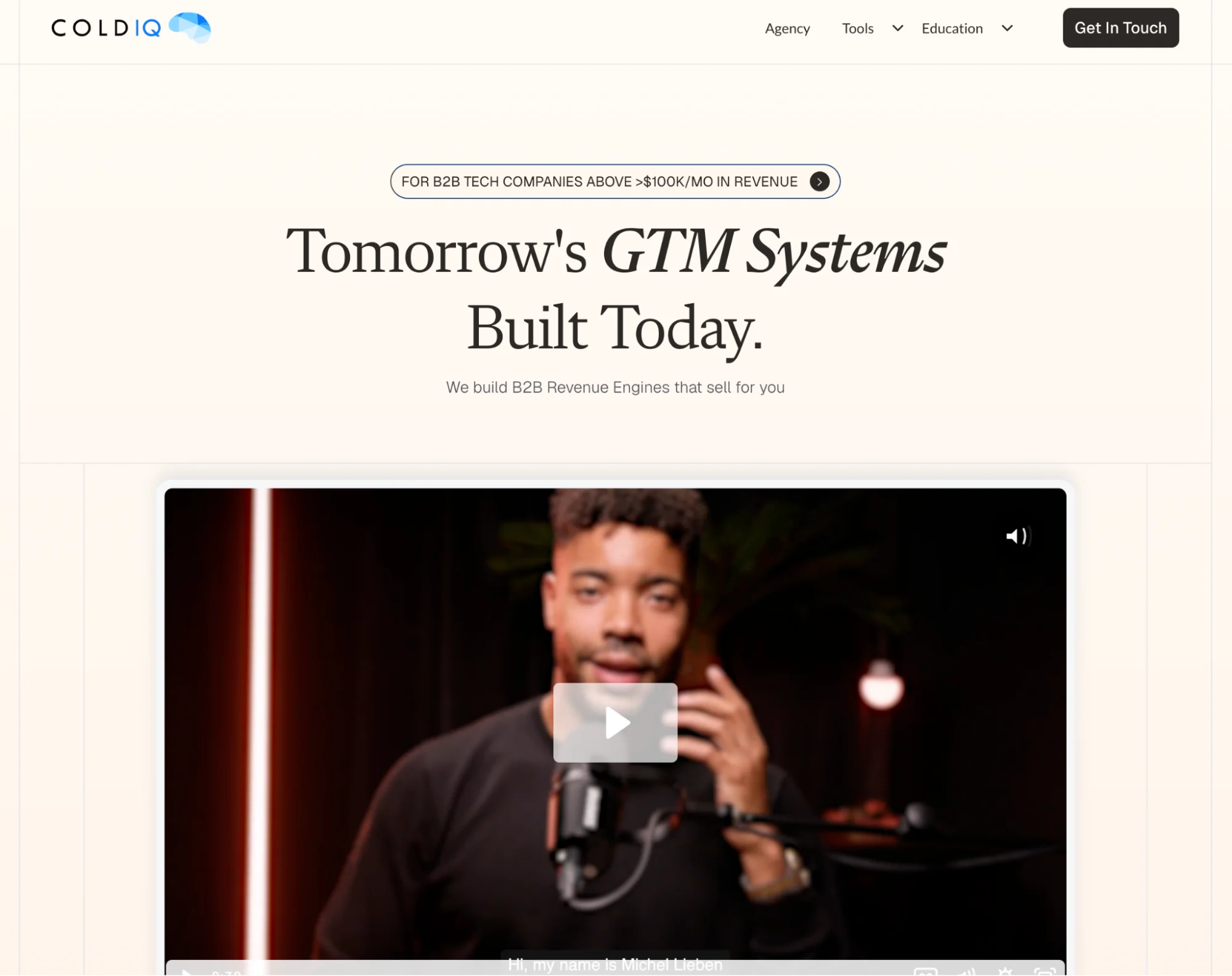
ColdIQ takes a more modern, AI-forward approach to outbound.
They mostly work with startups and B2B companies, and they specialize in building sales systems that combine strategic targeting, advanced enrichment, and multi-channel outreach across email, LinkedIn, video, and beyond.
ColdIQ also uses Clay, AI agents, n8n, and custom scraping and enrichment workflows, the same building blocks we use at Nebor.
The main difference between our service and theirs is positioning. ColdIQ is less of a done-for-you agency and more of a partner that helps you build sustainable, intelligent outbound engines.
They will not own a meetings number or a leads-generated number for you. You pay them to build systems with you. They also sell a course if that fits better than the consulting engagement.
4. OneAway
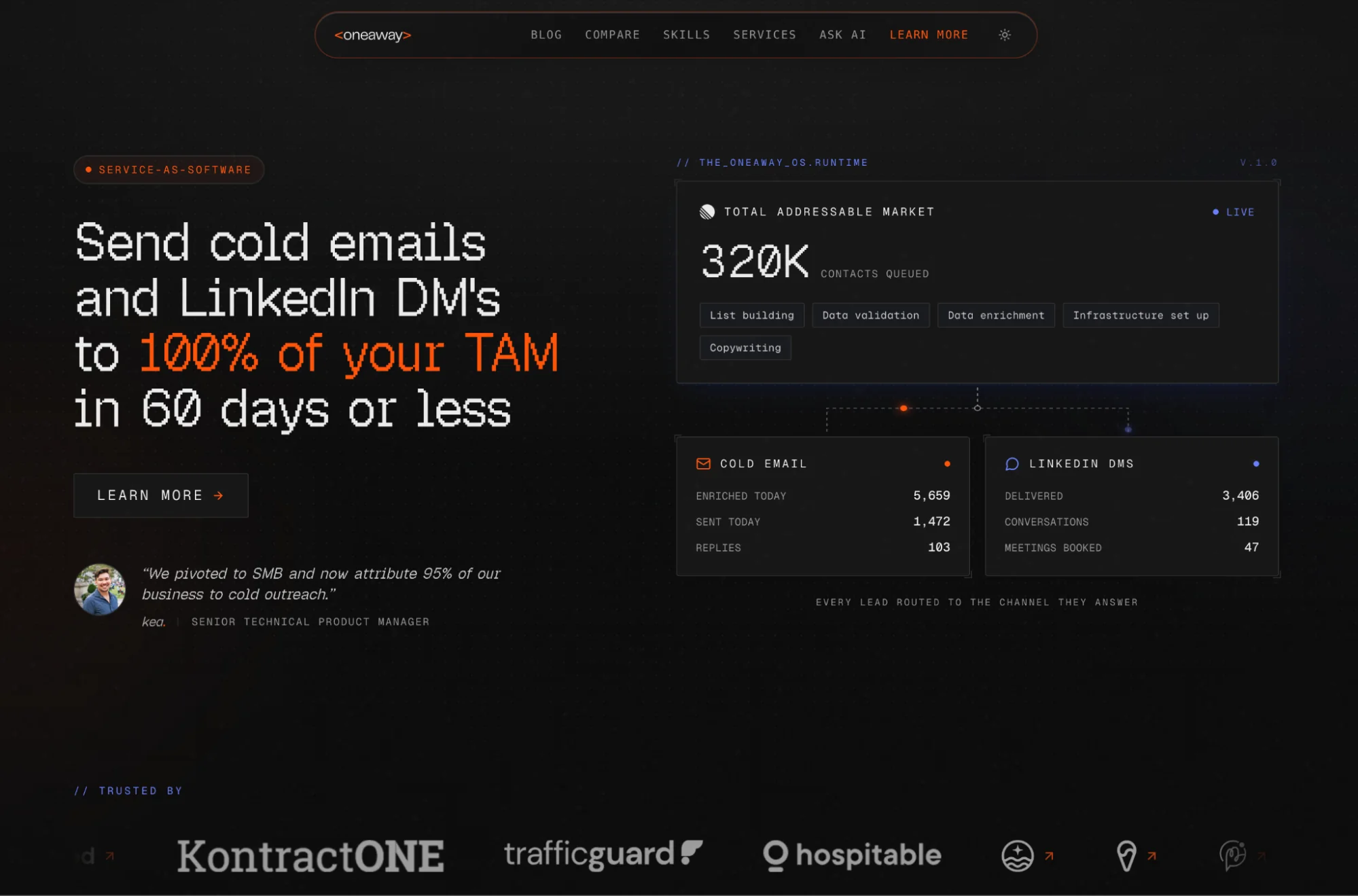
OneAway is one of our better competitors, alongside Sopro and ColdIQ.
Their work bridges the gap between cold outreach, relationship-building, and removing manual labor. The output is a heavily automated and deeply personalized outbound system, close in shape to what we build.
They are known for using advanced tooling like Clay, Apollo, and LinkedIn automation to deliver tailored multi-step sequences that mimic real human interaction.
Unlike traditional lead-gen shops, OneAway does not just hand over leads. They build and tune the full outbound funnel, and they often function as an extension of the client's GTM team.
For SaaS startups looking to scale outbound without giving up message quality, OneAway is a sound pick.
5. LeadBird.io
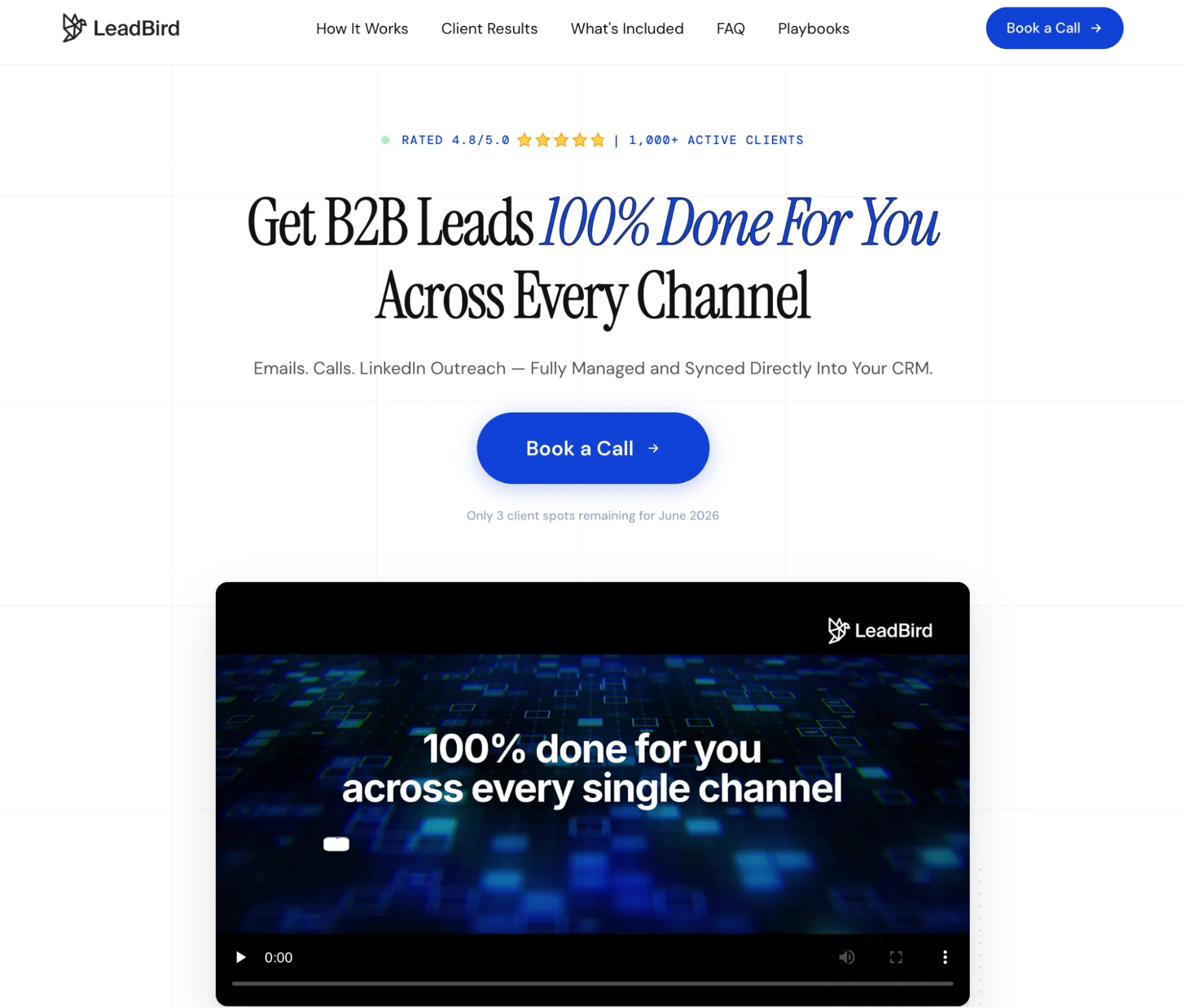
LeadBird, founded by Justin Weeder, is built around a founder-friendly philosophy. They offer a productized service with a proprietary backend that gives clients visibility into outreach performance, deliverability, and results.
With a focus on SaaS and B2B startups, LeadBird is a fit for early-stage companies that need traction fast and want to skip the time it takes to build an in-house SDR team.
6. Afonto
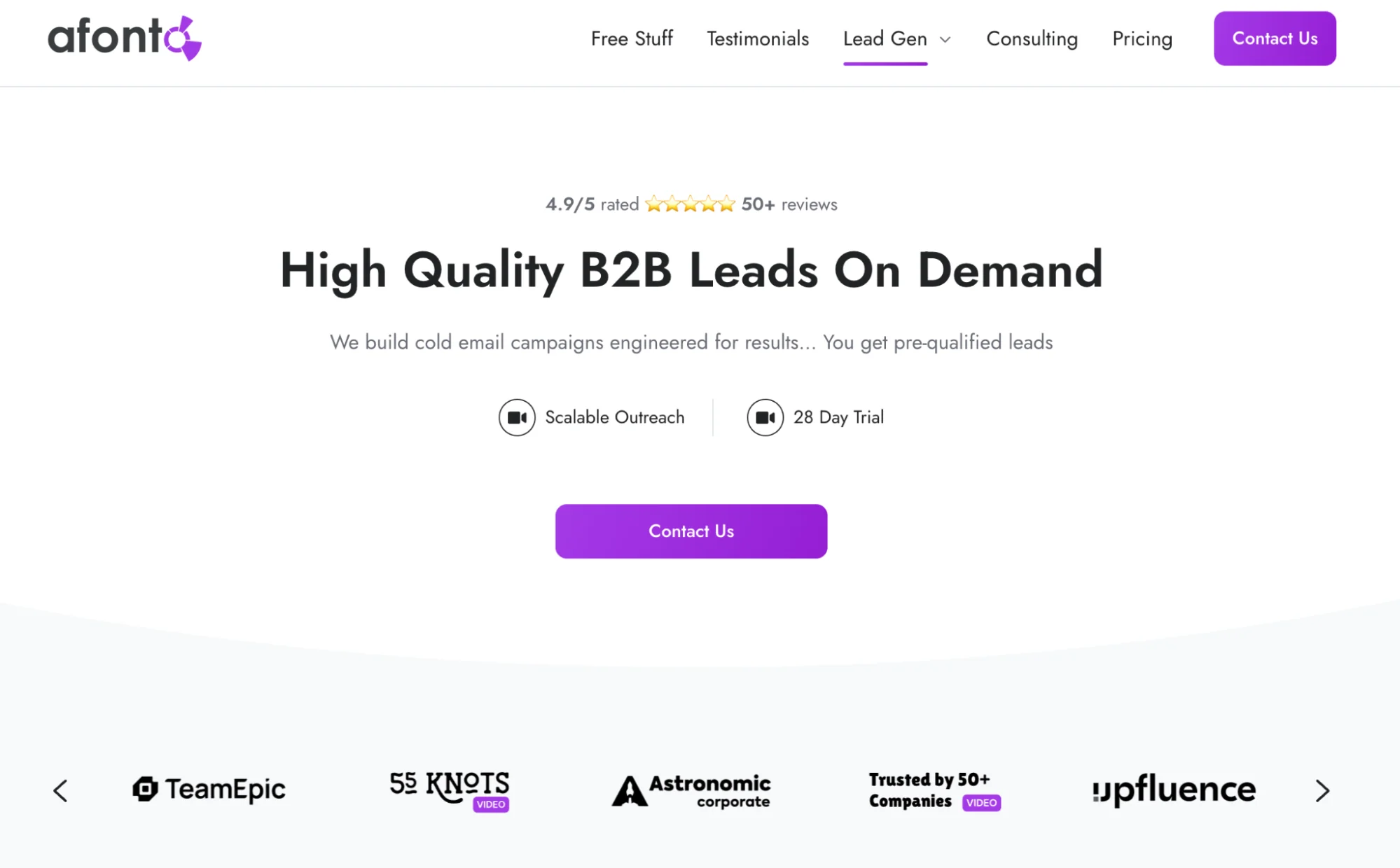
Afonto operates closer to a systems consultancy than a typical outbound agency. We still see them right up there with us and the other automation services on this list.
They focus on building full-stack, AI-enhanced outbound systems that integrate with CRMs, enrichment tools, and multi-channel workflows.
Their work includes custom scraping scripts, automated enrichment, n8n orchestration, ICP-driven targeting models, and personalized campaigns, all built with a strategic eye.
Afonto is a fit for companies that want smart outbound at scale to bring in new leads, without bloating the tech stack or relying on manual SDRs.
Top 6 sales automation tools you can use to build automated sales systems for your company
1. Clay (best for outbound sales automation)
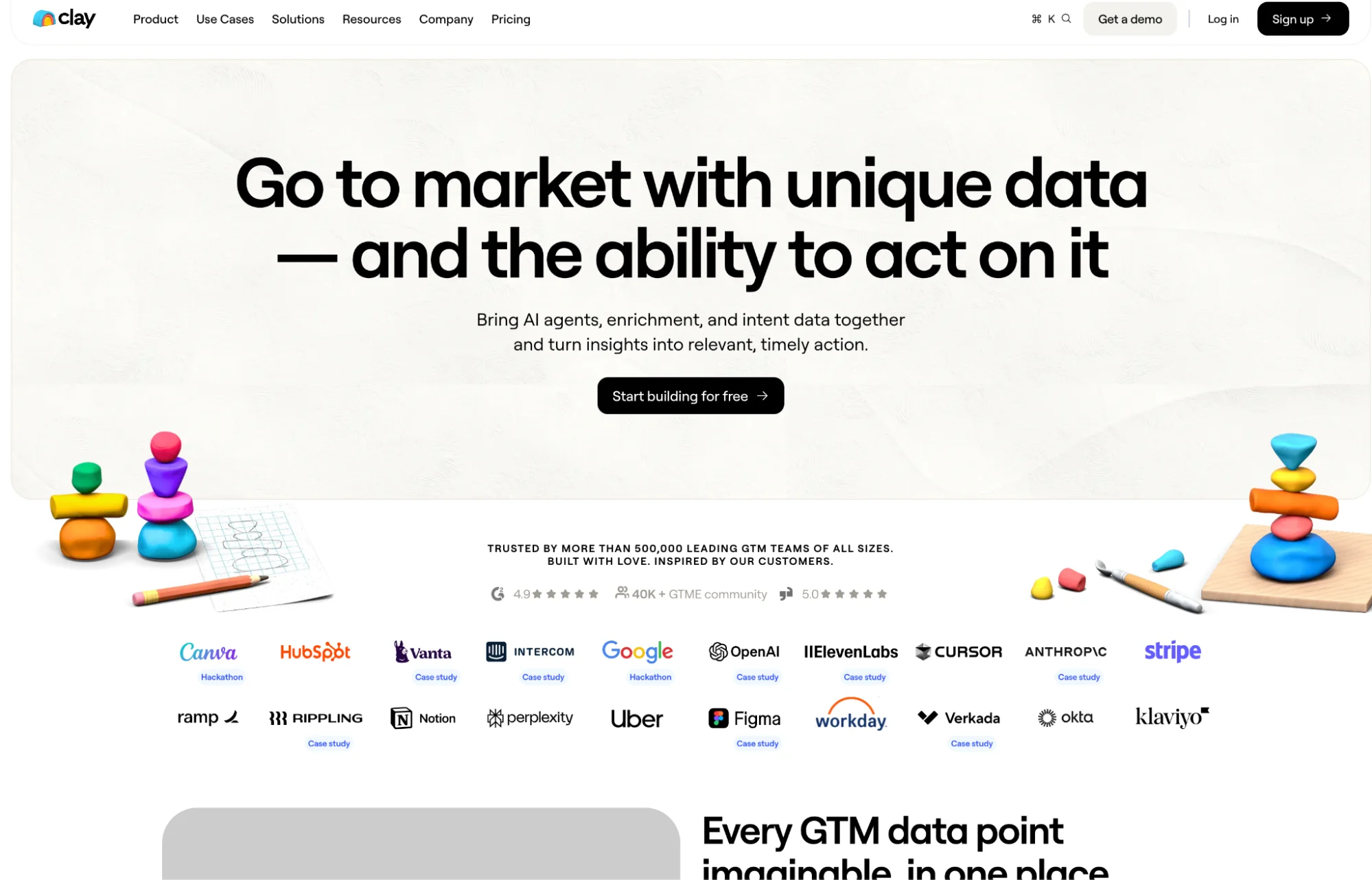
Clay is not a typical sales automation tool. It is more like a programmable command center for outbound workflows, and that is exactly why we use it at Nebor over any other automation platform.
Clay handles AI sales automation that helps teams enrich leads, scrape websites, trigger AI personalization, and drive full prospecting sequences across LinkedIn, email, and CRMs without writing code.
It connects with platforms like n8n, Make.com, and Zapier, which means you can build dynamic, contextual lists that update in real time and that remove most of the repetitive sales work.
We see Clay as the right tool for sales leaders who want to move past static lead lists and build automated systems that adapt to customer data, buyer behavior, and intent.
2. HubSpot (best all-in-one platform)
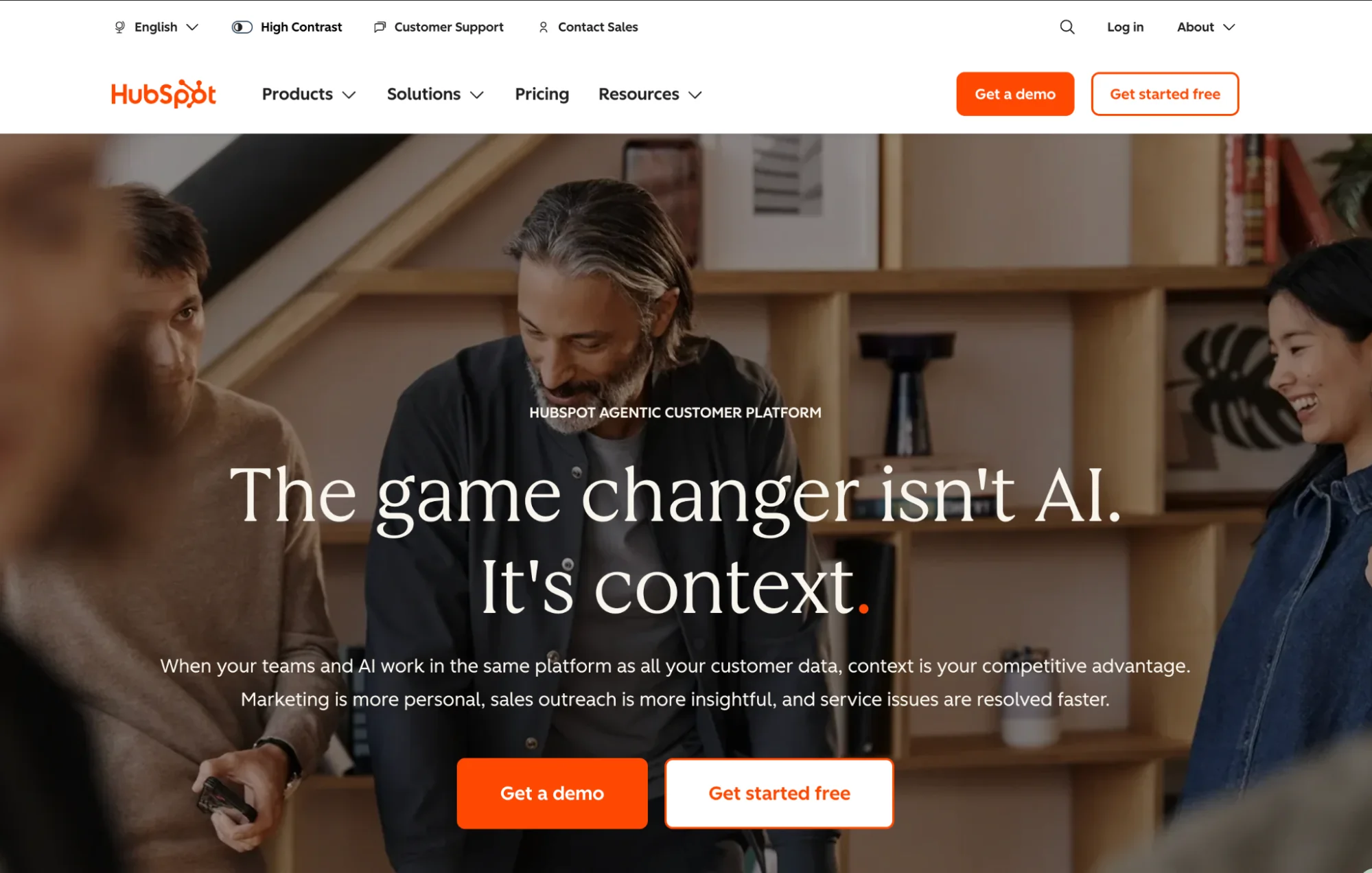
HubSpot has grown from a simple marketing automation tool into a full CRM platform that powers everything from lead capture and sales data management to deal closing.
For sales teams, HubSpot's automation covers contact enrichment, email sequencing, pipeline tracking, and task workflows, all wrapped in a clean UI.
It is strong for SMBs and mid-market sales and customer success teams that want to centralize sales and marketing ops, and remove repetitive tasks without heavy technical lift.
It does not match the deep customization of enterprise CRMs, and that is fine. The plug-and-play ecosystem and the intuitive automation builders make it a default pick for fast-growing teams.
3. Salesforce (best for enterprise-scale companies)
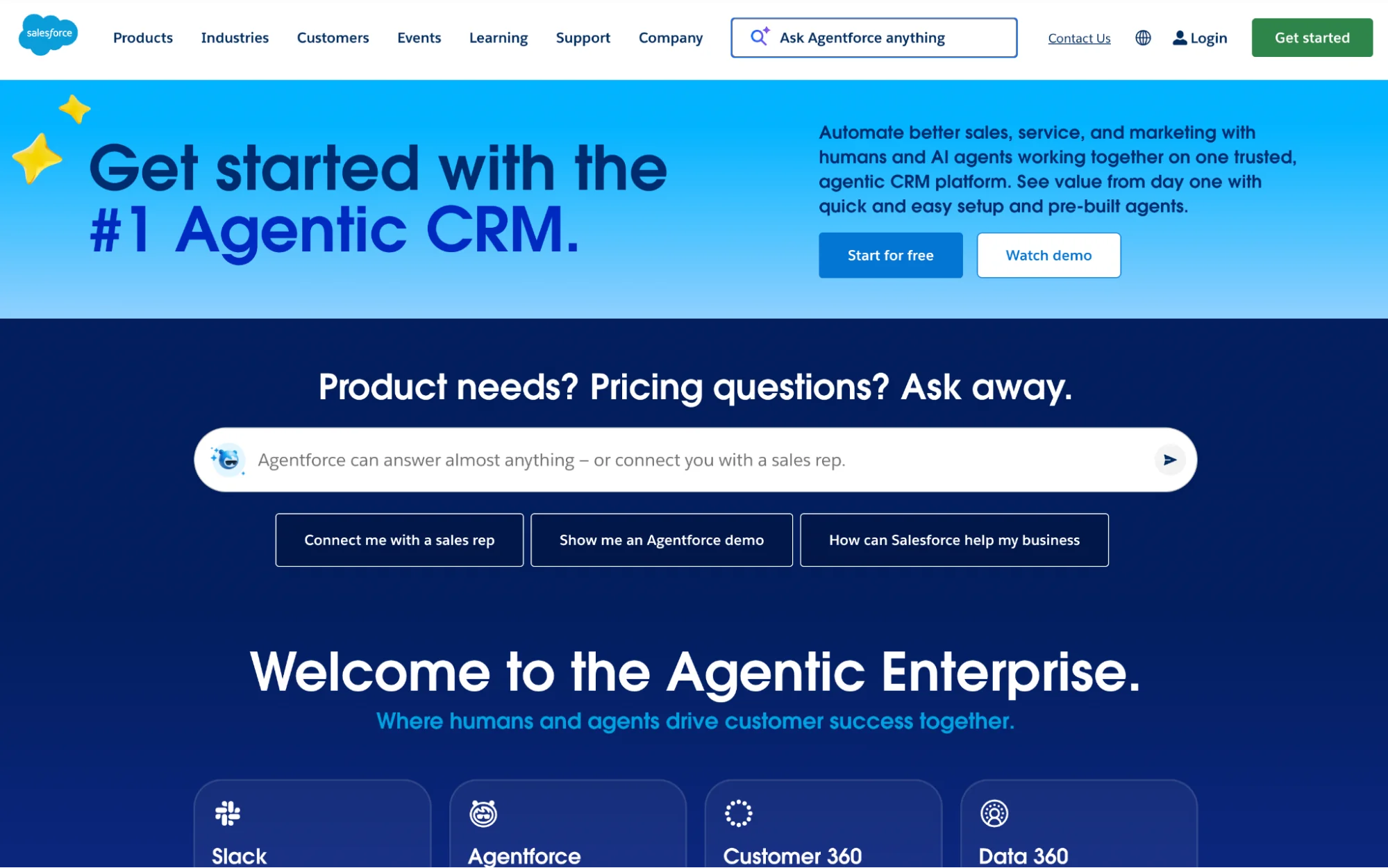
Salesforce is the heavyweight of CRMs and sales automation platforms. It is powerful, deeply customizable, and embedded in most enterprise stacks.
If you are a sales leader at a large corporate looking to push automation into a real organization, Salesforce is the platform to use.
Its strength is flexibility. You can automate and tailor almost every sales workflow, from lead scoring to quote generation to territory management.
That power comes with complexity. Salesforce is not a tool you set up casually. It is a platform you architect, and that means you need real experience to get value out of it.
For automation, you get native process builders and advanced integrations through third-party tools (Outreach, Gong, LeanData). Useful for sales teams that need end-to-end control and scale.
4. Pipedrive (best pipeline-first CRM with automation)
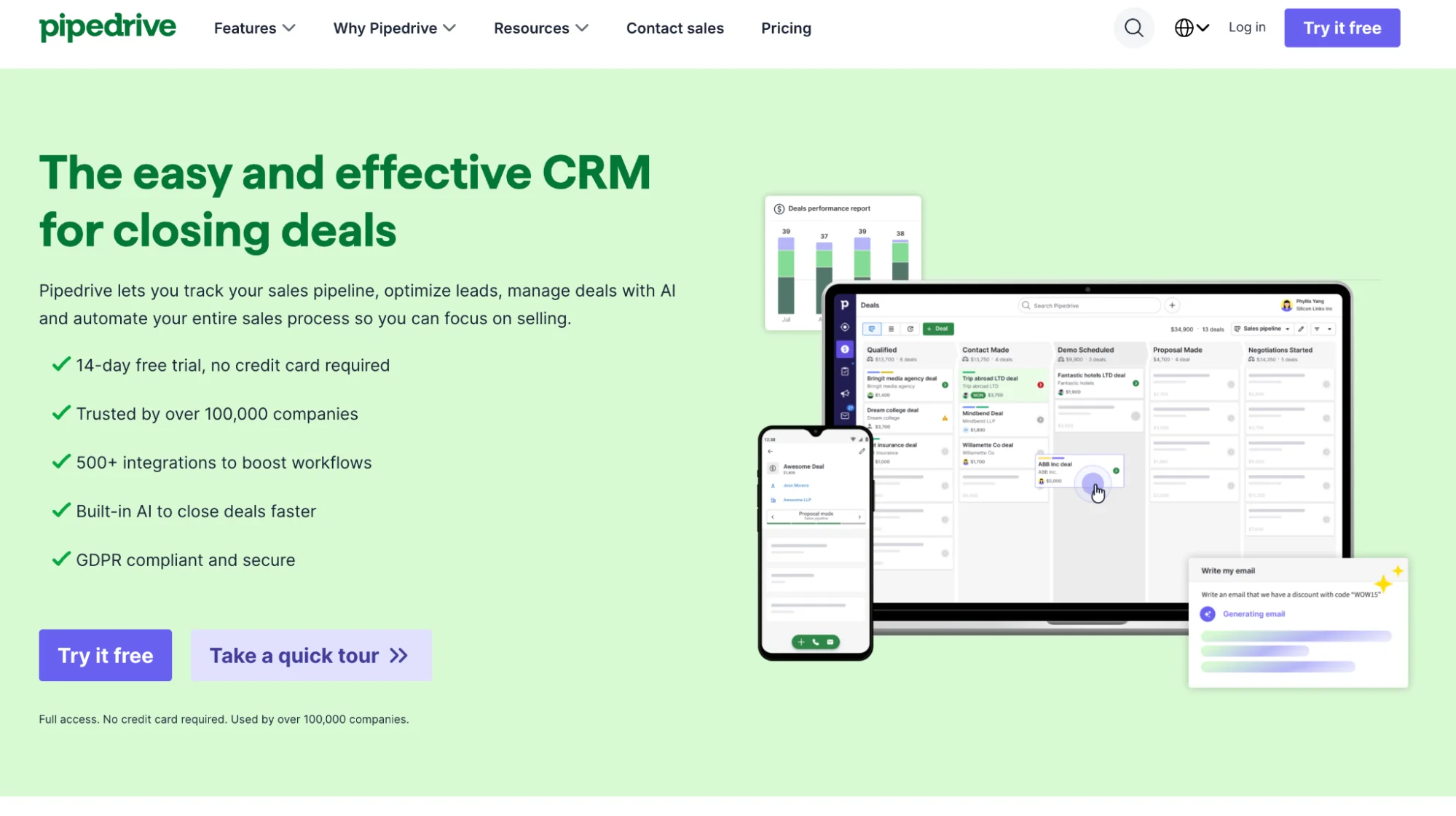
Pipedrive reframes the CRM experience by treating the sales pipeline as the central interface.
Its automation tools are simple but effective. You get task triggers, lead routing, and email sequences without much configuration overhead.
Pipedrive's strength is usability because the product is built for sales teams, not CRM admins. It works for lean teams that want enough automation to manage leads and stay efficient without getting buried in setup work.
If your sales team is just starting to scale outbound, Pipedrive is a fast, low-cost entry point before stepping up to heavier platforms like Salesforce or HubSpot.
5. Gong (best for revenue intelligence)
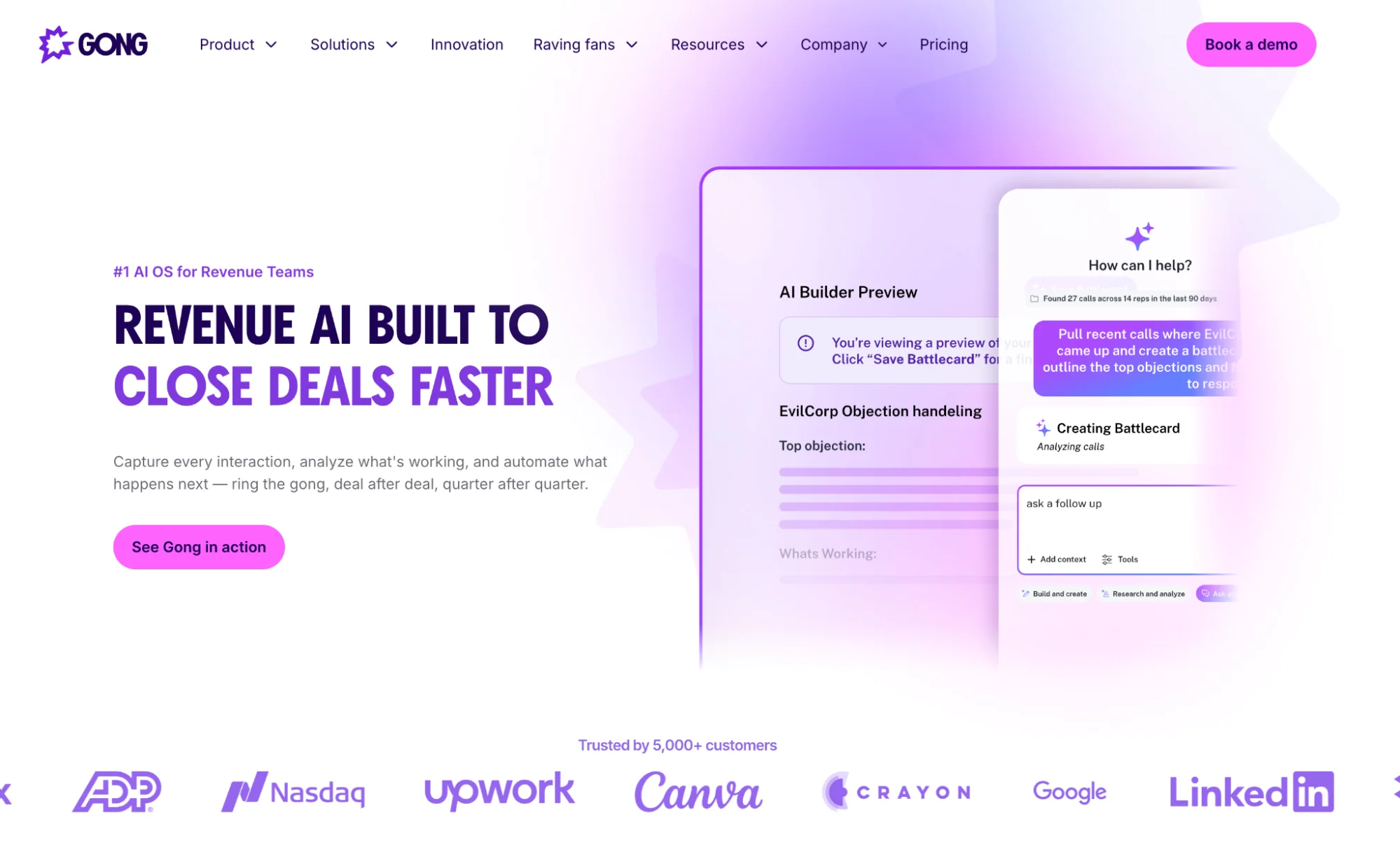
Gong is not a CRM and not the same kind of automation tool as the rest of this list.
It is more of an intelligence layer that spans your sales conversations, your pipeline, and your forecasting. We recommend it to revenue leaders who want actionable insights from real activity rather than CRM hygiene.
Gong analyzes call recordings, emails, and CRM data to surface deal risks, performance gaps, and customer intent signals so you can work better future deals.
Where it ties into automation is the alerting and the workflow triggers. Gong creates tasks and coaching prompts based on real behavior, not on what reps did or did not type into the CRM.
Gong has been moving from passive insight toward active guidance, which is making it a real part of modern revenue operations.
If your team is looking for data-driven sales automation rather than task automation, Gong is the option.
6. Freshworks (best for customer-facing teams)
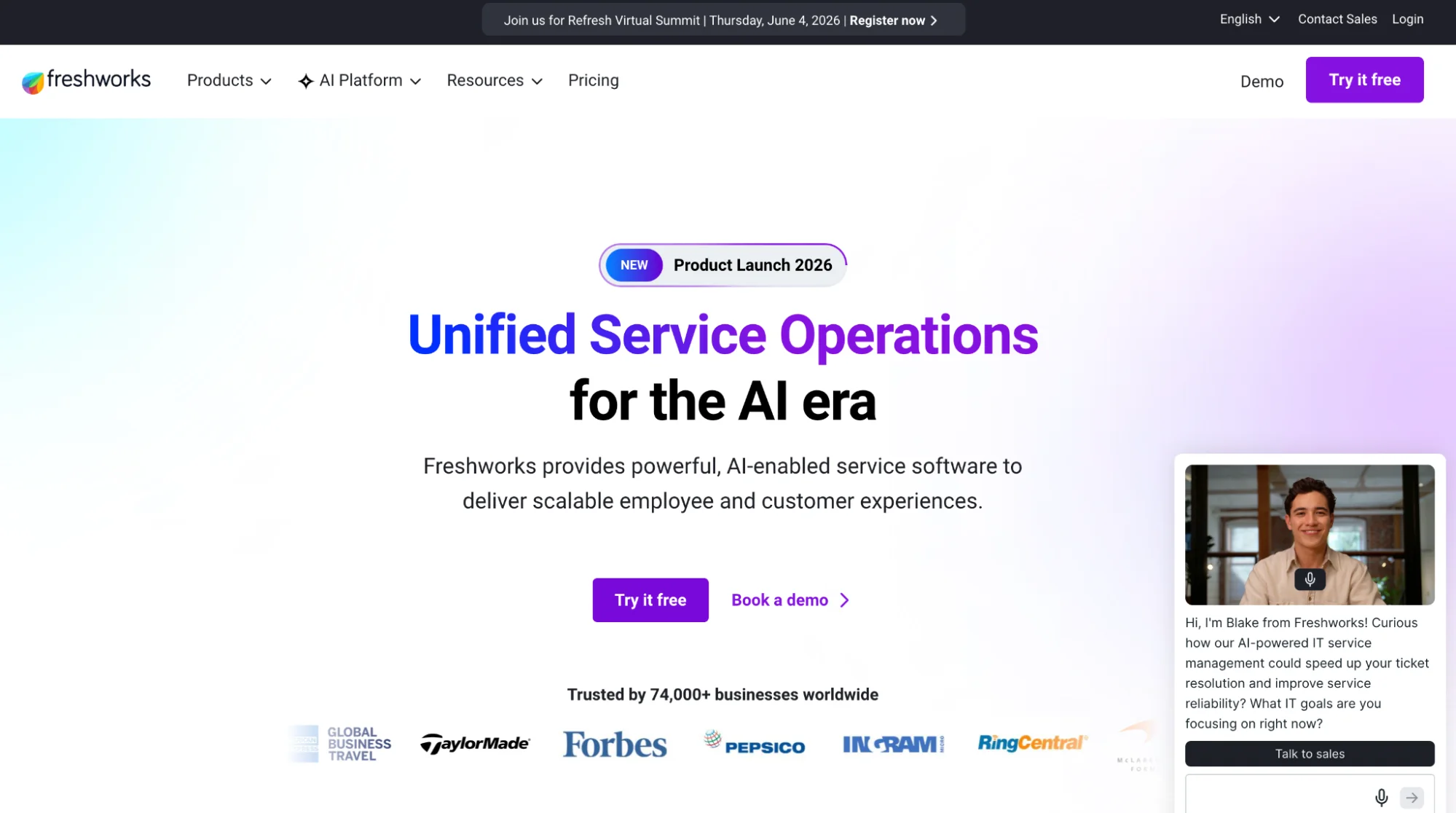
Freshworks is a CRM built for sales and success teams that want intelligent automation without the enterprise bloat.
It offers email tracking, lead scoring, data analysis, sales funnel automation, and built-in phone functionality.
Freddy AI, their in-house assistant, monitors activity and tells reps when to follow up, which helps with pipeline management and relationship work.
Freshworks is more popular as a customer-facing and support solution, and that is what we recommend it for. It also covers automation for email campaigns, contact management, customer onboarding, and analytics.
Freshworks has been pushing into outbound and sales automation, especially for companies that want an all-in-one CRM without the complexity of Salesforce or the price of HubSpot Sales Hub.
Let Nebor handle your outbound, demand and lead gen automation so your team can focus on selling
If you are tired of watching manual processes eat your reps' time, or watching real opportunities go cold because nobody could move fast enough, we can help.
The shape of the engagement is straightforward. Our team becomes an extension of yours, and we own a fully automated system that puts qualified meetings on your calendar week after week.
We line up everything against your sales motion, your industry, and your real customers. The output is a custom workflow that produces predictable pipeline growth, owned by you, in your accounts.
What working with us looks like in practice.
40 to 60% less time on manual prospecting for your reps. Your team focuses on conversations, not data entry.
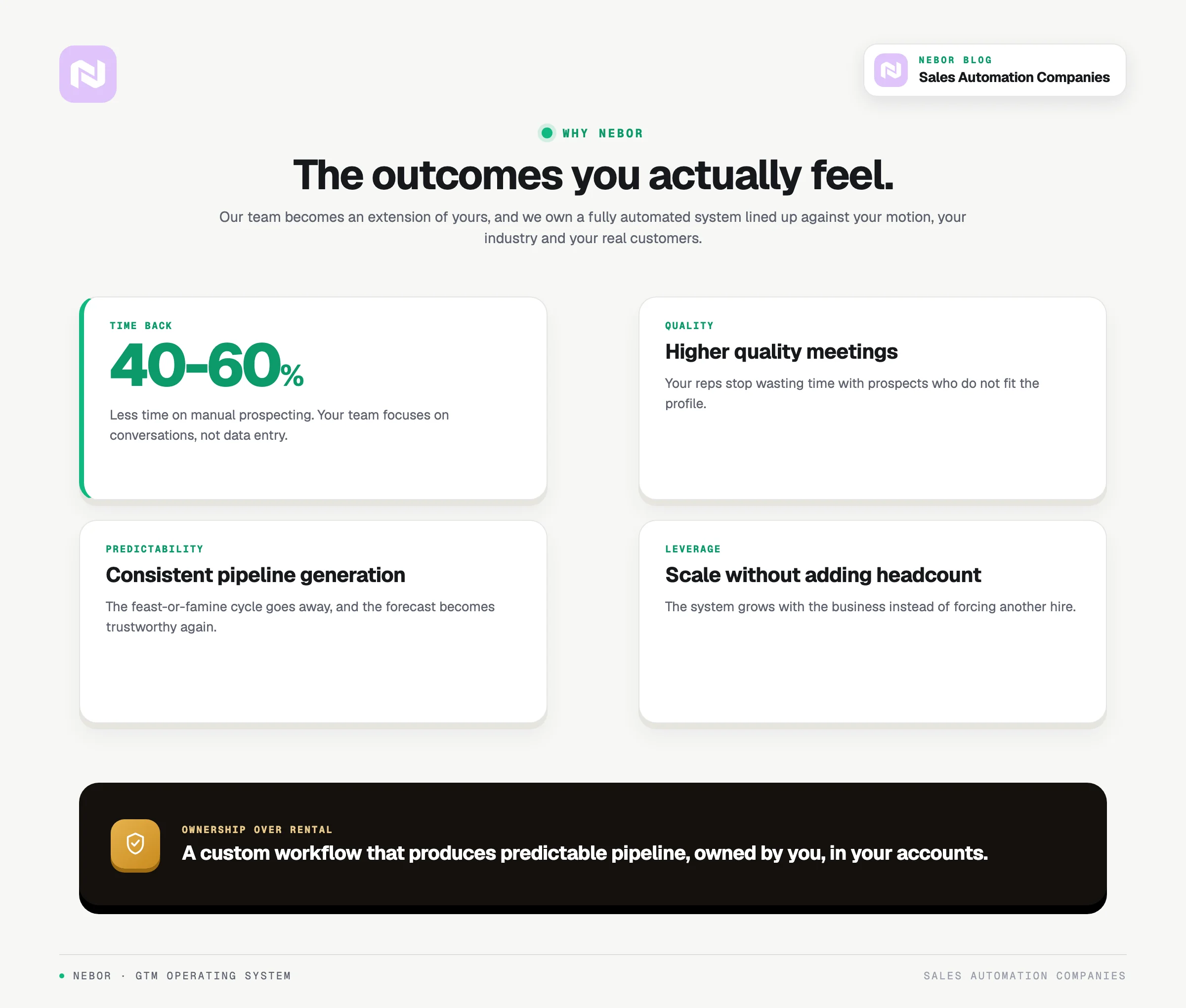
Higher quality meetings. Your reps stop wasting time with prospects who do not fit.
Consistent pipeline generation. The feast-or-famine cycle goes away.
Scale without adding headcount. The system grows with the business instead of forcing another hire.
If you want to talk through what this would look like for your specific motion, find Andrew and Yannick on LinkedIn, or book a 15-minute intro call and we can walk through it together.


Related Articles

By clicking Sign Up you're confirming that you agree with our Terms and Conditions.