
10 Best B2B Lead Generation Companies in 2026 (and What Each One Actually Sells You)

In this post:
The best B2B lead generation companies in 2026 are Belkins, CIENCE, and Martal Group. There you have it.
Type the question into any search engine or AI tool and those are the names most likely to come back, and they've earned it.
But that answer only holds if what you're buying is what they sell. And that's the part worth slowing down on, because there are two ways to buy B2B lead generation in 2026, and most buyers only get shown one.
The first is the retainer, which is what Belkins, CIENCE, Martal and nearly every name on this list sell. The agency puts SDRs, researchers and copywriters on your account, does the outreach from its own tools, and books what it books.
You pay for the effort, and when the contract ends the effort stops, along with everything it learned.
The second is the system. For the same money you'd pay one of those agencies for six months, you can have the whole prospecting operation built as automated workflows in your own accounts: the list building, the enrichment, the sequencing, the follow-up, the intent monitoring.
Your reps show up to meetings and close. And that same system handles your inbound leads, your RevOps, and the data moving between sales, marketing and customer success.
Before you pick, we want to ask you a few questions:
What do you actually need: more names in your CRM, more meetings with the right accounts, or your reps' time back? Or all three together?
If the same budget buys either six months of someone else's effort or a system you keep that generates the same results, which one is your company better off with in year two?
What happens to your pipeline the month the retainer stops?
Why does an industry that sells "results" still bill you by the month, the seat, and the email sent?
When every agency pulls prospects from the same Apollo and ZoomInfo records, what exactly is the premium paying for?
Who learns from the campaigns that fail, you or the agency?
If the manual work that justified the retainer is now software, why hasn't the price changed?
Do you want lead generation solved on its own, or the inbound, the CRM and the follow-up solved with it?
If conventional lead generation is all you need, skip ahead to the 10 agencies and pick one. They're good at what they do, and we've been honest about who each one fits.
If you want more out of the same money, keep reading.
One thing to know before you do. We're Nebor, a GTM and RevOps systems company, and we've never been a lead generation agency.
We've spent years on the other side of this industry, taking over accounts after the retainer ended, and the pattern was always the same: a lot of activity, some meetings, and nothing the client could keep. That's what we build against.
You'll notice the industry has noticed too. Most agencies now put "GTM" somewhere on their homepage, because the shift is obvious to everyone selling into it: the labor that used to justify a retainer has turned into workflows, and we want you to ask why you don't own them.
But a new label on the same retainer changes nothing about what you're left with. The model has to change, from renting someone's effort to owning the engine that produces the result, with lead generation as one of the things it produces.
That's the case this guide makes, alongside a fair look at the agencies for the teams that still need them.
Note: B2B lead generation is no longer what it used to be. Most lead generation agencies and experts now depend on Clay, automation and AI to do the work people used to do by hand.
What most of them will not tell you is that they keep those tools and workflows in house and sell you only the campaigns and results. When you stop paying, you are back at zero.
At Nebor, we are a GTM engineering and RevOps agency. We build the automated prospecting and lead generation that fills your pipeline, and we build it so you own it.
The difference shows up around month six. A lead generation agency is still charging you a retainer. With us, the workflows are already yours, so the only thing left to pay for is the software underneath them.
Book a 15-minute call and we'll show you what an automated lead generation motion would look like for your business.
TL;DR
We're Nebor, and we're first on this list because we sell the one thing no other lead generation company here does: the system itself, built in your own accounts.
That system maps your market and the decision makers in it, sends outbound from data sources your competitors aren't using, watches the web for buying signals, and puts qualified leads from your inbound in front of your reps the moment they arrive. Here's what our clients think about our work:
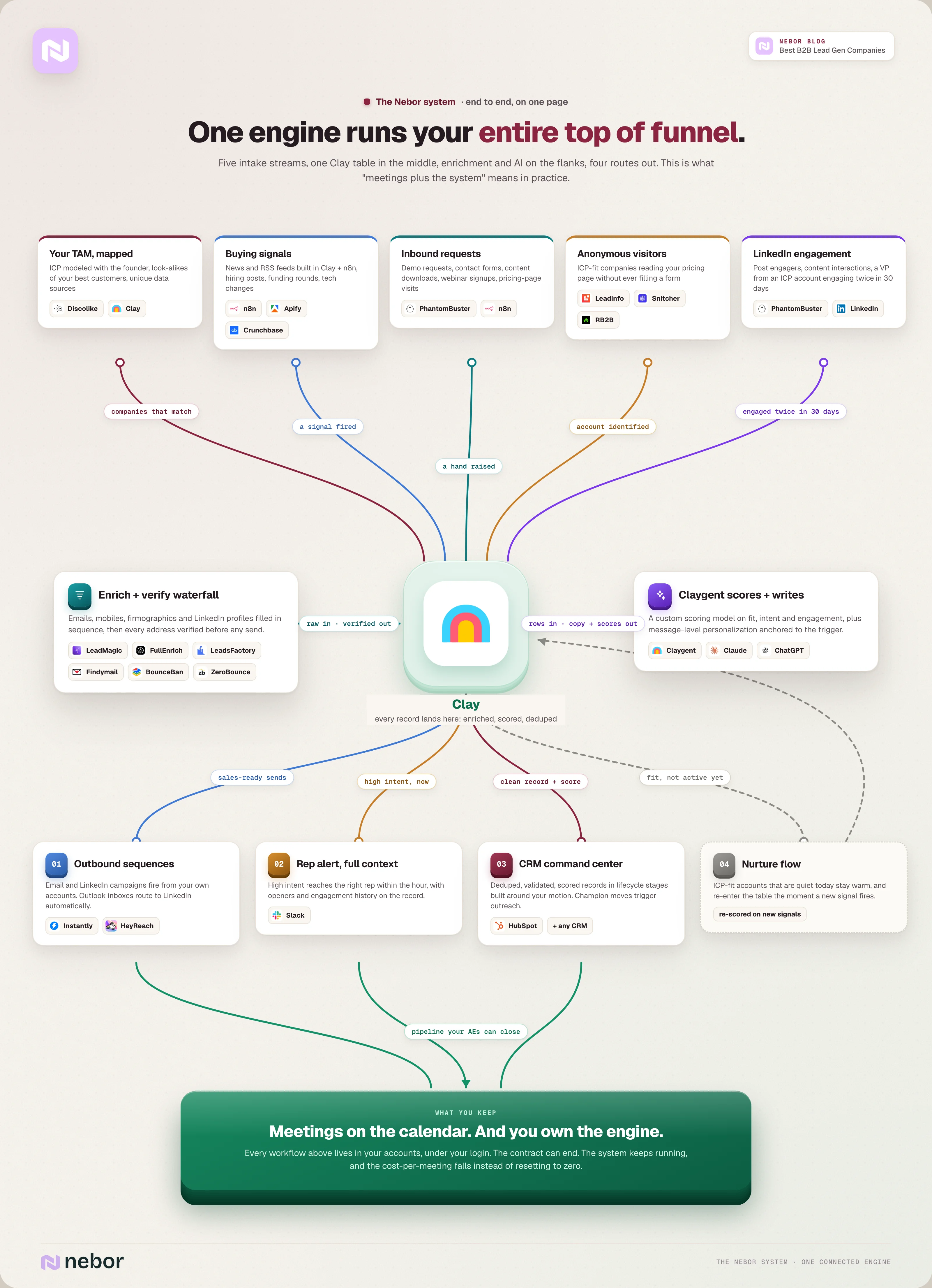
A traditional lead generation agency leaves you whatever meetings landed when the contract ends. Ours leaves you the meetings and the whole engine, still working, in your own login. Here's the whole thing on one page:
And here are all 11 companies at a glance.
Company | What they sell | Pricing | Min commitment | What you keep | Best fit |
|---|---|---|---|---|---|
Nebor | Custom GTM (outbound, inbound, and RevOps) workflows built in your accounts | Custom engagement | Project-based | Meetings + the full system | Any service or SaaS with a good product and a clear ICP |
Belkins | Managed multichannel outbound | $3K-$15K/mo | 6-12 mo | Meetings only | Premium managed execution |
CIENCE | Outsourced SDR + AI-assisted outreach | $4K-$15K/mo | 6-12 mo | Meetings only | Mid-market managed services |
Martal Group | Tiered sales-as-a-service | $5K-$15K+/mo | 6+ mo | Meetings only | B2B SaaS with enterprise budget |
CallBox | Multi-region appointment setting + ABM | $5K-$15K/mo | 6-12 mo | Meetings only | Cross-border GTM rollouts |
Sopro | Multichannel platform with managed execution | From £3K/mo | Month-to-month | Meetings only | UK/EU mid-market, low friction |
Cleverly | LinkedIn-only outreach (managed) | From $1K/mo or PPL | 3 mo | Meetings only | LinkedIn-only top-of-funnel |
SalesHive | Productized flat-tier outbound | ~$5K/mo flat | Month-to-month | Meetings only | US mid-market wanting predictable cost |
Pearl Lemon Leads | Volume-guaranteed multichannel outreach | No public number | Multi-month | Meetings only | High-volume buyers |
Sapper Consulting | Email + direct mail to enterprise | No public number | 6 mo | Meetings only | Mid-market without an SDR team |
SalesHawk | Hybrid AI outreach + lead nurture | No public number | Multi-month | Meetings only | SMB hybrid testing |
Six reasons to choose a GTM systems partner like Nebor over a traditional lead generation agency
Before you pick a name off the list, weigh the model itself. We build the alternative, so judge our bias, but you can verify every reason below on your own stack.
Reason 1: the traditional lead generation playbook is aging out faster than the agencies selling it admit
The classic agency model was designed before Clay, Claygent and today's AI tools existed. Researchers pulled contacts from shared databases, SDRs copied and pasted between tools, and you paid for that labor by the hour.
In 2026 almost all of that labor is software. The same tools the agencies use are available to you directly, and the six kinds of service sold under the "lead generation" label are all feeling it.
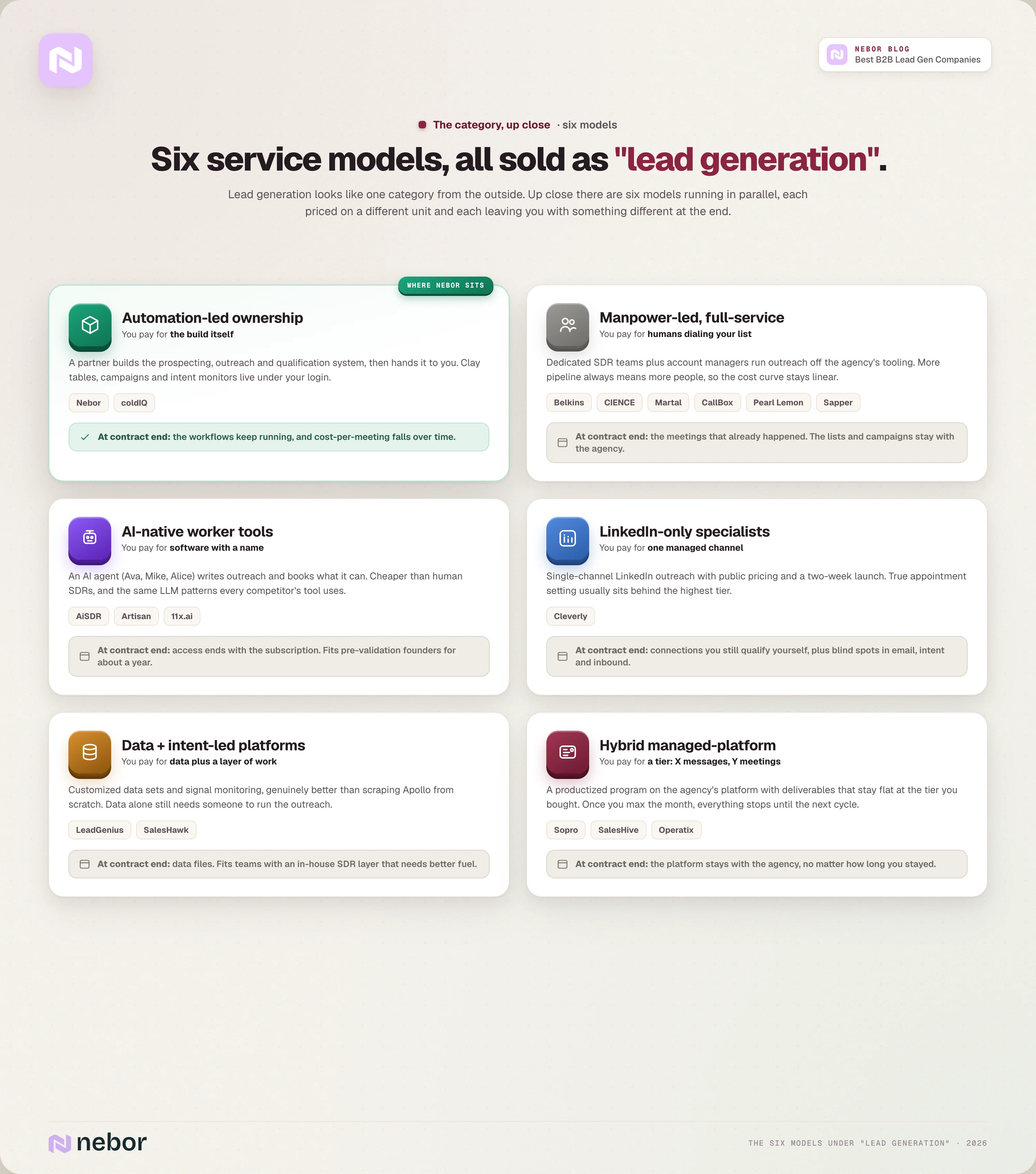
Agencies still win on one thing: people dialing at volume. For everything else, paying 2019 labor prices for work that software does better is the expensive way to fill your funnel.
Reason 2: the same retainer money buys workflows you own instead of activity you rent
Start with the money, because that's the part most buyers never put side by side.
A full-service retainer at Belkins, CIENCE or Martal costs $5K to $15K a month, so a six-month engagement lands somewhere between $30K and $90K. For that, an SDR team works your list from the agency's own Clay tables, Apollo lists and Instantly campaigns, and books the meetings it books.
Then the contract ends. What you keep is the meetings that already happened and a report about them. The lists, the sequences, the messaging that worked, the messaging that didn't, and every lesson the SDRs learned about your buyers stay on accounts you never had a login for.
Six months later, when you need pipeline again, you hire the next vendor and pay for the same learning curve a second time.
Now take the same budget and buy the build instead. The same money pays for the engine to be designed and set up in your own accounts: the Clay tables, the enrichment workflows, the campaigns, the signal monitors, the routing into your CRM. Everything is under your login from day one.
When the engagement ends, nothing stops. The workflows keep finding accounts, verifying contacts and sending outreach in month seven exactly as they did in month three, and every campaign result stays in your data, so the next campaign starts smarter than the last.
That's why the cost per meeting moves in opposite directions. With a retainer it resets to zero every time you change vendors. With an owned system it falls every quarter, because the fixed cost is behind you and the engine only gets better at your market.
One honest caveat. An owned system still needs an owner, someone on your side who watches the numbers and asks for changes. That can be a RevOps person, a founder for the first year, or us on a light support arrangement. Without that person, even the best build slowly goes stale.
Reason 3: your team starts to generate qualified leads without anyone doing manual prospecting
Ask your reps how they spent this morning. In most B2B teams the answer is building a list, hunting for emails and mobile numbers, checking who's still at the company, and writing first touches. That's the front half of lead generation, and it's the half nobody was hired to do.
The system takes that half off the team entirely. Here's what it does instead, step by step.
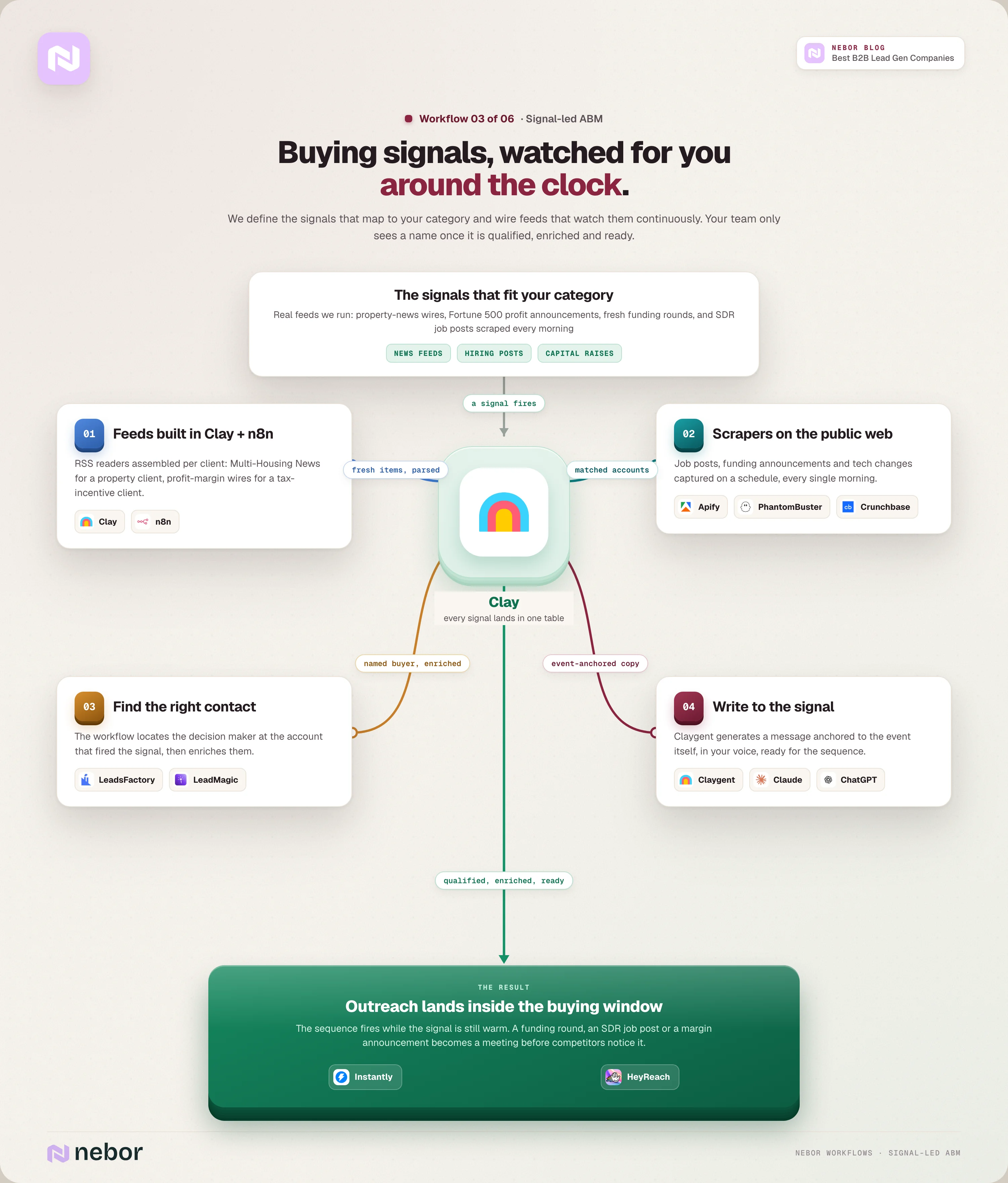
It starts with your market. We map the target market with your founder or head of revenue and define the ICP precisely enough that Clay can search against it, then add lookalike tools such as Discolike that find potential customers matching your best accounts.
Then the data. We use the standard databases where they help, and we add the sources your competitors aren't watching: hiring posts, funding rounds, news feeds and technographic changes tied to your buying signals.
Waterfall enrichment across LeadMagic, FullEnrich, LeadsFactory and Findymail pulls emails, human verified mobile numbers and firmographics, so the contact and company data matches your ICP.
Then the checks. BounceBan, DeBounce and ZeroBounce verify every address before a send, so your domain reputation never pays for a bad list.
Then the sending. These targeted campaigns go out through Instantly for email marketing and HeyReach for LinkedIn, with every message personalized through Clay's AI to the account, the role and the signal that put them on the list.
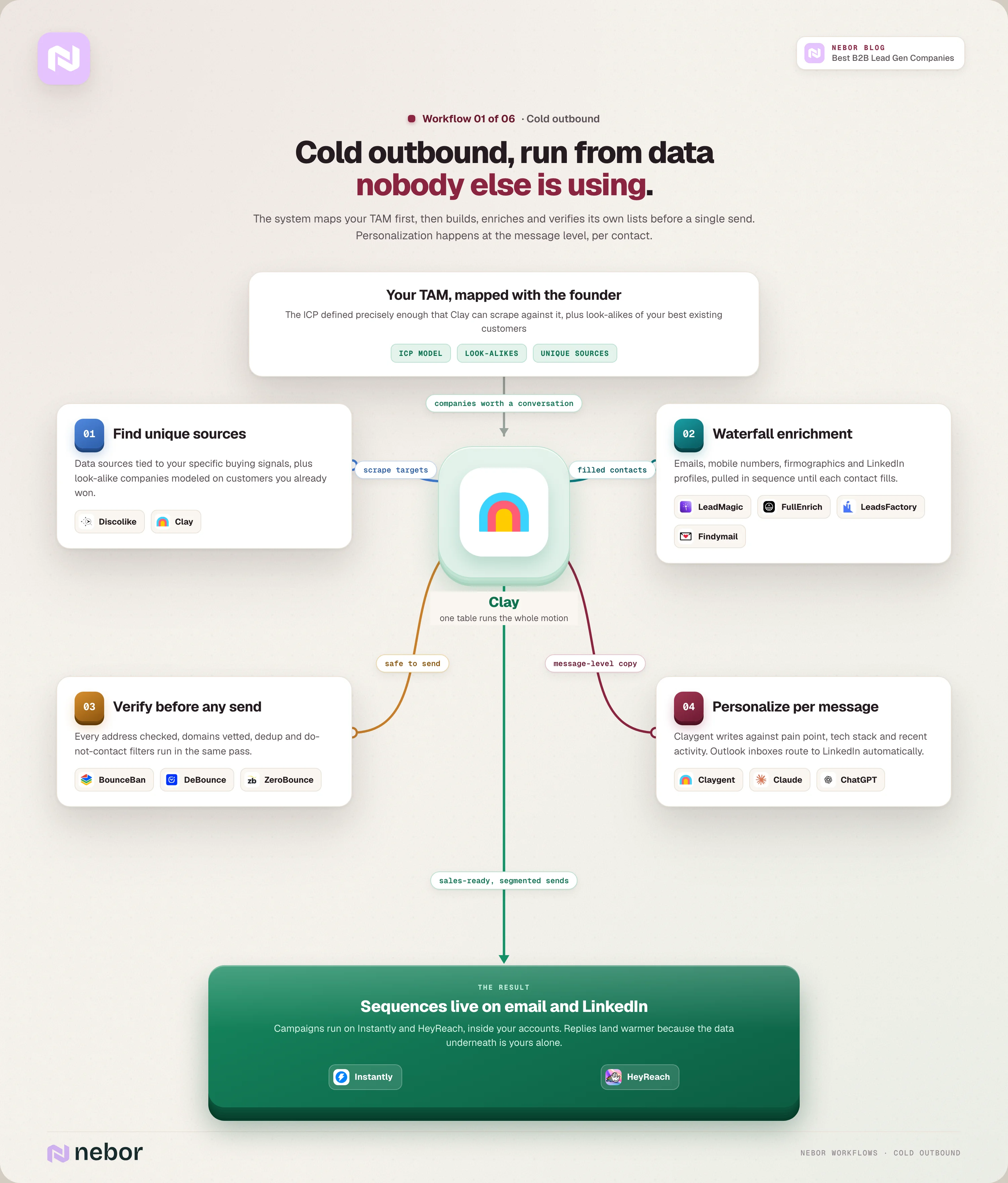
The same engine also watches for buying signals on its own. For a client selling to property developers, it monitors housing news feeds. For our own outbound, it scrapes LinkedIn job posts for SDR roles, because a company hiring an SDR has pipeline pain right now.
When a signal lands, the workflow finds the right decision makers at that account and sends outreach anchored to the reason behind it. Sales opportunities show up in your reps' queue every day without anyone searching for them.
Note: B2B lead generation is no longer what it used to be. Most lead generation agencies and experts now depend on Clay, automation and AI to do the work people used to do by hand.
What most of them will not tell you is that they keep those tools and workflows in house and sell you only the campaigns and results. When you stop paying, you are back at zero.
At Nebor, we are a GTM engineering and RevOps agency. We build the automated prospecting and lead generation that fills your pipeline, and we build it so you own it.
The difference shows up around month six. A lead generation agency is still charging you a retainer. With us, the workflows are already yours, so the only thing left to pay for is the software underneath them.
Book a 15-minute call and we'll show you what an automated lead generation motion would look like for your business.
Reason 4: you generate leads faster from the inbound you already have, and conversion rates climb
Most companies leak the inbound leads they already paid for. Demo requests wait in a queue for hours, visitors who fit the ICP stay anonymous, and marketing leads land in the CRM as raw email addresses for someone to sort through on a slow afternoon.
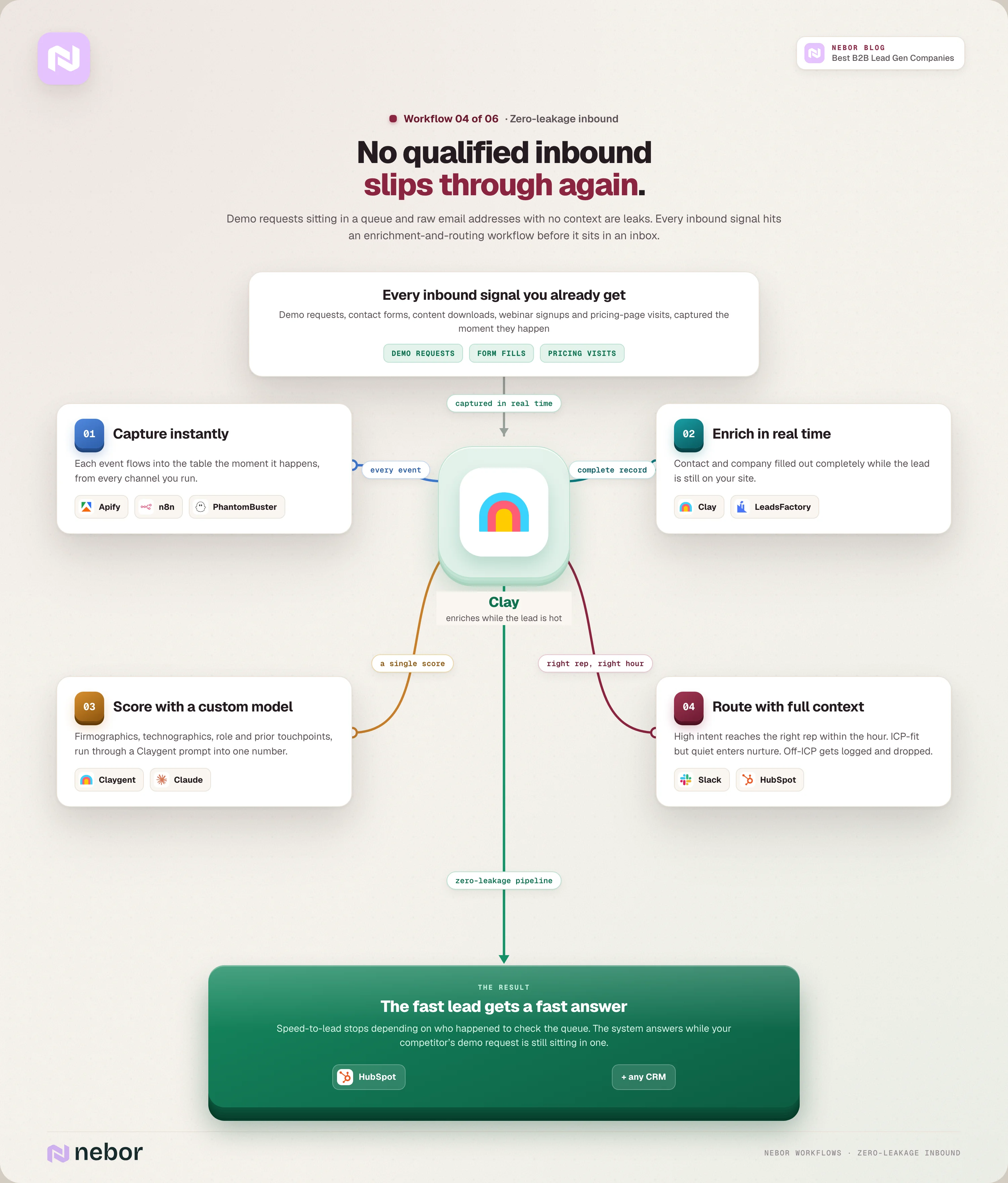
The inbound workflow reacts the moment a signal arrives. Every demo request, content download and pricing-page visit goes into Clay, and a Claygent model scores it on who they are and what they did.
The hot ones reach the right rep in Slack within the hour. The rest go into a nurture flow.
Speed is the whole point here, because conversion rates on inbound drop by the hour.
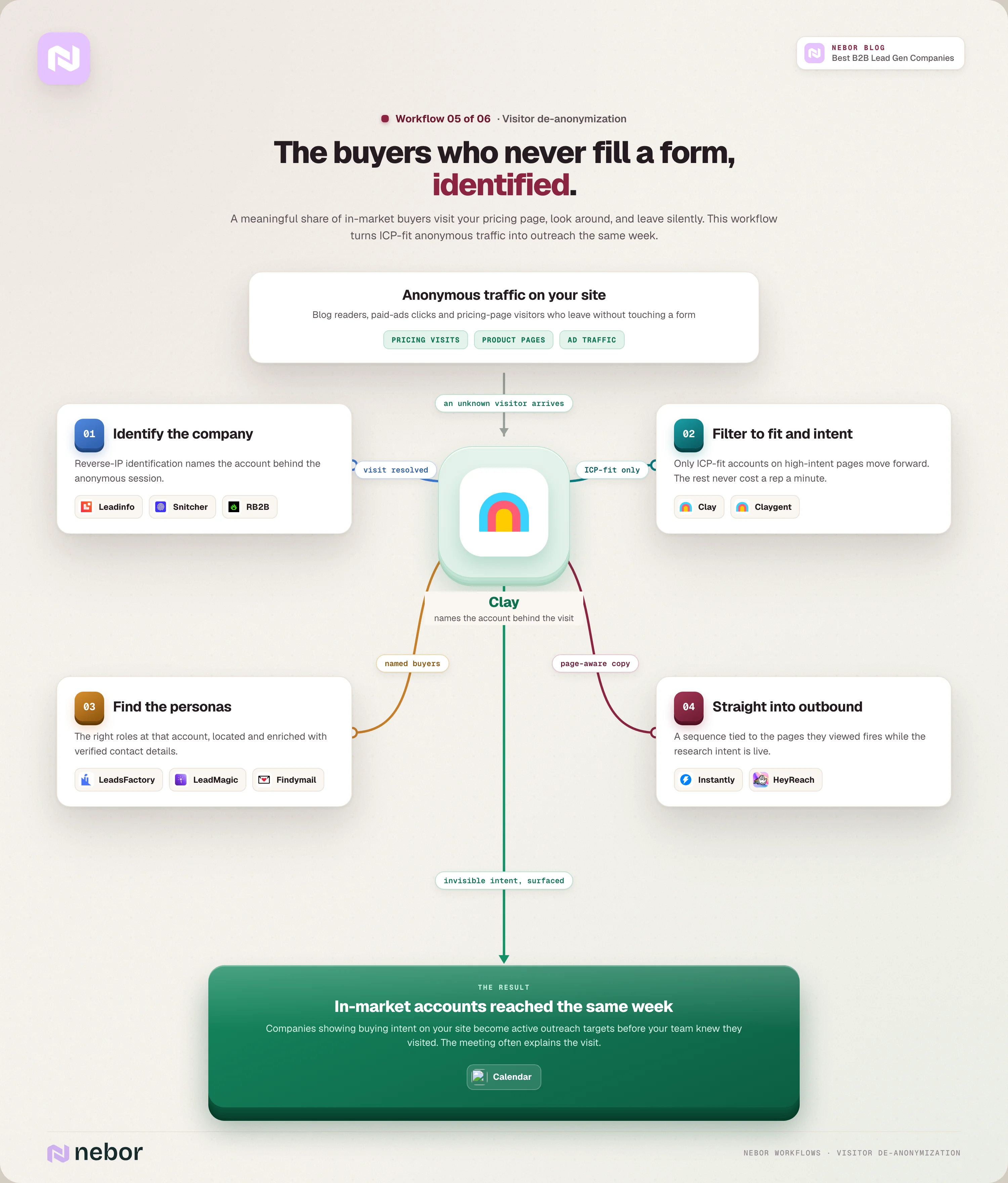
The same goes for the buyers you can't see. Leadinfo and Snitcher, or RB2B for US-only setups, tell you which companies are on your site anonymously.
An ICP-fit account reading your pricing page becomes an outreach target the same week. Here's how we do website-visitor identification.
Reason 5: research and prospecting come off your reps' plates for good
Your closers didn't join to spend mornings hunting LinkedIn profiles and phone numbers. With the system in place, they open a CRM record and find a verified number, a conversation starter, and the reason the outreach went out in the first place. The call is warm before they dial.
List building, enrichment, lead qualification and follow-up timing all leave the team's plate, and the people you pay to close spend their week closing. Here's how the full sales automation workflow stack fits together.
Reason 6: your content marketing, demand generation and CRM finally work as one compounding system
Your LinkedIn post got 200 likes? PhantomBuster pulls every engagement into Clay, and when a VP from an ICP-fit company engages twice in 30 days, they go into a sequence that mentions the exact post. Content marketing stops being a branding expense and starts feeding pipeline.
Paid channels warm the same accounts: LinkedIn ads aimed at the decision makers on the buying committee, and Google ads for the high-intent searches. Both use the same Clay tables as your outbound, so your marketing and your outreach point at the same companies.
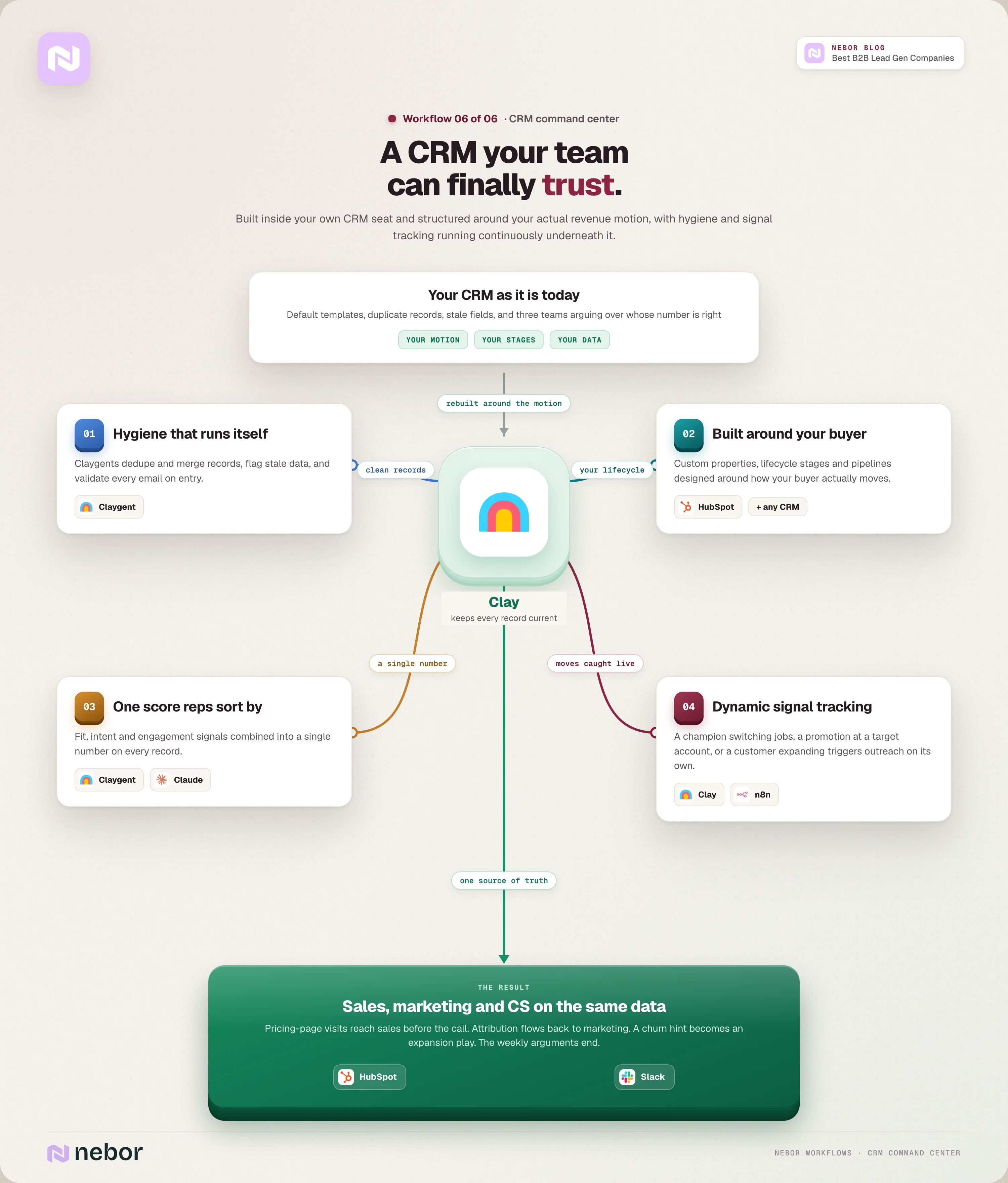
Underneath is your HubSpot or Salesforce, rebuilt around how you actually sell: clean records, enrichment that keeps them current, and a lead score that combines fit, intent and engagement into one number your reps can sort by.
When a champion changes jobs or a decision maker gets promoted, the system catches it. Here's how the Clay-driven CRM automation works.
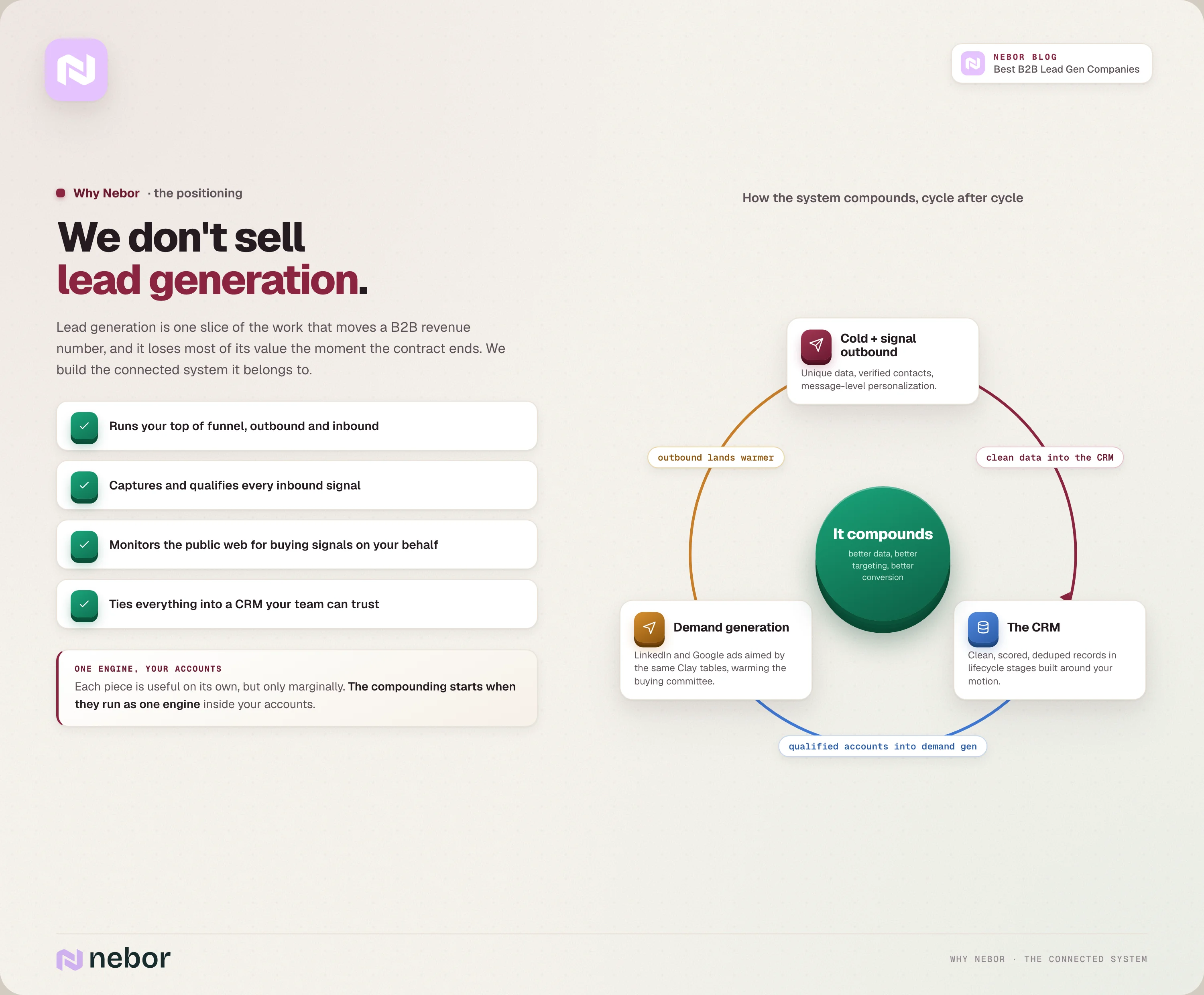
Then the loop closes. Outbound feeds clean data into the CRM, the CRM feeds qualified accounts into demand generation, demand generation warms those accounts so outbound lands better, and every cycle brings better conversion rates and more sales opportunities.
A retainer breaks that loop by design. The system keeps generating qualified leads after we leave.
Where to start on this list, depending on what you're trying to fix
Most teams shopping this list are in one of four situations, and the right partner is different for each.
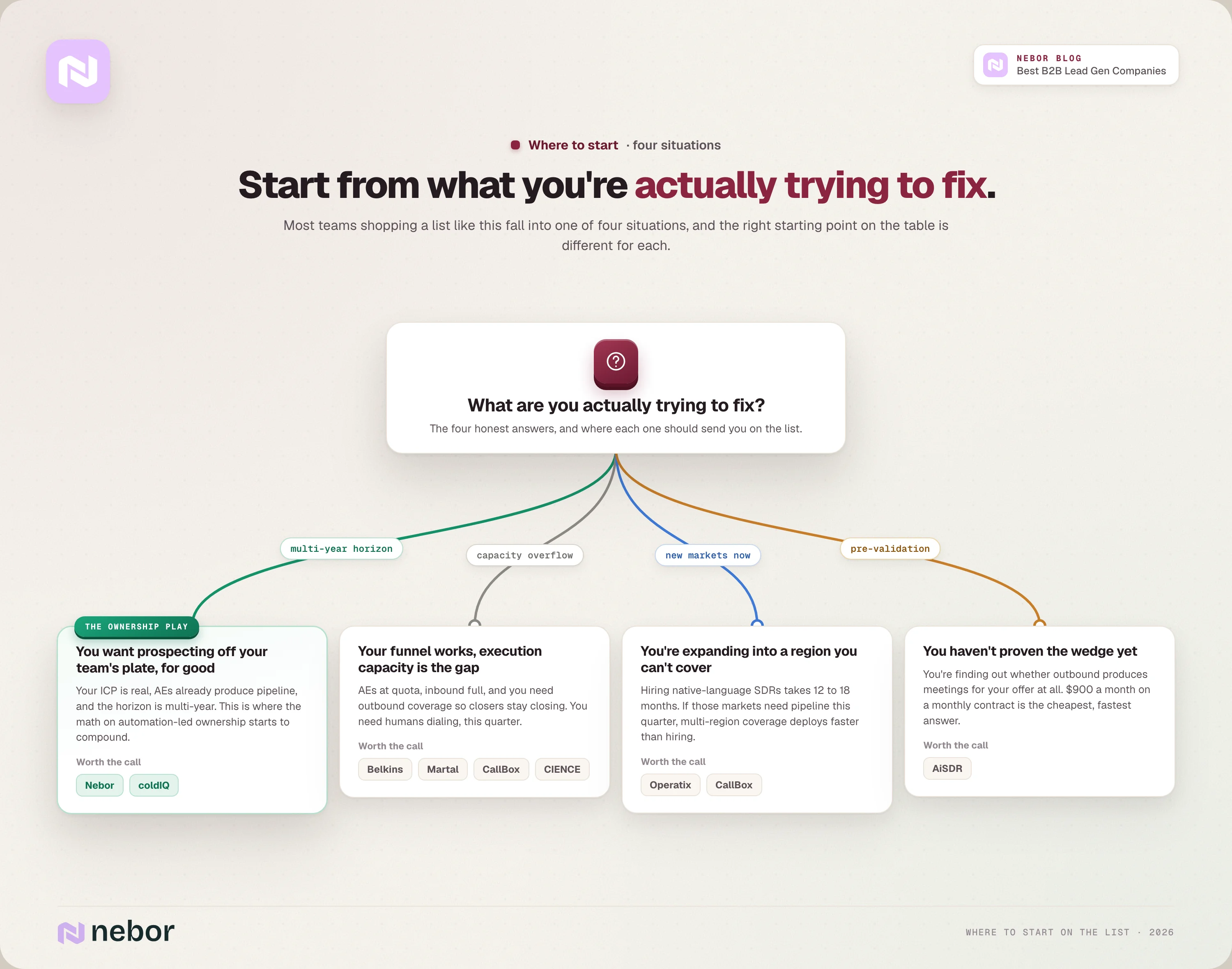
You want prospecting off your team's plate and your ICP is proven
This is where owning the system pays off. Talk to a systems builder: that's us, or a Clay-led consultancy like ColdIQ. Longer argument here: why most B2B teams shouldn't outsource lead generation.
You need execution capacity so your team stays focused on closing
Outsourcing this way lets the business focus on its core work while the vendor handles coverage. Belkins is the safe premium pick, Martal and CallBox if you need international coverage, CIENCE if price matters more than the recent quality questions.
You're expanding into a region or language your team can't cover
Hiring native-language SDRs takes 12 to 18 months. CallBox and Martal both cover regions in the local language.
You're still testing whether outbound works for your offer
Skip the agencies and start with an AI SDR tool like AiSDR. At $900 a month, it's the cheapest way to find out whether outbound produces qualified leads in your market. If it does, you'll outgrow it within 18 months. More in the right way to get B2B leads.
What B2B lead generation actually costs in 2026
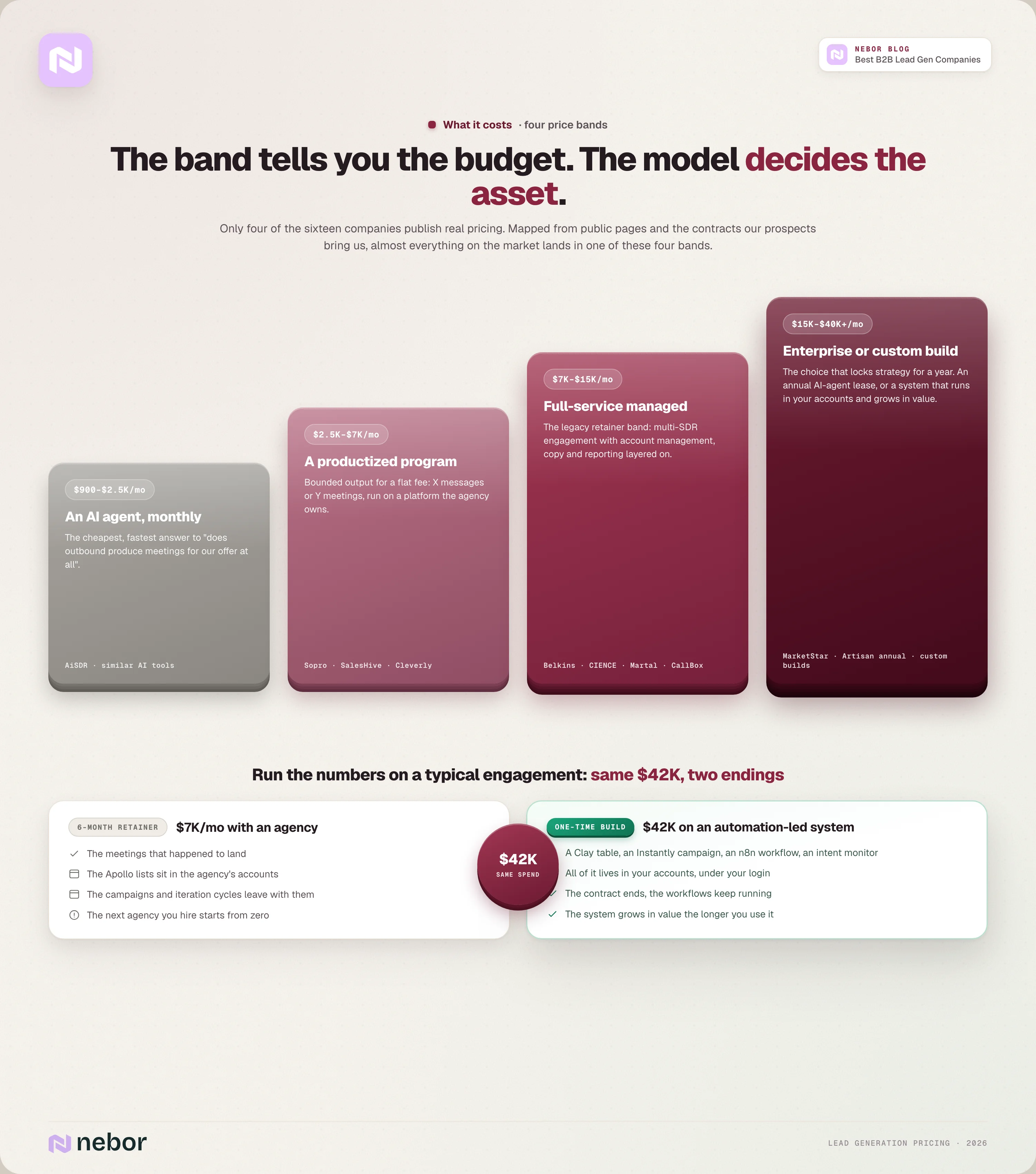
Lead generation is sold two ways, done-for-you agency work or self-serve software, and almost no lead generation companies publish prices. So here are the four bands, from public pricing pages and the contracts our prospects bring us.
AI SDR software costs $900 to $2,500 a month. Productized programs like Sopro, SalesHive and Cleverly cost $2,500 to $7,000. Full-service appointment setting retainers at Belkins, CIENCE, Martal and CallBox cost $7,000 to $15,000. Enterprise services and custom builds, including ours, cost $15,000 to $40,000 and up.
The band tells you the budget. The model decides what you keep, and Reason 2 above already did that math. Longer version: what appointment setting services really cost.
10 best B2B lead generation companies up close
How we picked these 10 lead generation companies
One rule shaped this list: every company below calls itself a lead generation agency, so the AI SDR tools, data platforms and outsourced SDR shops that get lumped into this search are out.
They all make the same core promise, appointment setting: qualifying leads and booking them onto your sales team's calendar through email, calls and LinkedIn, using the agency's own tools.
The best ones pair real ICP research with multichannel outreach, and they specialize by industry, so ask whether they've done campaigns in SaaS, IT services or manufacturing before you sign.
1. Belkins
What you need to know: Manpower-led, full-service. $3K to $15K per month, no public pricing, 6 to 12 month minimums.
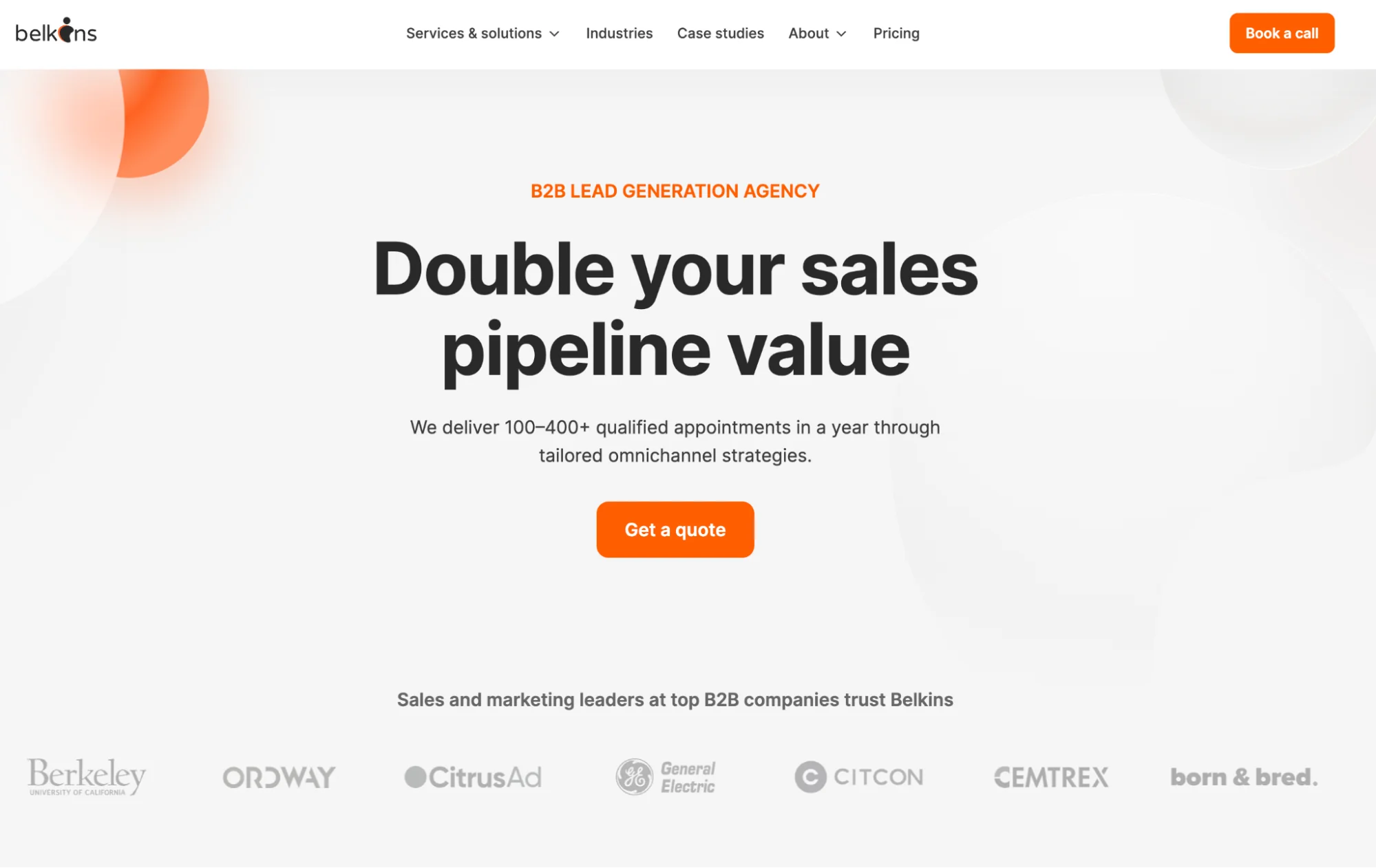
Belkins is the premium shop most B2B teams look at first, and the reviews back it: 4.9 on Clutch from over 220 reviews, 4.8 on G2.
You get a full pod around your account, dedicated SDRs plus account managers, copywriters and researchers, known for personalized outreach and appointment setting, with a proven track record and high quality leads to show for it.
Choose them if you want the most polished managed execution money can buy. The watch-out: the playbooks stay with Belkins when you leave, like everywhere else on this list. See Belkins competitors for a different price point.
2. CIENCE Technologies
What you need to know: Manpower-led, full-service. $4K to $15K per month at the managed tier, no public pricing, 6 to 12 month minimums.
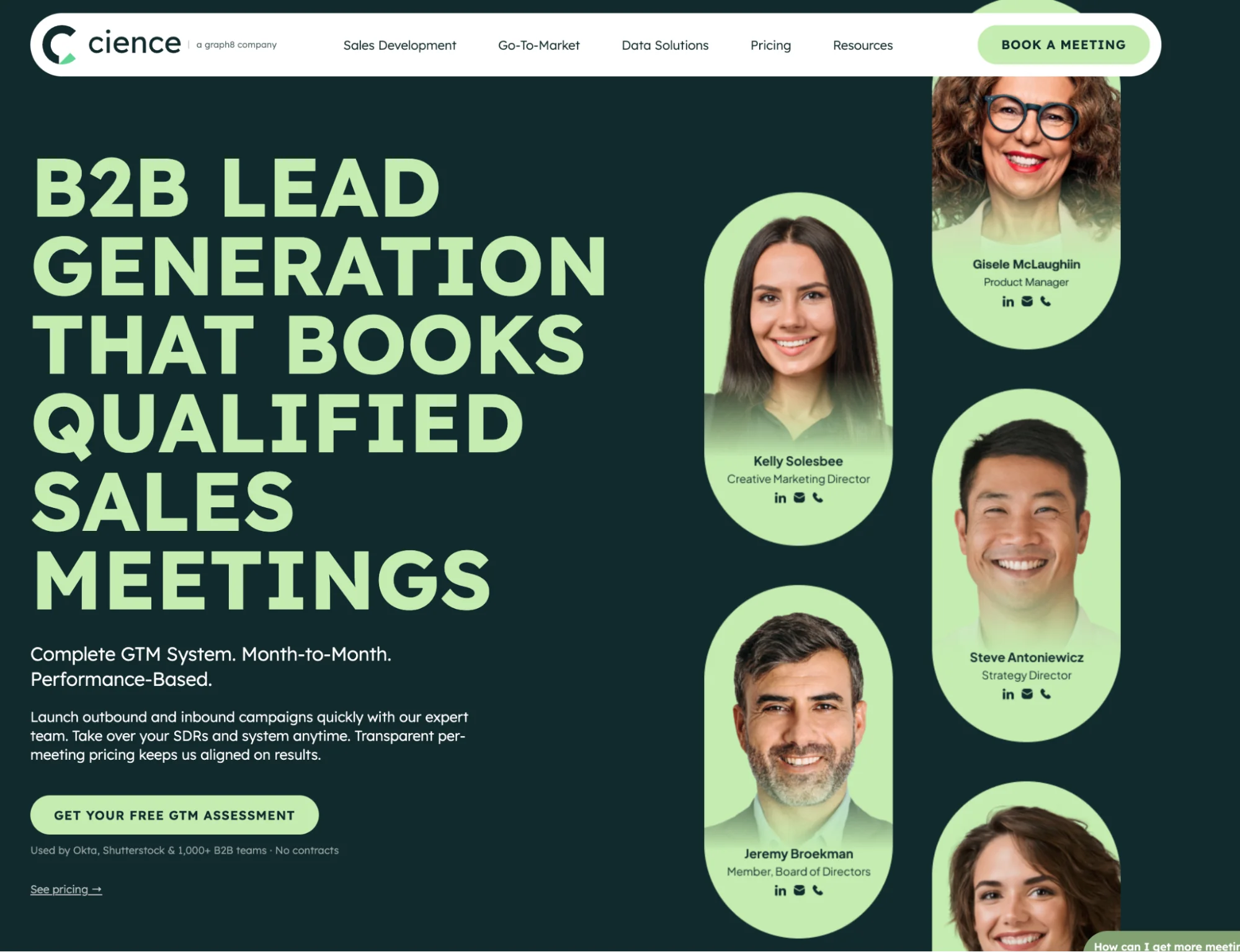
CIENCE is one of the older and larger names here, selling end-to-end B2B lead generation services: outbound and inbound SDR teams, their own data, AI-assisted outreach and lead nurturing, all under one contract.
Choose them if you want that full stack at a mid-market price point. The watch-out is the recent quality questions from buyers, covered in CIENCE alternatives.
3. Martal Group
What you need to know: Manpower-led, full-service. $5K to $15K+ per month at higher tiers, no public pricing, 6-month minimums.
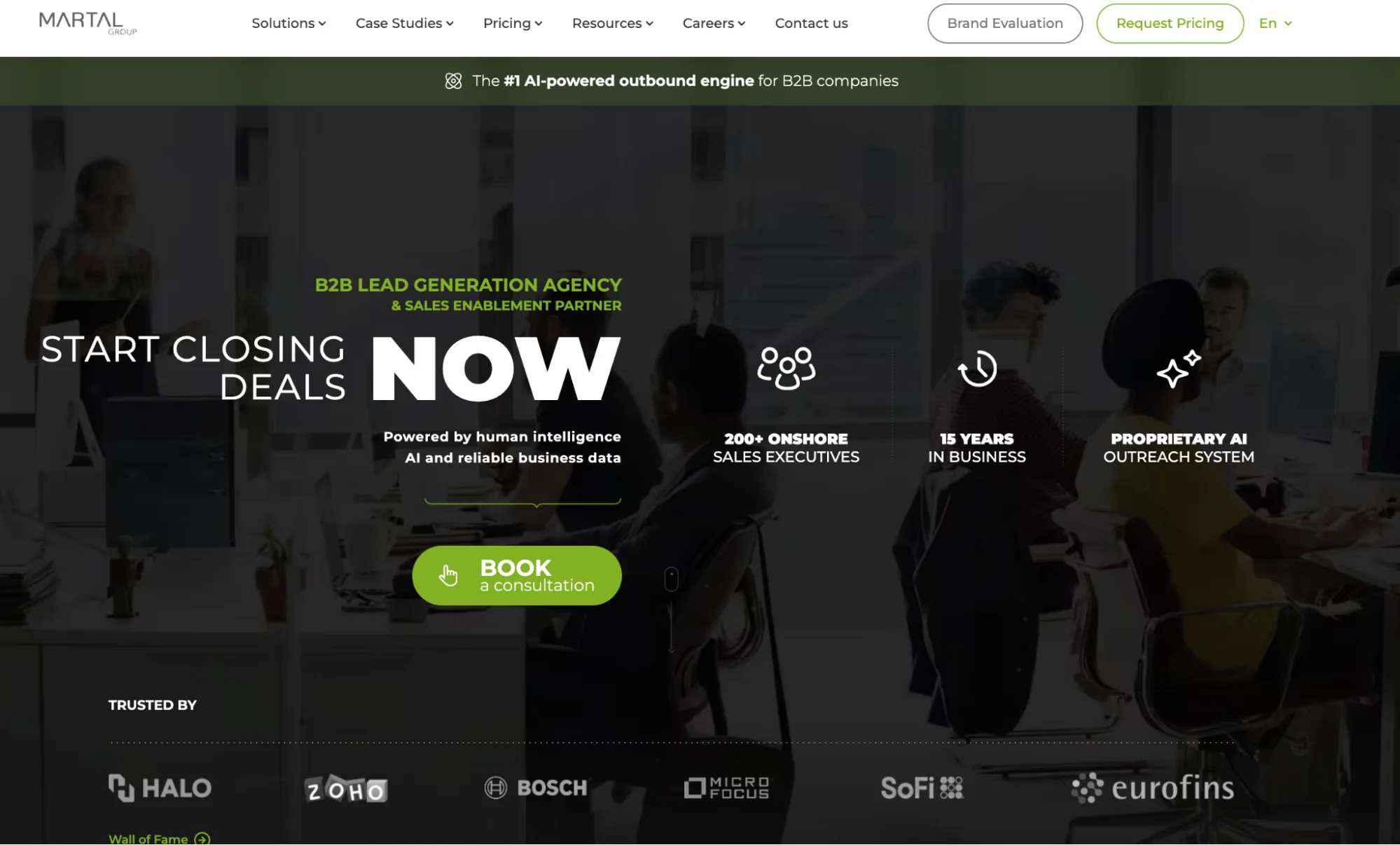
Martal is a 15-year-old outsourced sales shop for B2B tech, with 200-plus SDRs across North America, Europe and LATAM, and tiered packages that bundle lead generation, appointment setting and account management.
Choose them if you sell B2B tech and want one vendor across regions. The watch-out is tier creep. See Martal alternatives for a different price shape.
4. CallBox
What you need to know: Manpower-led, full-service. $5K to $15K per month, no public pricing, 6 to 12 month minimums.
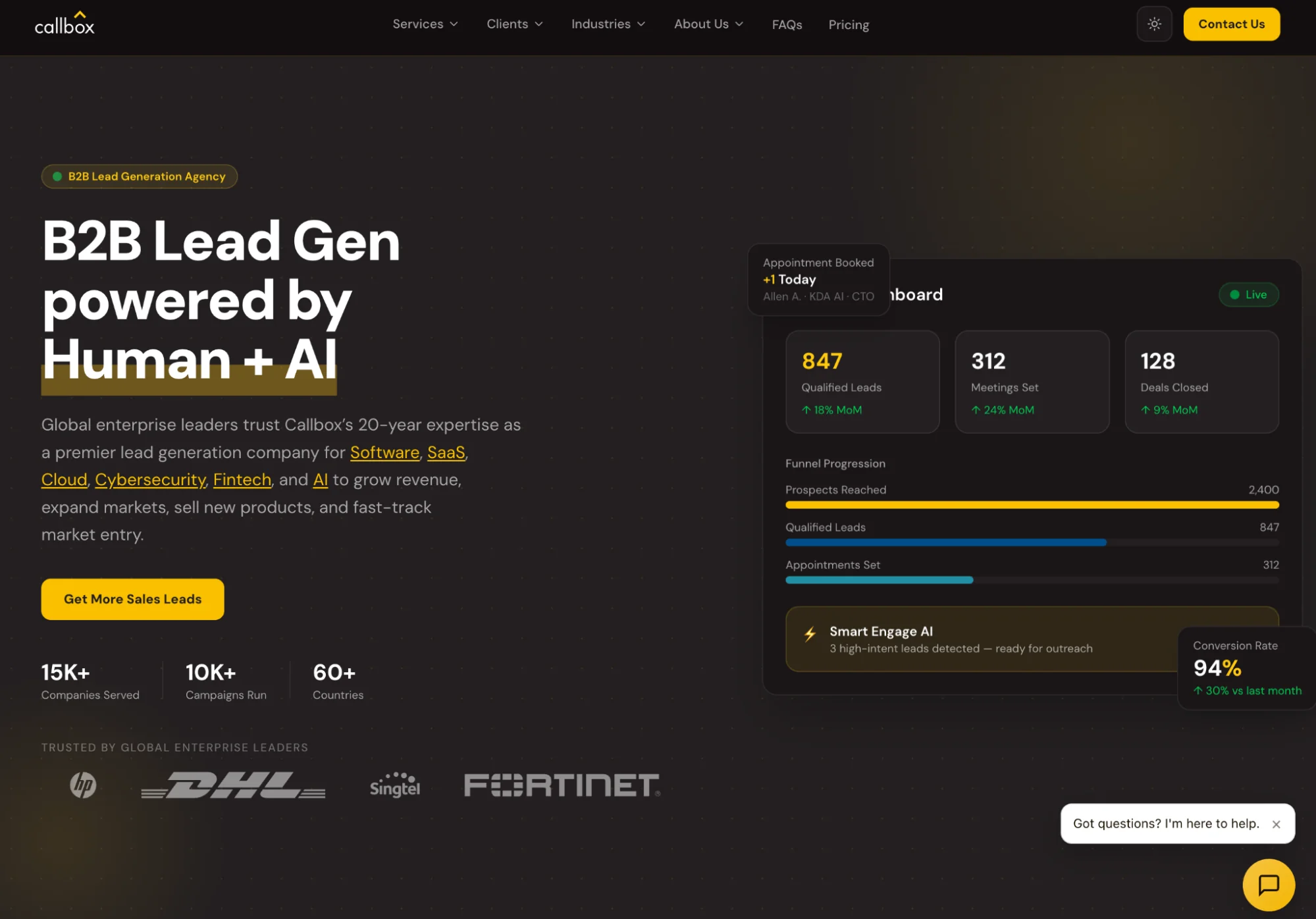
CallBox is the multi-region pick, founded over 20 years ago, with sales executives across geographies and one system for outreach across multiple channels: email, calls, account based marketing and social.
Choose them if you're rolling out across borders and need one vendor in each region. The watch-out: a process built for global rollouts can feel heavy for a single-market SMB.
5. Sopro
What you need to know: Hybrid managed-platform. From £3,000 per month, public pricing, no setup fee, month-to-month.
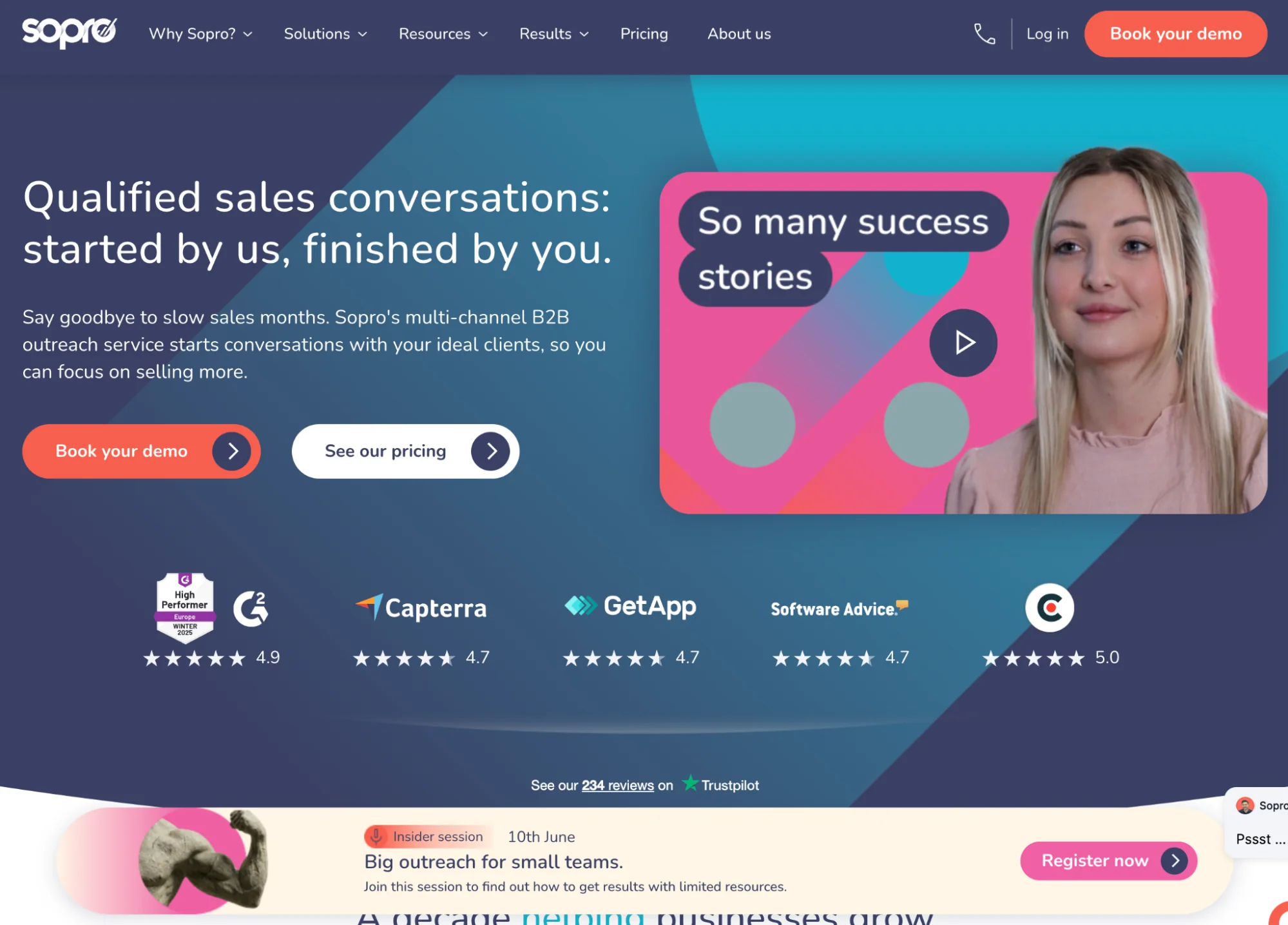
Sopro is half agency, half software platform: UK-based, 300-plus employees, a public pricing page, and clients including Sage, Zurich and Royal Mail. The pitch is a program that costs about what one SDR does, or less.
Choose them if you're UK or EU mid-market and want managed execution without lock-in. The watch-out: the platform is theirs, however long you stay. See Sopro competitors for other geographies.
6. Cleverly
What you need to know: LinkedIn-only specialist. Public pricing from $1,000 per month, retainer or pay-per-lead, 3-month minimums.
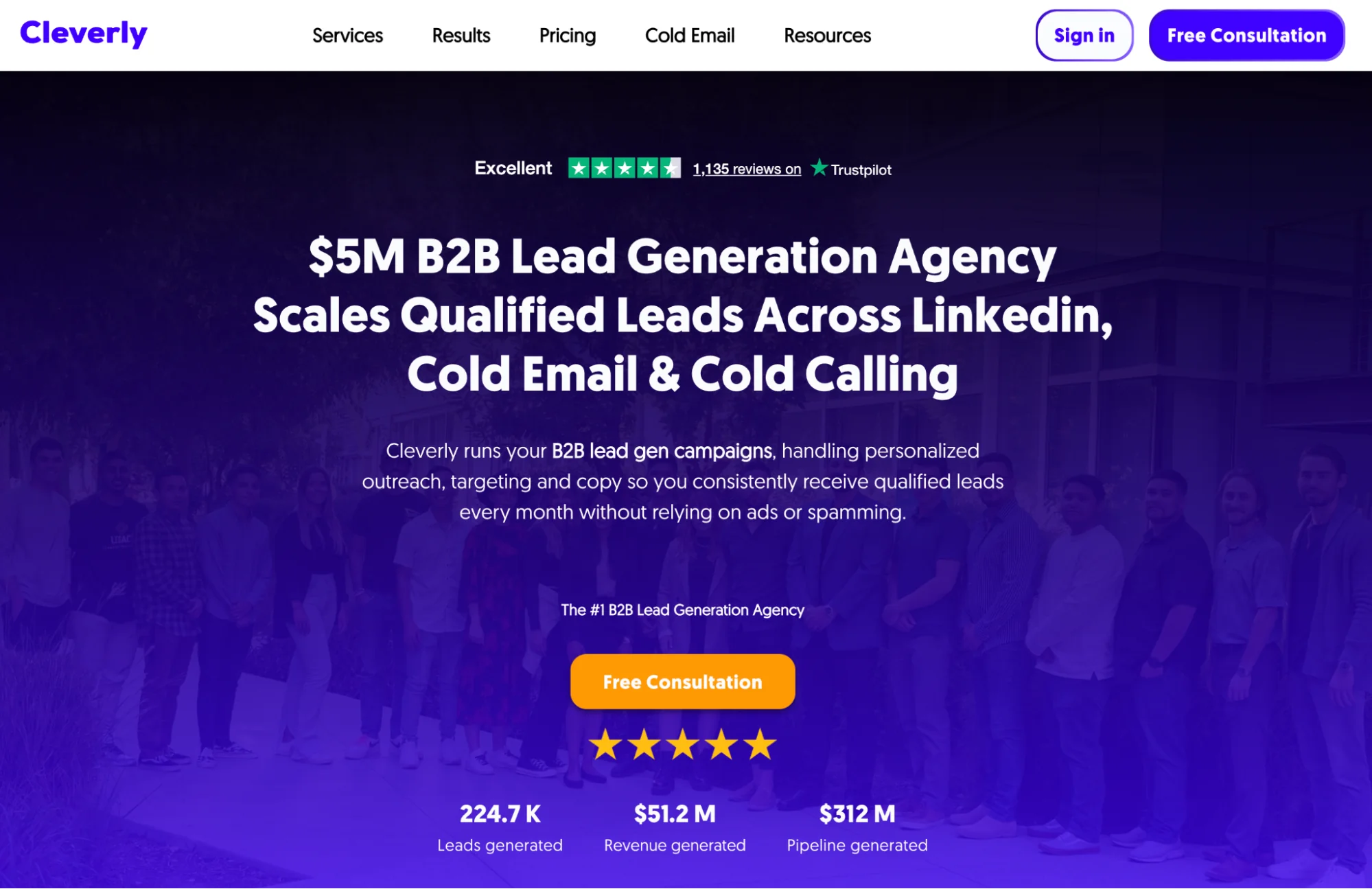
Cleverly is a LinkedIn lead generation agency through and through, with an approach built on thousands of campaigns and confident homepage numbers: 224,700-plus client leads and $51.2M in client revenue. Public pricing and a pay-per-lead option are rare in this category.
Choose them if your buyer truly lives on LinkedIn and you want a two-week launch. The watch-out is the single channel: appointment setting is only in the top tier, cheaper tiers hand you connections instead of qualified leads, and conversion rates stay capped.
See Cleverly alternatives for a different model.
7. SalesHive
What you need to know: Productized flat-tier outbound. Around $5,000 per month flat, public pricing, month-to-month contracts.
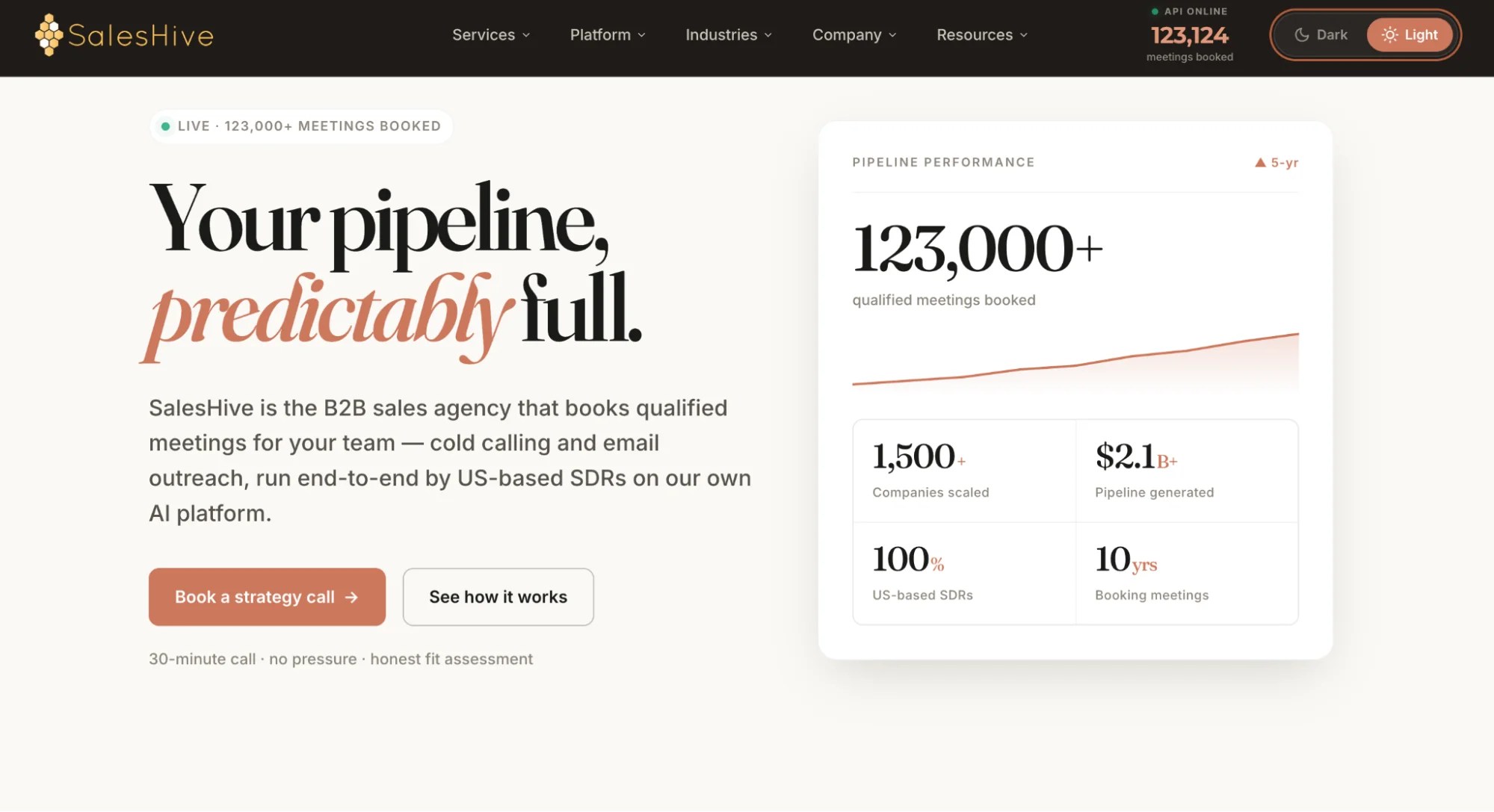
SalesHive offers a set program at a flat monthly price with US-based SDRs and campaign management included, one of the more transparent options here.
Choose them if you're US mid-market and predictability matters more than flexibility. The watch-out is the ceiling: once you hit the month's limit, everything waits for the next billing cycle.
8. Pearl Lemon Leads
What you need to know: Manpower-led, full-service. No public pricing, multi-month minimums, volume-guarantee marketing.
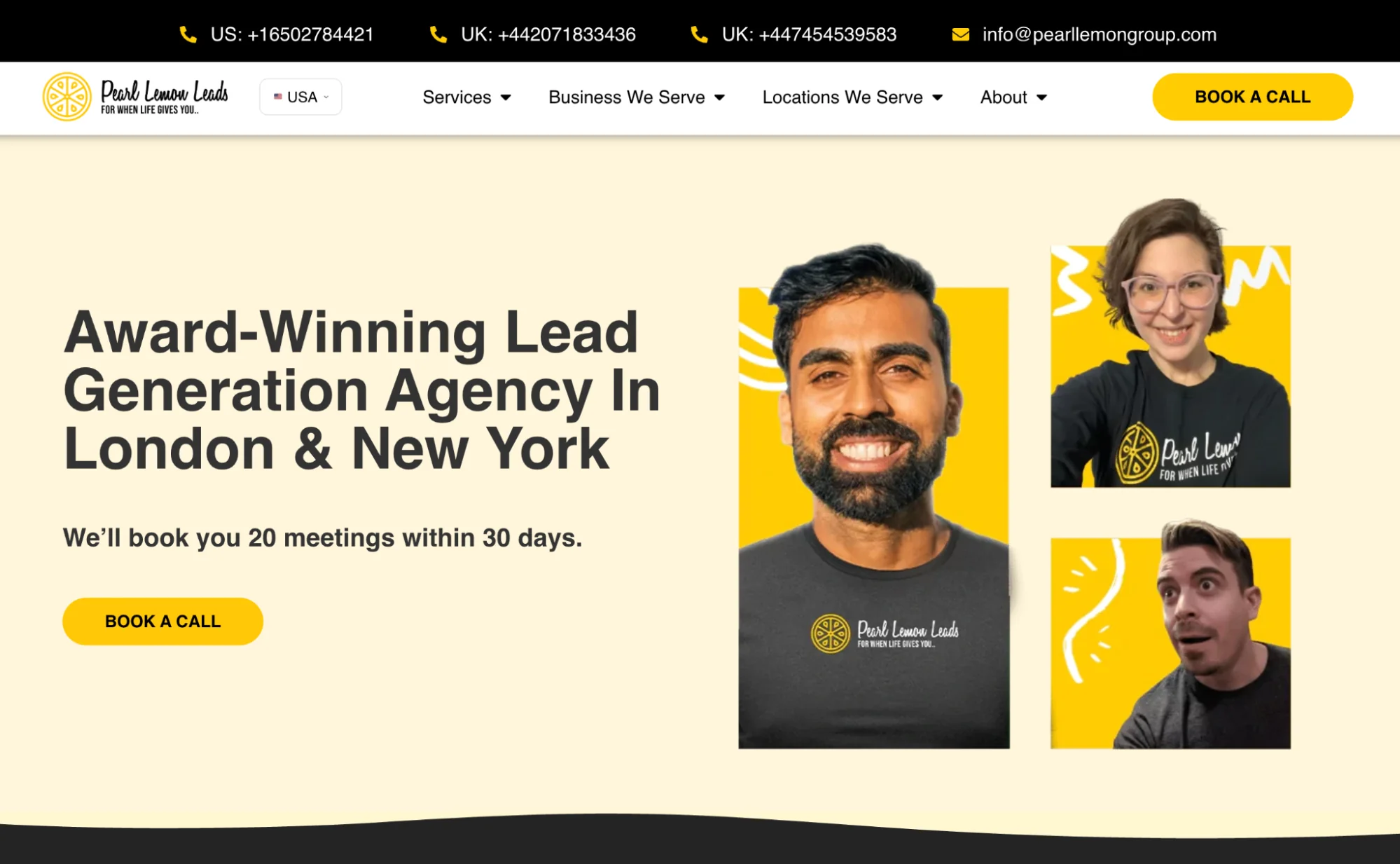
Pearl Lemon Leads is the high-volume promise on Google's front page, headlined by "20 meetings within 30 days", with LinkedIn, cold email, cold calling and content behind aggressive SEO.
Choose them if raw meeting volume is the goal and you'll qualify hard on your side. The watch-out: ask them to show you a campaign that didn't work before you trust the volume guarantee. See the best Pearl Lemon alternatives.
9. Sapper Consulting
What you need to know: Manpower-led, full-service. No public pricing, 6-month minimums, email plus direct mail to enterprise.
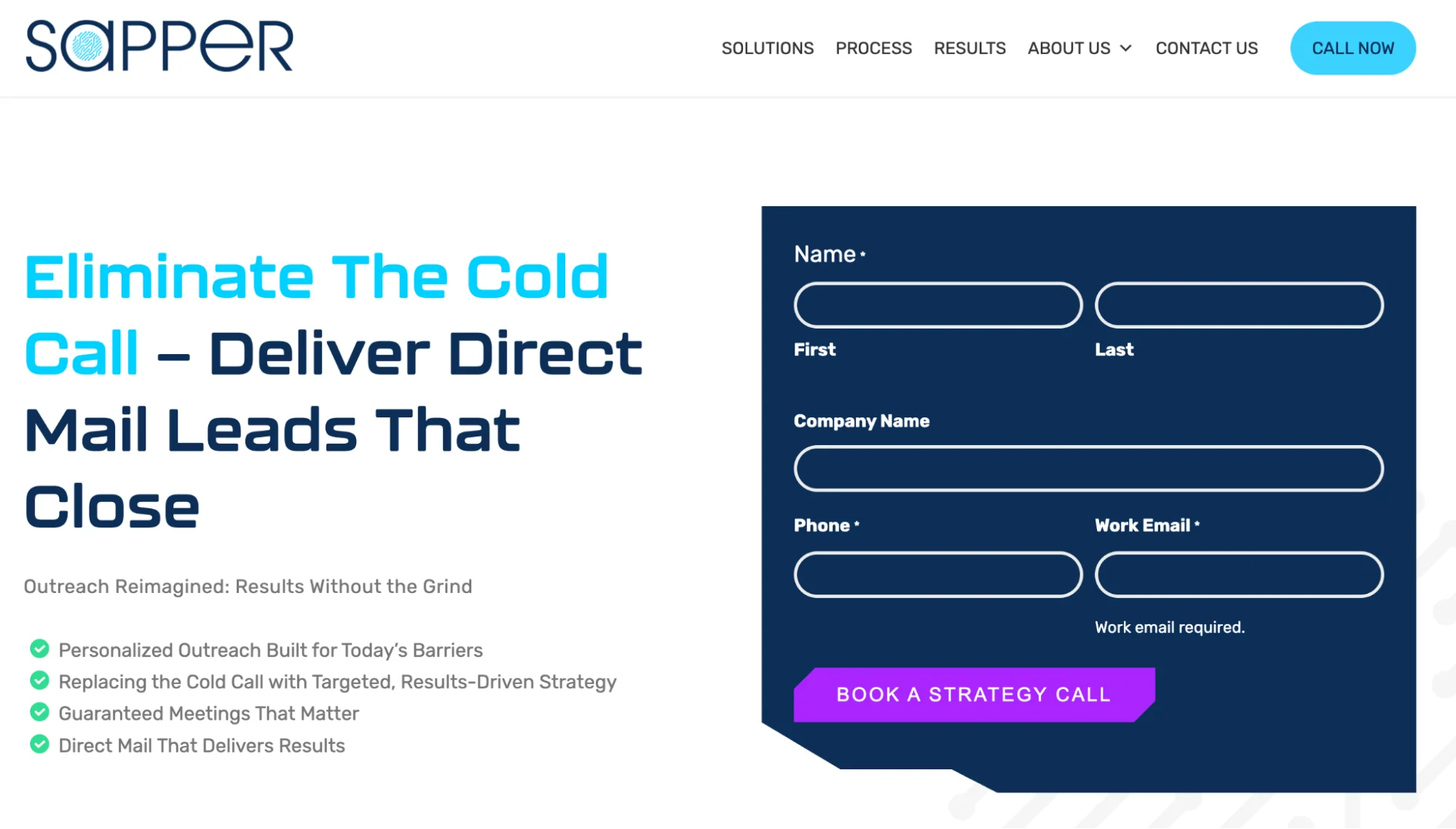
Sapper Consulting is the direct-mail specialist, built on the claim that cold email is saturated and physical mail gets through where digital doesn't, with managed email outreach and list building around it.
Choose them if you sell into enterprise desks where a physical touch stands out. The watch-out is measurement: direct mail is harder to attribute, so agree on tracking before you sign.
10. SalesHawk
What you need to know: Hybrid AI plus human-led outreach. No public pricing, multi-month minimums.
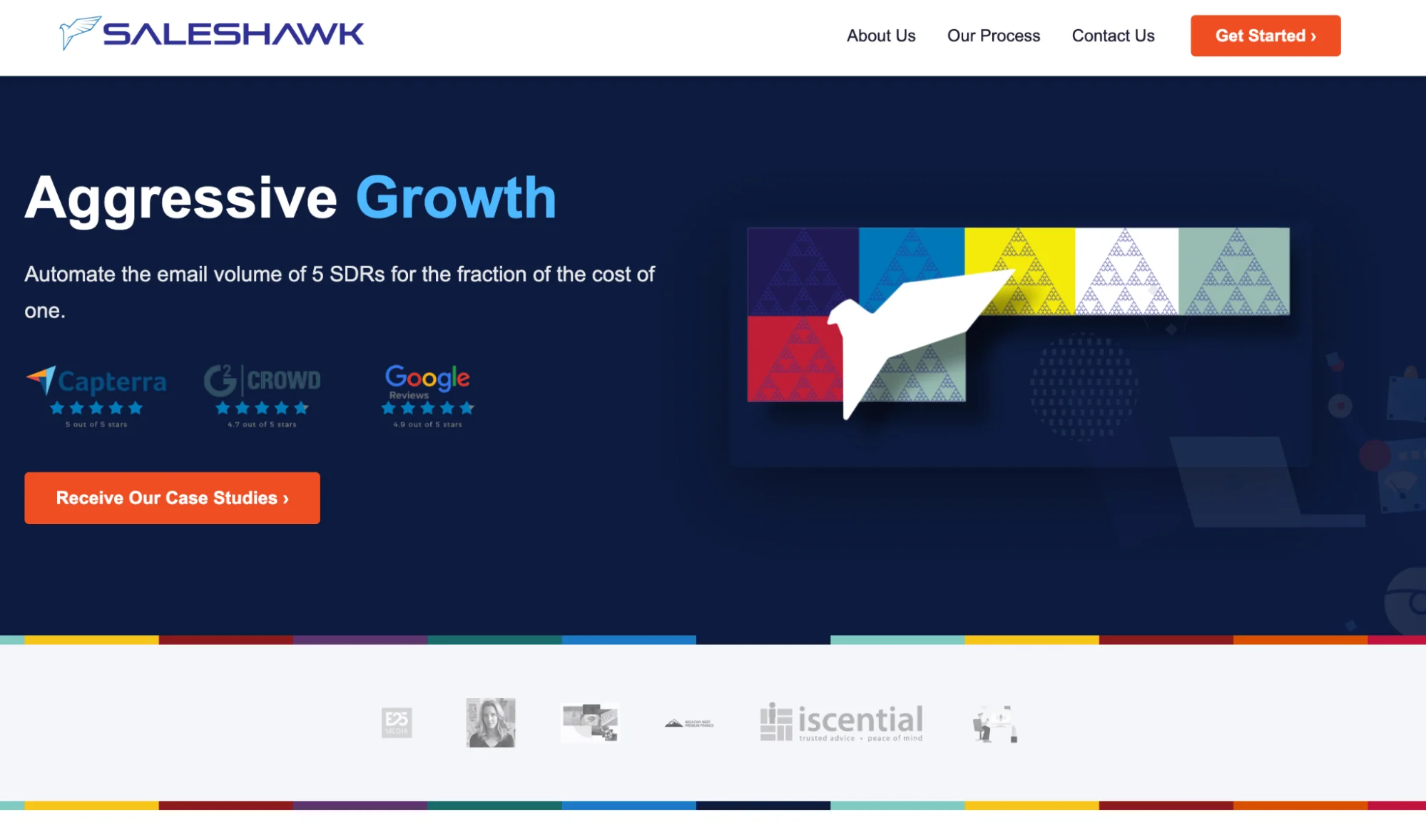
SalesHawk pitches sales leaders who want results without the overhead, mixing AI automation with human expertise, and promises steady replies and lead volume without new headcount.
Choose them if you're SMB and want to test an AI-plus-human hybrid before a bigger retainer. The watch-out is opacity: no public pricing and a younger track record.
Questions buyers ask before hiring lead generation companies
Is hiring a lead generation agency still worth it in 2026?
Yes in three cases: you need execution capacity on a proven playbook, you're entering regions you can't staff, or you need a burst of qualified leads this quarter.
If what you need is the top of your sales funnel handled permanently, the retainer is the expensive route to business growth.
What do B2B lead generation and appointment setting services cost?
Most lead generation companies price their lead generation services in four bands: AI SDR software from $900 per month, productized programs $2,500 to $7,000, full-service retainers $7,000 to $15,000, and enterprise or custom builds to $40,000 and beyond. What you keep at the end is the number that matters.
What belongs in a lead generation strategy beyond hiring an agency?
Inbound marketing channels generate leads too, and most agencies don't touch them. Search engine optimization brings in the searches buyers already make, PPC advertising brings leads by paying per click, webinars turn attendees into warm leads, and content marketing and email marketing feed it all.
Those marketing strategies still need an owner, whether that's your team or a marketing agency. The lead generation strategies that survive vendor changes are the ones you own.
How is demand generation different from lead generation?
Demand generation is how marketing teams create interest in your category through content, ads and brand. Lead generation captures that interest and converts it into names, meetings and pipeline.
They work best wired together, with your marketing efforts and sales outreach reading the same data, and that's how we build them.
How long before lead generation campaigns show results?
Most campaigns need a few weeks of inbox warm-up before potential customers see the first email, and agencies quote one to three months to steady meeting flow. An owned system ramps on the same clock, and it's still there in year two.
How do you measure lead generation performance?
Measure performance on outcomes, with numbers that can't be gamed: cost per qualified lead, cost per meeting held, conversion rates from meeting to pipeline, and sales opportunities created per month.
If a vendor reports emails sent and hours logged, your lead generation efforts are being measured in activity, and conversion rates will tell you so within a quarter.
What should a lead generation partner leave you with when the contract ends?
More than the leads generated while you paid. The workflows, the company data on potential customers, and what every campaign taught you should be yours, in your accounts. If they aren't, you're renting.
Should you build an in-house SDR team, hire an agency, or own the workflows?
In-house sales teams give you control and take 12 to 18 months to ramp. Agencies start fast and leave nothing behind. An owned workflow system is up in weeks, keeps every lesson, and never resigns.
If that's the route you're weighing, book a call and we'll walk you through our actual Clay workflows and real results. No black boxes.
Note: B2B lead generation is no longer what it used to be. Most lead generation agencies and experts now depend on Clay, automation and AI to do the work people used to do by hand.
What most of them will not tell you is that they keep those tools and workflows in house and sell you only the campaigns and results. When you stop paying, you are back at zero.
At Nebor, we are a GTM engineering and RevOps agency. We build the automated prospecting and lead generation that fills your pipeline, and we build it so you own it.
The difference shows up around month six. A lead generation agency is still charging you a retainer. With us, the workflows are already yours, so the only thing left to pay for is the software underneath them.
Book a 15-minute call and we'll show you what an automated lead generation motion would look like for your business.


Related Articles


By clicking Sign Up you're confirming that you agree with our Terms and Conditions.