

Enterprise-platform voor ABM en intent dat accounts scoort op hun voorspelde koopfase, met prijs op aanvraag en gebouwd voor teams met ops-ondersteuning.
Wat is
6sense
6sense verdient zijn prijs terug op één specifiek niveau: een enterprise met een grote adresseerbare markt, een marketing-ops-team om het geheel te sturen, en ads, outbound en CRM die allemaal één gedeeld beeld van het account nodig hebben. Onder dat niveau blijft het grootste deel van waar je voor betaalt ongebruikt. Het platform voegt intentdata van derden, de-anonimisering van websitebezoek, technografische data en je eigen CRM-historie samen in een voorspellend model dat elk account een koopfase en een fitscore geeft. Ads, alerts en plays voor sellers gaan vervolgens af op basis van die fases in Salesforce, HubSpot, Outreach of LinkedIn, zodat je reps nooit een tweede tool hoeven te openen. Het verschil met het kopen van een losse intentfeed is dat 6sense een eigen datanetwerk heeft en anoniem websiteverkeer zelf herleidt, waardoor het signaal en de scoring op één plek zitten. Daar kom je alleen met echt werk, want iemand moet eerst de segmenten, keywords en regels voor de fases vastleggen. We zouden een klant niet op 6sense zetten. De scoring die de prijs moet rechtvaardigen, is precies het deel waar je niet in kunt kijken, en een koopfase die niemand kan uitleggen wordt genegeerd zodra een rep het er niet mee eens is. Met Bombora, bezoekersidentificatie en Clay haal je het grootste deel van dat signaal binnen, met regels die een rep gewoon kan lezen.
Integraties en de moderne GTM-stack
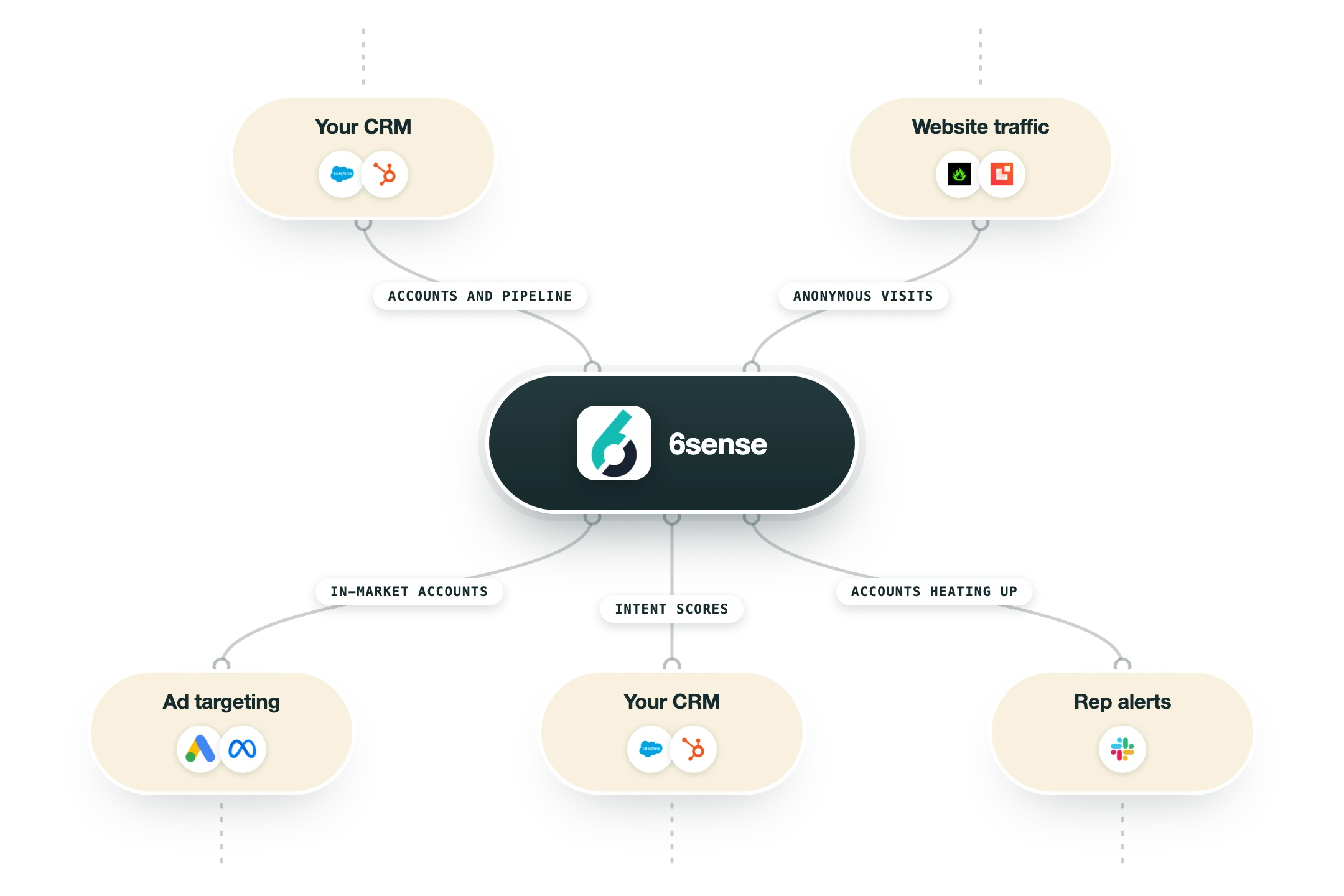
6sense koppelt via kant-en-klare integraties in plaats van een open API die je zelf kunt gebruiken, en de nuttige flows draaien er allemaal om dat accountscores terechtkomen in de systemen waar je team al in werkt.
Salesforce, Microsoft Dynamics en HubSpot CRM | 6sense leest je account- en opportunityhistorie om het model te trainen en schrijft daarna koopfase, intent en fitscores terug op account- en leadrecords, zodat reps ze in het CRM zien. |
Marketo, Eloqua, Salesforce Marketing Cloud Account Engagement en HubSpot MAP | Segmenten die je in 6sense bouwt, gaan als lijsten naar het marketing-automationplatform, zodat nurture- en e-mailprogramma's zich richten op accounts die het model als in-market heeft gemarkeerd. |
LinkedIn, Meta, Google Ads | Accountsegmenten gaan als advertentiedoelgroepen naar buiten voor account-based campagnes, en 6sense haalt de engagement terug, zodat het zien van ads meetelt in de accountscore. |
Outreach, Salesloft, Salesforce Sales Engagement en Gong Engage | Reps kunnen contacten uit 6sense direct aan een sequence toevoegen, en intent en voorspellende inzichten verschijnen in de sales engagement tool, zodat het platform geen apart tabblad is dat je moet onthouden. |
Bombora, G2, TrustRadius, PeerSpot, Gartner Digital Markets en Informa TechTarget | Intentfeeds van derden worden naast de eigen signalen van 6sense ingelezen. Betaal je al voor Bombora of G2, dan kan die data naar binnen stromen in plaats van vast te zitten in een los rapport. |
Snowflake, AWS S3 | Accountscores en intentdata kunnen naar je datawarehouse of object storage worden gestuurd. Die route gebruiken de meeste teams voor eigen rapportages en modellen verderop in de keten. |
Slack en mailservers | Alerts komen binnen in Slack of je inbox als een account van koopfase verandert of een target de site bezoekt, en dat is wat de meeste sellers in de praktijk dagelijks gebruiken. |
API-token (kanttekening) | 6sense noemt in zijn documentatie een integratietype met API-token, maar er is geen openbaar gepubliceerde API-referentie zoals Clay of HubSpot die hebben. Alles op maat loopt dus via hun team, en de lijst met connectors is in de praktijk de grens. |
Voordelen
Data over accounts en buying committees gaat diep op enterpriseschaal, vooral in Noord-Amerika.
Intent, gede-anonimiseerd websiteverkeer en CRM-historie komen samen in één accountbeeld in plaats van in vier losse tools.
De ABM-orkestratie is volwassen, dus hetzelfde segment kan tegelijk ads, nurture en alerts voor sellers aansturen.
Brede integraties met CRM, marketing automation, sales engagement, advertentieplatforms en het datawarehouse.
Het scoort een 4,4 uit meer dan duizend reviews op G2, dus het kernproduct werkt duidelijk voor zijn kopers.
Nadelen
Door de data van derden ligt het mediane jaarcontract boven de $60.000, en dat is onder enterpriseschaal lastig te verantwoorden.
Contracten lopen een jaar of meerdere jaren, met automatische verlenging en krappe opzegtermijnen, dus een slechte match blijft duur.
Reviewers noemen de scoring van de koopfase keer op keer ondoorzichtig, waardoor je reps niet kunnen zien waarom een account bovenkwam.
Een volledige implementatie duurt vaak drie tot zes maanden en vraagt om een vaste ops-eigenaar die segmenten en keywords beheert.
Er is steeds kritiek op de nauwkeurigheid van contactdata en de internationale dekking, dus vaak koop je alsnog een tweede databron.
Prijzen
Sales Intelligence + Data Credits
Op maat alleen op offerte, geen openbare prijslijst
Chrome-extensie en lijstbouwer
Technografische data, vacatures en intentdata van derden
Identificatie van websitebezoekers
Sales Intelligence + Predictive AI
Op maat alleen op offerte
Voorspellend model, scores en dashboards
Aanbevolen acties via Sales Copilot
Integratie met CRM en sales engagement
Sales Intelligence + Data Credits + Predictive AI
Op maat volledig salespakket
Alles uit beide lagere pakketten
Bedrijfs- en contactdata inkopen
Kopers ontdekken en slimme workflows
Revenue Marketing
Op maat de marketingkant van het platform, apart verkocht
Account-based advertising
Segmenten doorzetten naar je MAP
Rapportage over campagnes en pipeline
Zo past het in je stack
Alternatieven


In het kort
Voorspellende modellen voor de koopfase
Intentdata van derden op één plek
De-anonimisering van websitebezoekers
Ingebouwde account-based advertising
Sync met Salesforce, Dynamics en HubSpot
Plays in Outreach en Salesloft
Datalevering naar Snowflake en S3
Enterprise-prijzen alleen op offerte
Lees een paar van onze klantverhalen




GTM-workflows
Zo zet je GTM-tools in binnen workflows
Gidsen en tutorials om het meeste uit je workflows te halen
Geen items
Klaar om te beginnen?




Door op Registreren te klikken bevestig je dat je akkoord gaat met onze Algemene Voorwaarden.