
Google Ads koopt intentie in via Search, YouTube, Gmail en het displaynetwerk op basis van een veiling, zonder licentiekosten. Elke betaalde klik is meteen ook een intentsignaal dat je naar je CRM kunt routeren.
Wat is
Google Ads
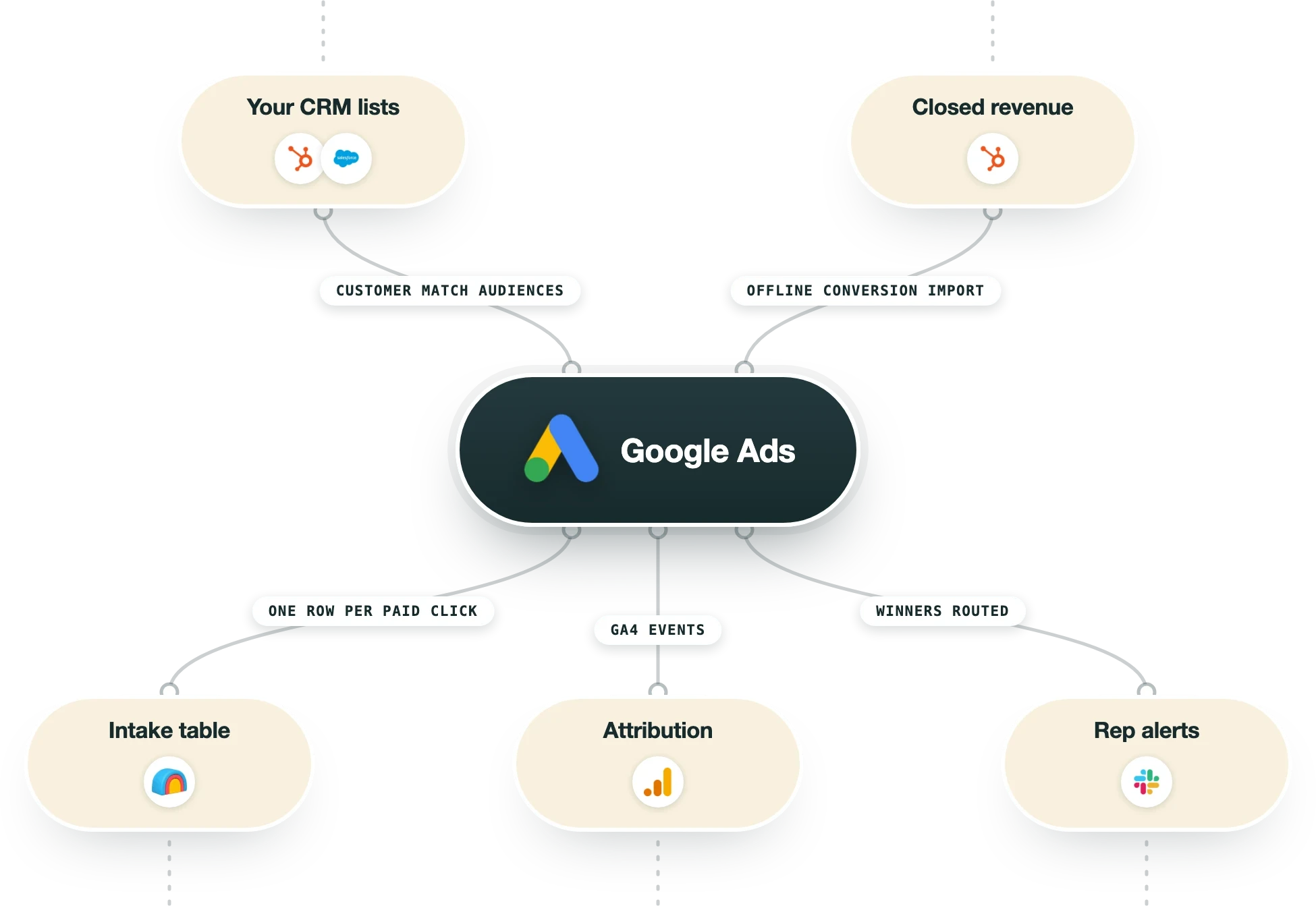
Met Google Ads koop je aandacht in op alles wat Google bezit: de zoekresultatenpagina, YouTube, Gmail, Discover, Maps en het displaynetwerk dat het grootste deel van het web bereikt. Je kiest wie je wilt bereiken, je geeft aan wat een resultaat je waard is, en een veiling bepaalt of je advertentie wordt getoond en wat die klik kost. Voor B2B draait het om search. Wie een probleem in Google intypt, heeft al besloten dat het opgelost moet worden, en een warmer moment vind je nergens in de funnel. Door die intentie kost een klik in sommige softwarecategorieën meer dan honderd dollar en verdient hij zichzelf toch terug. De andere campagnetypes werken anders. Performance Max verdeelt één budget over alle kanalen van Google en laat het model bepalen waar het heen gaat. Demand Gen zet visuele advertenties voor mensen nog voordat ze zoeken. Google schuift losse Display-campagnes in de loop van 2026 onder Demand Gen, dus nieuwe visuele campagnes begin je het best daar. Bij Nebor is Google Ads voor ons evenveel een signaalbron als een kanaal. Een betaalde klik is een intent-event met een naam eraan, dus we zetten hem in dezelfde tabel als je formulierinzendingen en websitebezoekers, scoren hem met alles wat je verder over het account weet en routeren hem zoals elke andere inbound lead. Customer Match laat de stroom de andere kant op gaan: een lijst die je in je CRM bouwt, wordt een doelgroep die je kunt targeten of uitsluiten. Zo stop je met betalen om reclame te maken bij je eigen klanten.
Integraties en de moderne GTM-stack
Google Ads koppelt aan een GTM-stack via doelgroepen die erin gaan en conversies die eruit komen:
Customer Match | Gehashte lijsten uit je CRM worden exact-match-doelgroepen op search en YouTube, en uitsluitingen synchroniseren vanuit dezelfde lijsten. |
Offline conversie-import | Gesloten omzet stroomt terug naar de klikken waarmee het begon, zodat de biedstrategie leert van deals in plaats van formulierinzendingen. |
Google Analytics 4 | De klik en de sessie worden aan elkaar gekoppeld, en pas daardoor kun je betaald verkeer überhaupt toeschrijven. |
HubSpot en Salesforce | Een native doelgroepsync laat advertentielijsten automatisch je CRM-segmenten volgen, zonder dat iemand een CSV hoeft te exporteren. |
Google Ads API | Campagnes en doelgroepen aansturen vanuit code. Zo haalt een workflow een opgewarmd account uit een doelgroep op de dag dat de outreach begint. |
Voordelen
Search bereikt mensen op het moment dat ze zoeken naar wat jij verkoopt, en dat kan geen enkel outbound kanaal nadoen.
Er zijn geen platformkosten en er is geen contract, dus het enige geld dat op het spel staat, is het dagbudget dat je zelf instelt.
Customer Match maakt van een CRM-segment een doelgroep, zodat je open pipeline kunt targeten en bestaande klanten kunt uitsluiten.
Offline conversie-import stuurt gesloten omzet terug naar Google, zodat de biedstrategie optimaliseert op deals in plaats van formulierinzendingen.
Een betaalde klik neemt het zoekwoord en de campagne mee, en dat maakt hem tot een van de meest specifieke intentsignalen die je kunt krijgen.
Het bereik is ongeëvenaard: Search, YouTube, Gmail, Discover, Maps en het grootste deel van het open web zitten achter één account.
Nadelen
Competitieve zoekwoorden voor B2B-software kosten van tachtig tot ruim boven de honderd dollar per klik, dus een zwakke landingspagina verbrandt snel geld.
Performance Max verbergt het grootste deel van zijn data over plaatsingen en zoektermen, en daardoor is verspilling lastig te vinden en te schrappen.
De interface duwt automatische aanbevelingen die je uitgaven verhogen, en die worden vanzelf doorgevoerd tenzij je automatisch toepassen uitzet.
Klikfraude en rommelverkeer komen voor aan de displaykant, en die in de gaten houden is jouw werk.
Resultaten stoppen op de dag dat het budget stopt. Content of een workflow die je zelf bezit, levert juist rendement op dat zich opstapelt.
Prijzen
Het account
$0 geen licentie, geen minimum, geen contract
Onbeperkt campagnes en zoekwoorden
Conversietracking en offline import
Customer Match-doelgroepen uit je CRM
Klikken in Search
$2,96 gemiddelde CPC over alle sectoren, Q1 2026
Betaald via de veiling, per klik
Een hoge Quality Score verlaagt wat je betaalt
B2B en SaaS zitten gemiddeld dichter bij $3,33
Display en Demand Gen
$0,44 gemiddelde CPC op het displaynetwerk
Goedkoper bereik, koudere doelgroep
Visuele formats op YouTube en Discover
Losse Display-campagnes gaan op in Demand Gen
Competitieve B2B-software
$80 tot $110 per klik op de moeilijkste zoekwoorden
Geprijsd naar wat het contract waard is
De kwaliteit van je landingspagina bepaalt de rekensom
Alleen de moeite waard met echte conversietracking
Gangbaar maandbudget
$1.000 tot $10.000 per maand voor de meeste kleine en middelgrote teams
Het gemiddelde account komt uit rond $3.100 per maand
Dagbudget met plafond, op elk moment te pauzeren
Je uitgaven volgen je pipeline en niet het aantal licenties
Zo past het in je stack
Alternatieven


In het kort
Geen licentiekosten, geen minimumbesteding
Veilingprijzen op klikken, weergaven of conversies
Search vangt mensen die al aan het zoeken zijn
Performance Max dekt alle kanalen van Google
Demand Gen bereikt mensen voordat ze zoeken
Customer Match target of sluit CRM-lijsten uit
Offline conversie-import koppelt uitgaven aan gesloten omzet
Elke klik is een bruikbaar intentsignaal
Lees een paar van onze klantverhalen
GTM-workflows
Zo zet je GTM-tools in binnen workflows
Gidsen en tutorials om het meeste uit je workflows te halen





Klaar om te beginnen?


Door op Registreren te klikken bevestig je dat je akkoord gaat met onze Algemene Voorwaarden.