

The advertising platform behind Facebook and Instagram. In a GTM stack it warms your exact target accounts with custom audiences built from your own lists, at a fraction of LinkedIn's cost, before any outreach lands.
What is
Meta Ads
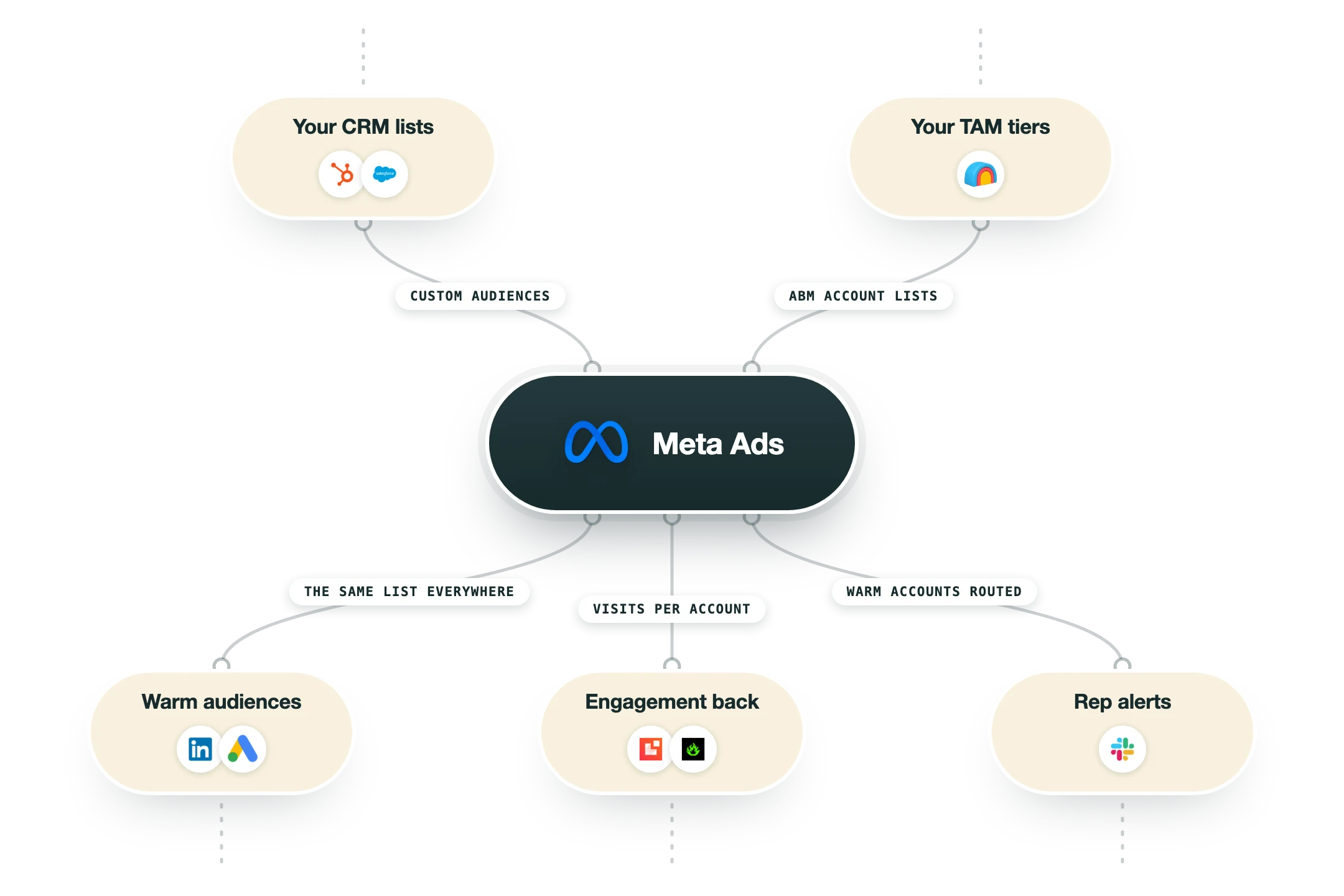
Meta Ads is where you buy attention on Facebook and Instagram, plus Messenger, WhatsApp and the Audience Network behind them. One platform, one auction, and your ad follows people through the feeds they read every day, most of it off the clock. The reason it earns a place in a B2B stack is price and presence. Your buyers scroll the same feeds as everyone else in the evening, and reaching them there costs a fraction of what LinkedIn charges for the identical person. The targeting is blunter, there are no job-title filters, so the aiming comes from the lists you feed it. That is exactly the job we give it in our warming and ABM builds. Your CRM lists and TAM tiers upload as custom audiences, useful content lands on those exact companies for weeks before any outreach, and suppression syncs from the same lists so a closed deal stops its own ads. Lookalike audiences built from your closed-won customers extend the same list to companies that resemble them. Fed a precise list, Meta is the cheapest familiarity a B2B budget can buy. Fed a loose one, it happily spends everything on the wrong companies. The list always comes first in our builds, and the platform stays on a short leash: small budgets, tight audiences, and the engagement flowing back into the same table that built the list.
Integrations and the modern GTM stack
Meta Ads plugs into a GTM stack through its APIs and the audience syncs the ecosystem has built on them:
Custom Audiences | The workhorse: upload a hashed list of emails or companies from your CRM or your Clay table, and the ads reach exactly those people. Suppression lists work the same way in reverse. |
Conversions API | The server-side event feed. Your site or backend reports signups and purchases straight to Meta, which keeps the measurement standing where browser tracking has crumbled. |
Marketing API | Programmatic control of campaigns, budgets and audiences, which is how a workflow rotates an account out of the warming audience the day its sequence starts. |
HubSpot and Salesforce | Both CRMs sync lists to Meta natively, so an audience can follow a CRM segment without anyone exporting a CSV. |
Lead Ads webhooks | If you use lead forms, every submission sends a webhook the moment it lands, into n8n, Zapier or straight at your table, so the follow-up starts in minutes. |
n8n and Zapier | Ready-made nodes for audience updates and lead capture, for the steps where you would rather wire it visually than call the API yourself. |
Pro’s
The reach is unmatched: the same buyer you can't afford to reach on LinkedIn every day is on Instagram every evening, and a custom audience puts your name in front of them for a fraction of the cost.
Custom and lookalike audiences from your CRM lists mean the ads follow the account list your outbound already works, so warming and outreach point at the same companies.
The Conversions API sends conversions from your server, so attribution survives ad blockers and browser privacy changes.
Creative testing is fast and cheap, and what you learn about which message lands feeds the email copy too.
Lead Ads capture a form in the feed and hand it to your CRM through the integrations, with the source stamped.
Cons
Company-level match on B2B lists is weaker than LinkedIn's, so a small target list can match poorly and the audience needs padding.
Targeting by job title and company is limited compared with LinkedIn, so it works best as a warming layer on a list you already have.
Reporting attributes generously to itself, and without your own attribution the numbers flatter the channel.
Policy reviews and account restrictions can pause campaigns with little warning.
Pricing
Auction pricing
No license fee you pay per impression or click
Budgets start at a few euros per day
Daily and lifetime caps you control
Cost follows your audience and market, set by auction
Warming a tight account list stays cheap because the list stays small
How it fits your stack
Alternatives


At a glance
Facebook, Instagram, Messenger, WhatsApp and the Audience Network from one account
Custom audiences from your CRM lists and site visitors
Lookalike audiences built from your best customers
Conversions API sends events server-side, past ad blockers
Pixel for site events, Lead Ads for in-feed forms
Reaches your buyer on the phone in the evening
Self-serve, no minimum spend
Detailed reporting per audience and creative
Read some of our client stories
GTM Workflows
Learn how to use GTM tools in workflows
Guides and tutorials to get the most from your workflows









Ready to get started?




By clicking Sign Up you're confirming that you agree with our Terms and Conditions.