
10 Best Clay Agencies (Claygencies) To Consider 2026

In this post:
Clay changed the way companies do outbound and go to market. With it, you can build a sales and GTM (go-to-market) motion that drives your business growth from demand generation to RevOps activities.
You can build your self-sufficient lead generation and outreach workflows that work on autopilot. No more manual scraping, no more writing hundreds of cold emails by hand, and no more guessing who’s a good fit.
But as powerful as Clay is, it only works as well as the people behind it. That’s where Clay agencies or Claygencies come in.
After three years of building Clay-based GTM systems for B2B clients, we’ve worked with, replaced, or competed against most of the agencies on this list.
The pattern is clear by now. The Clay agency category split into three different types of company sometime in 2025.
It hasn’t been one job for a while.
You have outbound execution shops that send campaigns for you and use Clay as the data layer behind the scenes.
Clay-specialist consultancies who build the tables and the workflows, then hand both back to your team.
Last and best, you have full GTM systems builder agencies that treat Clay as the spine of an end-to-end revenue stack covering outbound, inbound, signal monitoring, and RevOps.
So this piece covers ten Clay agencies (claygencies) worth considering in 2026, sorted with the categories made explicit. We also share a short framework for picking the one that fits your stage and your team.
If you want a more elaborated read on the category mechanics, our longer piece on the Clay sales automation agency space covers fifteen players and digs further into the trade-offs.
Let’s get started.
The 10 agencies, at a glance
# | Agency | Category | Clay partnership | Best for |
1 | Nebor | Full GTM systems | Solutions Partner | Outbound, inbound, signal monitoring, and RevOps built as one connected system |
2 | The Kiln | Clay consultancy + RevOps | Founder team is ex-Clay, Elite Studio Partner | GTM teams pushing Clay to its technical ceiling |
3 | ColdIQ | Outbound execution | Elite Studio Partner | Managed cold email and AI personalization at volume |
4 | OneAway | Outbound + Clay consultancy | Enterprise Partner | Series B and C SaaS with custom GTM playbooks |
5 | Social Bloom | Outbound execution | Not listed | Strategy-first managed prospecting beyond Clay |
6 | RevPartners | Clay + HubSpot RevOps | Elite Studio Partner | HubSpot-centric stacks needing RevOps and Clay together |
7 | Growth Engine X | Outbound execution | Enterprise Partner | High-volume founder-led outbound playbooks |
8 | Avalanche Outbound | Outbound execution | Clay.com Certified | Deliverability-first outbound with system handoff at the end |
9 | frontBrick | Clay consultancy + outbound | Clay-certified | Long-cycle SaaS selling into mid-market and enterprise |
10 | GTM Engineering | Full GTM systems | Not listed | Seed-to-Series-B startups building infrastructure right the first time |
Two full GTM systems builders, four hybrid shops blending Clay consultancy with outbound or RevOps, and four pure outbound execution shops. The categories matter more than the order.
How the three Clay agency categories actually work in 2026
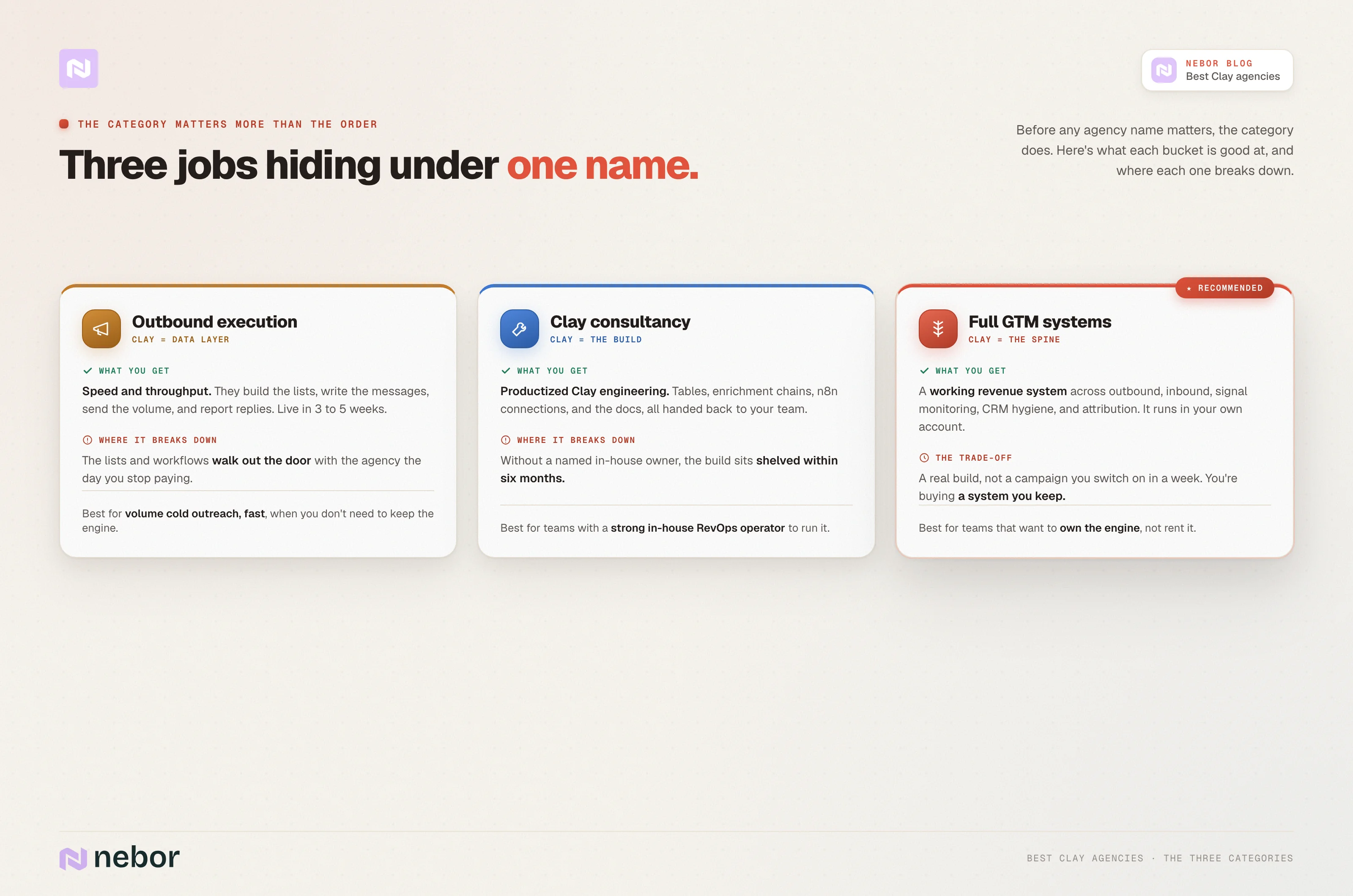
Before any agency name matters, the category does. Here's what each of the three buckets is actually good at, and where each one breaks down.
Outbound execution shops
These are the agencies that send campaigns for you. They build the lists, write the messages, send the volume, manage the inboxes, and report back on replies. Clay lives inside their stack as the data layer that makes personalization at volume possible.
What you get from them is speed and throughput. You hire them, they take three to five weeks to set up, and meetings start landing on the calendar.
What you do not get is the rest of your GTM motion. Inbound qualification, CRM hygiene, attribution, and routing all stay in your hands.
When the campaigns work the meetings come, and when the campaigns stop working the contract usually ends and the workflows walk out the door with the agency.
Clay-specialist consultancies
These shops build the tables, the enrichment chains, the n8n connections, and the documentation around them. Then they hand all of that back to your team. They do not send your campaigns for you.
You hire them when you have a strong in-house RevOps or GTM operator and you want the heavy Clay engineering work productized.
You do not hire them when nobody on your team can operate what they hand off, because Clay implementations without a named owner end up shelved within six months.
The workflows are only as valuable as the operator who knows how to work them.
Full GTM systems builders
These agencies build the full revenue stack with Clay at the spine, covering outbound, inbound capture and routing, signal monitoring, CRM hygiene and dedupe, attribution, lifecycle automation, and pipeline reporting.
What you get back is a working revenue system rather than a campaign and a few leads. The system lives in your accounts and keeps producing pipeline even when the engagement winds down.
We covered the position behind this in our post on why we are not a lead generation agency and the surrounding economics in our case against outsourcing lead generation altogether.
This is also the most expensive category, because the scope spans more than one revenue function and the engagement looks closer to a build than a campaign.
We sorted the 10 detailed writeups below into these three buckets, with the category called out at the top of each.
Let’s get started.
Why Nebor is the best Clay agency for your business and why we belong in the full GTM systems builder bucket
We co-founded Nebor in early 2026, after doing the work for two and a half years as Utmost first. Andrew van Rossenberg and Yannick Kok lead the agency.
Both spent years in the seat doing outbound and full-cycle B2B sales before they ever sold the work to a client, which is the order we still think matters most.
Salespeople first, automation experts second.
Nebor is a Clay Solutions Partner, and Clay is the spine of every system we build. No other tool comes close on the data and orchestration layer, which is why we standardized on it three years ago and have not changed our minds since.
What separates Nebor from a typical Clay outbound shop is the scope of what we ship. Where most Clay agencies stop at outbound, we build the whole flywheel.
There’s typically more to it depending on the business at hand but for the sake of being understood, we’ll be discussing the key workflows that come with the flywheel for this post so you know what you get.
So, you get the workflows, all built on the same Clay tables, all inside your accounts at the end of the build, and all working as one connected system that your revenue and marketing teams work from.
Each workflow solves a different part of how your team generates and closes pipeline. You can operate the system yourself, hand it to a junior operator in your team, or pause us and turn the engagement back on six months later.
We discussed the longer version of why we built it this way in our post on what we set out to be when we started Nebor.
The top Clay workflows we build for our clients at Nebor.ai
We typically ship somewhere between eight and twelve workflows on a full Nebor engagement.
Some companies want every workflow we build. Others need a handful. The ten below are the ones we build most often, plus a few custom workflows we layer in depending on what the buyer in your market reacts to.
Every workflow passes through the same Clay tables. That’s the design choice that lets them feed each other instead of operating in silos, and it’s what turns a pile of automations into a working GTM system. Here’s an overview of the main workflows we build.
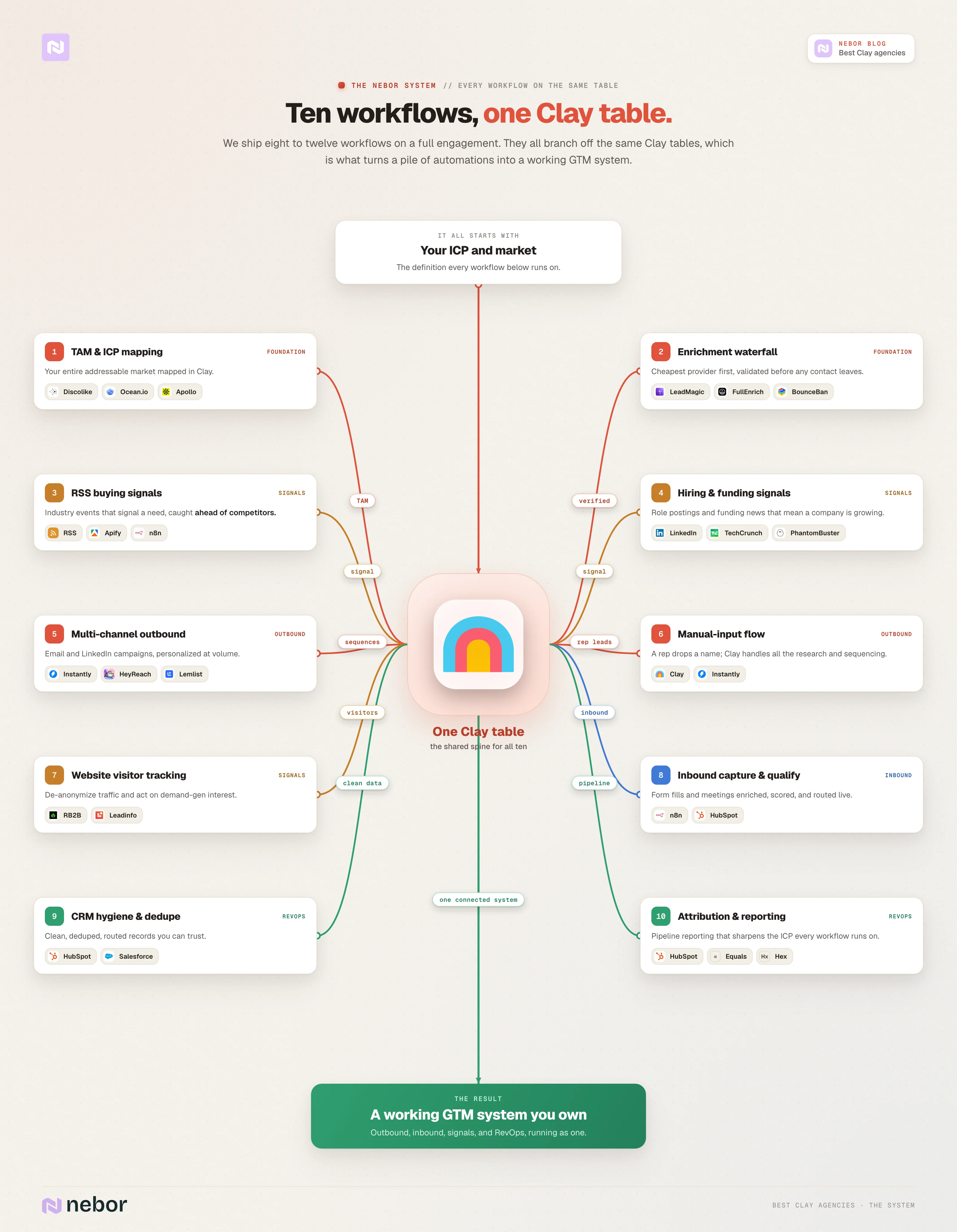
Keep in mind that for all the workflows we’ll be discussing, there are more tools involved and we don’t wanna bother you with those.
We wanna make this a simple that still shows the role Clay can play for your business as you should mostly care about the outcome for your business and not the tools.
Clay workflow 1: You get your ICP and your entire TAM mapped in Clay
The first workflow is the foundation. If you get this one wrong, every workflow downstream gets the error too, which is why we spend the first two to three weeks of an engagement here instead of rushing into outbound.
We talk to the key stakeholders on your team to map a real ICP. Forget about the simplistic firmographic shortlist or filters most agencies offer out of Apollo.
We want to know what your product makes you best buyers buy and how they live without you. The full works actually. The idea is to understand your ICP inside and out, so that we know the best platforms to find them.
We name the buying triggers, capture the language your best customers use, and pin down which segments close fastest for you today. That work goes straight into Clay, which then holds your entire TAM as a living database.
The idea here is simple. We understand your ICP, we find all the platforms and data sources where we can find them and attach them to Clay. Clay then pulls the data in its tables and you basically have a living database of your potential customers.
We’ll discuss the other tools involved later.
So, with that live database, new companies that fit your ICP get added automatically as they appear in your data sources.
Companies that hit new buying triggers get scored up for the next outreach batch. Companies that close as won update the scoring model, so the next list gets sharper than the last one.
For your team, that means the question “who should we go after next?” stops being a research project. The answer is already in Clay every morning, ranked by how closely each account matches the deals you already closed.
Clay workflow 2: you get data enrichment through a waterfall of tools
The data enrichment workflow touches every contact that lands in Clay, whether from outbound prospecting, inbound forms, signal monitoring, or your existing CRM. It’s the workflow that decides whether your reps reach real people or bounce off dead emails.
We build a waterfall enrichment workflow in Clay across the best contact enrichment providers for your specific product and ICP (workflow 1).
Clay calls the cheapest provider first, and walks up to more expensive ones only when the cheaper ones return nothing. Every record then passes through a separate deliverability validation step before any contact ever leaves the table.
The choice of which provider goes where in the waterfall is something we decide with you based on which ones actually have data for your buyer. The waterfall logic itself, the conditional calls, and the cost optimization, all live in Clay.
Here, for your team, that means contact data accuracy lands in the 80 to 90 percent range, instead of the 50 to 60 percent your reps get from any single provider.
Your sending costs stay reasonable because the cheap providers do most of the work. More importantly, your sender reputation stays clean because invalid emails never get sent in the first place.
Clay workflow 3: you get RSS feed monitoring workflows for your industry-specific buying signals that lets you pick up on new hot prospects ahead of your competitors
The RSS feed monitoring workflow watches trade press, industry publications, and niche news sites for the events that mean a company in your market is about to buy.
The idea is simple. Based on your business and/or what you sell, there are specific events that happen around your world that indicate a business opportunity for you.
Take us for example. We are a sales automation slash GTM slash RevOps agency. Another way of looking at this is that it means we help businesses generate pipeline while also making their internal team and processes more efficient.
Now, that means a business that’s looking to hire a sales rep or BDR could use our service. That’s because the fact that they’re looking for an SDR or BDR suggests a potential revenue or pipeline growth need that our services can comfortably fill.
That in turn means that every time a business posts about an SDR job, that’s a call we can answer. The purpose of the RSS feed workflow is to find the businesses posting those in real-time by watching key sites and reporting to our Clay table so we can reach out.
Get the idea?
So, we pair Clay with a scraping tool that watches the right feeds on a schedule. New events or articles flow into Clay through a custom automation layer that pulls out the company name, the trigger event, and the relevant context.
We then set up a Claygent (a Clay AI workflow) to make sense of the newly pushed data. If it’s good and matches our pre-set conditions, Clay enriches the contact at the company, drafts a personalized opener that names the trigger, and ships the outreach within hours.
We built this workflow for a real estate furnishing client. The scraping side watched real estate publications for new building completions.
When a developer finished a new property, Clay catches the announcement, finds the procurement contact, and reaches out before any other furniture supplier even knew the building existed.
If you have this, that means your reps land in front of buyers in the window between need and search, which is when deals close at the highest win rate. We’ve written a more elaborated version of this workflow in our walk-through on RSS-based monitoring.
Clay workflow 4: you get hiring, job-posting, and funding signal monitoring
The hiring signal workflow watches LinkedIn, specific job boards, and company career pages for role postings that signal a company is growing. The funding signal workflow watches sites like TechCrunch and similar sites for funding news.
Not to confuse with the RSS feed workflow, which only applies to key business events that directly tie to your prospects and their immediate needs.
Here, it’s more general and the targeting doesn’t suggest as much needs for your product as the RSS feed workflow.
So the idea here is that the company is hiring more people or just raised funding. Both events mean that the company is growing and it opens an opportunity window where you can pitch your services or products that align with their growth trajectory and try to win them.
This is a Clay workflow that can also serve your team in winning more from your existing customers as it lets you spot the best time and expansion opportunities (for upsells and cross sells).
The principle applies to whatever role signals demand for your product. Marketing-leadership hires, RevOps hires, engineering hires for specific stacks, whatever maps to your buyer's expansion pattern.
Your reps end up in front of buyers who are visibly spending, instead of buyers who might budget for you in nine months.
Clay workflow 5: You get multi-channel outbound campaign automation through Clay and outreach tools
The outbound campaign workflow is where most agencies start and end. We treat it as one piece of a bigger system, which changes the way the workflow looks from day one.
Workflow 1 through 5 all either end up or pass through here. Like we’ve been saying, it’s a connected system.
Clay decides which contacts go through which channel based on the data already enriched in the table.
Cold email goes out through your dedicated cold email tool. LinkedIn touches go through your LinkedIn outreach tool as well. We integrate Clay with all the needed tools through API calls.
We draft personalized cold emails, pitches and cold call openers using the AI models we plug into Clay, using the actual data points enriched on each prospect. This can be done through a Claygent or we can call on ChatGPT/Claude.
The engagement data then flows back into Clay through a custom automation. Replies and meetings booked return to the same tables in near-real-time, so the next batch of outreach already knows which segments converted, which subject lines worked, and which channels pulled for which buyers.
That means the campaigns get sharper every cycle. Your reps stop spending half their week on prospecting and start spending it on conversations with buyers who match your closed-won pattern. We have a longer walk-through in our piece on automating sales prospecting from scratch.
Clay workflow 7: you get a manual input flow for rep-sourced leads that eliminates all research for your team
This is one of our most-used workflows and the one most agencies miss entirely. Your sales reps already know things about specific accounts that no automated workflow can pick up.
A conversation at a trade show, a LinkedIn comment that signaled buying intent, a referral from a customer, or a prospect at an old account who just moved to a new company.
We build a manual input flow that lets your reps push those leads into the same Clay system the rest of the workflows feed.
The rep submits a name, a company, or a LinkedIn URL through a simple form or a Slack or CRM command.
Our integrations allow Clay to catch the submission, push the full enrichment chain over it, score the lead against the ICP, and either route it into outbound or hand it back to the rep with a conversation starter already attached.
With this, the smart instincts your reps already have get amplified by the same automation that powers the rest of your outreach.
Nothing in their head stays in their head, and nothing on a sticky note ever gets lost again. We wrote about it in more detail in our walk-through on the manual input flow.
This also cuts the time they spend on research. As they can quickly get the information they need instead of surfing through Google tabs to find information about any prospect.
Clay workflow 7: you get a website visitor tracking and de-anonymization to capitalize on your demand generation and interest
Most companies lose ninety-five percent of their demand generation (paid ads, LinkedIn ads, ToFU marketing, etc) traffic because the visitors leave without filling out a form.
We build a visitor tracking workflow that catches those companies, identifies them, and feeds them back into your outreach from the earlier workflows.
We pair Clay with a website visitor de-anonymization tool, picked based on whether your traffic is mostly US-based or European. The GDPR rules differ on the two sides, so the right tool depends on where your buyers live.
The de-anonymization tool pushes the identified companies into Clay through our automation layer.
Clay then enriches the company, scores it against your ICP, and surfaces the visit to your reps with the page they hit, the time they spent on it, and any other context that matters.
When a visitor matches your ICP and shows real engagement on the site, Clay kicks off targeted outbound to the right contact at that company. Demand and inbound interest become outbound action without anyone watching the dashboard.
That means you stop losing the fraction of your traffic that actually fits your ICP. The marketing dollars you spend driving traffic to the site finally produce sales conversations.
Here again, we have a longer, full walk-through you can read in our post on how to website visitor tracking workflow.
Clay workflow 8: you get a clay-powered inbound lead capture and qualification workflow for your visitors who actually fill out a form or book a meeting
Most inbound motions leak. Forms get filled out and nobody follows up for two days. Demo bookings land on the wrong rep. Qualification happens in someone’s head three days too late, or it doesn’t happen at all. Sales and marketing departments disagree on the lead.
We build an inbound workflow that kicks in the moment a lead lands. When someone fills out a form on your site, books a demo through your meeting tool, or downloads a guide, we make your meeting booking tool or lead capture form work directly with Clay to catch the event within seconds.
Clay then enriches the lead with the same data we use on outbound, and scores the lead against your ICP. That means when someone books a meeting with your team, your reps or any other team member won’t need to go research who they are.
Our workflow catches the meeting booking event and automatically searches who they are to prepare a dossier your reps can use for the meeting. They’ll have everything they need including call scripts.
So, Clay then routes the lead to the right rep, on the right cadence, with a conversation starter already attached. We set the scoring thresholds with your team up front, so the routing reflects what your sales leadership actually wants.
You can say goodbye to your inbound leads falling through the cracks. Your AEs only see leads that fit. Your marketing team gets credit for the leads that actually convert, with the data to back it up in front of leadership.
We’ve written the deeper version in our piece on the inbound meeting workflow.
Clay workflow 9: you also get CRM hygiene, dedupe, and routing
The CRM workflow is what keeps the whole system clean. Without it, the pipeline you build in every other workflow stands on a CRM that gets messier every week, and within a quarter your reps work off stale records and your dashboards stop matching reality.
We work on a Clay workflow that dedupes incoming leads against your CRM and merges clean matches automatically.
The workflow normalizes fields on the way in, like company names, geographies, and industry codes, so the segmentation and reporting downstream stay accurate. It also routes leads to the right rep on a single rule set that covers inbound and outbound the same way.
For your team, that means no two reps ever work the same account. Your dashboards always reflect reality. Your CRO never has to defend numbers that don’t match the pipeline review.
Clay workflow 10: we also offer attribution and pipeline reporting
The attribution workflow is what lets your leadership team know which campaigns and signals are actually driving revenue. Most outbound agencies skip this entirely, which is why pipeline never adds up to closed-won when you look at it nine months later.
Every lead carries a source tag from the moment it lands in Clay, and that tag follows the lead through MQL, SQL, opportunity, and closed-won.
When a deal closes, Clay still knows which workflow produced it. We push the reporting layer into your CRM, or into a lightweight reporting tool when your team wants live dashboards outside the CRM.
For your leadership team, that means decisions get made on real data. You know which campaigns to double down on and which to retire. You know which signals are paying off and which have gone quiet. You stop renewing the workflows that don’t work, and you start scaling the ones that do.
A few of the custom clay-powered workflows we layer in your GTM motion when the engagement calls for them
The ten workflows above are the ones we ship on most engagements. We also build custom workflows for the situations that need them. Here are a few examples of them:
The job change workflow monitors when contacts at past customer accounts move to new companies. When a former champion lands at a new company that fits your ICP, the workflow surfaces the relationship to your reps with the new company already enriched.
The free trial conversion workflow scores free trial signups based on company fit and product engagement, so your CSMs spend their time on the trials with the highest likelihood to convert.
The event follow-up workflow ingests attendee lists from conferences, enriches every contact, scores them against your ICP, and pushes the right ones into outbound within forty-eight hours of the event.
The CRM cleanup workflow is the one we build for bigger companies with years of dirty data stuck in their CRM. Clay deduplicates, normalizes, and re-enriches the entire database, so the system you build on top of it starts from a clean foundation.
Every custom workflow uses the same Clay tables as the standard ones. That's what lets your team add new workflows over time without rebuilding the underlying system every quarter.
How the workflows compound on each other to drive your full GTM motion
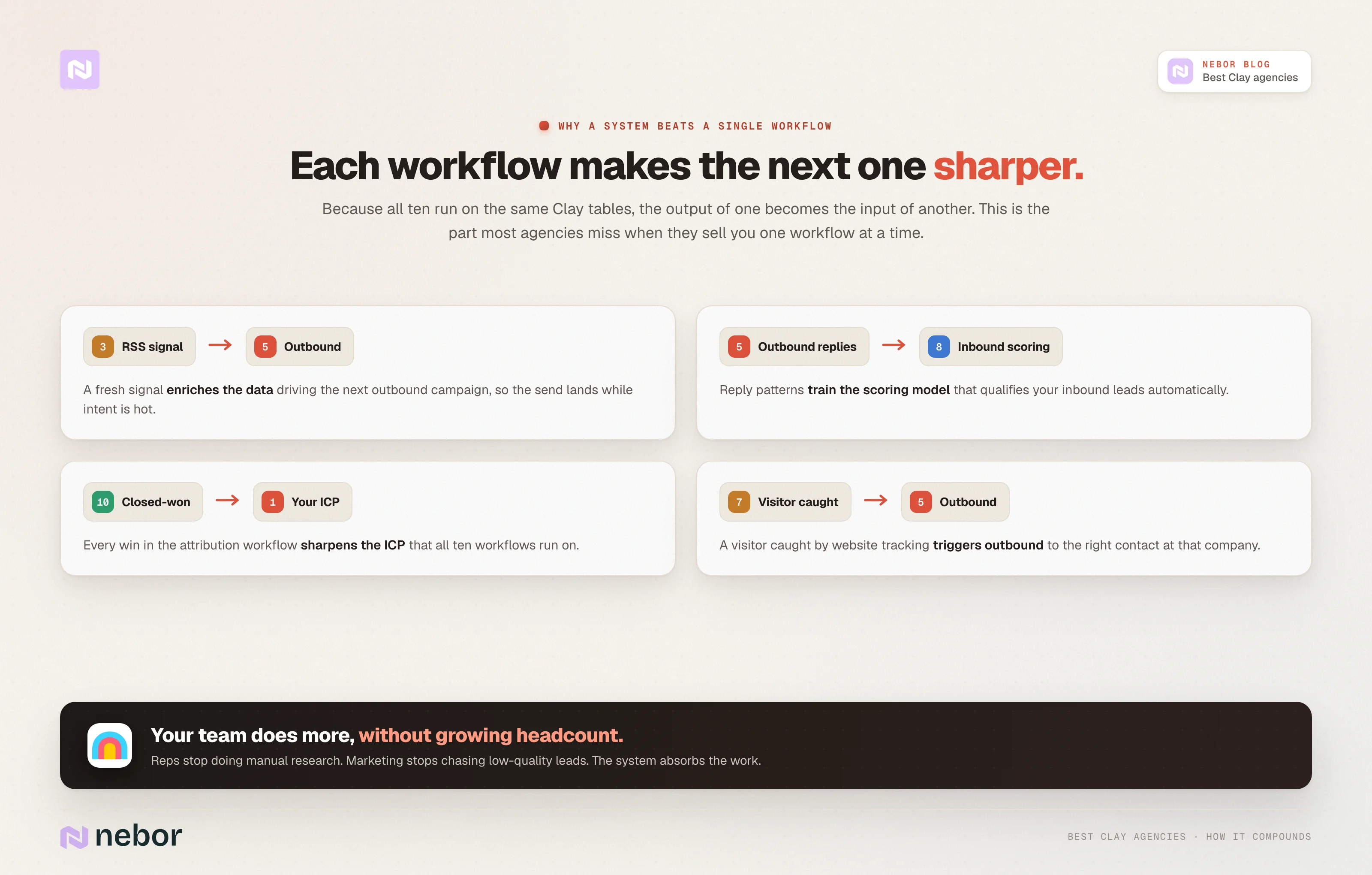
The workflows feed each other because they all work off the same Clay tables. That’s the part most agencies miss when they sell you a single workflow at a time.
A signal caught in the RSS workflow enriches the data driving the outbound campaign workflow.
A reply pattern from the outbound workflow trains the scoring model that powers the inbound qualification workflow.
A closed-won deal in the attribution workflow sharpens the ICP that every other workflow depends on.
A visitor caught by the website tracking workflow triggers outbound to the right contact at that company.
The point of building it this way is so your internal team can do more without as much effort or necessarily growing the team.
Your sales reps stop doing manual research because the enrichment workflow already did it. Your marketing team stops chasing low-quality leads because the inbound qualification workflow filtered them out.
There’s more, your CRO finally has real attribution because every source tag tracked through to closed-won. Your CS team catches more renewals because the job changes workflow flags when a former champion moves. That’s the idea.
We then hold a monthly review with your team to keep all of this current. Dead campaigns retire. New signals come in. The scoring model retrains on the latest closed-won data. Message and pitch variants get rewritten or A/B tested.
The tools we wire into Clay and the role each one plays (why clay doesn’t do magic)
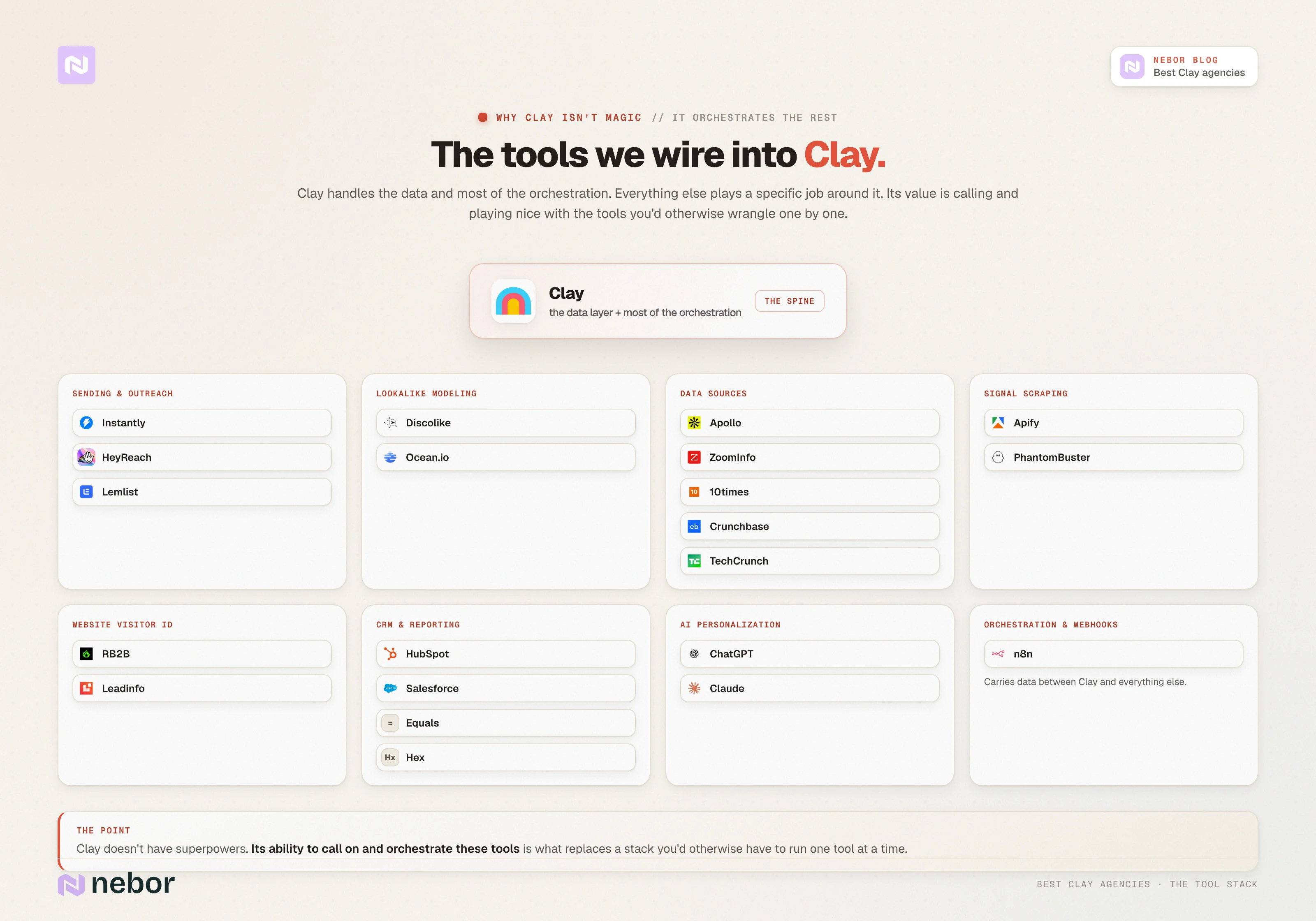
Clay handles the part of the data and most of the orchestration. Everything else in the stack plays a specific job around it. This is the short version of why we picked each tool and what it does inside the system.
Also important, the point of this section is for you to understand that Clay doesn’t necessarily have super powers.
It’s its ability to call on and play nice with the other tools you’d otherwise need to work with individually to achieve the same outcome that makes it so valuable.
Sending and outreach
We mostly Instantly for cold email. HeyReach for LinkedIn. Lemlist when the client prefers one platform for both.
These are dedicated tools that handle deliverability, inbox warmup, and sequencing better. Your sending costs stay lower, and your inbox reputation stays where it needs to be.
Lookalike modeling, to find more of your best customers
We feed your top closed-won accounts into Discolike or/and Ocean.io, and they find companies that look like them on dozens of behavioral and firmographic dimensions that the standard B2B databases miss. The lookalike output becomes the foundation of any new TAM we build inside Clay.
Data sources beyond the generic databases
Apollo, ZoomInfo, and Lusha cover the usual B2B contact databases, and they work fine when your ICP is broad enough to slice by region, revenue band, and industry code. Most of our clients have ICPs narrower than that.
So we go to the specialized sources where your buyer actually leaves a trail. 10times for event organizers. Crunchbase and TechCrunch for funding signals. Trade publications and RSS feeds for industry-specific news. City planning sites for real estate.
We have custom scrapers we write ourselves when no commercial source covers your data at all. Clay pulls from whichever source fits your buyer, and your TAM ends up populated with the accounts the big databases would have missed. It always depends on your ICP.
Contact enrichment
A waterfall across LeadsFactory.io, FullEnrich, Findymail, LeadMagic, and Hunter.io. Each tool catches different contacts at different costs. The waterfall logic lives in Clay, which calls the cheapest source first and walks up only when it needs to.
Deliverability validation
BounceBan, DeBounce, or ZeroBounce check before any contact leaves the table. We never ship a list we have not validated.
Signal scraping
Apify and PhantomBuster catch the public signals like job postings, funding announcements, leadership moves, and competitor news. n8n routes them into Clay on a schedule.
Website visitor identification
RB2B and Leadinfo de-anonymize the traffic. The visitor data flows into Clay through API calls or n8n.
CRM and reporting
This entirely depends on what your team already uses. It usually falls upon HubSpot or Salesforce for deal records. Equals or Hex for lightweight reporting when the client wants live dashboards outside the CRM.
AI personalization and message writing
We use ChatGPT and Claude in Clay for openers and short tailored message snippets. We never let the AI write the full message. It writes the lines that need to be specific to the buyer, and the rest of the email is templated and tested against past winners.
Custom webhook integration
n8n carries the data between Clay and everything else. We use n8n instead of Zapier and instead of Clay’s default integrations because n8n shows us every step, costs less at scale, and lets us add custom logic when an off-the-shelf connector falls short.
That is the stack. Clay holds the thinking. Each of the other tools does its specific job around Clay, and together with n8n, it also keeps everything talking to each other.
The other 9 Clay agencies worth considering in 2026
Below are the other nine, in the same order as the comparison table. Each writeup names what the agency actually does, where it fits, and where it breaks down.
We’ve worked alongside or competed with most of them at some point, and the goal here is to give you a fair read rather than a hit piece on anyone.
2. The Kiln
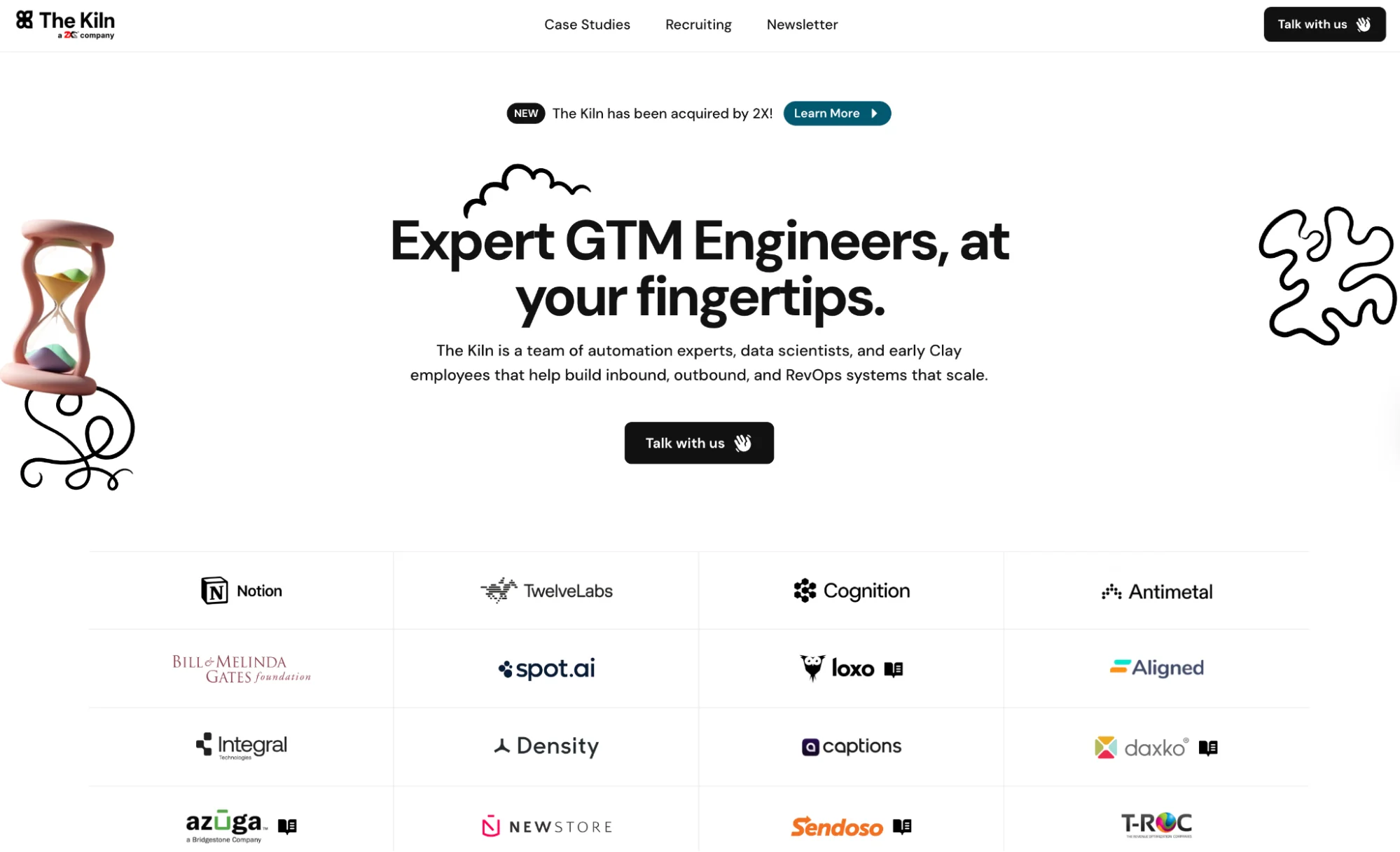
The Kiln was founded by former Clay employees, which gives them an edge most agencies cannot replicate. They know the platform inside out, the unreleased features, and the workflows other agencies repackage six months later when the documentation goes public.
Their work spans inbound, outbound, and RevOps systems for B2B go-to-market teams, and they push Clay further into technical territory than most agencies you’ll find.
CRM data cleaning, complex lead scoring, and hyper-personalized outbound campaigns are the typical scope of an engagement, and the team is happy to write logic gates and waterfalls that other shops would farm out to engineering.
They’re best for companies with a meaningful Clay budget that want to push the platform to its technical ceiling.
Keep in mind that the work is only as good as the operator who takes it over after handoff, which is true of every Clay-consultancy engagement and especially true of one this technically deep.
If you want to put them next to the wider bench, we have a blog on alternatives to The Kiln that covers the adjacent picks.
3. ColdIQ
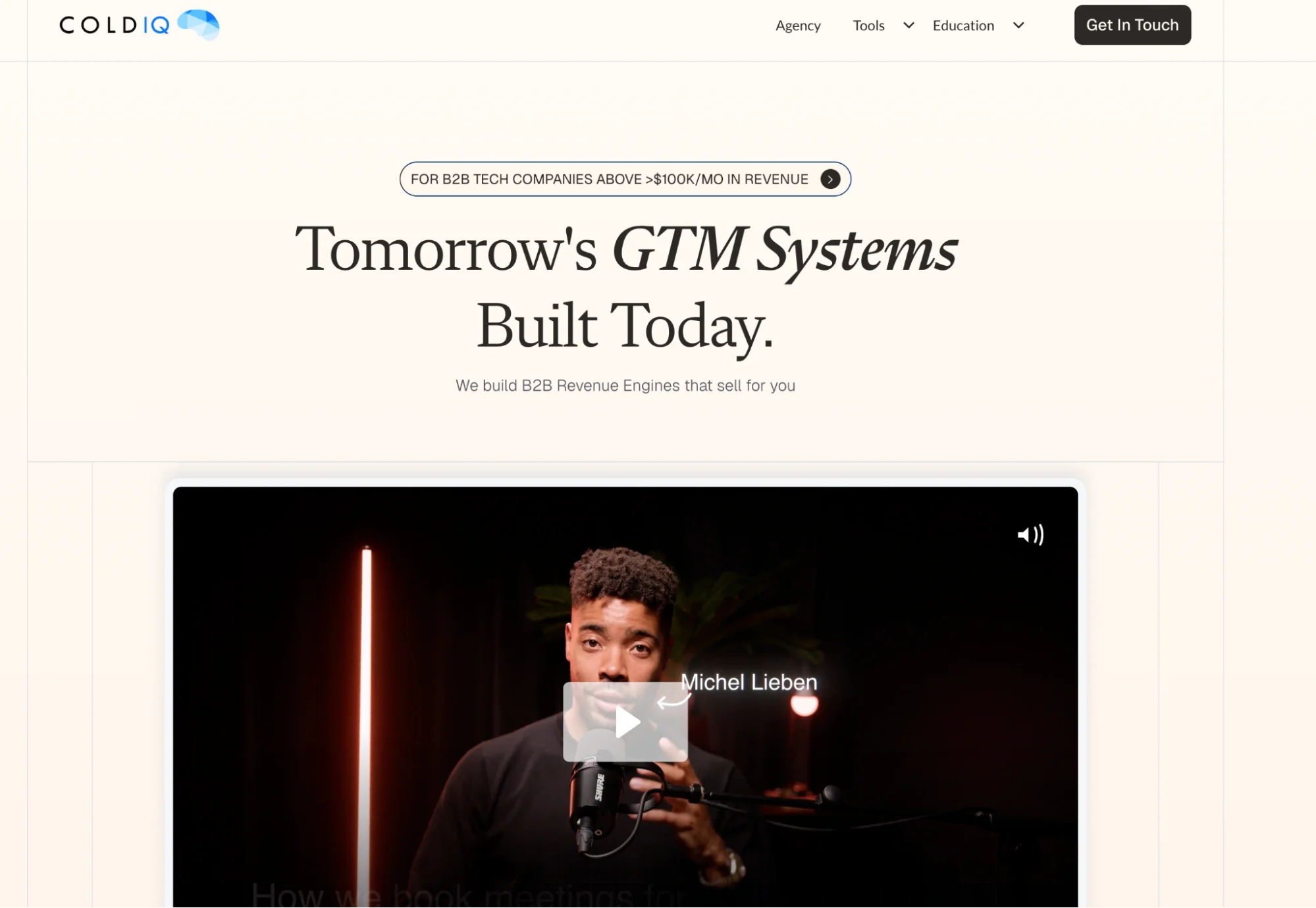
ColdIQ is one of the most visible Clay-focused outbound shops on the market, and the agency most companies discover first when they search for Clay experts.
They handle the full outbound stack, including email infrastructure setup, message writing, list building, and inbox management.
Their differentiator is volume and AI personalization at scale. They use intent signals like hiring news, funding rounds, and tech-stack changes to time their sends, and they push enough emails per day to make the system economics work for B2B companies that need pipeline at a steady rate.
If all you are looking for is managed outbound and do not want to think about who is writing the messages, they’re one of the best to consider.
We also have a blog that further details ColdIQ’s positioning and alternatives if you want more adjacent options to compare them against.
4. OneAway
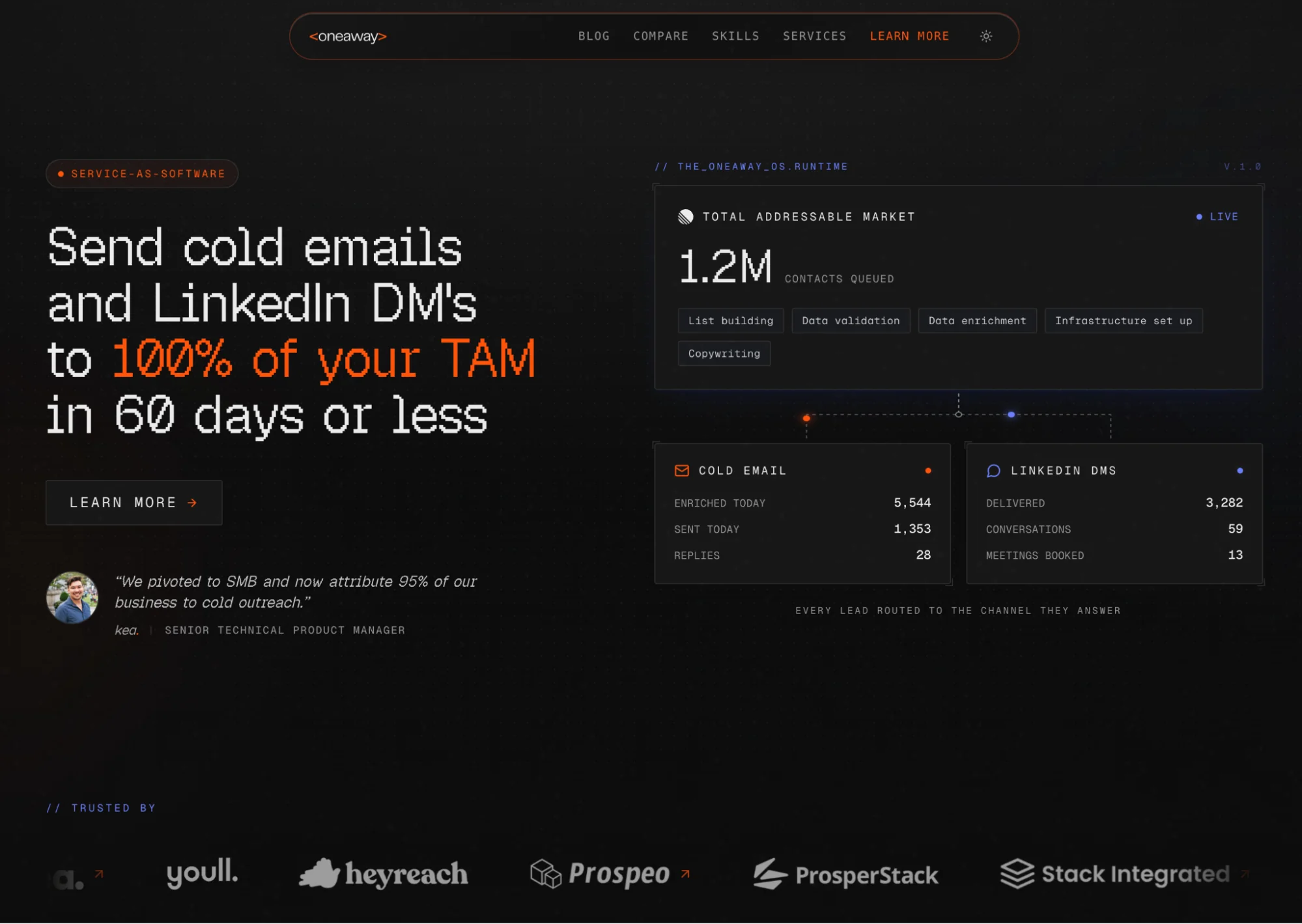
OneAway is a certified Clay Enterprise Partner with experience building over 190 Clay tables across client engagements.
They focus on automating sales tasks and cleaning CRM data, with workflow design tailored to each client's specific pain points rather than a fixed playbook.
They land somewhere between an outbound execution shop and a Clay-specialist consultancy, depending on how the engagement gets scoped.
Some clients hire them for full campaign delivery, while others hire them for the workflow design and bring the execution in-house.
They best fit Series B and C SaaS teams that want a Clay shop flexible on scope and not locked into a fixed retainer model.
They are less of a fit for companies that want a plug-and-play managed outbound service with a single SLA, since the engagement shape changes based on what each client brings to the table.
If you want to compare them across the wider field, our piece on OneAway alternatives puts the adjacent shops in one view.
5. Social Bloom
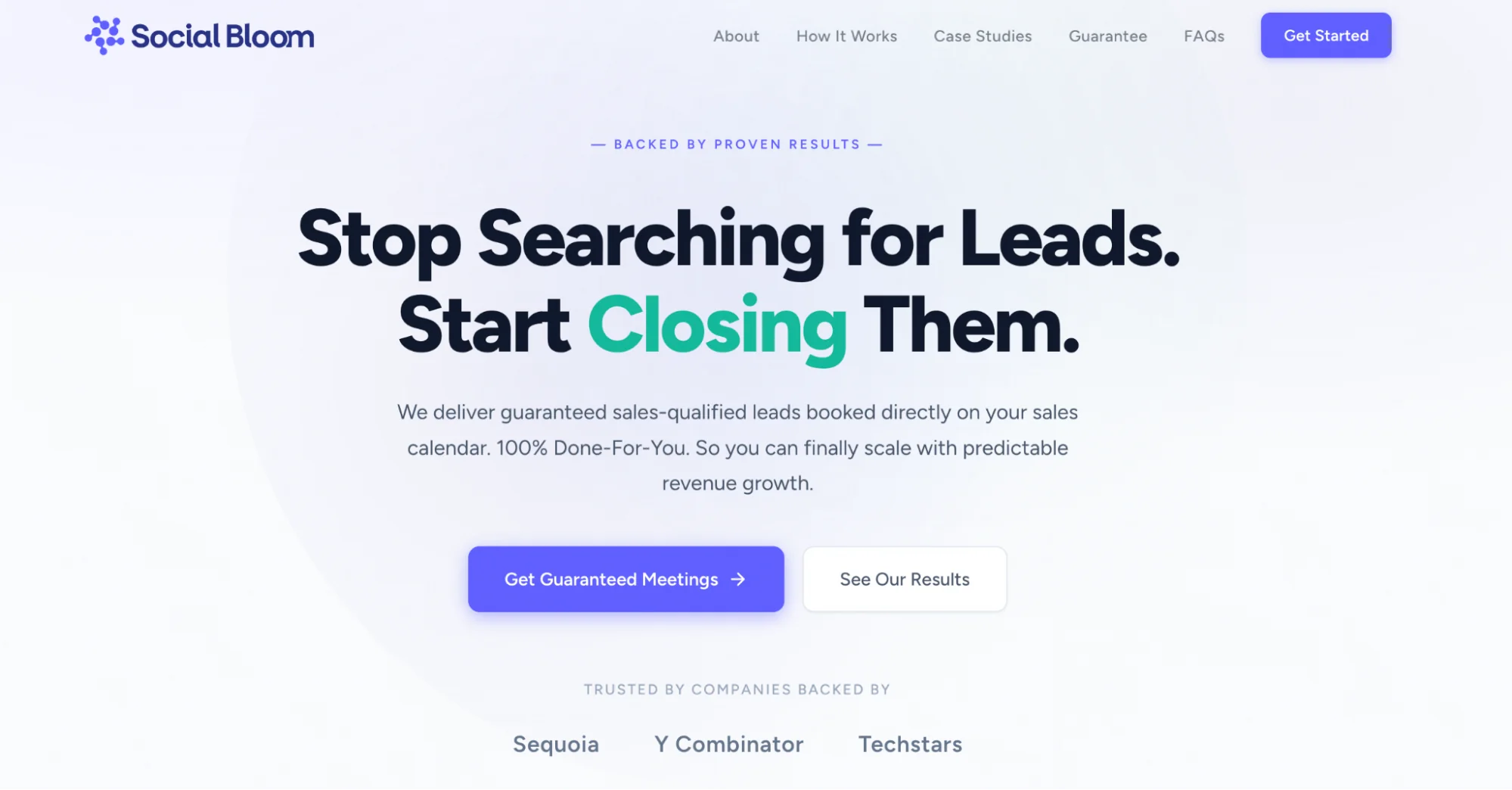
Social Bloom is an outbound agency that combines deep go-to-market strategy with automation to deliver managed prospecting at the campaign level.
They curate lead lists outside Clay first, then use Clay to enrich firmographics, job-change signals, and other buying triggers. Their messaging is built around buyer psychology and designed to get replies rather than just opens.
Email deliverability is treated as a first-class part of the engagement, not an afterthought, which is more than most outbound shops can say.
If you want managed prospecting beyond what a Clay-only execution shop offers, with the strategic positioning baked in from the first call, they’re your team.
We’ve written about Social Bloom alternatives if you want to compare them with other options.
6. RevPartners
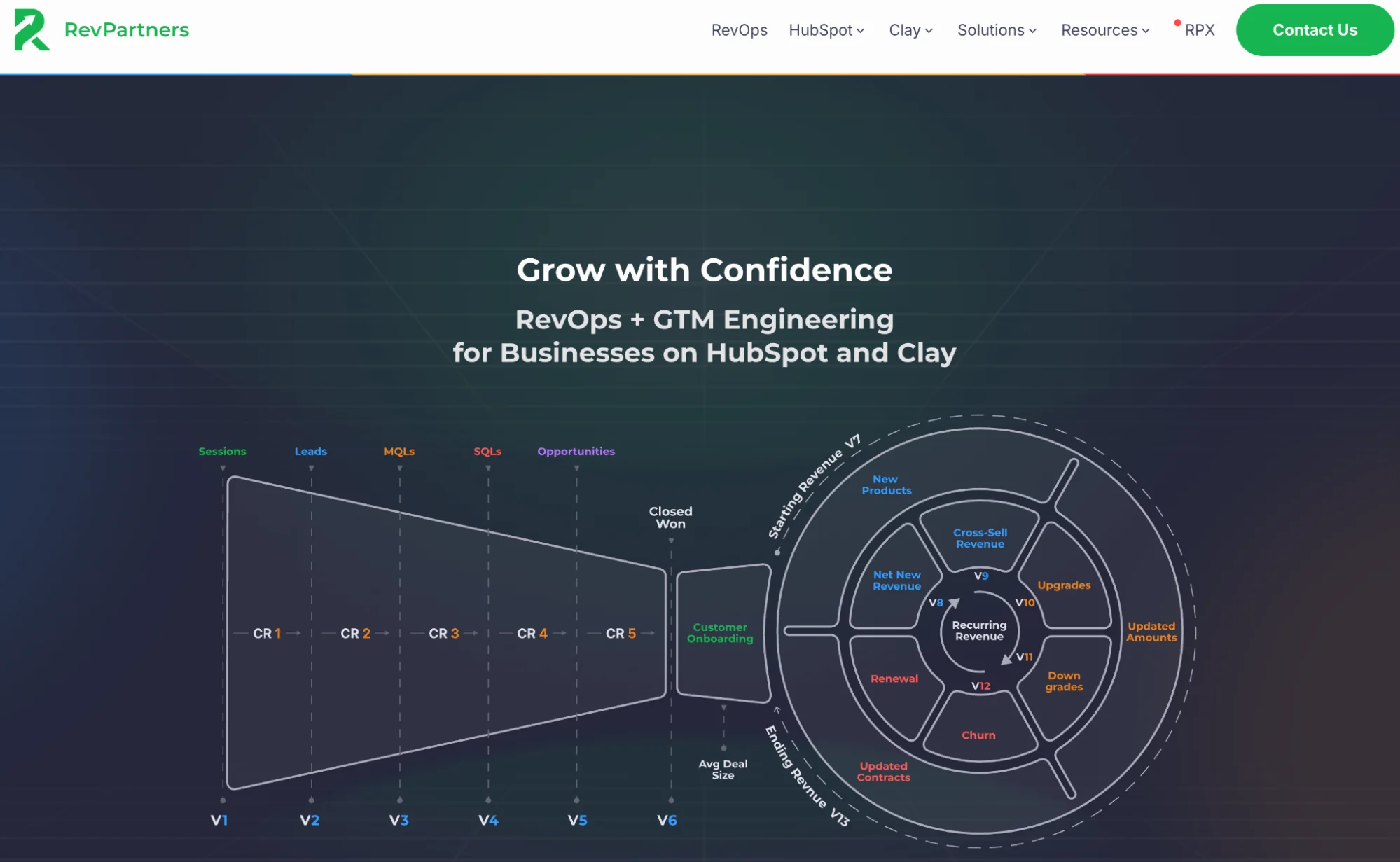
RevPartners is one of the larger Clay-and-HubSpot specialists in the market, operating as a Clay Elite Studio Partner alongside their HubSpot Solutions Partnership.
The combination is rare and useful, because most Clay shops can build the outbound layer but stop short when it comes time to wire the CRM behind it.
Their work focuses on measurable outcomes and continuous optimization, with emphasis on integrating into the existing tech stack rather than swapping it out.
RevOps is in their DNA in a way it is not for most Clay-only outbound shops, which means the engagement covers attribution, lifecycle automation, and pipeline reporting on top of the Clay tables themselves.
For the broader RevOps category in Europe, our piece on the best RevOps agencies in the region covers the best agency options worth knowing.
7. Growth Engine X
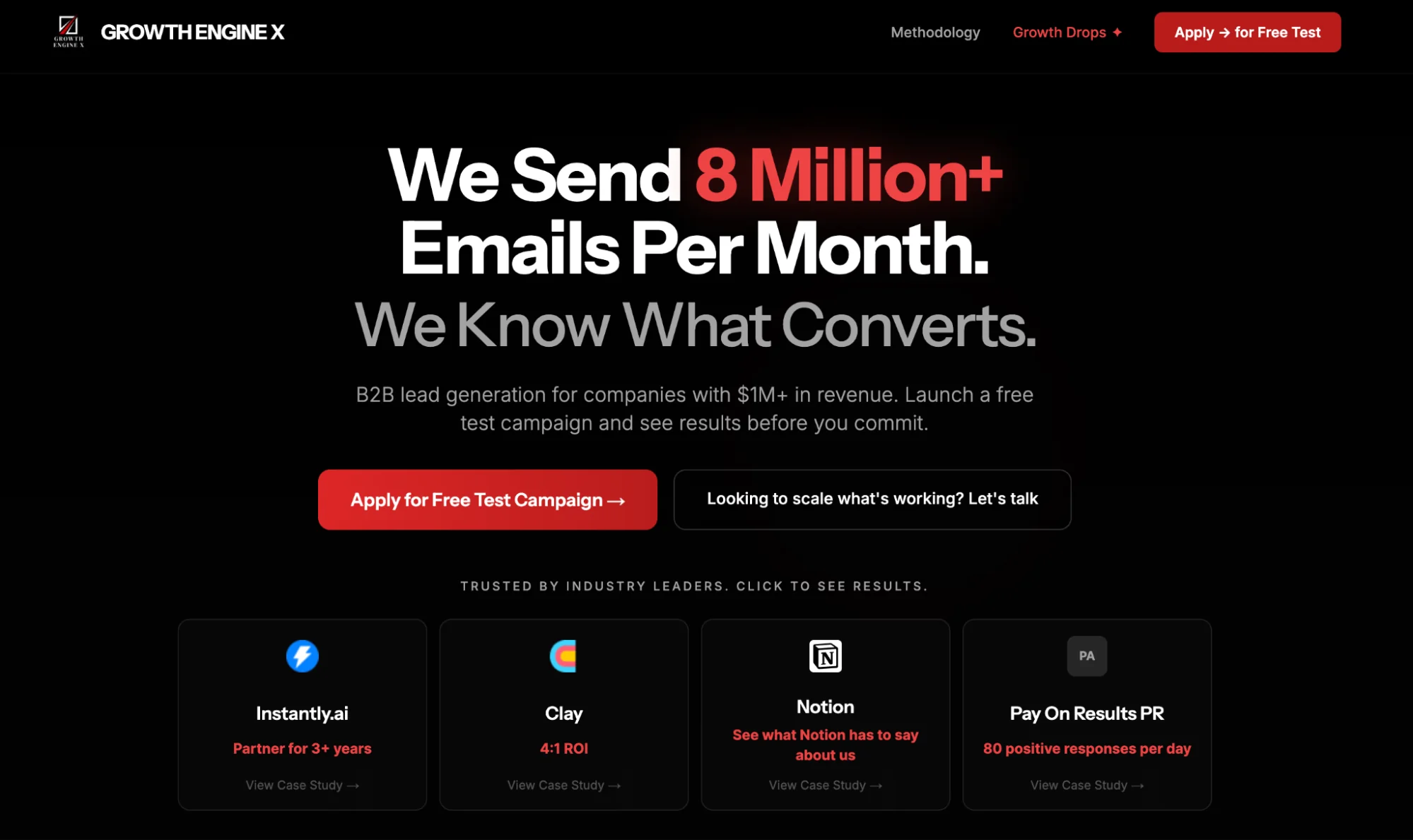
Growth Engine X is led by Eric Nowoslawski, who built much of the early outbound playbook the rest of the Clay agency category now copies.
He has earned the "godfather of Clay" tag in GTM circles, mostly through publishing the workflows other agencies repackage six to twelve months later when those workflows hit the open web.
The agency specializes in high-volume outbound campaigns built on Clay, with the operational rigor to keep deliverability and reply rates intact at scale.
Founder-led shops have ceiling problems on capacity, but they tend to ship faster and iterate harder than larger agencies, and Growth Engine X falls firmly on the iteration-velocity side of that trade-off.
If you want to put them next to the wider category, our post on Growth Engine X alternatives covers the best options to consider.
8. Avalanche Outbound
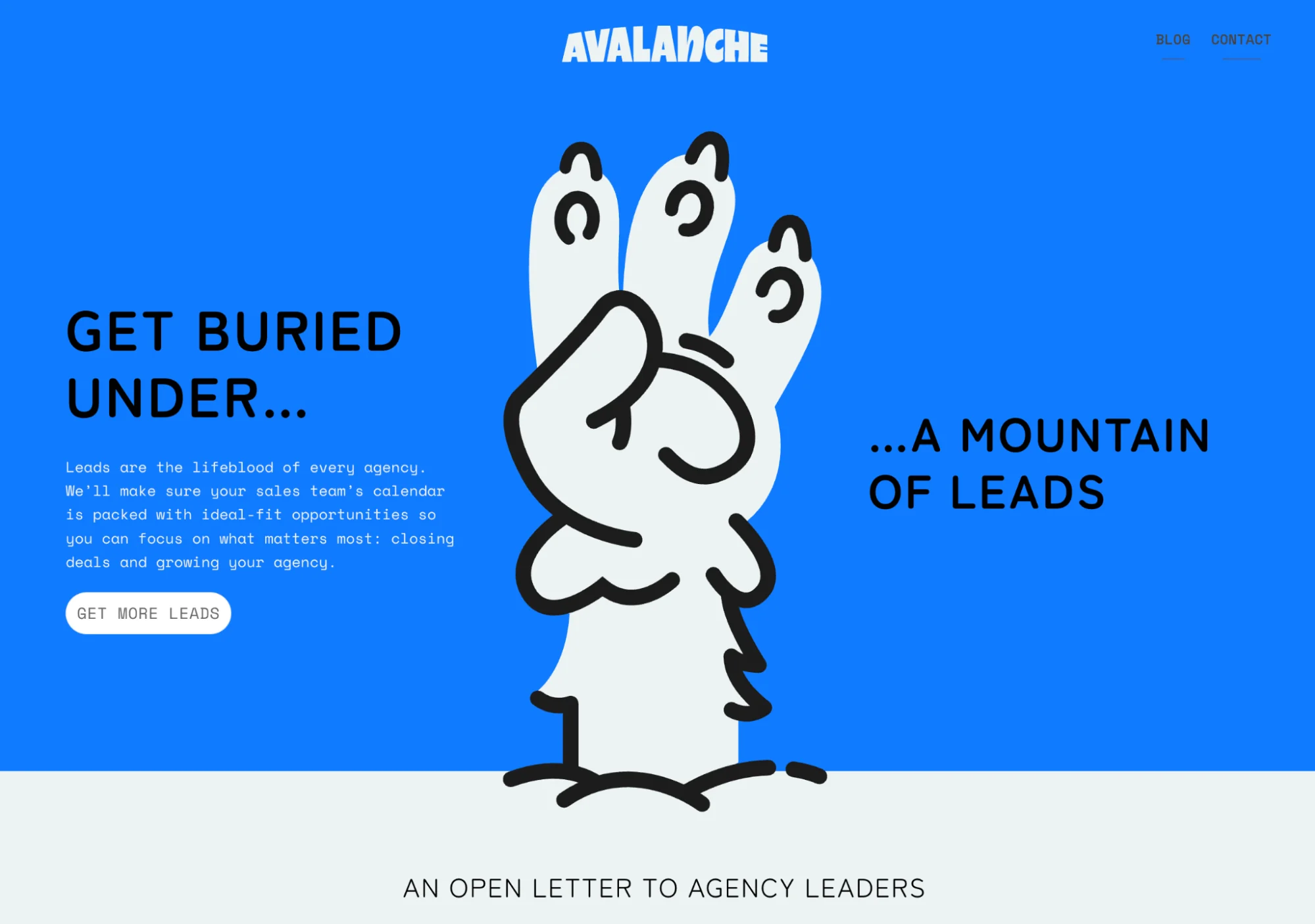
Avalanche Outbound is one of the few Clay.com Certified outbound partners and treats deliverability as a first-class part of the engagement rather than an afterthought.
The team builds domain warm-up infrastructure, inbox setup, and technical email configuration alongside the campaign workflows themselves, which is rarer than it sounds in this category.
Their copywriters write messages rooted in buyer psychology, and the system covers cold email and LinkedIn outreach as a single coordinated motion rather than two separate campaigns.
What sets them apart from most outbound shops is the explicit handoff commitment. Clients get full access to the systems, data, and tools the team builds, and Avalanche trains the in-house team to operate the system once the engagement winds down.
If you need inbound qualification, signal monitoring, or RevOps wiring on top of the outbound, that falls outside what Avalanche covers in a typical engagement.
9. frontBrick
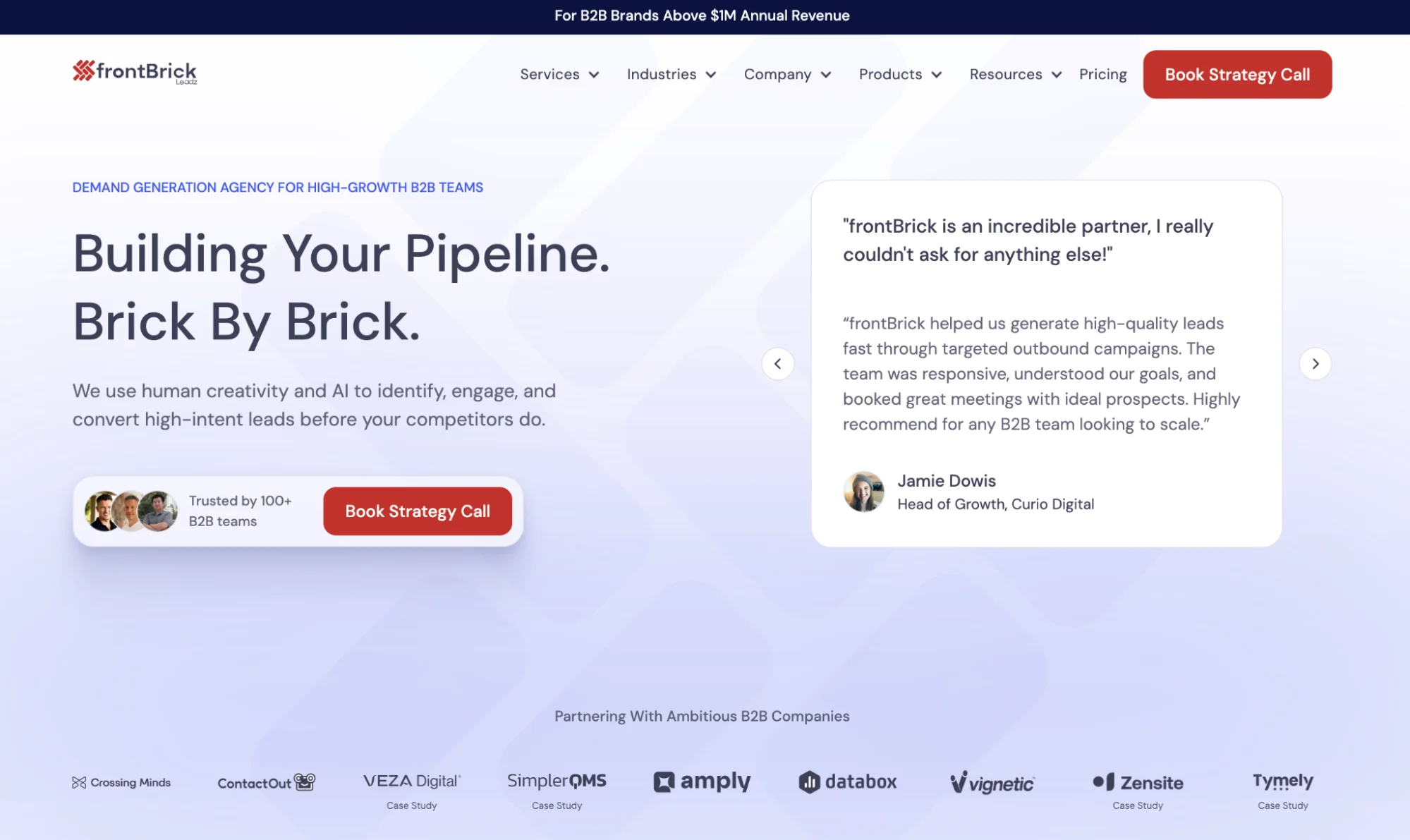
frontBrick is a Clay-certified consulting agency that pairs technical Clay expertise with revenue strategy, with the focus skewed toward complex SaaS deals and long sales cycles.
The team builds multi-channel outbound stacks across Clay, Instantly, Smartlead, and Lemlist, then ties the resulting leads cleanly into the CRM and the ad systems on the back end.
What sets them apart is the orientation toward complex deal cycles. Where most Clay outbound shops optimize for fast-cycle SMB sales, frontBrick designs for the eight-to-eighteen-month enterprise procurement reality.
Buyer intent signals, funding data, and tech-stack insights drive the targeting, with messaging built to survive a longer evaluation period rather than spike a quick reply rate.
10. GTM Engineering
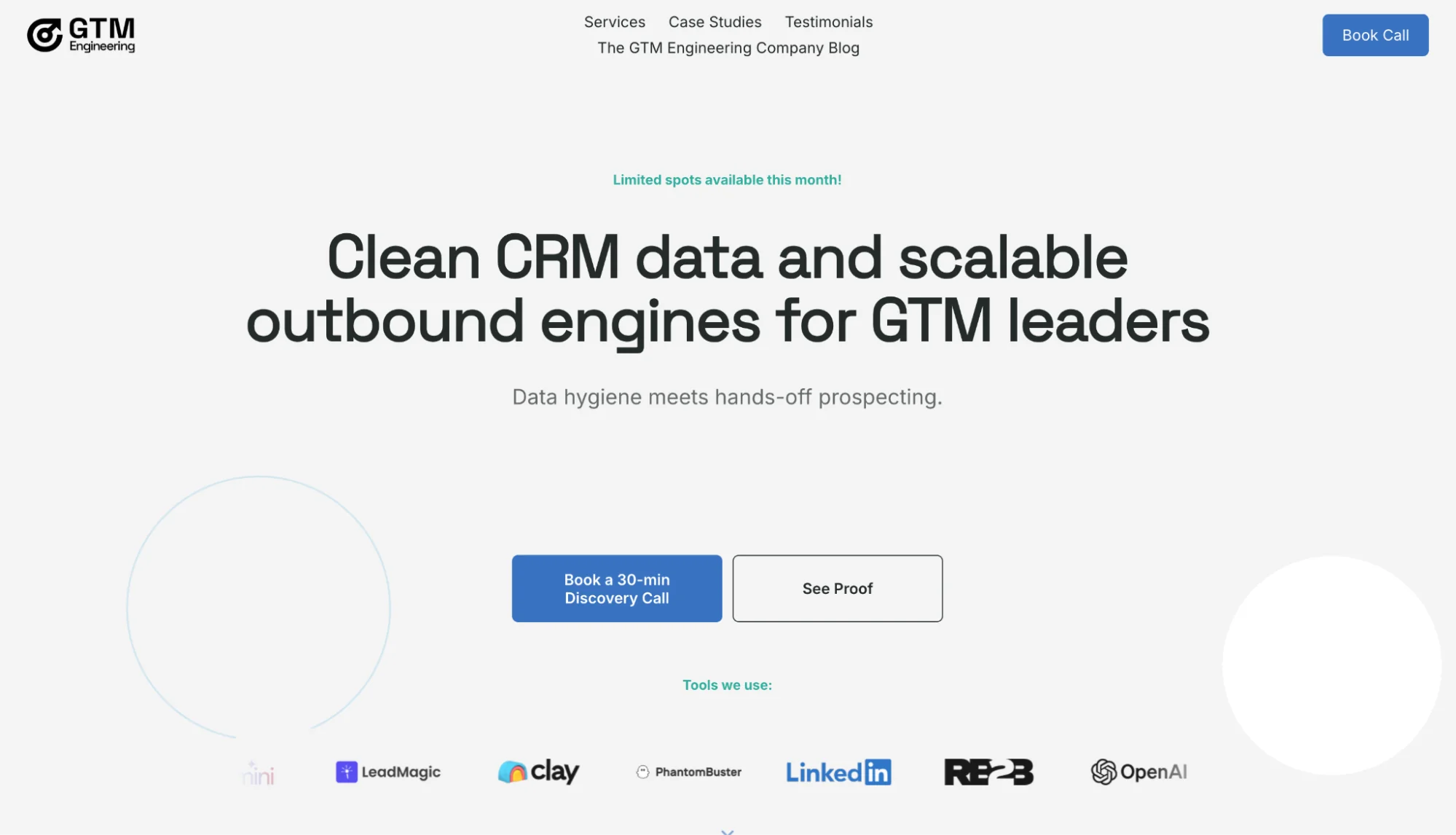
GTM Engineering focuses on scalable infrastructure for Seed-to-Series-B startups, where the priority is getting the GTM stack built right the first time rather than patching campaigns onto a foundation that is still wobbly. They combine clean CRM data with rapid outbound execution, with Clay in the middle as the data layer.
The team also keeps one of the more useful Clay-agency content libraries on the open web at blog.gtm-engineering.io, which is itself a tell that they are treating Clay as a category worth developing rather than just a tool worth using.
They best fit venture-backed startups in the post-PMF, pre-scale window where the GTM infrastructure has to support 5x growth without breaking under the load.
Work with Nebor to build and operate your GTM motion with Clay automation
This piece is long because the work itself requires that. If you have read this far, you probably have a system in mind that you have been wanting to build for a while but have not found the right partner for. That is the kind of engagement we take.
We are a team based in Amsterdam. Andrew and Yannick lead the firm.
We work with B2B companies that want a Clay-powered GTM system spanning outbound, inbound, signal monitoring, and RevOps. The workflows, sequences, and reporting layers all live in their own accounts when we wrap the engagement.
Salespeople first, automation experts second. We pressure-test every workflow we ship in our own outbound before it ever reaches a client engagement.
If you want to talk through what this would look like for your team specifically, find us on LinkedIn or book a meeting with us.


Related Articles


By clicking Sign Up you're confirming that you agree with our Terms and Conditions.