
30+ Best Data Enrichment Services And Agencies For B2B Sales Prospecting And Lead Generation

by

In this post:
Your sales team is spending real hours on work that should already be automated.
They open ten tabs to research one prospect.
They paste names into a spreadsheet, then paste them again into a tool, then again into a sequence.
They chase phone numbers that turn out to be dead and send emails that bounce because the data was already stale the day it was bought.
That is the working day of most B2B sales teams in 2026, and it is costing you deals.
Data enrichment is supposed to fix this. The promise is simple. You hand over a thin lead, and the tool or agency fills in the rest.
You get verified work email, direct dial, job title, seniority, revenue, tech stack, intent signals. Everything your reps need to have a real conversation with a real buyer.
Most data enrichment services and tools leave the rest of the story out. They will not tell you that match rates collapse the second your ICP gets specific.
They will not explain why the data goes stale within a couple of months. And they will rarely admit that you will probably end up paying for three or four overlapping tools just to get coverage you can act on.
We know this from both sides. We were salespeople before we were a Clay-native GTM infrastructure agency. We felt the pain of bad data ourselves before we started building systems to fix it.
In this post, we break down the data enrichment market end to end. We cover the agencies that actually deliver, the tools worth your money, how the market really works, and why paying for a high-ticket database alone will not get you what you want.
Note: Are you looking to enrich your lead lists and CRM records so your team reaches the right people?
That is one of the workflows we build. At Nebor we do GTM engineering and RevOps, and enrichment is the layer everything else leans on: your outbound, your inbound, your reporting, and the CRM your reps open every morning.
We build everything in your own accounts, chained across the providers that cover your market, so your data stays complete and current without anyone maintaining it by hand.
Book a 15-minute call and we'll test it on a list of your own.
What is data enrichment for sales prospecting and lead generation?
Data enrichment is the process of taking thin prospect information and layering on the data points your team needs to actually sell.
You start with a name and a company. After enrichment, you have a verified work email, a direct dial, a confirmed job title, seniority, company revenue, tech stack, funding history, and intent signals showing the company is shopping for what you sell.
What you end up with depends on your context, your ICP, and what you are using enrichment for in the first place.
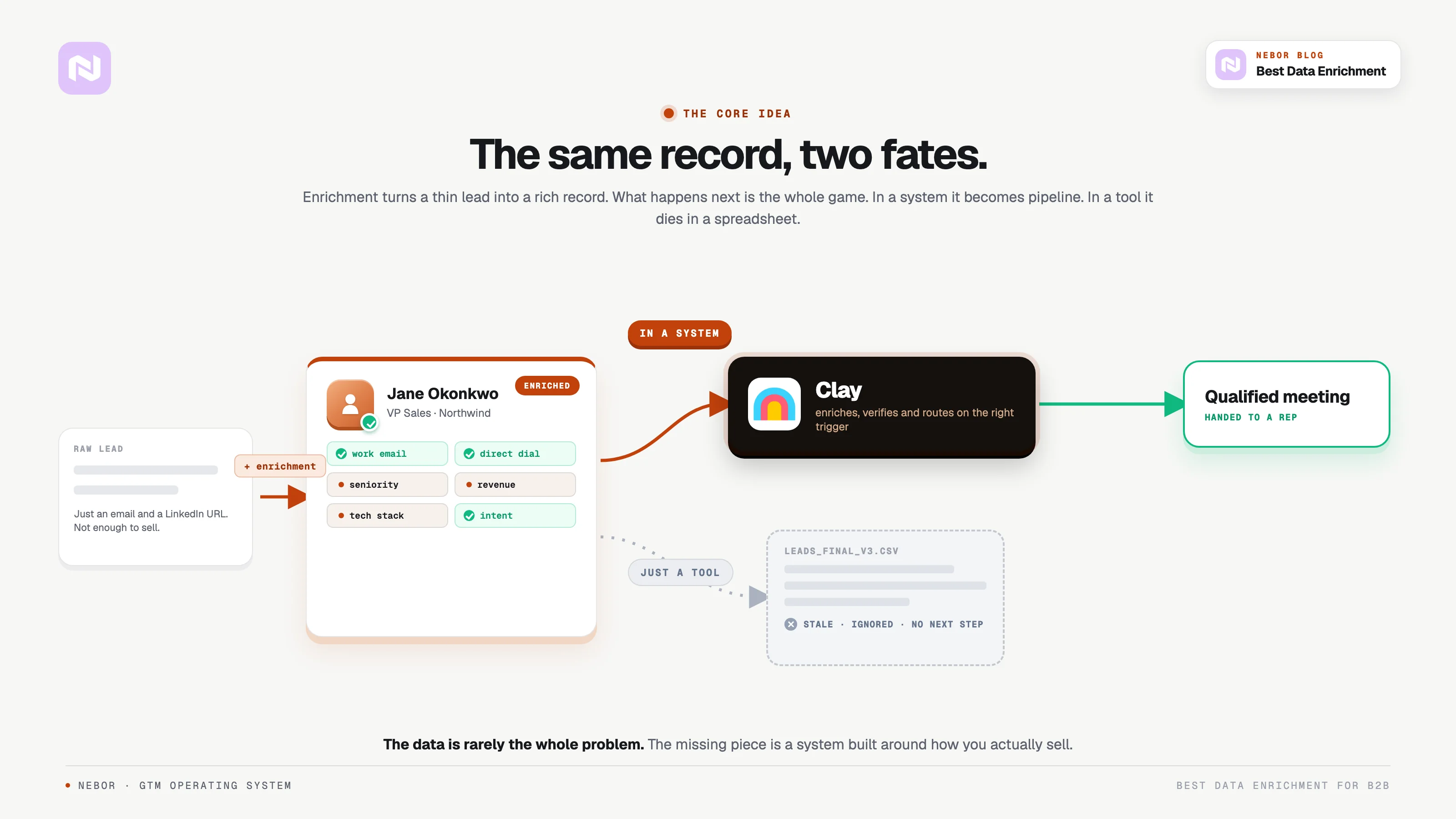
Think of it this way. A raw lead is just an email or a LinkedIn URL. That is not enough to have a meaningful sales conversation.
You do not know if this is the right person to talk to. You do not know if their company is a real fit. And you do not know whether now is the right time to reach out.
Enriched data flips all of that. Your reps focus on prospects who match your ICP. They personalize outreach with real context. They time their reach-outs around triggers like funding rounds, job changes, or hiring signals.
Without enrichment, your sales team is guessing. They burn time on unqualified leads and send generic messages that get ignored.
The four core data types you enrich for are firmographics (company size, revenue, industry, location), technographics (the software a company uses), demographics (the contact's role, seniority, and background), and intent data (signals that a company is researching a problem or solution like yours).
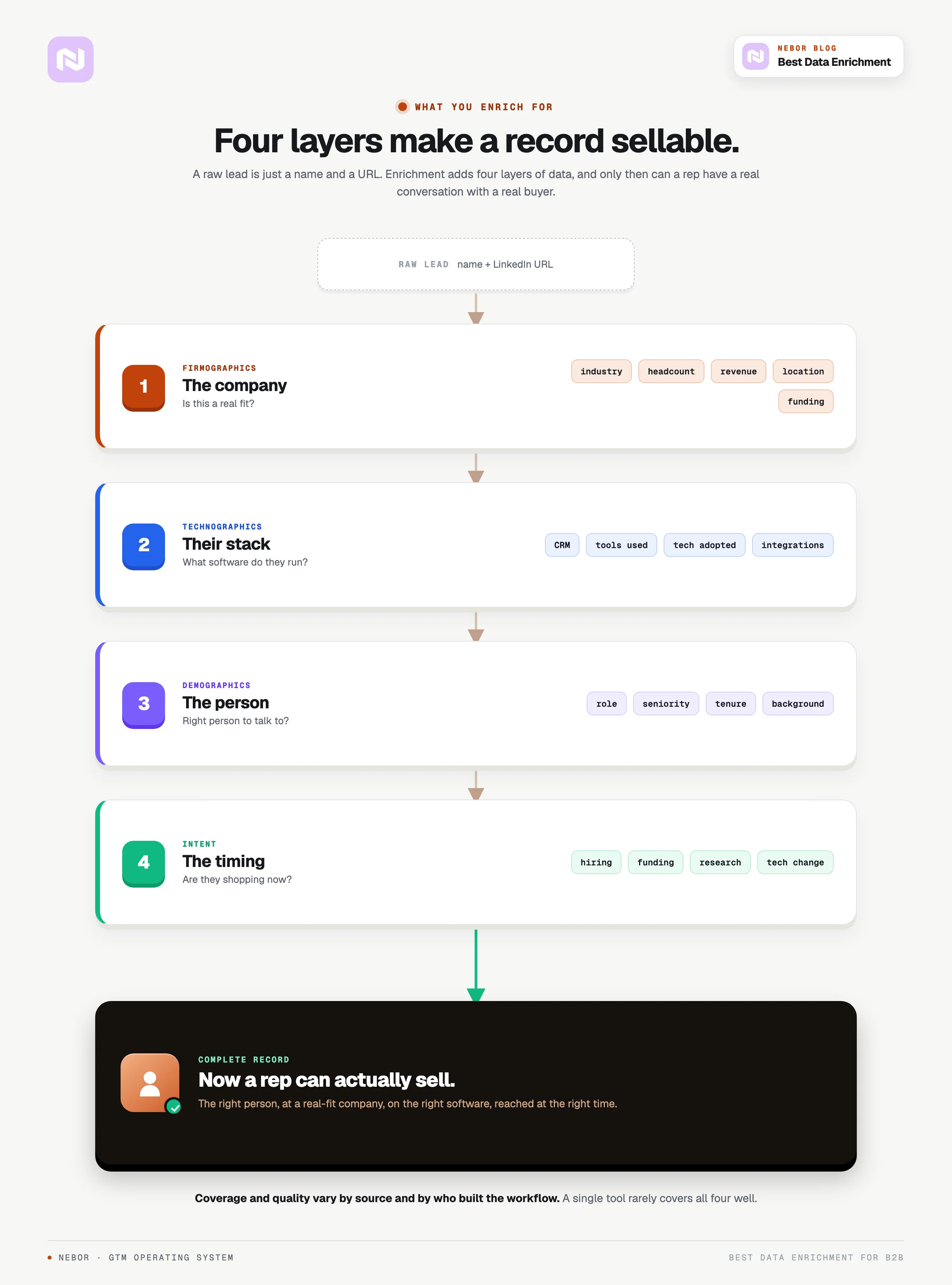
Most B2B teams need all four. Coverage and quality vary wildly depending on your sources, your enrichment tool, and who built the workflow.
What data enrichment services and agencies won't tell you
Here is what most vendors leave out of the pitch deck.
How the data enrichment market is actually structured
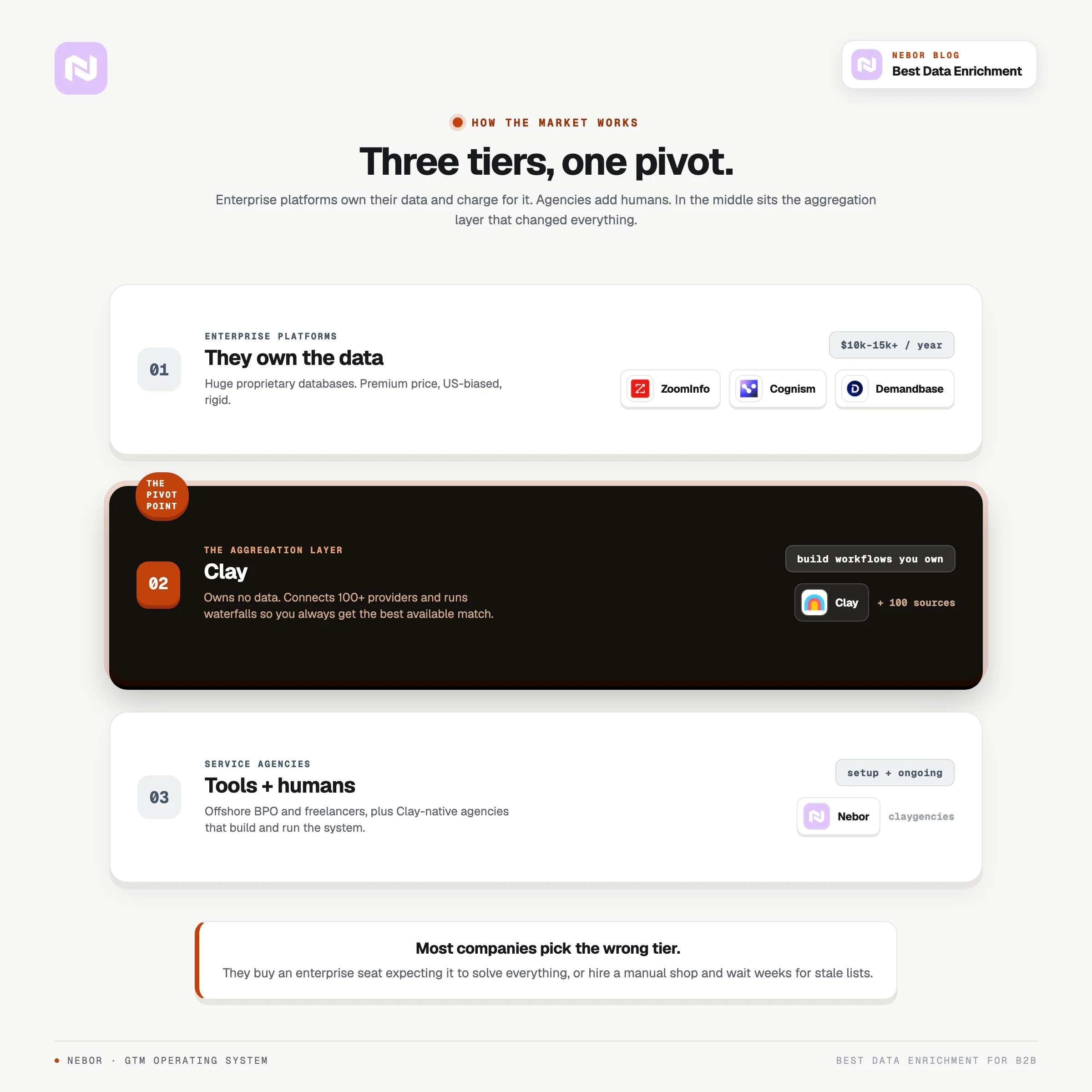
Most data enrichment tools fall into one of three tiers.
At the top are enterprise data platforms like ZoomInfo, Cognism, and Demandbase. ZoomInfo alone maintains a database of around 14 million companies and 235 million professionals.
These platforms own their data and charge premium prices for it. Think 10,000+ dollars a year just for meaningful access.
The middle tier is aggregation platforms. Clay is the prime example. These tools do not own the data.
They connect to 100+ raw data providers and let you pull real-time information about leads and buying intent. You build custom waterfall enrichment workflows instead of relying on a single source.
The third tier is service agencies. These combine tools with human research. The category includes offshore BPO operations and freelancers who handle manual enrichment and data cleansing, and GTM-focused agencies like us and most of our competitors that build and maintain enrichment infrastructure for clients.
The problem is that most companies do not understand which tier they actually need. They sign up for ZoomInfo expecting it to solve everything. Then they realize the data is US-biased and their European coverage is thin.
Or they hire a manual research agency, wait three weeks, and get back lists already filled with stale data by the time they arrive.
What the Clay factor changed for everyone
Clay's waterfall enrichment approach broke the traditional data sourcing model. Instead of relying on one provider, you wire Clay up to many sources of your choosing. Clay searches them in sequence until it finds a valid match. You always end up with the best available data.
The numbers back this up. Traditional single-source providers usually deliver 30 to 50 percent match rates for emails. A properly configured Clay waterfall hits 80 percent or more for email discovery.
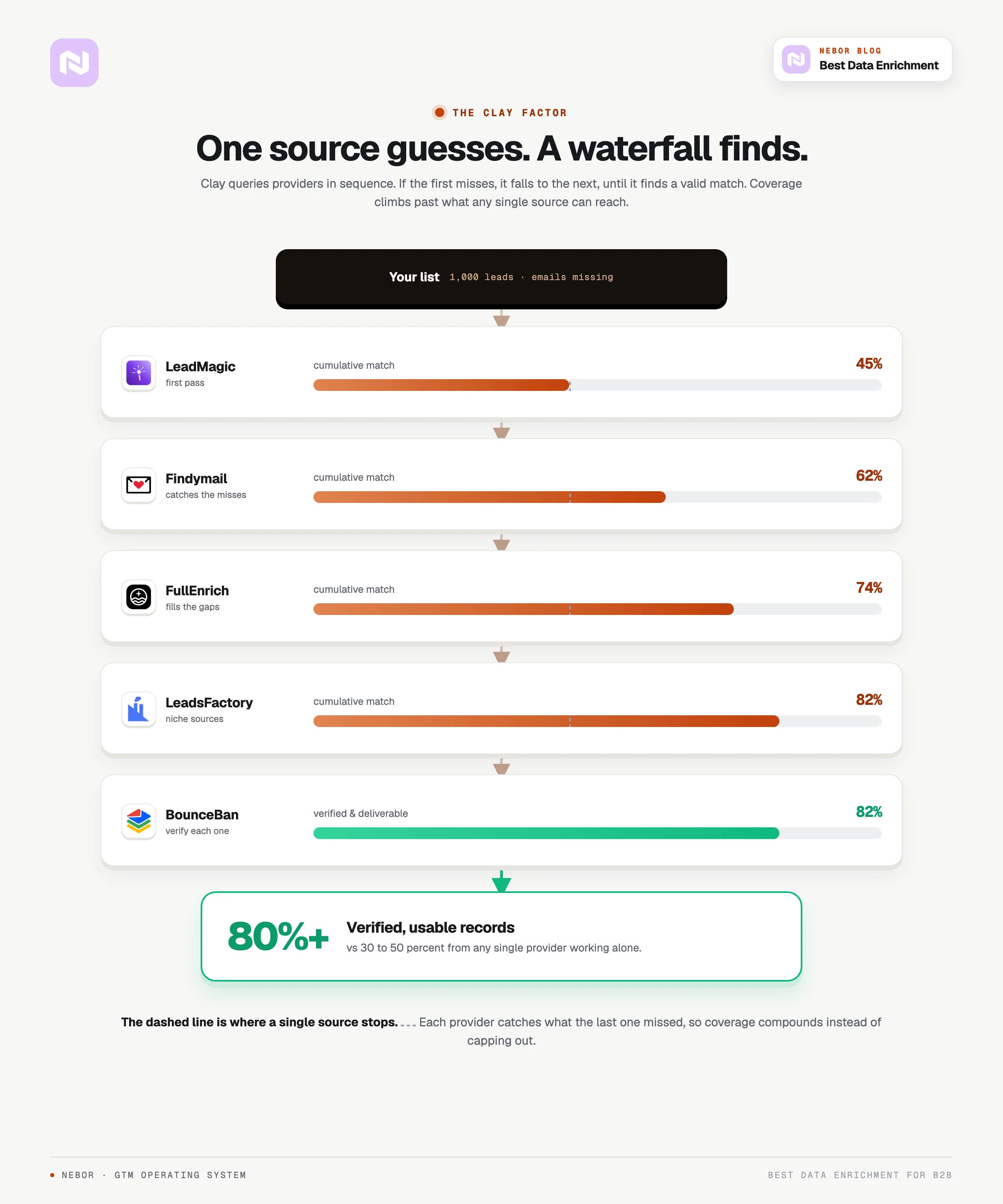
Clay's own case studies show one company tripling enrichment rates compared to their previous solution. Others go from 30 percent mobile coverage to over 70 percent just by wiring multiple providers into a waterfall.
That creates a real tension in the market. Why pay an agency to manually research contacts when automation can hit better coverage at a lower cost?
But Clay is not plug-and-play. It has a steep learning curve. If every sales rep on your team has to learn Clay and build their own workflows, you are not making the best use of the tool, and the price tag will balloon.
Architecting the workflows properly takes a real Clay expert and a GTM engineer. Most teams have neither, so they end up bringing in an agency.
That is where the new wave of Clay-native data enrichment agencies comes in. We have written more about why most Clay implementations fail if you want the longer version.
Where the new Clay agencies or “claygencies” fit in the market
A few agency models have emerged in response to how Clay changed the game.
The first is Clay implementation agencies, often called Claygencies among the people building inside the platform every day.
These teams or Clay-expert-led lead generation shops build and maintain enrichment infrastructure for clients. You get the full thing, including behavioral data enrichment and outbound.
They charge for setup plus ongoing optimization rather than per-lead fees. You own the system when they are done.
The second is hybrid enrichment services. These use automated waterfalls for what tools can find, then add human research on top for the gaps.
That matters most for phone numbers, where even the best waterfall configurations only hit 40 to 60 percent match rates for direct dials.
The third is traditional BPO-style outsourcing. These shops handle manual enrichment at scale and tend to promise savings of up to 60 percent against in-house teams.
They take on data validation, normalization, and manual research from sources that do not offer enrichment software and cannot be scraped programmatically.
The way we see it at Nebor, the real divide is no longer tool versus agency. It is ownership versus rental. Companies using Clay or similar tools build systems they own and control.
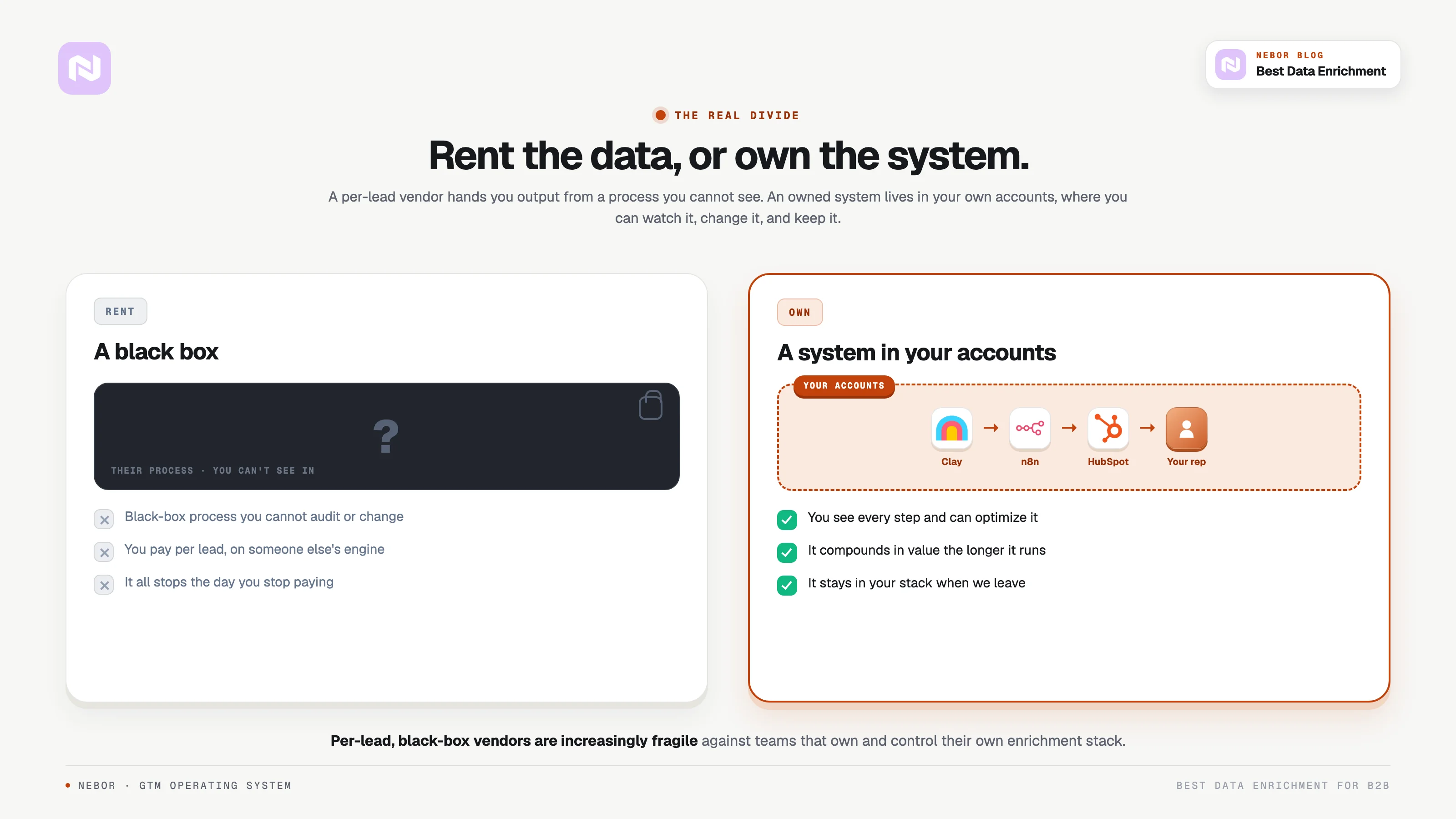
Traditional enrichment agencies that charge per-lead with black-box processes are increasingly fragile against teams that just spin up Clay and figure it out themselves.
The compliance wrinkle
One real issue with waterfall enrichment is compliance uncertainty. As B2B data flows through multiple third-party sources, keeping up with privacy regulations gets harder, especially in Europe.
Each provider has its own data collection practices. Some of them do not align cleanly with GDPR, CCPA, or industry standards.
When you are pulling data from 15 different sources through a waterfall, you carry the responsibility for verifying that each provider follows the rules. Any compliance miss could expose your organization to penalties.
This is why agencies like Cognism position themselves against waterfall tools by maintaining their own verified, compliant database rather than aggregating from sources you cannot fully audit.
It is worth keeping in mind, especially if you sell into regulated industries or European markets.
Why working with a B2B data enrichment agency is worth considering
Even the best data enrichment tool does not have all the accurate data. To get coverage you can act on, you need to combine multiple sources and build something close to your own data warehouse. Clay is what makes that possible.
Now you are probably thinking, if Clay is so good, why bring in an agency at all?
Fair question. Here is the honest answer.
Clay is powerful, and it is not plug-and-play. We have watched plenty of teams buy Clay, watch a few YouTube videos, and end up with a mess of half-built workflows that do not produce real results.
You know how you barely use 20 percent of what Excel can do? Clay is also a spreadsheet, and it is a much more complicated one. You are also trying to grow a business, not earn a Clay PhD.
The platform's complexity is not about usability. It is about depth. Clay's full capability set is not obvious to new users. The Clay expert badge exists for a reason.
Building real enrichment workflows requires understanding your ICP at a granular level. It takes knowing which data sources have the best coverage for your specific market.
It takes setting up verification layers so you are not burning budget on bad data. And it takes wiring everything into your CRM and outreach tools so the data actually moves.
Most sales teams do not have time for this. They are under pressure to hit quota this quarter, not spend three months learning a new tool.
Expert agencies compress the timeline. They have already made the mistakes and know which providers cover which industries.
They also know how to structure waterfalls for maximum efficiency. And they can get you from zero to live campaigns in weeks, not months.
The key is finding an agency that builds systems you own, not one that engineers dependency. If an agency will not show you how the sausage is made, that is a red flag.
You want a partner that transfers capability, not one that keeps you on a retainer forever. We have written before about how to hire a growth agency if you want our full take on what to look for.
What you should actually expect from a data enrichment agency
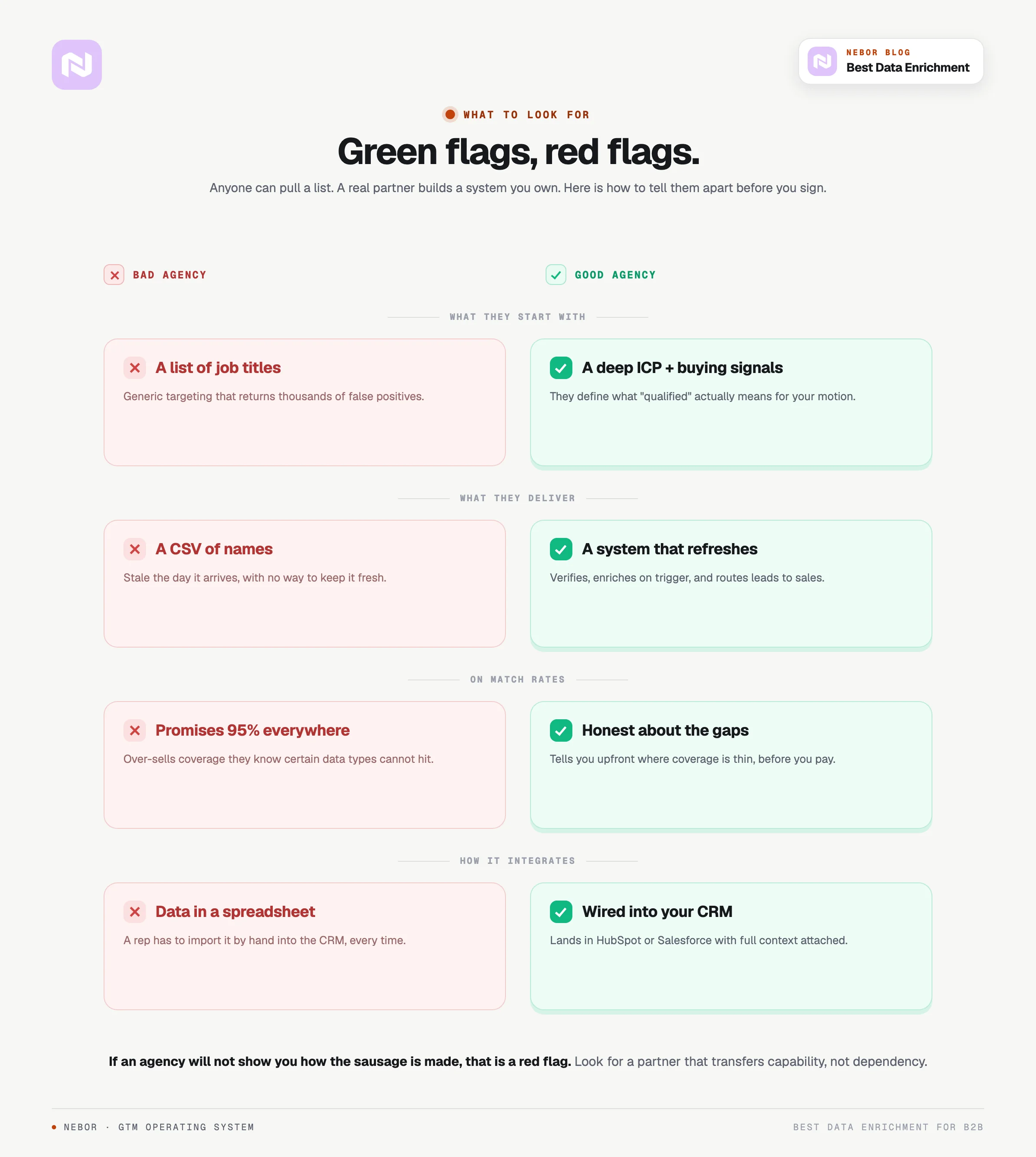
Here is what good agencies deliver versus what bad ones do. We are speaking from our own experience.
Good agencies start with a deep understanding of your ICP. They do not just ask for a list of job titles and company sizes. They dig into what actually makes a prospect qualified for your specific product. They figure out the signals that show real buying intent in your market.
Good agencies build systems, not just lists. Anyone can pull a list from LinkedIn Sales Navigator. The value is in the enrichment workflow that keeps that data fresh, verifies contact information, and routes qualified leads directly to your sales team.
Good agencies are honest about match rates and data quality. They will tell you upfront what coverage you can expect and where the gaps will be. They do not promise 95 percent accuracy across the board when they know certain data types are harder to find.
Good agencies wire the work into your existing stack. The enriched data lands directly in your CRM, not in a spreadsheet a rep has to import manually.
That means real connections to your HubSpot, Salesforce, or whatever your team already uses. We covered the deeper version of this in our post on Clay and CRM automation.
5 best B2B data enrichment agencies you need to hire to outsource data enrichment
Here are the five agencies worth considering for B2B data enrichment in 2026.
1. Nebor
This is us. We are not a pure data enrichment shop. Enrichment is one part of what we do. We are aGTM automation agency that designs the systems that produce pipeline for B2B teams.
Most teams that come to us for enrichment think their problem is data quality. The data is part of the problem. The bigger problem is that the data has nowhere to go.
There is no system pulling it in, no system enriching it on the right trigger, and no system handing the right context to a rep at the right moment. So even when the data is good, it dies in a CSV.
What we build is the system around the data. We design three connected workflows that live inside your own Clay, n8n, HubSpot, and Salesforce accounts. They handle outbound, inbound, and intent. Enrichment lives across all three.
Here is how each one gets built, what it produces, and how the three fit together.
We build you an outbound enrichment workflow that turns cold accounts into qualified meetings
Before we break it down for you, here is what the entire process and workflow looks like.
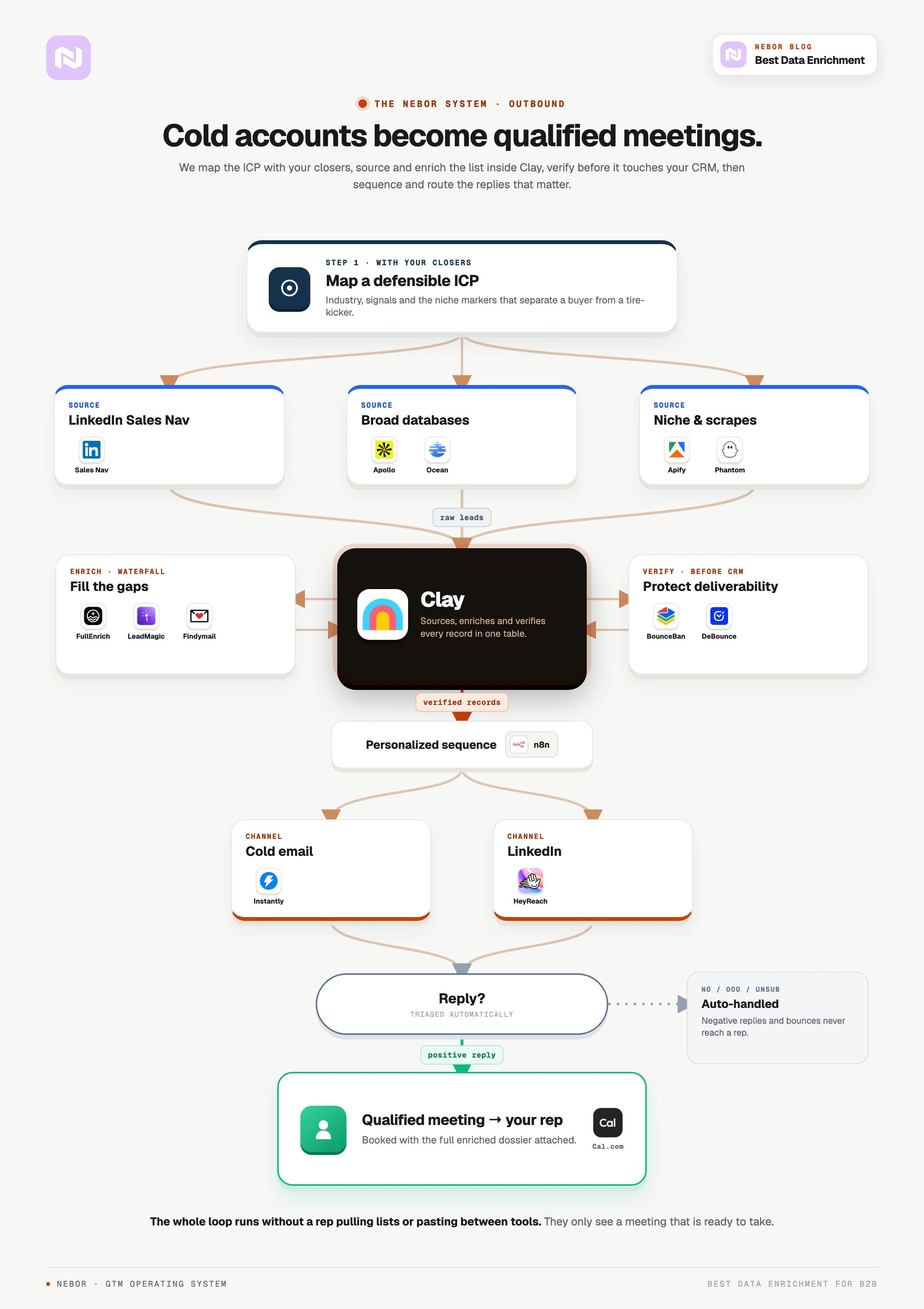
Most outbound today still depends on someone manually pulling lists, manually enriching them, and manually deciding who is worth a sequence. That is where the hours your team complains about actually go.
We take that whole loop off the team's plate.
We start by mapping your ICP at the level your sales team would defend in a deal review
Most ICPs we inherit are too loose to operationalize. "Mid-market SaaS in North America" is not an ICP. It is a vibe.
We work with the founders and the closers to define the ICP at the level they would defend on a sales call. Industry, sub-industry, headcount band, revenue band, geography, tech stack signals, hiring signals, and any niche markers that separate a real buyer from a tire-kicker.
For a recent client selling event tech to companies hosting events, "events industry" was useless as a filter. Apollo and Sales Nav return tens of thousands of false positives for that.
We pulled the actual buyers off niche platforms like 10times and Cvent, confirmed they were organizing events with paid sponsors, and even confirmed they had floor plans live. That is the level of ICP precision a real outbound system needs.
We build the lead-sourcing workflow inside Clay using sources tuned to your ICP
Once the ICP is locked, we build the sourcing workflow inside Clay. For most clients this means pulling from LinkedIn Sales Navigator, Apollo, Ocean.io, industry-specific directories, scraping from public sources, and pulling from APIs your competitors are not aware exist.
We do not rely on the same three providers everyone else uses. When your ICP gets niche, the popular sources fail. We have a working library of niche data sources for industries from event tech to industrial robotics to private equity, and we add to it on every engagement.
We enrich and verify the data through a waterfall before it ever touches your CRM
This is where Clay earns its keep. We layer waterfalls across FullEnrich, LeadMagic, LeadsFactory.io, Findymail, PhantomBuster, and other sources, and we add a verification layer on top with BounceBan or DeBounce to keep our deliverability clean.
The result is enriched, verified records that pass a deliverability bar before they ever land in your CRM. We are not in the business of polluting your domains. We have written more on this in our Clay automation guide and our piece on building a prospect list.
We design the multichannel sequence and route the right replies back to your reps
Once the data is clean and qualified, we design the actual reach-out. Email sequences go out through Instantly, LinkedIn touches go out through HeyReach, and we orchestrate the cross-channel timing through n8n.
When a prospect replies, we triage. Negative replies, out-of-office bounces, and unsubscribes get handled automatically.
Positive replies and meeting requests get pushed straight into the right rep’s inbox or calendar tool with the full enriched dossier on the prospect.
Your reps see a qualified meeting, not a list of names to chase.
Note: Are you looking to enrich your lead lists and CRM records so your team reaches the right people?
That is one of the workflows we build. At Nebor we do GTM engineering and RevOps, and enrichment is the layer everything else leans on: your outbound, your inbound, your reporting, and the CRM your reps open every morning.
We build everything in your own accounts, chained across the providers that cover your market, so your data stays complete and current without anyone maintaining it by hand.
Book a 15-minute call and we'll test it on a list of your own.
We build you an inbound enrichment workflow that catches every warm signal and routes it with full context
Here’s what the inbound workflow looks like:
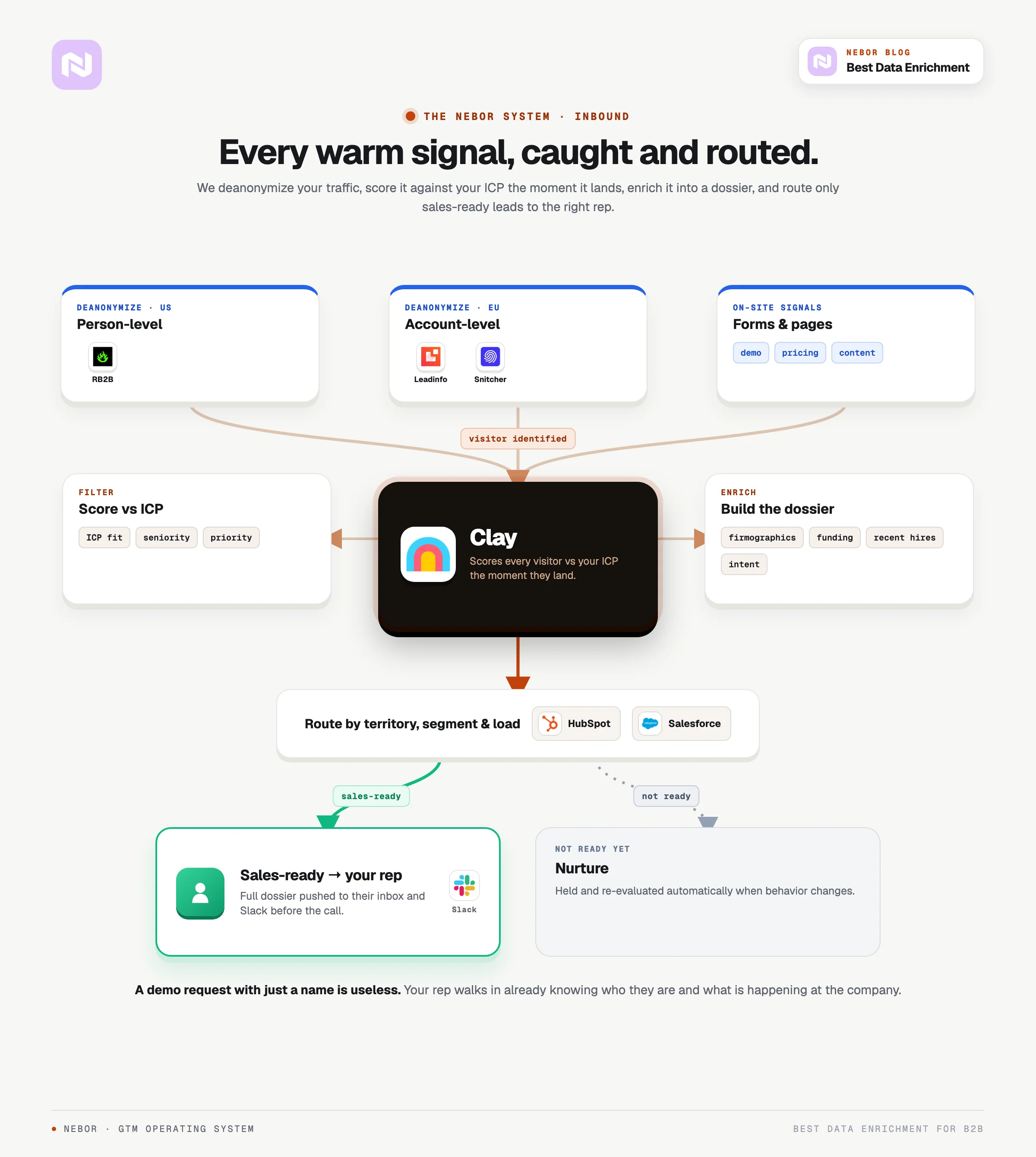
Most B2B websites generate more warm signals than the sales team ever sees. Demo requests are the obvious one, but there is also content downloads, pricing-page visits, calendar bookings, podcast listens, and anonymous traffic from target accounts.
Most of those signals never make it to a rep, or they make it to a rep stripped of context. We catch all of it and route it.
We deanonymize your traffic and identify the people and accounts on your site
We wire up RB2B for person-level deanonymization in the US, and Leadinfo or Snitcher for account-level deanonymization in Europe. The accounts and people on your site land in a Clay table within seconds.
We do not just dump them there. We score them against your ICP definition the moment they land, so the volume that hits your team is already filtered to the accounts you actually care about.
We enrich every inbound signal with the full context a rep needs to take the meeting
A demo request with just a name and an email is worse than useless. A rep walking into that meeting cold burns time on discovery that the system should have done already.
So we enrich every inbound signal automatically. Job title, seniority, decision-making power, full company firmographics, recent funding, recent product launches, recent hires, and any public intent signals we can pull.
We compile that into a dossier and push it into the rep's inbox or Slack before the meeting starts.
When the rep walks into the call, they know who they are talking to and what is going on at the company. The conversation starts where it should start.
We route the qualified meetings to the right rep with the right rules
Round-robin routing is fine for tiny teams. Anyone with a real B2B motion needs more. We build routing rules in HubSpot or Salesforce that match accounts to reps based on territory, segment, named-account ownership, language, and current pipeline load.
If you want the longer version of how this works for your inbound workflow, we wrote a full walk-through of the inbound meeting workflow with Cal.com, Clay, HeyReach, and Instantly.
We build you an intent enrichment workflow that watches continuously across your TAM
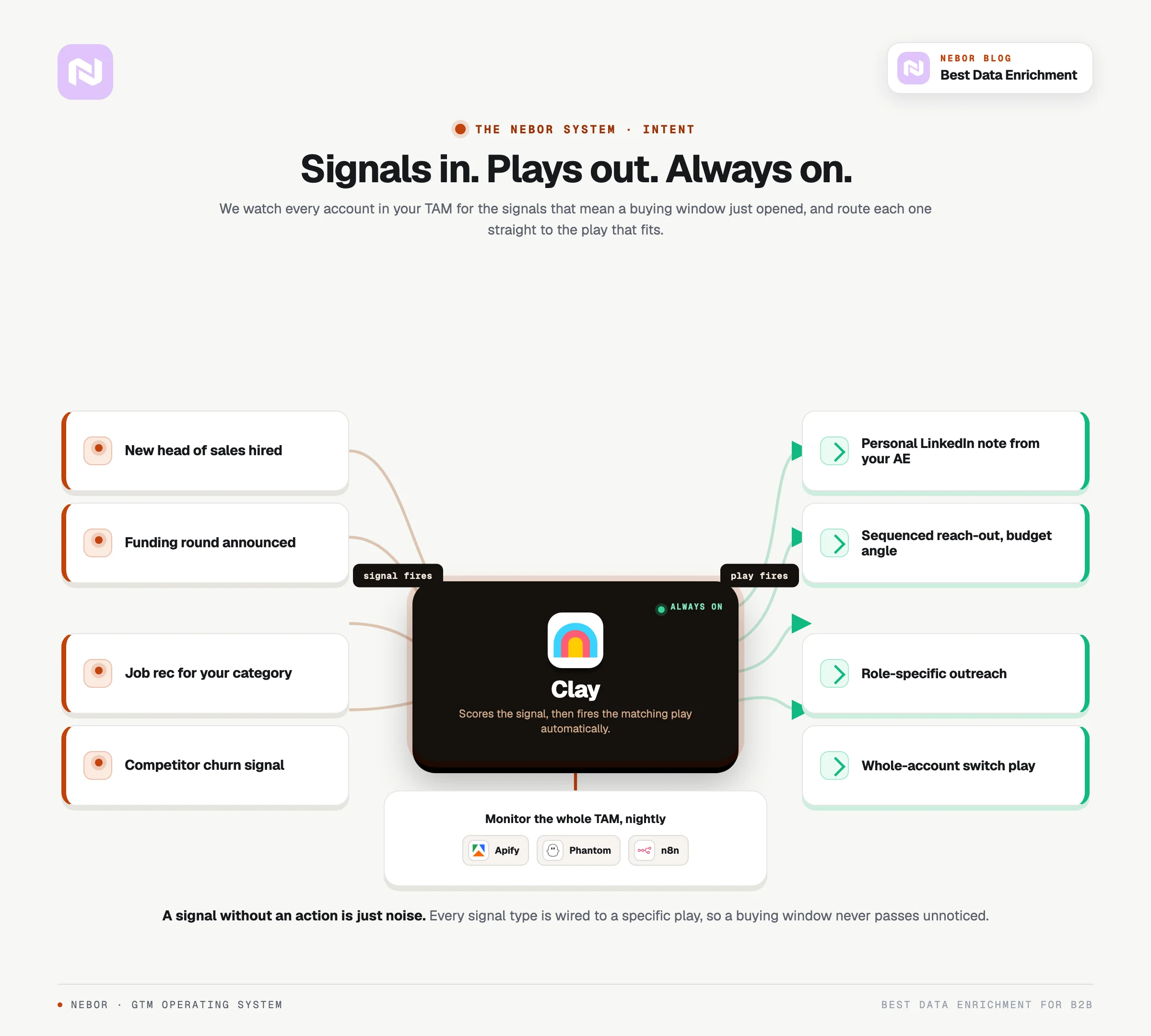
Outbound and inbound only catch the prospects you reach out to or the ones who land on your site. The third workflow works in the background, watching the rest of your TAM for the signals that say a buying window just opened.
We define the buying-window signals that actually map to your sales motion
We sit with the closers and figure out what a real buying window looks like for your product. The triggers vary by motion, but the shortlist usually looks something like this:
A new head of sales hired into a target account.
A funding round that opens new budget.
An open job rec for a role that uses your product.
A new office or expansion into a new geography.
RFP language showing up on a public site.
Specific tech stack changes that tee up your product.
A churn signal at a competitor that opens a window.
These are not generic intent topics. They are specific behaviors that, in your motion, mean the company is now in market.
We monitor those signals continuously across your TAM
We use Apify for social and behavioral intent, paired with funding and hiring signal feeds, plus public scrape jobs we push nightly through Clay. Every account in your TAM is watched. The moment a buying-window signal shows up, the account moves into the action queue.
We push the qualified intent signal into the right action automatically
A signal without an action is noise. So every signal type maps to a specific action. A funding round triggers a sequenced reach-out from your AE. A new head of sales triggers a personal LinkedIn note. A churn signal at a competitor triggers a whole-account play.
Your team is not staring at a dashboard trying to figure out what to do. The system has already routed the signal to the play.
This is the workflow we call "always-on TAM monitoring," and it is what separates intent data that stalls in a tool from intent data that produces meetings.
How the three workflows complement each other
The outbound workflow finds and engages cold accounts that match your ICP. The inbound workflow catches every warm signal and routes it with context. The intent workflow monitors the rest of the TAM for buying windows you would otherwise miss.
Together, they cover every account in your TAM at every stage. A cold account becomes a warm one through outbound. A warm one converts faster because of inbound. A previously dead account re-enters the pipeline the moment an intent signal appears. There is no leak.
2. OneAway.io
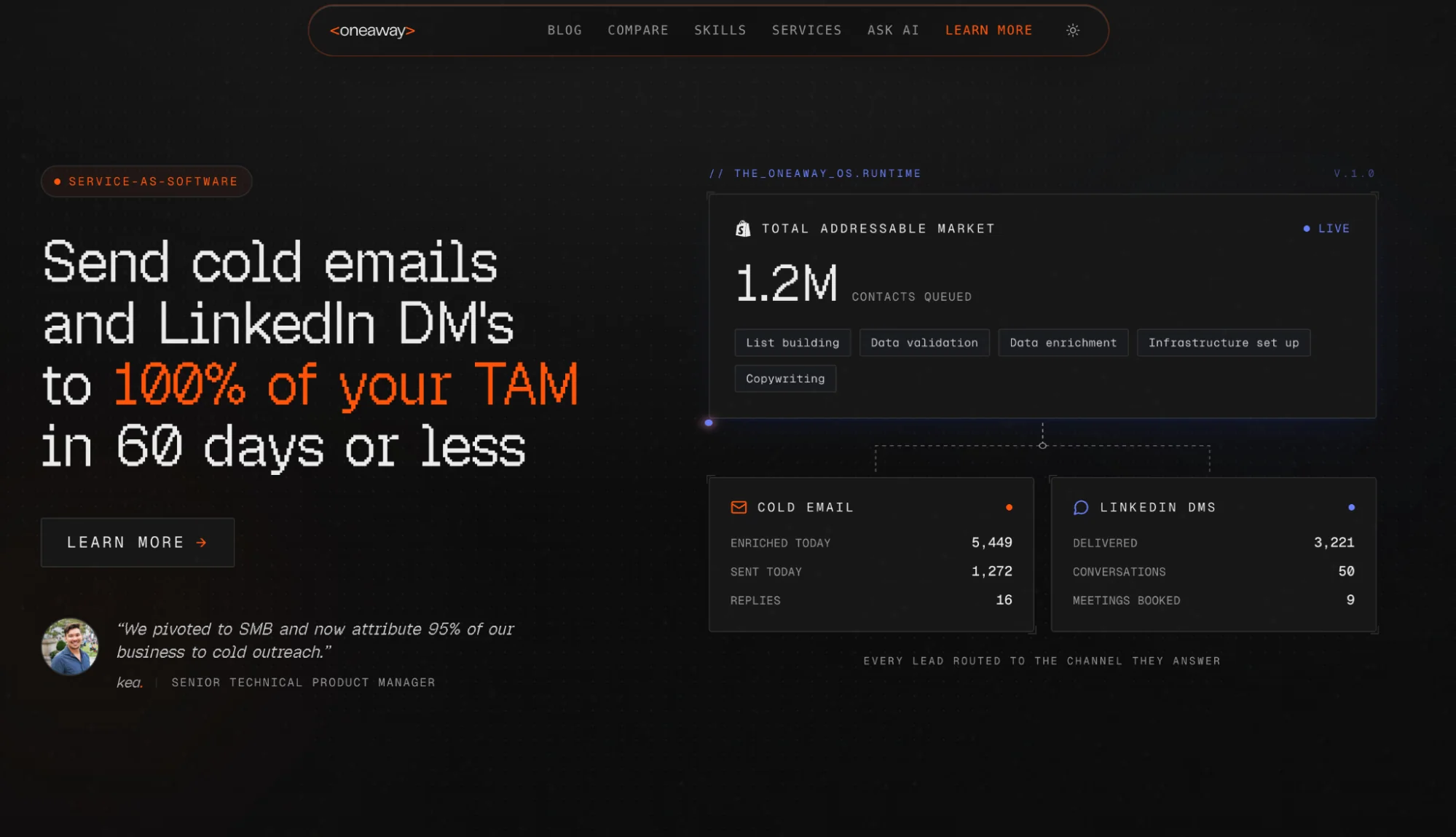
OneAway is a certified Clay Enterprise Partner with experience building over 190 Clay tables for clients. They have worked with more than 50 B2B teams across North America, the UK, and the UAE.
Their model is straightforward. You fill out an ICP form, and they handle everything else. They source 10,000 fresh leads per month from 105+ data points, build campaigns inside Clay, and even handle reply sorting and auto-booking for interested prospects.
What sets them apart is their focus on growth-stage companies. They work primarily with Series B-C SaaS teams and mid-market brands. Their playbooks are designed to reduce SDR load while pushing outbound output up through Clay engineering.
Best for growth-stage SaaS companies looking for a fully managed cold email system built on Clay. We have a longer breakdown in our OneAway alternatives post if you are still comparing options.
3. ColdIQ
ColdIQ is one of only four Elite Studio Clay Experts globally, the highest tier in Clay's partner program. They position themselves as an AI-powered agency that puts intelligence at the core of lead generation.
Instead of just adding manpower, they build systems that find buyers, not just contacts. That means using billions of data points for audience research and enrichment.
Their service covers email infrastructure setup and warmup, copywriting, send automation, and inbox management. They do continuous campaign optimization to book qualified meetings on client calendars.
Best for B2B companies that want an end-to-end outbound solution combining AI automation with human strategy. Our ColdIQ alternatives breakdown further details the trade-offs.
4. The Kiln
The Kiln specializes in helping organizations roll Clay into their tech stack. Patrick, the founder, is known for sophisticated campaign approaches like using AI to generate custom web apps for each prospect at scale.
Best for enterprise clients that need delivery infrastructure, proven frameworks, and organizational stability alongside GTM engineering innovation. See our Kiln alternatives guide for context on where they fit and where they do not.
5. SalesCaptain.io
SalesCaptain is a Clay-certified agency that has worked with more than 60 organizations. They combine cold email and LinkedIn outreach with AI-driven inbound qualification.
Their approach centers on precision targeting. They combine target niches with intent data, funding data, revenue data, and 250+ additional data points to build prospect lists of companies actively shopping for products like yours.
What makes them interesting is their RevOps focus. They do not just deliver campaigns. They align inbound, outbound, and post-sale motions while automating sales and marketing collaboration.
Best for B2B companies that want to unify inbound and outbound under one system.
20+ best B2B data enrichment services and tools
Now to the tools themselves. These are platforms you can use directly, either alongside an agency or as part of your own DIY enrichment stack.
Top data enrichment tools for automation and workflows
Clay
Clay is the platform that changed everything about data enrichment. It connects to 150+ data providers and lets you build waterfall enrichment workflows in a spreadsheet-style interface.
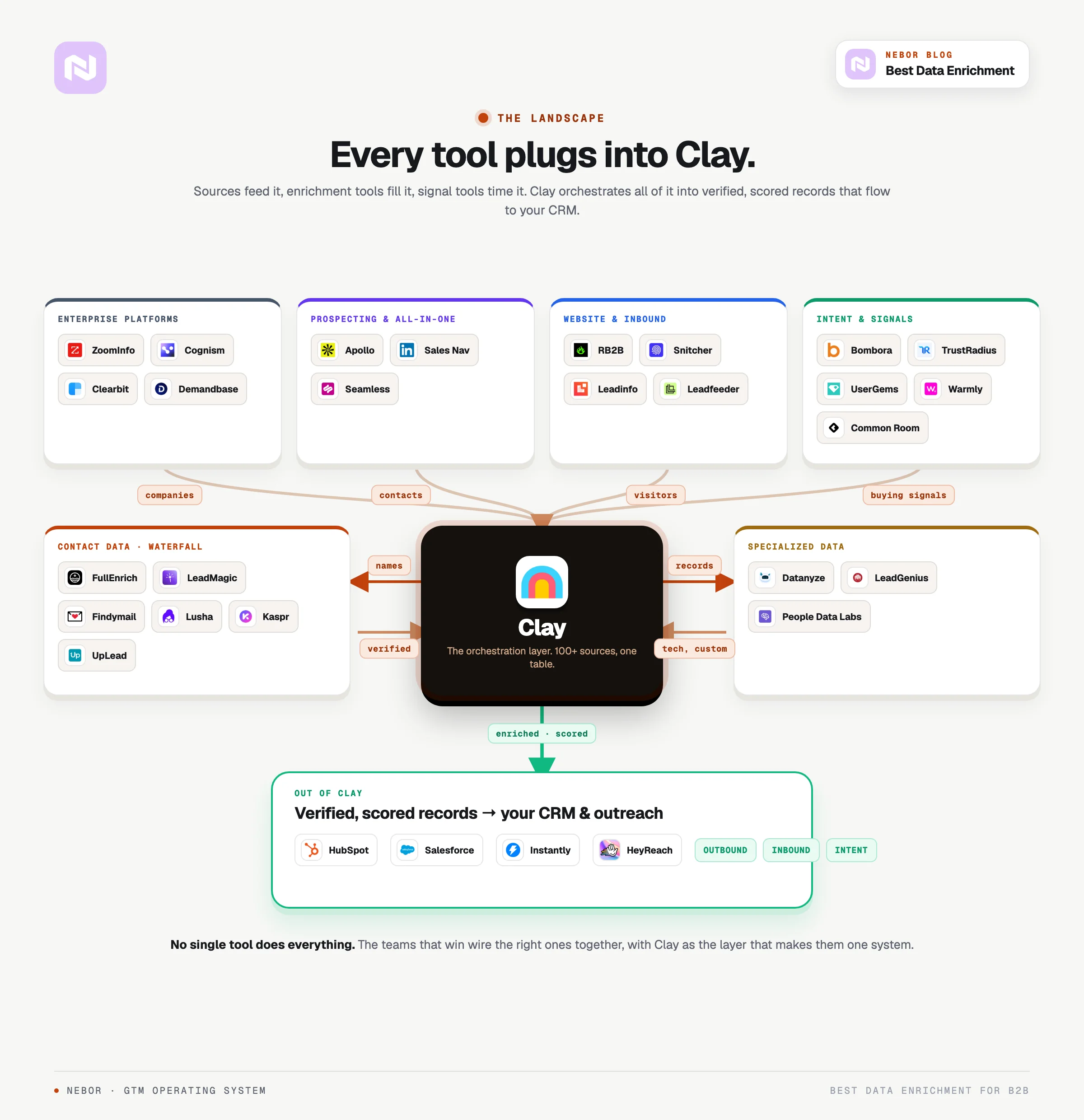
The core innovation is sequential fallback. If your primary data source does not find an email, Clay automatically queries the next provider in line. The waterfall continues until it finds a match or exhausts all sources.
Pros: Unmatched coverage through waterfall enrichment. The Claygent AI agent for custom research. Native integrations with CRMs and outreach tools. Active community and strong educational content.
Cons: Steep learning curve. Credit-based pricing can balloon if you are not careful. Requires technical expertise to get full value.
Pricing: Starts at 134 dollars per month with credit-based usage on top. Pro plan works out to around 16 dollars per 1,000 credits.
Best for teams with GTM engineering capability or those working with Clay agencies. Not a fit for small teams looking for plug-and-play.
Apollo.io
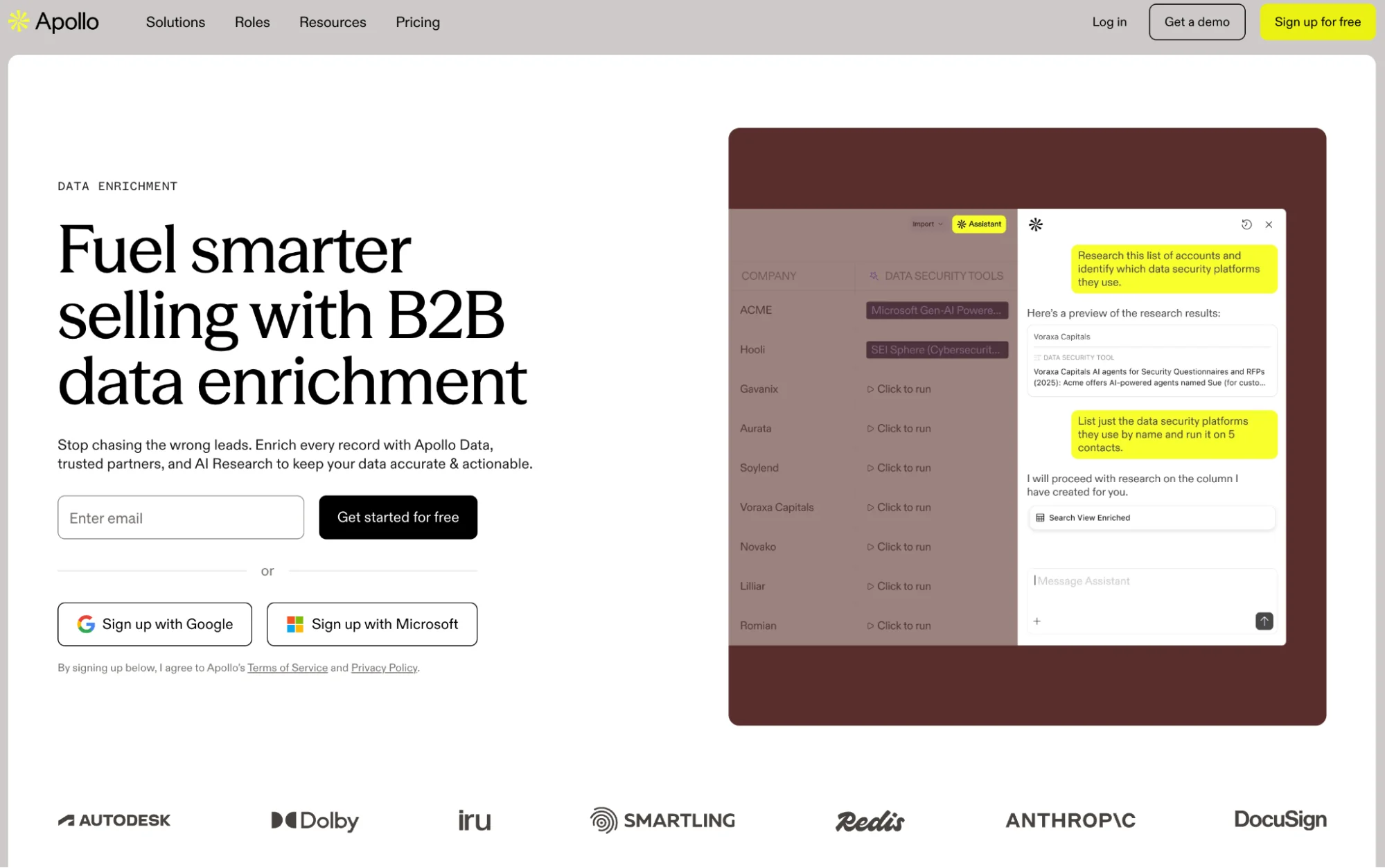
Apollo combines a massive database (275+ million contacts) with built-in engagement tools for sales and marketing teams. It is an all-in-one platform for prospecting and enrichment.
Pros: Large database with verified emails and phone numbers. Built-in email sequencing and power dialer. Intent signals and buying indicators included. Automated CRM enrichment.
Cons: Limited waterfall customization compared to Clay. Per-user pricing adds up for larger teams. Some users report data accuracy issues.
Pricing: Free tier with limited credits. Basic at 49 dollars per user per month, Professional at 79 dollars per user per month.
Best for teams that want everything in one platform without managing multiple tools.
Top B2B data enrichment platforms for enterprise companies
ZoomInfo
ZoomInfo remains one of the largest B2B data providers with records on 14 million companies and 235 million professionals. It is the default choice for enterprise sales teams.
Pros: Massive database. Intent data through Bombora partnership. Strong integrations with enterprise tools. Comprehensive platform.
Cons: Very expensive. Some users report data quality decline. US-biased coverage. Complex contracts.
Pricing: Starts around 10,000 to 15,000 dollars per year. Enterprise pricing varies.
We recommend it for enterprise sales teams with budget for premium data and a need for comprehensive coverage.
Cognism
Cognism focuses on European B2B data with phone-verified mobile numbers through their Diamond Data program. They verify numbers by actually calling them.
Pros: Best-in-class European coverage. Phone verification process improves accuracy. Strong GDPR compliance. Good intent data.
Cons: Limited US coverage compared to ZoomInfo. Premium pricing. Smaller overall database.
Pricing: Custom pricing. Typically starts around 15,000 dollars per year for teams.
We recommend it for companies selling into European markets that need verified phone numbers and GDPR compliance.
Clearbit
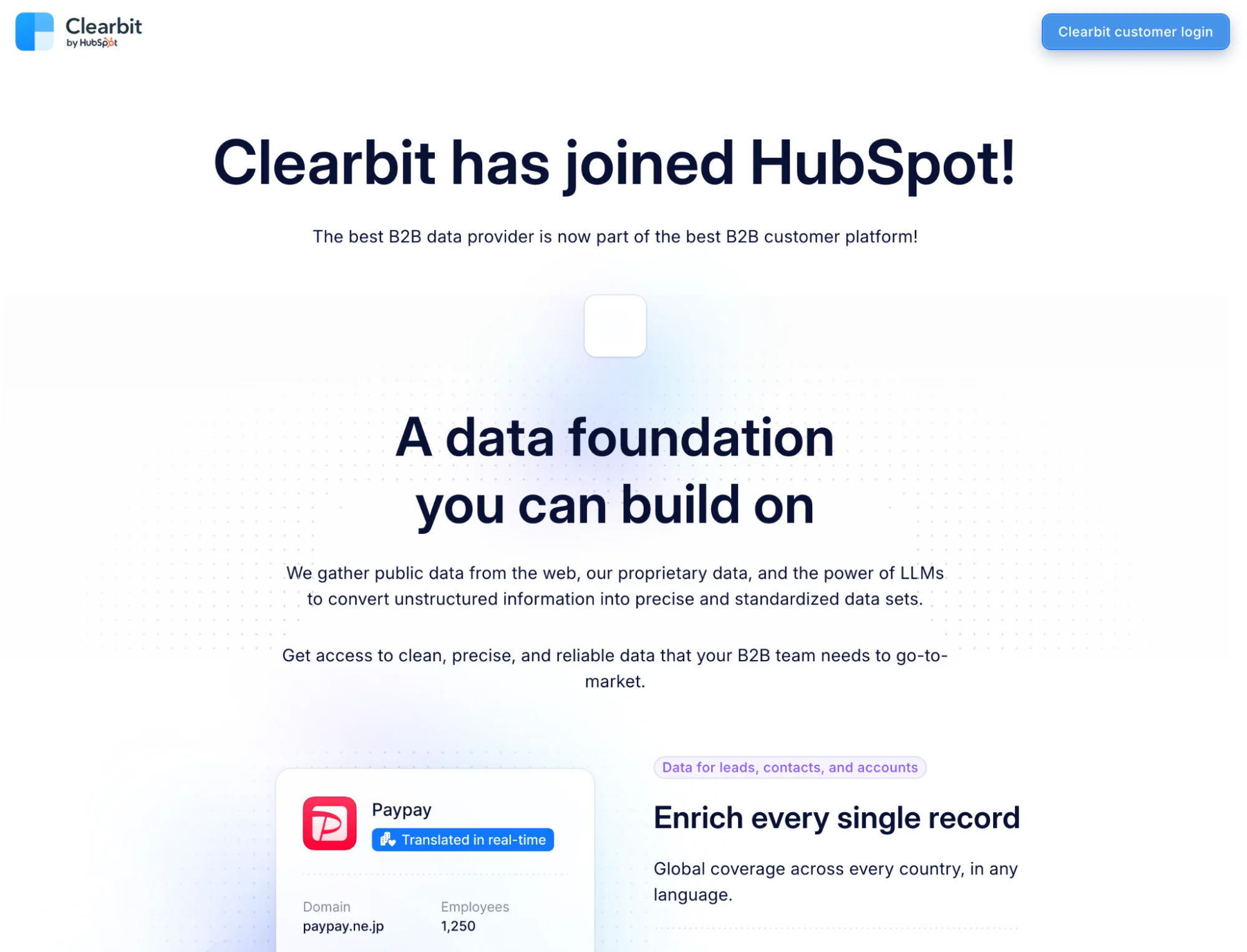
Clearbit (now part of HubSpot) provides real-time enrichment with over 100 data points per record. It is known for clean data on tech companies and startups.
Pros: Real-time API enrichment. Good for early and growth-stage startups. Clean integration with HubSpot. Strong tech company coverage.
Cons: Best coverage for tech companies, weaker for traditional industries. Pricing not transparent. Now bundled with HubSpot.
Pricing: Custom pricing. Free tier available for HubSpot users.
We recommend it for tech companies already using HubSpot that want native, real-time enrichment.
Demandbase
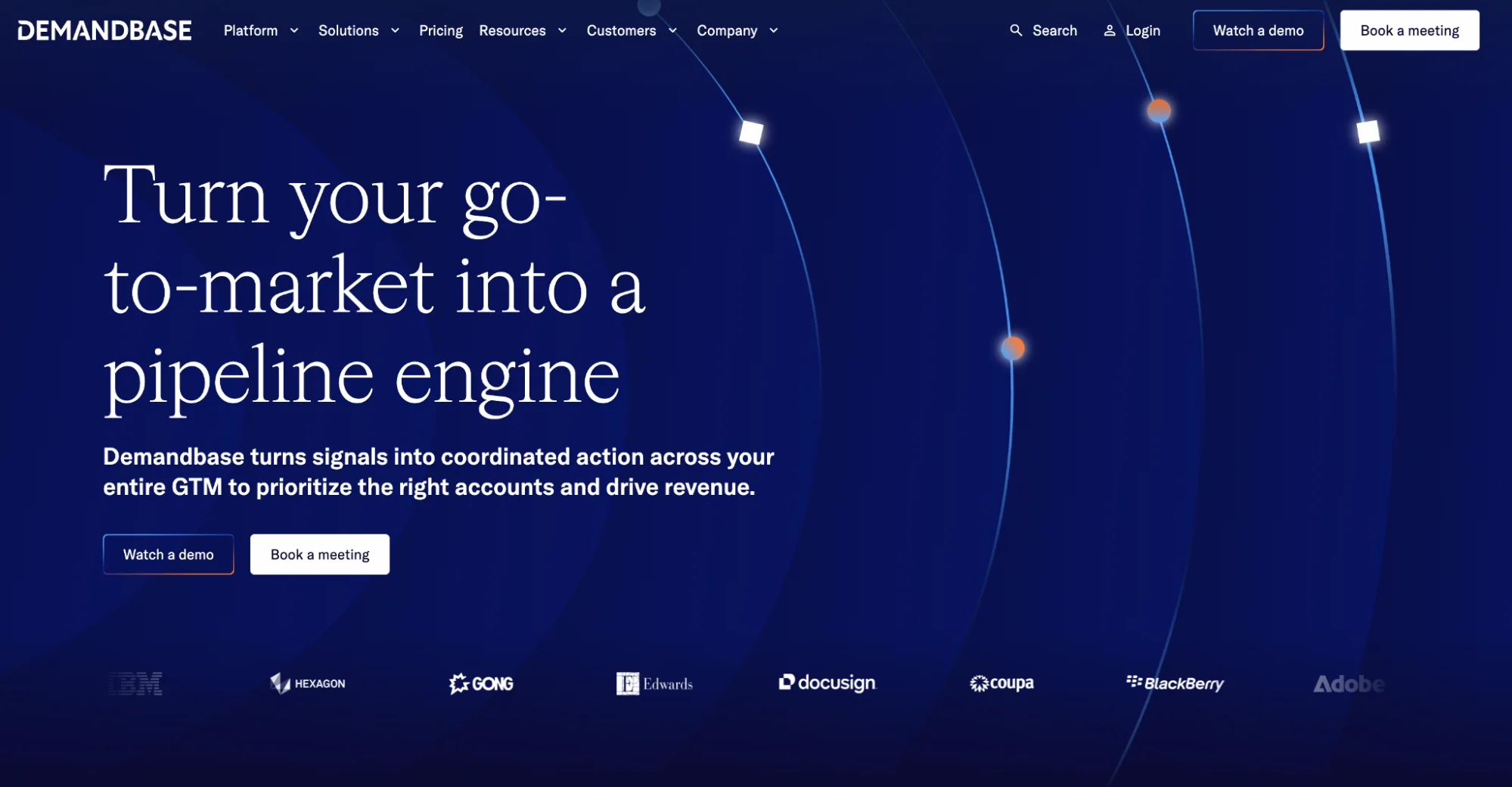
Demandbase is a go-to-market platform built for account-based marketing with enrichment baked in. It combines data with advertising and personalization.
Pros: Strong ABM capabilities. Identifies website visitors. Good for enterprise marketing. Combines data with activation.
Cons: Some users report data quality concerns. Complex platform with steep learning curve. Enterprise pricing.
Pricing: Custom pricing based on features and usage. Typically 50,000+ dollars per year.
We recommend it for enterprise marketing teams with sophisticated ABM programs that need data and activation in one platform.
LinkedIn Sales Navigator
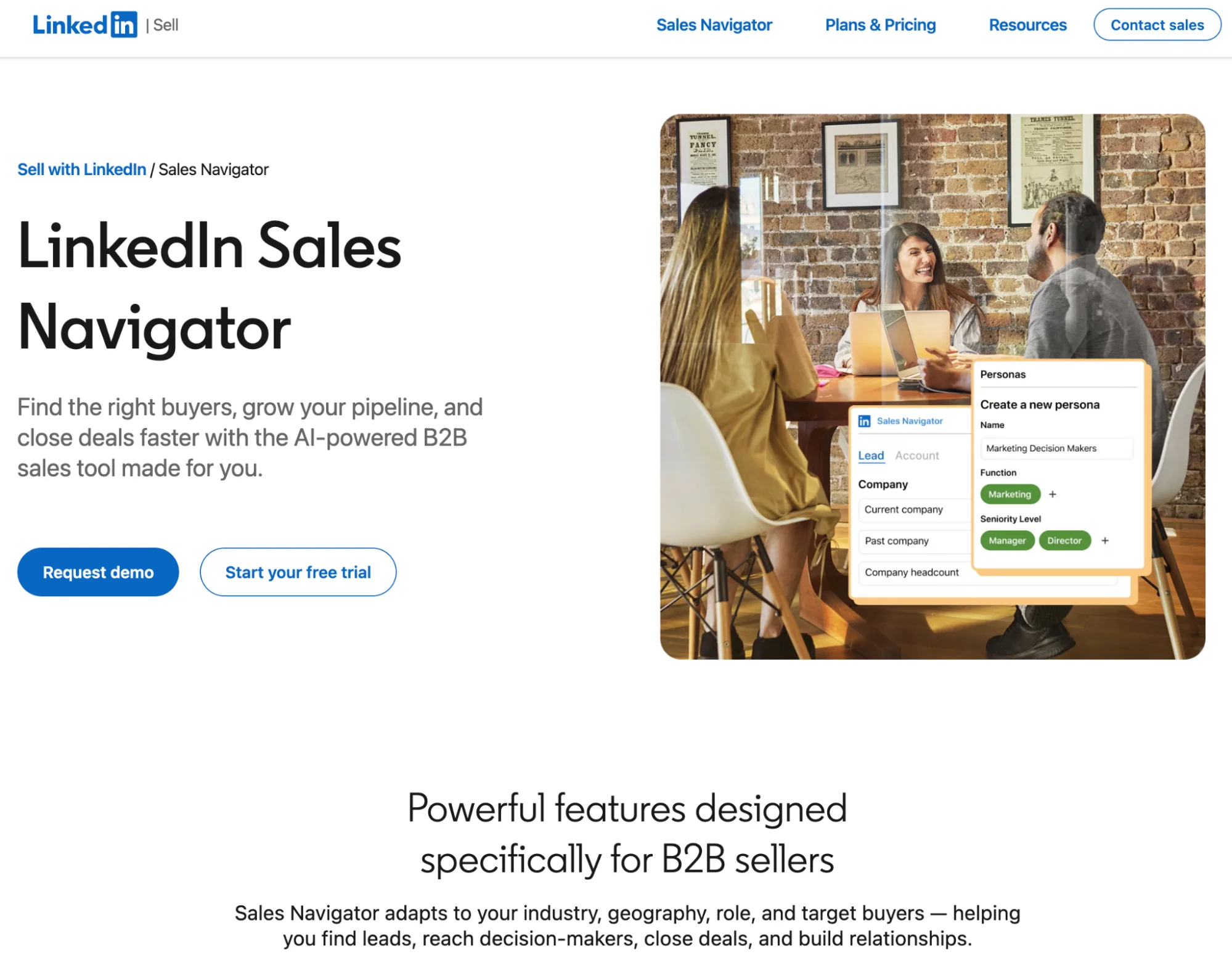
LinkedIn Sales Navigator is the premium version of LinkedIn built for sales prospecting. It gives you advanced search filters, lead recommendations, and InMail credits to find and reach decision-makers directly on the platform.
Pros: Access to LinkedIn's 900+ million members. Advanced search filters including company size, seniority, and geography. Lead and account recommendations based on your activity. InMail for direct outreach.
Cons: No email or phone data included, requires additional enrichment tools. Expensive for what you get. Data export is limited without third-party tools.
Pricing: Core at 99 dollars per month, Advanced at 149 dollars per month, Advanced Plus requires custom pricing.
We recommend it for sales teams that need to build targeted prospect lists and want to use LinkedIn's network directly.
Top data tools for inbound and website lead capture
RB2B
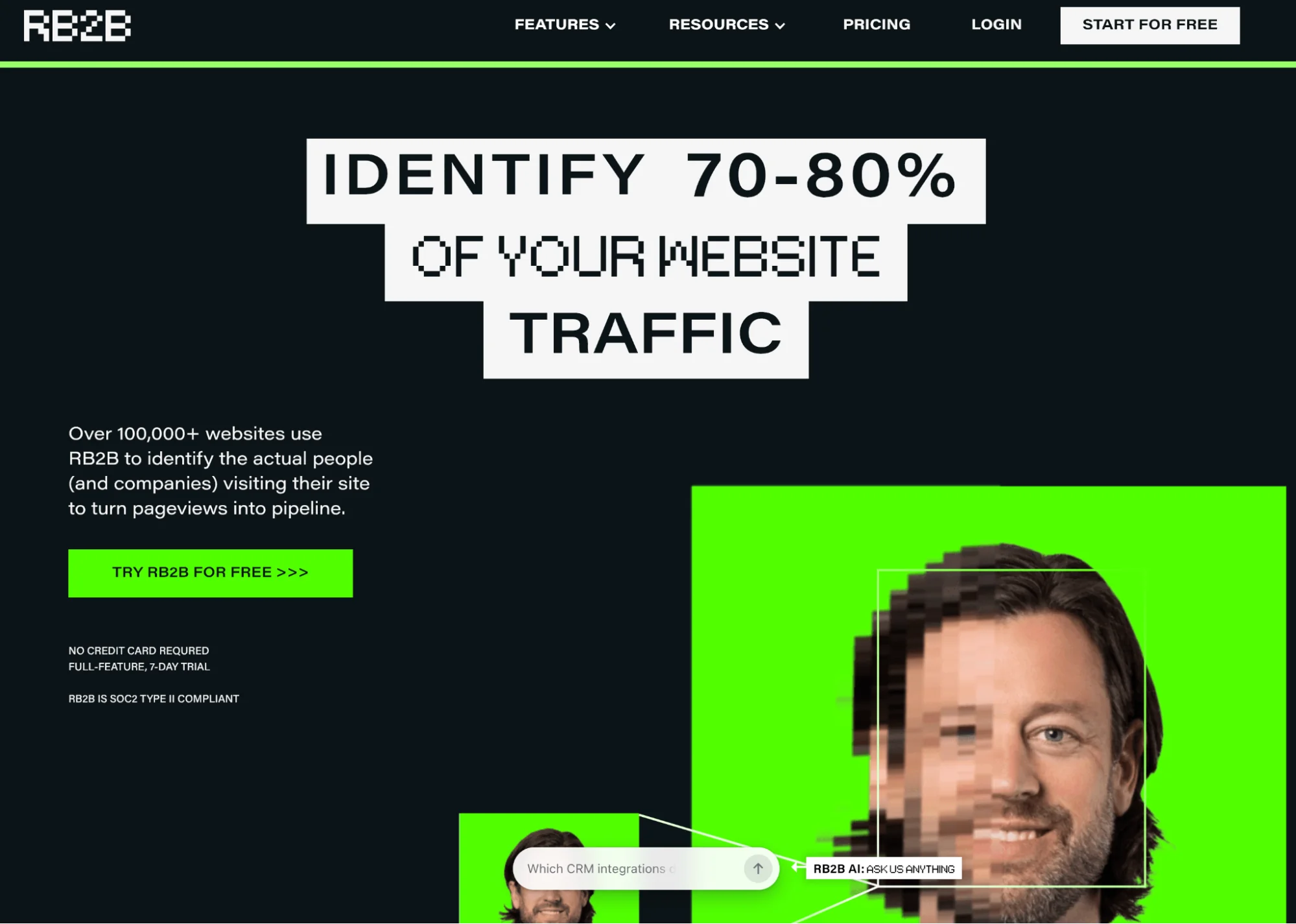
RB2B identifies anonymous website visitors and reveals who they are at the person level, not just the company level. It plugs into Clay for automated enrichment workflows based on visitor behavior.
Pros: Person-level identification rather than just company. Real-time alerts when target accounts visit. Good integration with Clay and outreach tools.
Cons: Coverage depends on your website traffic quality. US-focused coverage. Requires meaningful traffic volume to be useful.
Pricing: Free plan available. Paid plans start at 99 dollars per month.
We recommend it for B2B companies with meaningful website traffic that want to capture and act on intent signals.
Snitcher
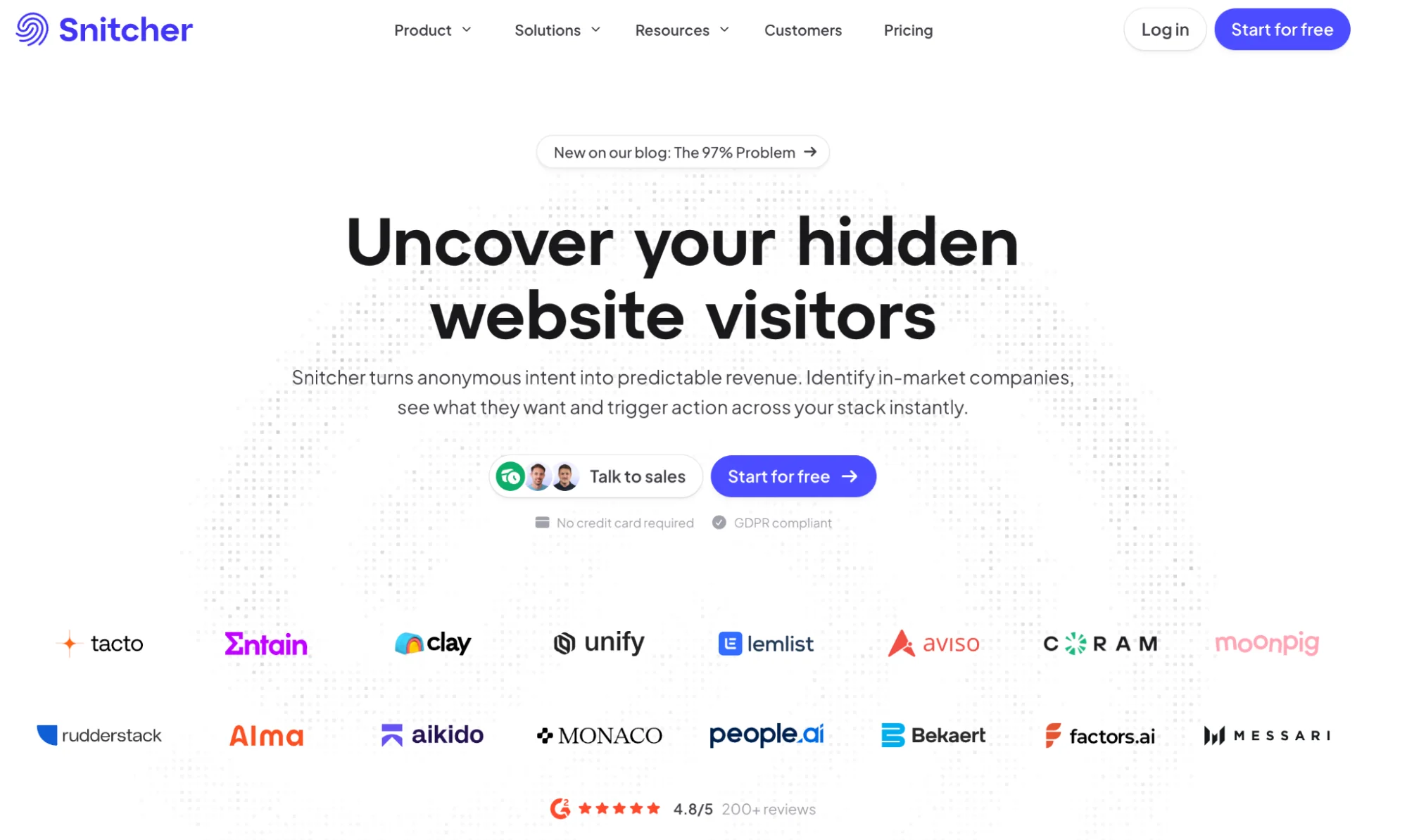
Snitcher identifies companies visiting your website and provides firmographic data about them. It is built for B2B lead generation from web traffic with a focus on European markets.
Pros: Clean interface with easy CRM integrations. Good European coverage. Affordable entry pricing. Real-time visitor notifications.
Cons: Company-level identification only, not individual contacts. Requires additional enrichment for contact details.
Pricing: Starts at 39 euros per month for up to 100 identified companies.
We recommend it for European B2B companies looking for affordable website visitor identification.
Leadinfo
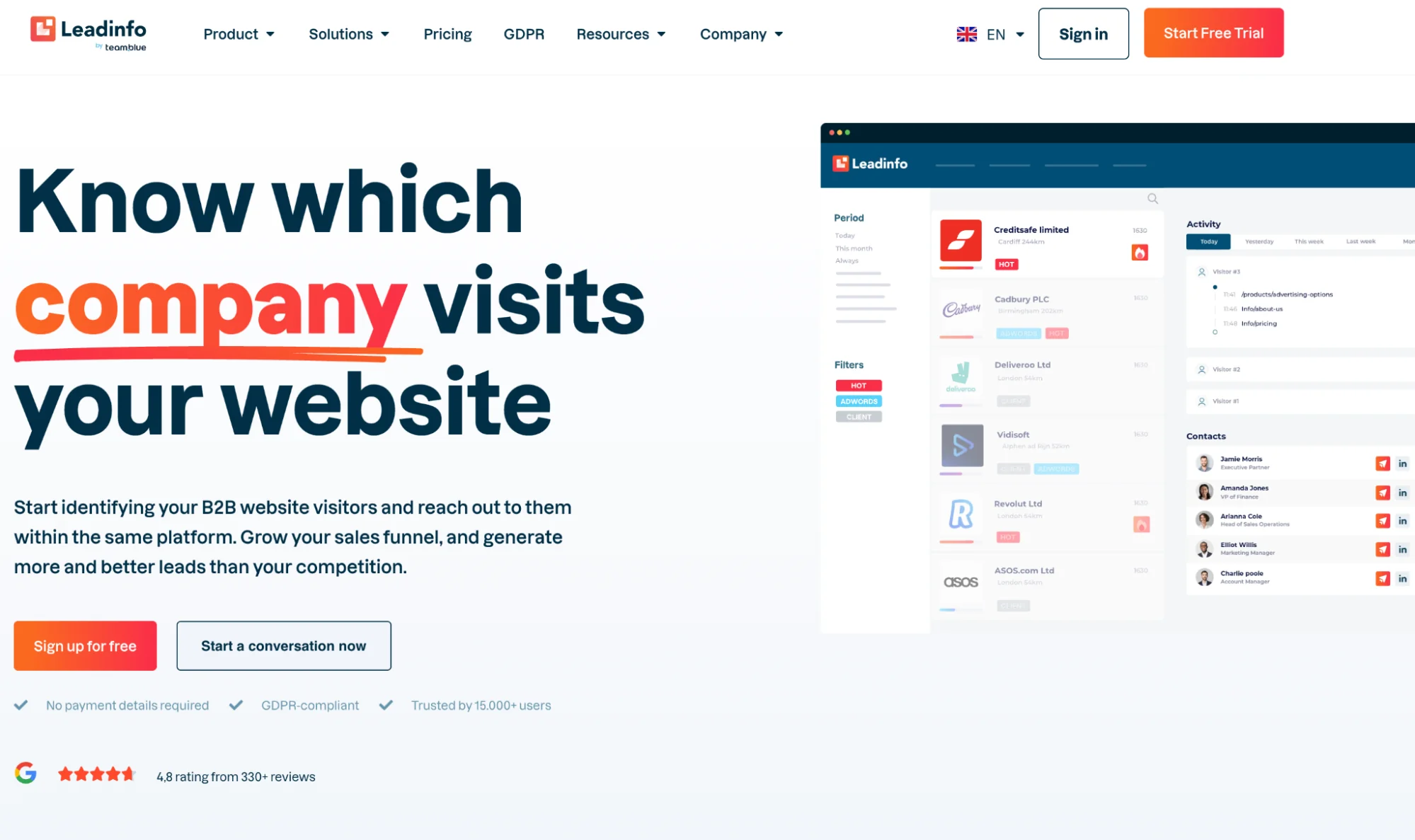
Leadinfo is a website visitor identification tool focused on the European market. It shows which companies visit your site and provides company details with strong compliance features.
Pros: Strong GDPR compliance. Good coverage of European businesses. Real-time notifications when target accounts visit. Clean dashboard.
Cons: Limited to company identification. Smaller database compared to US-focused competitors.
Pricing: Starts at 49 euros per month based on identified companies.
We recommend it for European B2B companies prioritizing GDPR compliance in their lead capture.
Leadfeeder
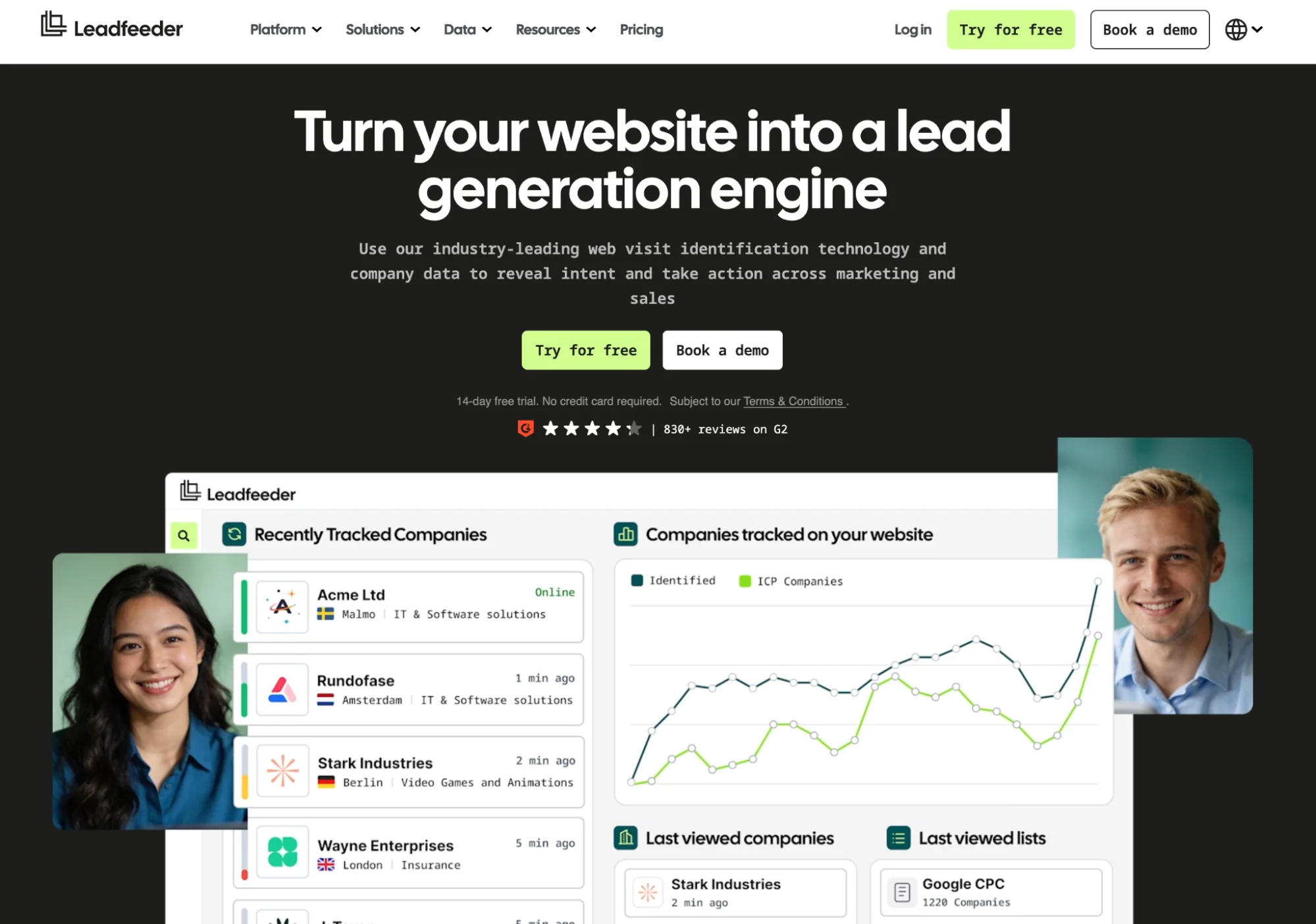
Leadfeeder (now part of Dealfront) identifies companies visiting your website and integrates with your CRM to surface warm leads. It pairs visitor identification with broader sales intelligence.
Pros: Established platform with strong CRM integrations. Combines with Dealfront's broader sales intelligence suite. Good filtering and segmentation.
Cons: Company-level only. Can be expensive for the features offered. Interface can feel dated.
Pricing: Free plan with limited features. Paid plans start at 99 dollars per month.
We recommend it for mid-market companies already using or considering the Dealfront ecosystem.
Top data enrichment sources for lead contact data
FullEnrich
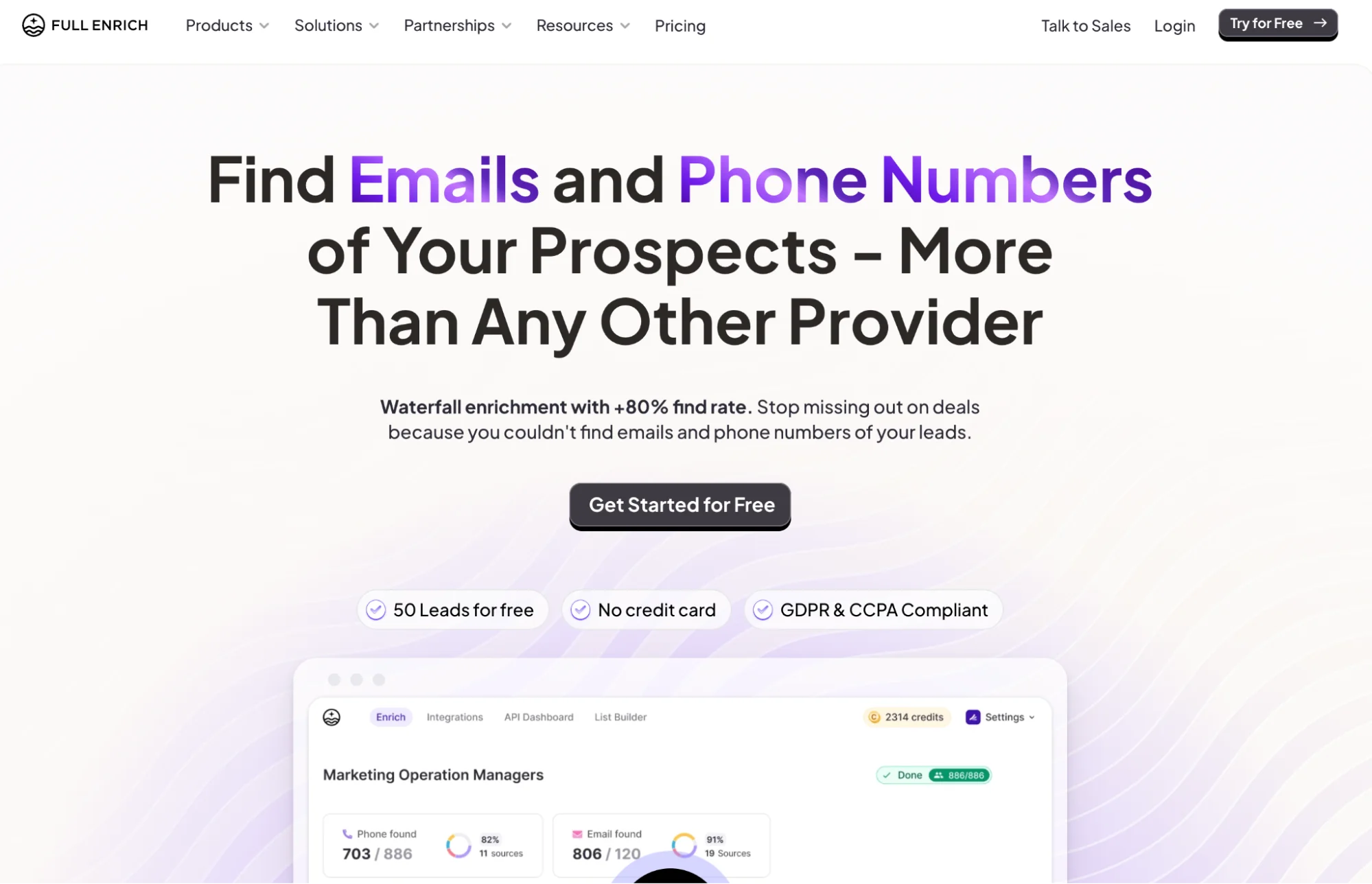
FullEnrich focuses specifically on finding valid emails and phone numbers through waterfall enrichment. They search over 15 data vendor databases to push coverage as high as it goes.
Pros: High email verification accuracy (99.5 percent claimed). Native integration with Clay, Make, and Zapier. You only pay when they find and verify valid data.
Cons: Focused specifically on contact data, not firmographics or technographics. Credits can add up for phone numbers.
Pricing: Starter plan at 29 dollars per month, Pro plan at 55 dollars per month. Agency plans range from 400 to 50,000 dollars per month.
Best for teams that need maximum phone and email coverage without managing multiple data subscriptions.
LeadMagic.io
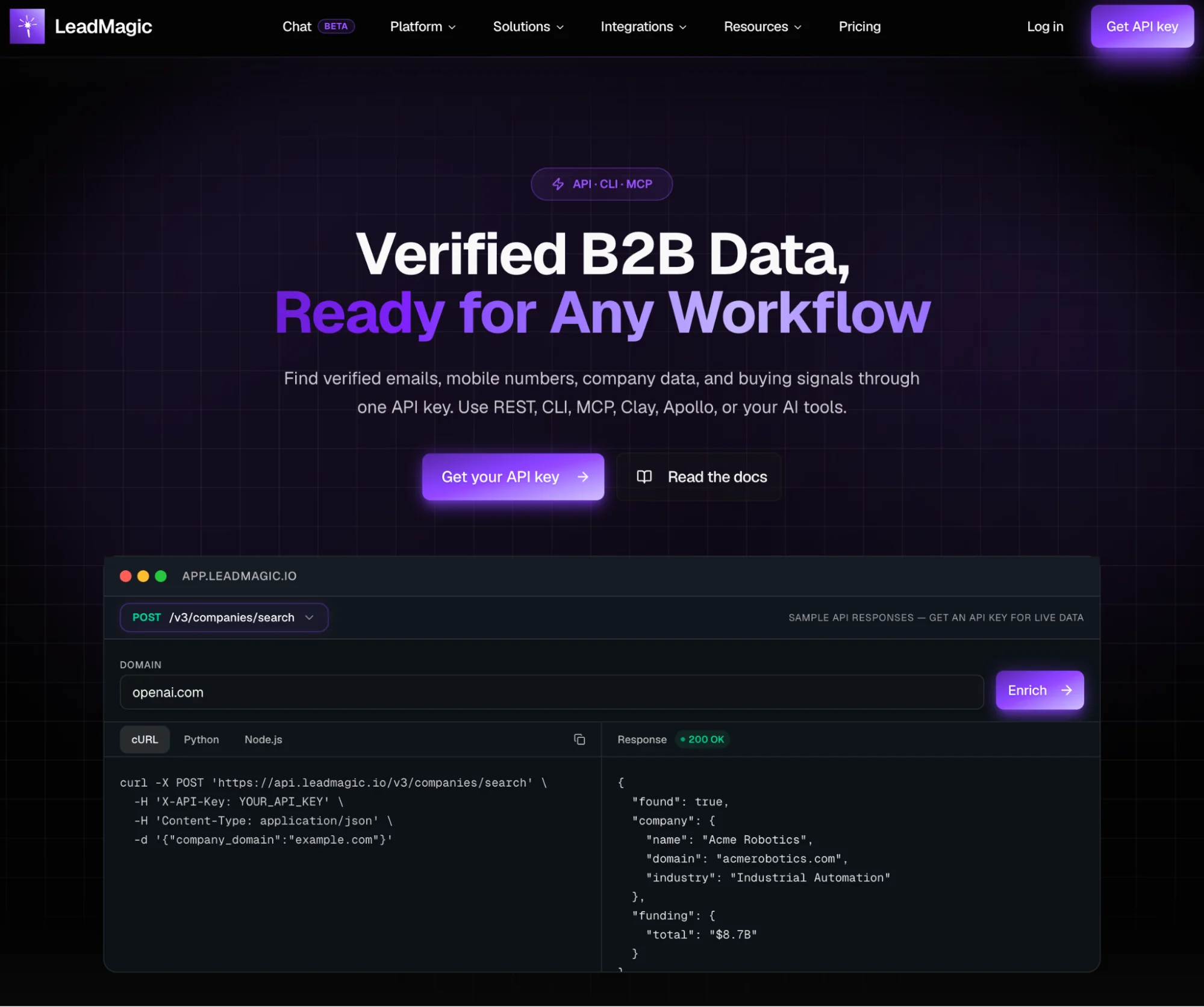
LeadMagic is a B2B data enrichment platform focused on accurate email and phone data at competitive pricing. It is popular among agencies and Clay users for its API-first approach and visitor identification features.
Pros: High accuracy on email and mobile data. Competitive pricing compared to alternatives. Strong API for integrations with Clay and other tools. Visitor identification included.
Cons: Smaller database than enterprise providers. UI is less polished than competitors. Limited firmographic enrichment.
Pricing: Pay-as-you-go starting at 99 dollars for credits. Email enrichment costs around 0.01 to 0.03 dollars per record depending on volume.
We recommend it for agencies and Clay users that need reliable contact enrichment at scale without enterprise pricing.
Findymail
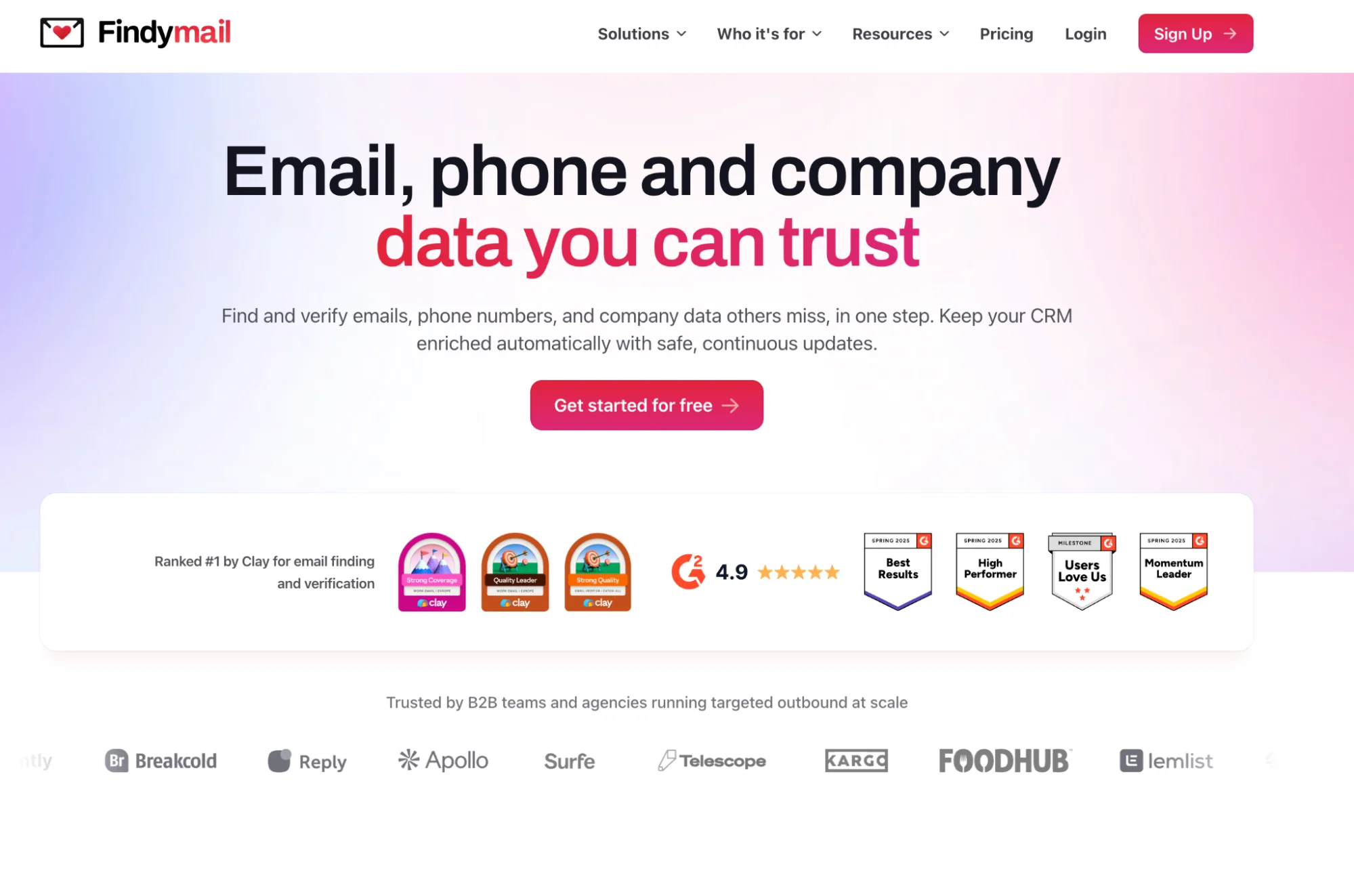
Findymail finds and verifies B2B email addresses with a focus on accuracy over volume. They claim a 98 percent deliverability rate and only charge for verified emails.
Pros: High deliverability rates (98 percent claimed). Only charges for verified, deliverable emails. Native integration with Clay. Good for Sales Navigator exports.
Cons: Email only, no phone numbers. Smaller coverage than larger databases. Can be slow on large batches.
Pricing: Starter at 49 dollars per month for 1,000 credits. Standard at 99 dollars per month for 2,500 credits. Scale at 249 dollars per month for 10,000 credits.
Lusha
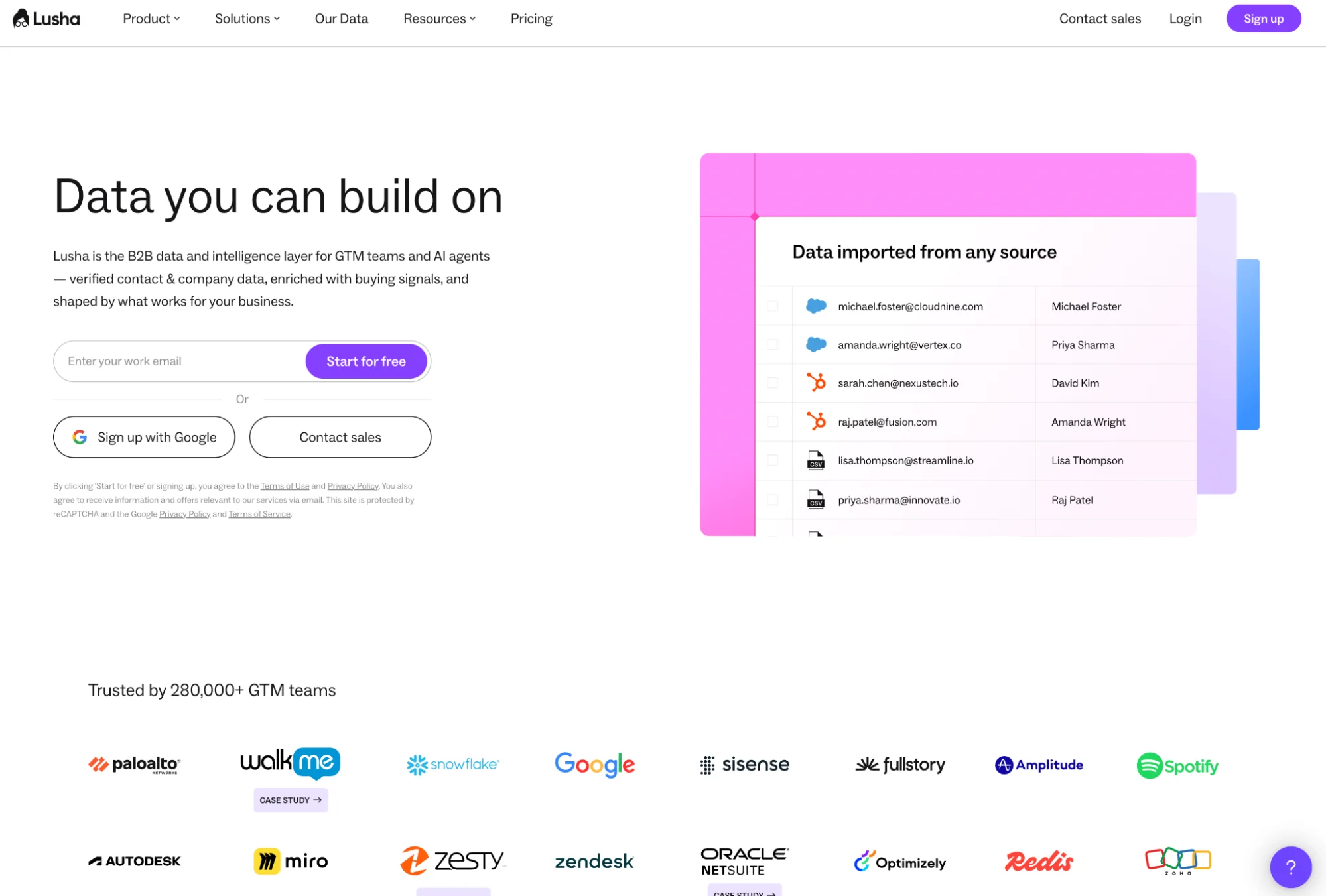
Lusha is known for quick, accurate direct-dial phone numbers and email addresses. It is popular as a Chrome extension for on-the-fly prospecting while browsing LinkedIn.
Pros: Fast access to contact data while browsing LinkedIn. Good direct dial coverage. GDPR and CCPA compliant. Easy to use.
Cons: Limited data for companies under 50 employees. Some users report personal email addresses instead of work emails. The credit-based model can be limiting.
Pricing: Free plan with 5 credits per month. Pro starts at 36 dollars per user per month.
We recommend it for sales reps that need quick contact lookups during prospecting sessions.
Kaspr
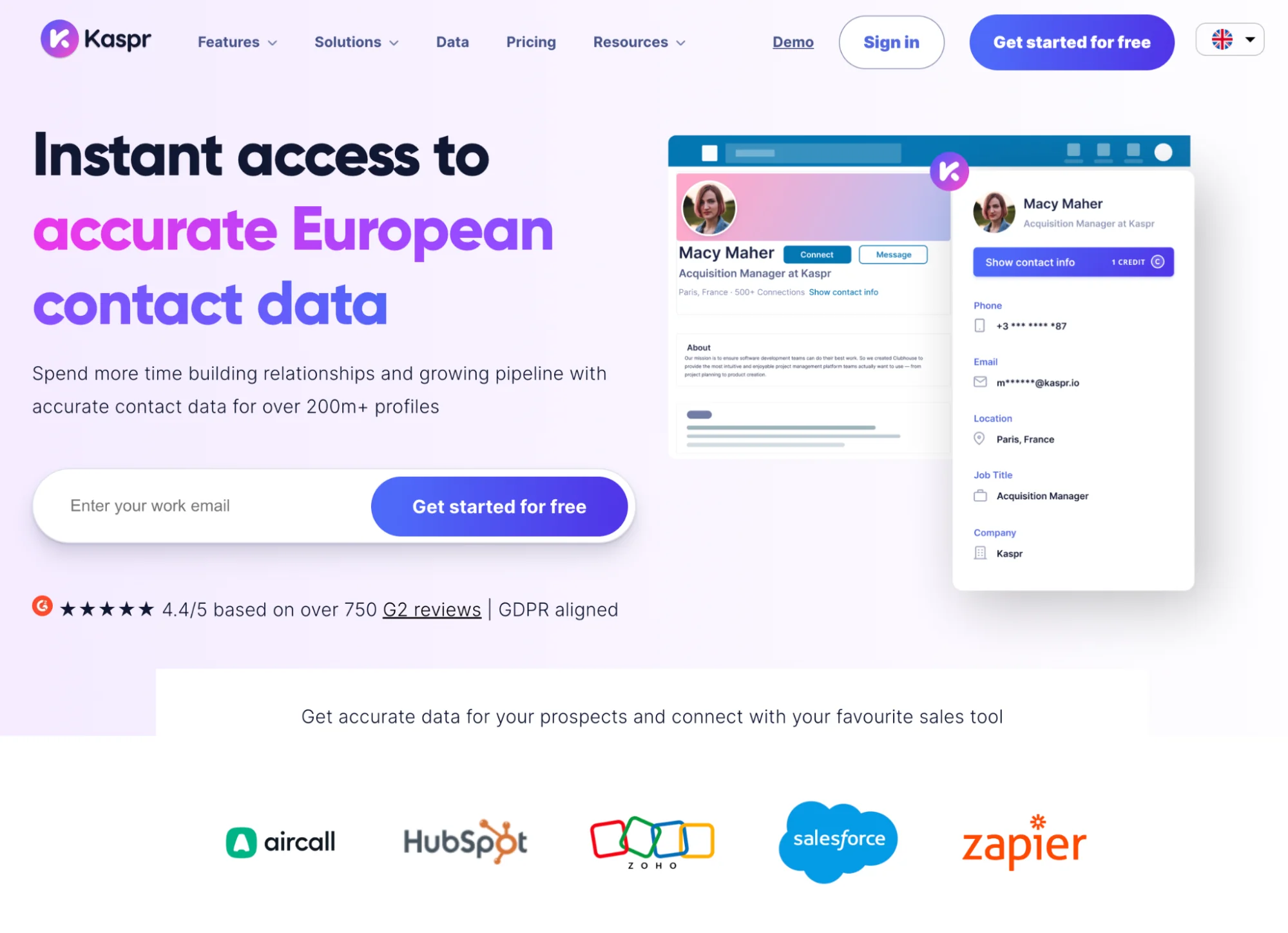
Kaspr specializes in real-time contact data extraction, primarily from LinkedIn. It is often compared to Lusha for ease of use and European phone number coverage.
Pros: Chrome extension for instant data capture. Good European phone number coverage. Free plan available. Part of Cognism group.
Cons: Data quality depends on LinkedIn profile accuracy. Limited enrichment beyond contact details. Smaller database than competitors.
Pricing: Free plan available. Paid plans start at 45 dollars per month.
We recommend it for individual sales reps and small teams doing LinkedIn-first prospecting, especially in Europe.
UpLead
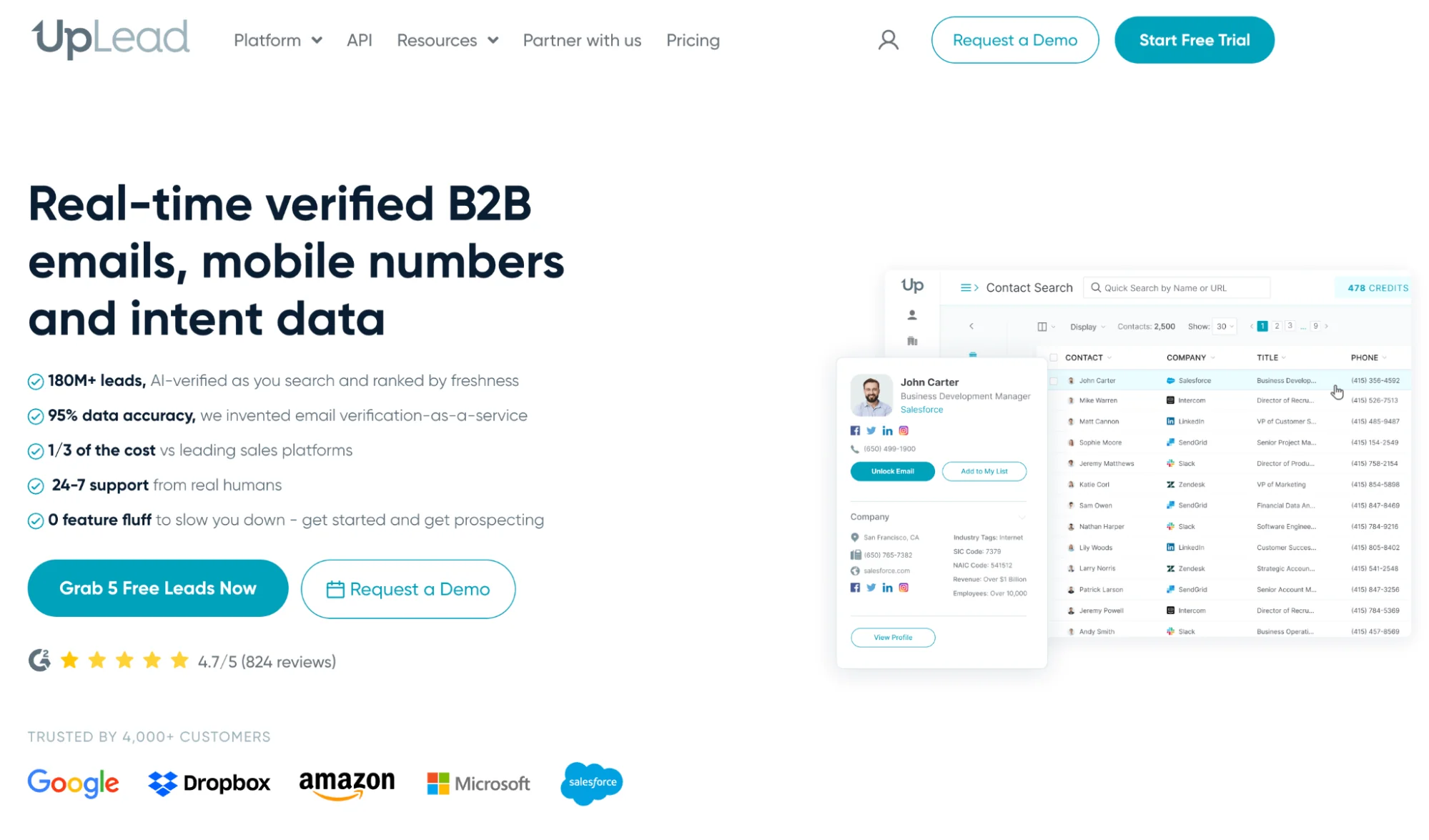
UpLead provides a 95 percent data accuracy guarantee, which sets it apart from competitors. They refund credits for wrong data, lowering risk for buyers.
Pros: Strong accuracy guarantee with refunds for bad data. Real-time email verification. Good filtering options. Transparent pricing.
Cons: Smaller database than ZoomInfo or Apollo. US-focused coverage. Limited intent data.
Pricing: Essentials at 99 dollars per month for 170 credits. Plus at 199 dollars per month for 400 credits.
We recommend it for teams that prioritize data accuracy over volume and want guaranteed results.
Top data enrichment companies for B2B intent and buyer signal data
Bombora
Bombora is the leading B2B intent data provider, tracking content consumption across a co-op of 5,000+ websites. They identify which companies are actively researching topics related to your solution based on surge scores.
Pros: Largest B2B intent data co-op. Topic-level intent signals across 12,000+ topics. Integrates with major platforms including ZoomInfo, 6sense, and Salesforce. Weekly data updates.
Cons: Company-level only, no individual contact intent. Expensive for smaller teams. Requires interpretation to action effectively.
Pricing: Custom pricing based on topics and accounts tracked. Typically starts around 25,000 dollars per year.
We recommend it for mid-market and enterprise teams that want topic-based intent signals to prioritize accounts showing research behavior.
TrustRadius Buyer Intent
TrustRadius provides intent data from their B2B technology review platform. It identifies companies researching products in your category and shows downstream intent signals like product comparisons and pricing page views.
Pros: In-market buyer signals from active research behavior. Category and product-level intent data. Less saturated than larger intent providers. Good for mid-market tech companies.
Cons: Smaller footprint than G2 or Bombora. Limited to tech and software categories. Coverage varies by category.
Pricing: Custom pricing based on package. Intent data typically bundled with vendor profile subscriptions.
We recommend it for B2B tech companies that want intent signals from an alternative review platform with less competition for attention.
UserGems
UserGems tracks job changes and identifies when your past customers, champions, or prospects move to new companies. It is intent data based on the premise that people buy what they have bought before.
Pros: Tracks job changes of past buyers and champions. High conversion rates on job-change signals. Integrates with CRM to automate alerts. Identifies warm paths into new accounts.
Cons: Requires existing customer base to track. Not traditional topic-based intent. Takes time to build pipeline from signals.
Pricing: Custom pricing based on contacts tracked and CRM size. Typically starts around 20,000 dollars per year.
We recommend it for companies with established customer bases that want to use past relationships when champions change jobs.
Warmly
Warmly combines website visitor identification with intent data orchestration. It reveals who is on your site, enriches them with firmographic and contact data, and triggers automated outreach based on behavior.
Pros: Real-time website visitor identification. Combines deanonymization with orchestration. Integrates intent signals from multiple sources. Automated workflows based on visitor behavior.
Cons: Requires meaningful website traffic. US-focused coverage. Can be complex to set up properly.
Pricing: Free plan for basic features. Paid plans start at 499 dollars per month for full functionality.
We recommend it for B2B companies with strong website traffic that want to identify and engage high-intent visitors automatically.
Common Room
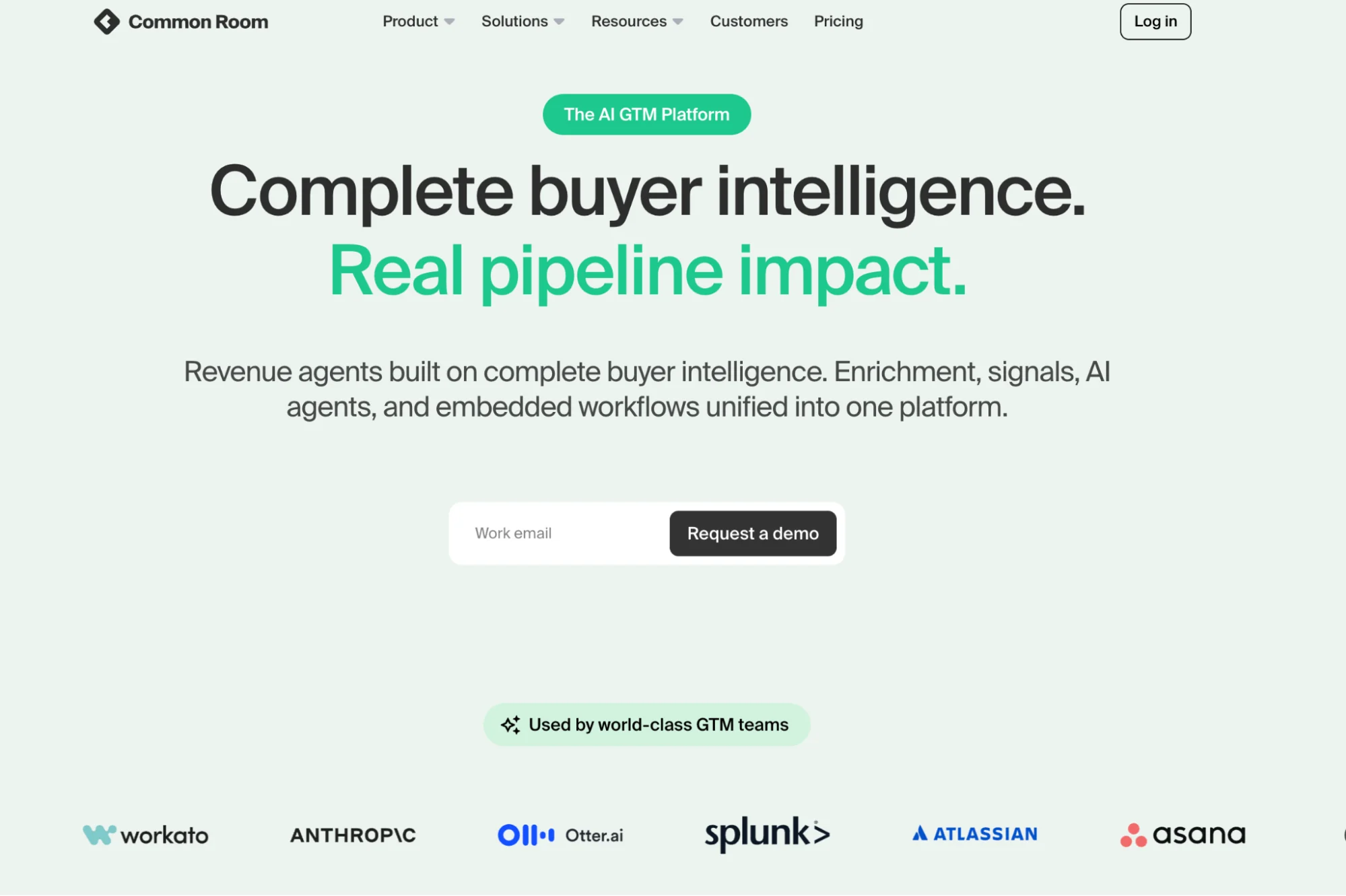
Common Room aggregates signals from across your digital footprint, community activity, social engagement, product usage, and more, to identify buying intent and champion behavior.
Pros: Aggregates signals from community, social, and product sources. Identifies champions and advocates. Good for product-led and community-led growth. Strong integrations with Slack, Discord, and GitHub.
Cons: Best suited for companies with active communities. Can surface noise alongside signals. Enterprise pricing.
Pricing: Free tier for small communities. Paid plans start around 625 dollars per month. Enterprise pricing for full features.
We recommend it for product-led and community-driven companies that want to identify buying signals from community engagement and product usage.
Top data enrichment platforms for specialized enrichment
Datanyze
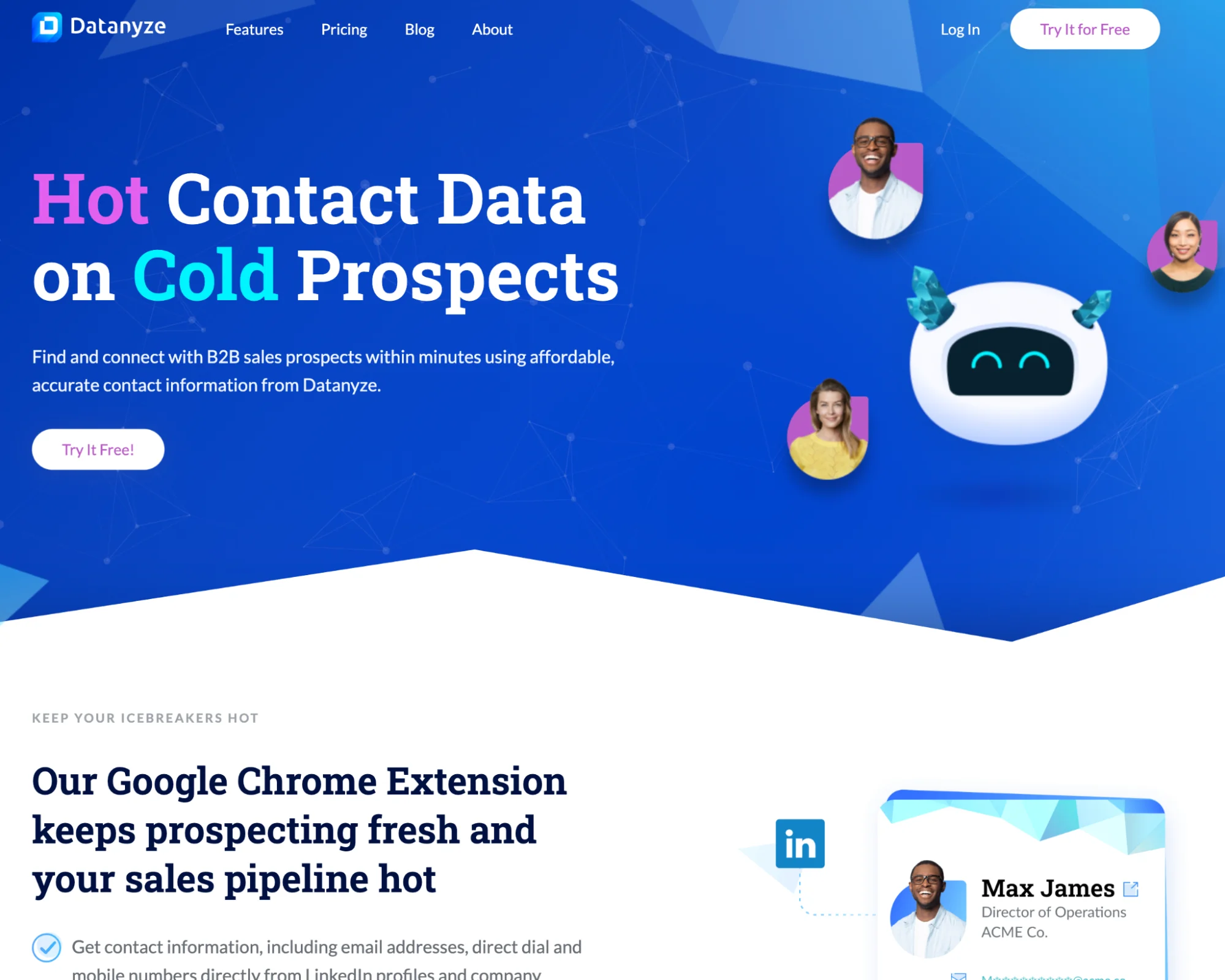
Datanyze specializes in technographic data, tracking what software and tools companies use. That matters for selling technology products or targeting based on tech stack.
Pros: Deep technology stack tracking across 70+ categories. Chrome extension for quick lookups. Good for tech-based targeting and competitive intelligence.
Cons: Limited contact data enrichment. Data can be outdated for fast-moving tech stacks. Smaller overall database.
Pricing: Free trial for 90 days with 10 credits per month. Paid plans start at 21 dollars per month.
We recommend it for SaaS companies selling to technology teams that need technographic targeting.
LeadGenius
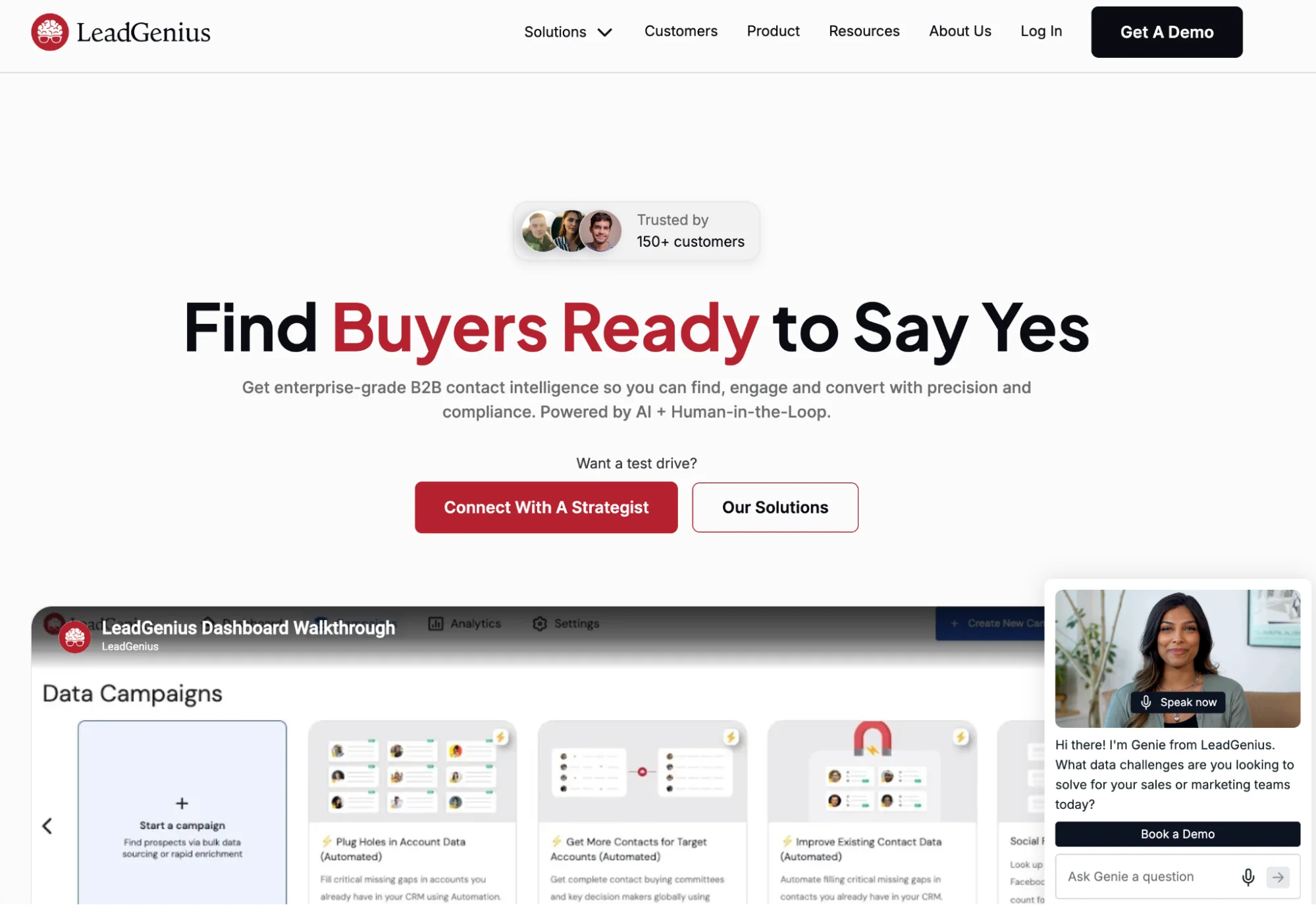
LeadGenius combines AI with human research for custom, hard-to-find data. They handle complex enrichment projects that automated tools cannot solve.
Pros: Human verification for high-accuracy data. Can handle custom research requests. Good for niche markets and unusual data requirements.
Cons: Slower turnaround than automated tools. More expensive for standard enrichment. Requires project scoping.
Pricing: Custom pricing based on project scope. Typically starts at several thousand dollars per month.
We recommend it for companies with complex ICP requirements that need custom research beyond standard data points.
People Data Labs
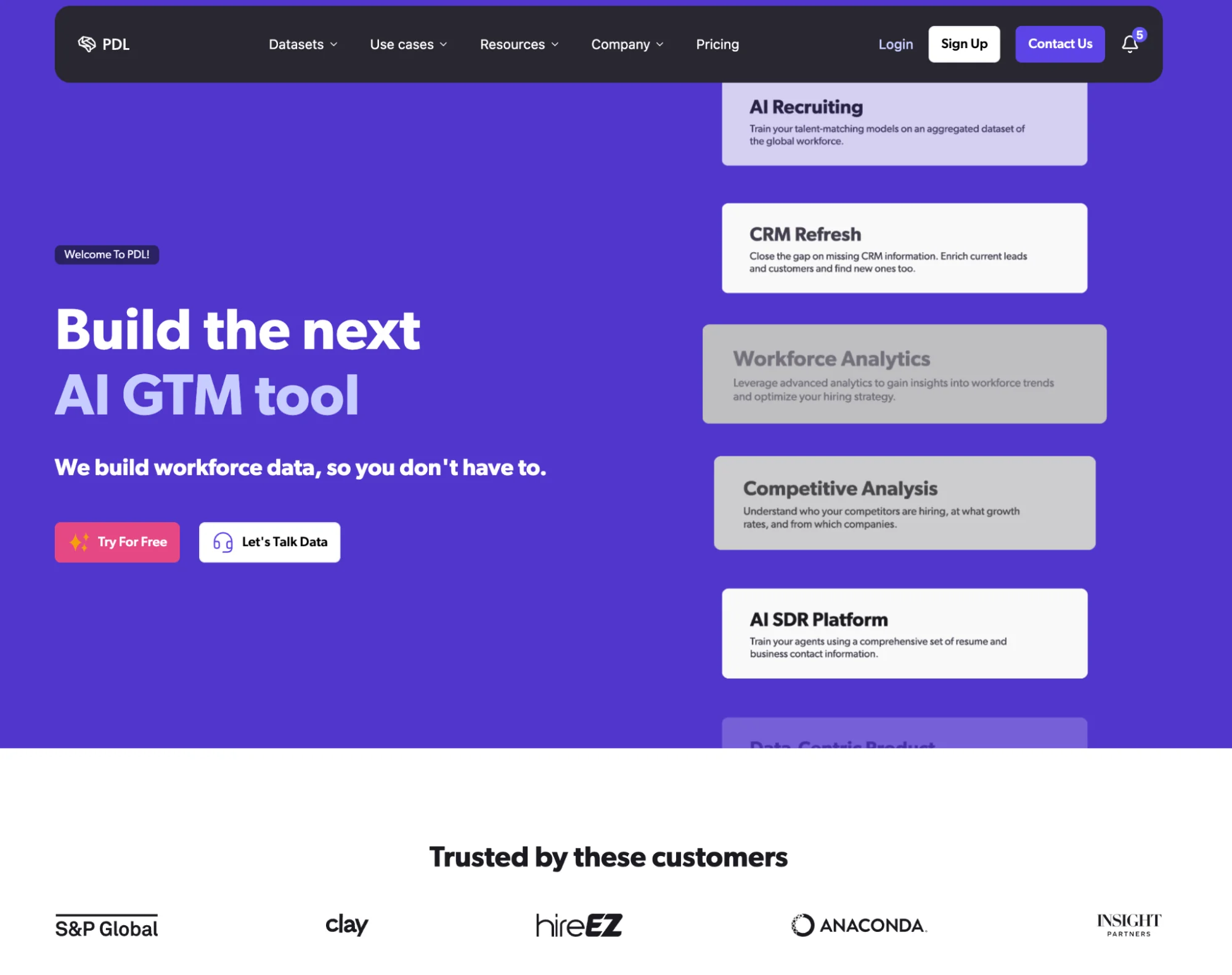
People Data Labs is an API-focused provider for large-scale, deep-data enrichment. They are built for companies building data products or handling massive enrichment operations.
Pros: Massive database with over 1 billion person records. Developer-friendly API. Good for building custom enrichment workflows. Flexible pricing.
Cons: Requires technical implementation. Not suitable for small teams or one-off enrichment. No self-serve UI.
Pricing: Pay-as-you-go starting at 0.01 dollars per record. Volume discounts available.
We recommend it for data teams building custom enrichment infrastructure or products that require person data at scale.
Seamless.AI
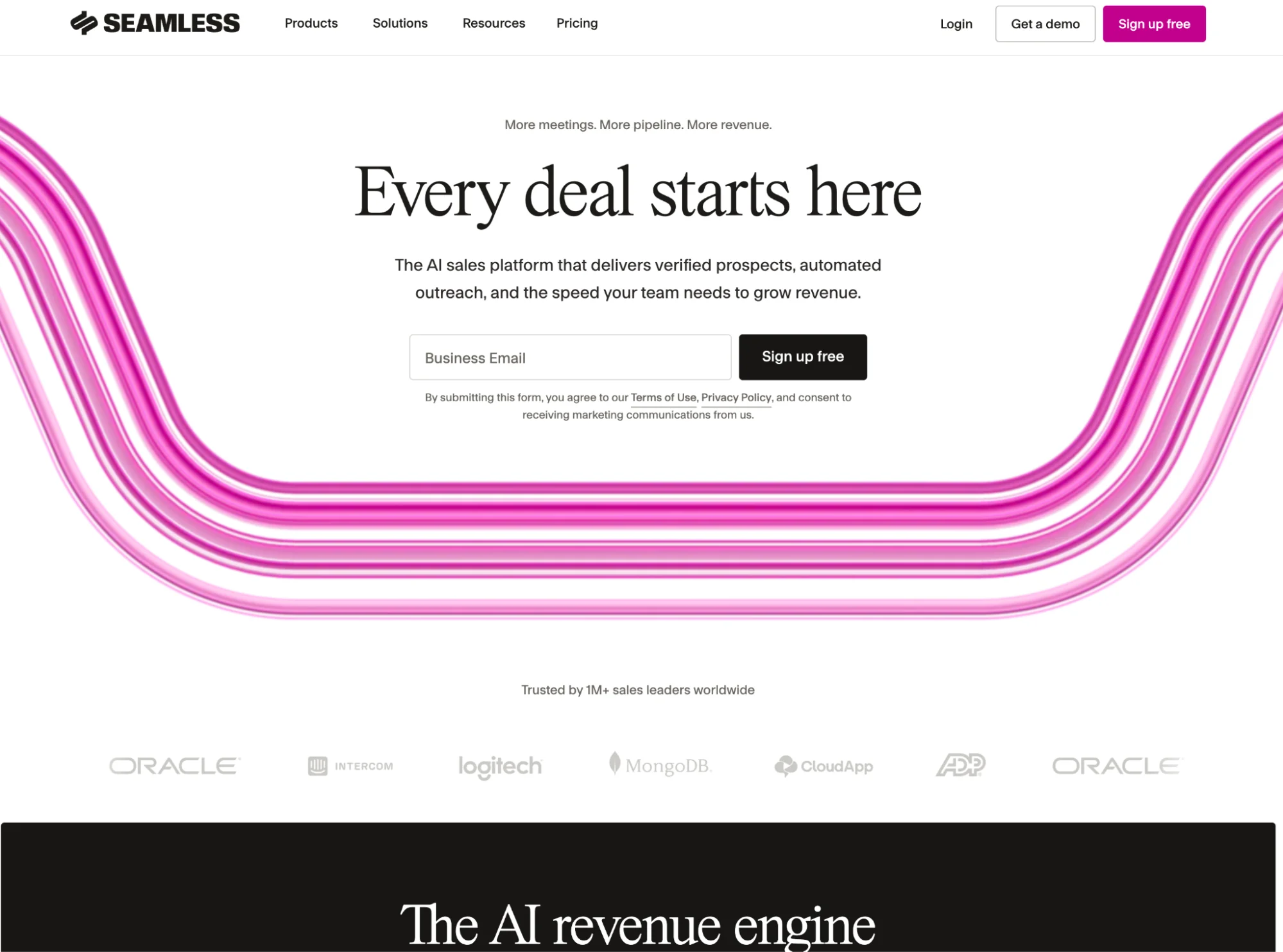
Seamless.AI uses artificial intelligence to find and verify contact information in real-time. It searches the web live rather than relying on a static database, which means fresher data but variable results.
Pros: Real-time search finds current contact data. Chrome extension for prospecting on LinkedIn. Includes direct dials and verified emails. Integrates with major CRMs.
Cons: Data quality can be inconsistent. Aggressive sales tactics reported by users. Credit system can be confusing.
Pricing: Free plan with 50 credits. Basic starts at 147 dollars per month. Pro and Enterprise require custom quotes.
We recommend it for teams that want real-time data verification and are willing to trade some consistency for freshness.
Why Nebor should be your data enrichment partner
You have seen the full picture. Dozens of tools, each with their own strengths and limitations. Enterprise platforms charge premium prices and still leave gaps.
Point solutions solve one problem and create integration headaches. Intent data providers give you signals without a clear way to act on them.
The reality is that no single tool does everything. The companies winning at data enrichment are not picking one provider and hoping for the best. They are building systems that combine multiple sources, verify data at every step, and route qualified leads directly to sales.
Clay is the center of this. It is the orchestration layer that connects your data sources, drives waterfall enrichment across providers, and automates the sales workflows that used to eat your team's time.
But Clay alone is not enough. You need someone who knows how to architect these systems properly.
That is where we come in. At Nebor, we build automated data enrichment workflows with Clay.
We connect them to the tools that matter for your specific ICP, whether that is LeadMagic for contact data, Bombora for intent signals, or industry-specific sources your competitors do not even know exist.
We do not set up Clay and walk away. We build complete systems that enrich leads automatically, verify data before it hits your CRM, and trigger outreach when timing is right.
Your sales team gets qualified leads with full context. No manual research. No copy-pasting between tools. No stale data clogging up your pipeline.
And because Andrew and Yannick used to do their own outbound before they ever sold it to clients, we build systems that actually get used. Not fancy workflows that look good in a demo and fall apart in practice.
If you are tired of juggling tools, paying for data that goes stale, and watching your team waste hours on manual enrichment, let’s talk.
Note: Are you looking to enrich your lead lists and CRM records so your team reaches the right people?
That is one of the workflows we build. At Nebor we do GTM engineering and RevOps, and enrichment is the layer everything else leans on: your outbound, your inbound, your reporting, and the CRM your reps open every morning.
We build everything in your own accounts, chained across the providers that cover your market, so your data stays complete and current without anyone maintaining it by hand.
Book a 15-minute call and we'll test it on a list of your own.


Related Articles


By clicking Sign Up you're confirming that you agree with our Terms and Conditions.