
7 Best Social Bloom Alternatives for B2B Lead Generation and a Sales Pipeline (socialbloom.io)

by
In this post:
The thing about hiring a lead generation agency like Social Bloom is that you are not just buying meetings on your calendar. You are making a bet on whether your pipeline will still exist six months after the contract ends.
All done-for-you lead generation services, including Social Bloom, sell a version of the same model. You pay them every month, the agency sends campaigns on its side of the wall, and meetings land on your calendar.
Everyone is happy until the invoice stops clearing. Then the meetings stop, the pipeline dries up, and you are left with a HubSpot full of cold contacts and a nagging feeling that you just rented someone else's system at a premium for a year and a half.
We do not want to be unfair to the category. Agencies like Social Bloom have built solid reputations delivering qualified meetings to their clients.
If you need meetings booked fast and the subscription model fits the way you want to operate right now, Social Bloom will get the job done.
If you are reading this, though, you are probably wondering something else. What happens when calendar fills are not enough, when your sales team needs to understand the system rather than just inherit leads from it, and when ownership starts to matter more than convenience.
That is the question we built Nebor around. Instead of sending campaigns from our side of the wall, we build you an automated GTM system you actually own.
The Clay workflows, the enrichment logic, the multichannel sequences, the inbound capture layer, and the reporting all live inside your own accounts and keep going long after we leave.
We covered the longer version of why we made that bet in our piece on what makes a great growth agency and in our explanation of why we are not a lead generation agency.
In this post, we will walk through the seven best Social Bloom alternatives across the spectrum, from the established multichannel shops to the AI-native systems builders to the niche LinkedIn or email specialists.
We will also show you how a system you own can deliver the same or better pipeline results without the open-ended retainer fee.
Let’s get started.
Note: B2B lead generation is no longer what it used to be. Most lead generation agencies and experts now depend on Clay, automation and AI to do the work people used to do by hand.
What most of them will not tell you is that they keep those tools and workflows in house and sell you only the campaigns and results. When you stop paying, you are back at zero.
At Nebor, we are a GTM engineering and RevOps agency. We build the automated prospecting and lead generation that fills your pipeline, and we build it so you own it.
The difference shows up around month six. A lead generation agency is still charging you a retainer. With us, the workflows are already yours, so the only thing left to pay for is the software underneath them.
Book a 15-minute call and we'll show you what an automated lead generation motion would look like for your business.
Why Nebor is the best Social Bloom alternative for building a B2B lead generation engine
We do book meetings, build lead lists, write sequences, and fill calendars too. If the only thing you want is somebody to send campaigns and deliver SQLs every month, we can do that, and you will be happy.
If that is genuinely all you need right now, you can randomly choose between us and Social Bloom. The more elaborated answer for most companies, though, is that you should not be buying that shape of engagement at all.
The reason comes down to the structure of the service. Most B2B lead generation agencies, including Social Bloom, staff up SDRs, hand out scripts, and push multichannel sequences from accounts they own.
The work happens, the meetings get booked, and the slide deck arrives at the end of every week. The moment the contract ends, the data sources, the sequences, and the workflows go home with the agency.
You are left with a CRM full of stale contacts and the same problem you started with, which is figuring out where next month's pipeline comes from.
We started Nebor because we watched this play out from inside the model. Most agencies' incentives point toward the renewal conversation. And most businesses actually want systems they can own. Those two things were not the same thing, and the gap is what we built Nebor to close.
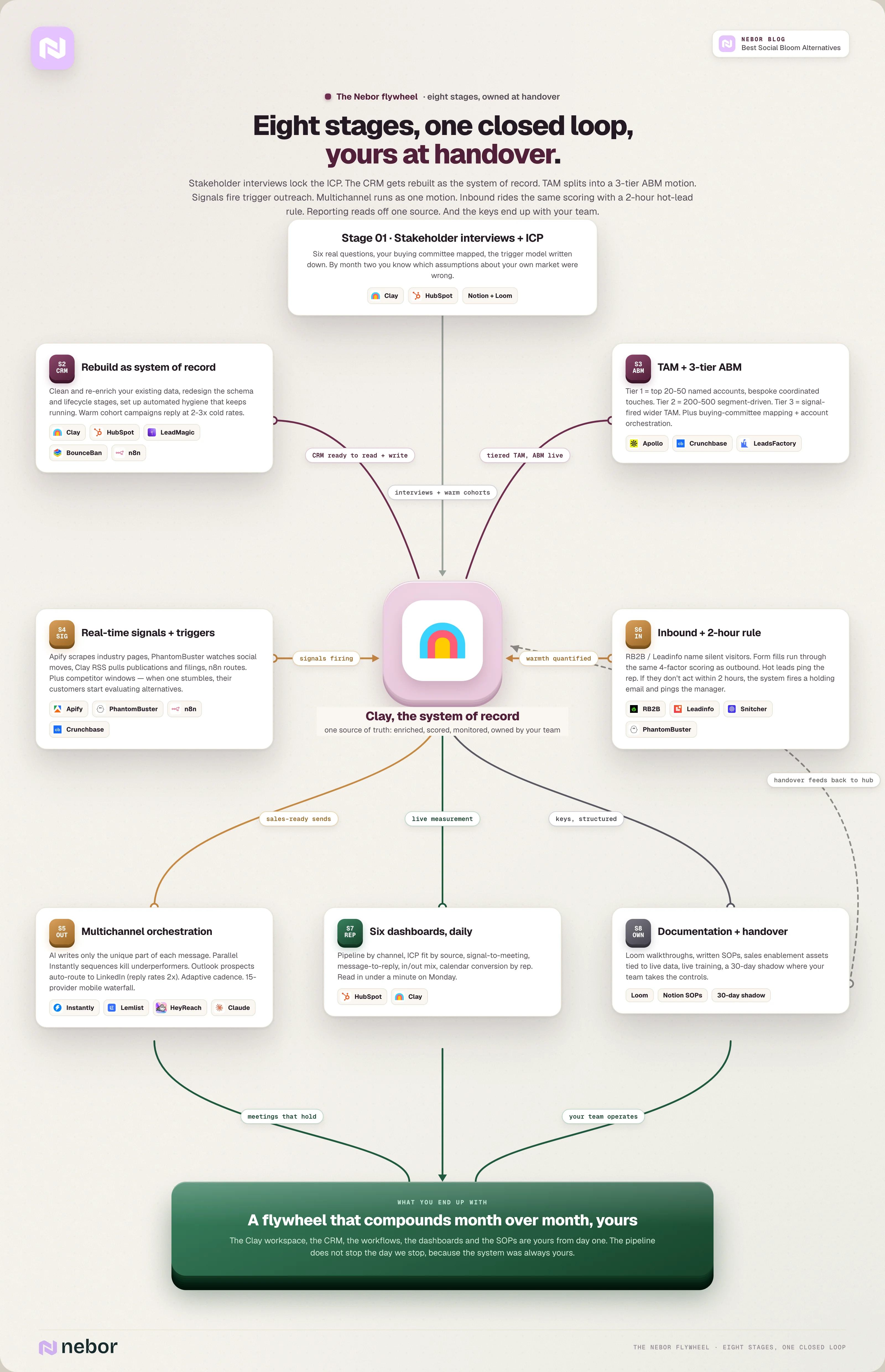
The way we close it is what we call the GTM flywheel. The flywheel is one closed-loop system.
Outbound, ABM, inbound, RevOps, and reporting all share the same data, the same ICP scoring, and the same routing logic. Each stage feeds the one that comes after it, and the work compounds across the months and quarters.
The entire thing lives in your accounts, on your billing, with your team operating the day-to-day. Our post on building a GTM system from scratch details the longer version of this argument.
The flywheel typically spans 5 and more stages, each one feeding the next, depending on your business and what you need.
Stakeholder interviews and ICP definition. We talk to your team and lock down who actually buys, who decides, and what triggers them.
CRM and RevOps rebuild as the system of record. We clean what is in there, redesign the structure to support a real revenue process, and set up the hygiene jobs that keep it clean after we leave.
TAM mapping and the ABM tier on top of it. We build a live database of every fit-company in your market and layer a one-to-few ABM motion across your highest-value tier-1 accounts.
Real-time buying signals and trigger-based outreach. We watch the TAM for the moments when a prospect moves toward a decision, and the system sends personalized outreach the same day the signal lands.
Multichannel outbound orchestration. We wire email, LinkedIn, and phone into one coordinated motion that adapts to how each prospect responds.
Inbound capture, qualification, and handoff. We enrich, score, and route every web visitor, content engagement, and form-fill alongside outbound, on the same scoring logic.
Reporting and attribution your team actually opens on a Monday. Dashboards inside the tools you already use, with weekly and monthly cadences built around real operational questions.
Documentation, training, and the operating handover. Loom walkthroughs and SOPs for every workflow, structured training across the relevant roles, and a 30-day shadow where your team takes over.
Here’s a representation of how it flows together:
The next eight subsections walk through each stage in detail, and a final section closes the argument. If you are short on time, scroll the headings to the part that maps to where your current setup is breaking, and start there.
We start by interviewing your team and locking your ICP
The point of these interviews is not surface-level info. We are after the core value proposition that your best customers actually buy. These are the kinds of questions we put on the table.
Why did you start the business in the first place?
What pain were you solving when you built the product?
Which customers stay the longest and spend the most?
What job titles actually show up in the buying process?
How do prospects solve this problem today without you?
What event triggers someone to start shopping for a tool like yours?
Most founders think they already know the answers. The gaps show up fast inside the interview.
We are the ones writing them down, so they stop being tribal knowledge stuck in three different heads.
From these interviews, we build a detailed ICP, the buyer personas inside it, and a map of the buying committee that has to sign off.
This becomes the foundation for every targeting decision, every message, and every workflow that follows. It is also what tells us, by month two, which of your assumptions about your own market were wrong.
If you want to see how the same buying-committee logic shows up later when an inbound lead lands, we wrote about it in our post on the inbound meeting workflow.
We rebuild your CRM and set up RevOps as the system of record for the whole flywheel
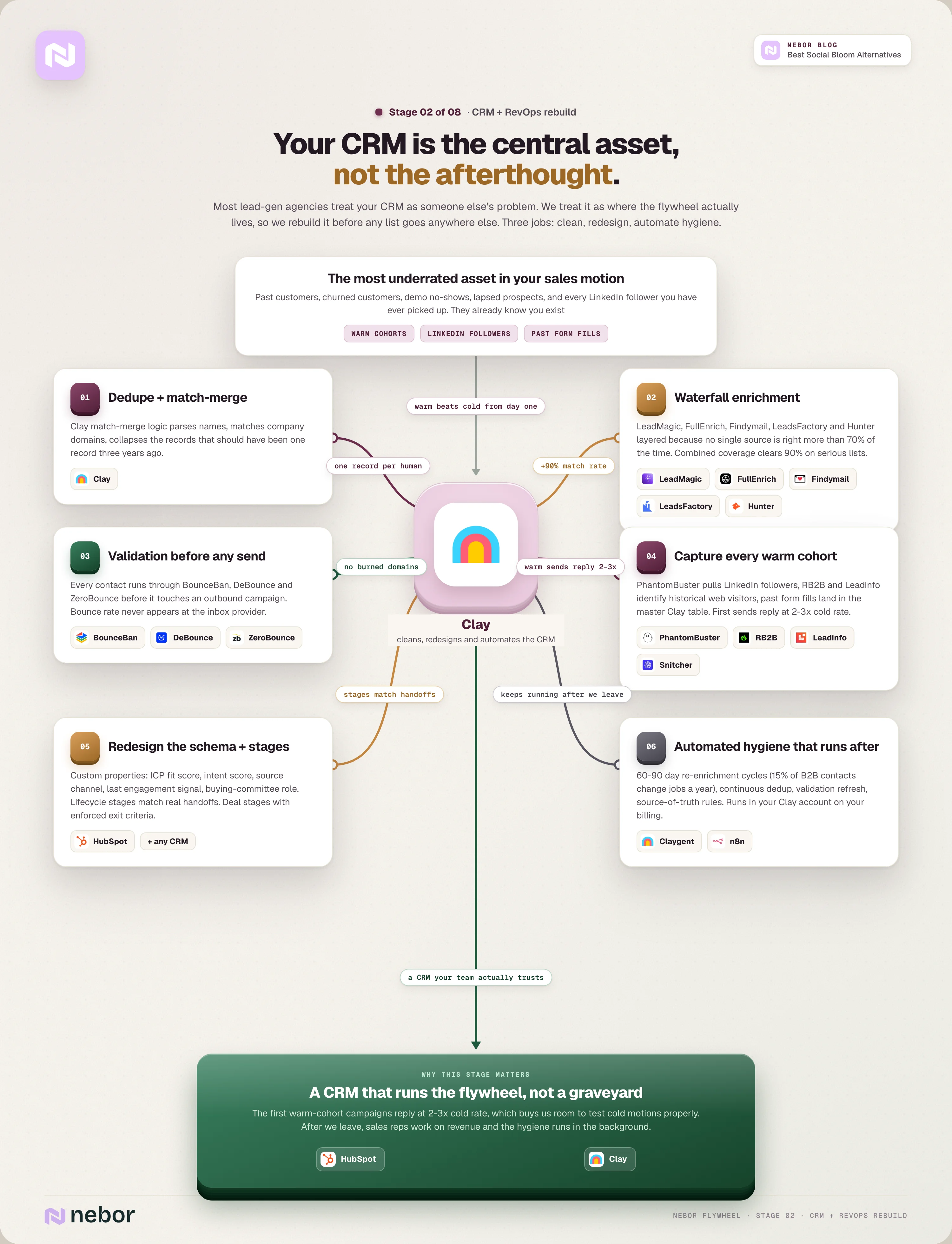
Lead gen agencies like Social Bloom don’t concern themselves with your CRM or its state. Which is part of how they define themselves but we’re different.
We treat the CRM as the central asset, not the afterthought. The CRM is where your flywheel actually lives, so we rebuild it before any list goes anywhere else.
This is also where our RevOps work lives, and the RevOps capability is one of the parts of the engagement founders consistently underestimate. We have published a deeper read in our roundup of the best RevOps agencies in Europe.
Three jobs happen in this stage of the build. We clean what already lives in your CRM, redesign the structure so it can carry a real revenue process, and set up the hygiene jobs that keep the system clean long after we leave.
We map your TAM and layer an ABM tier on top of it
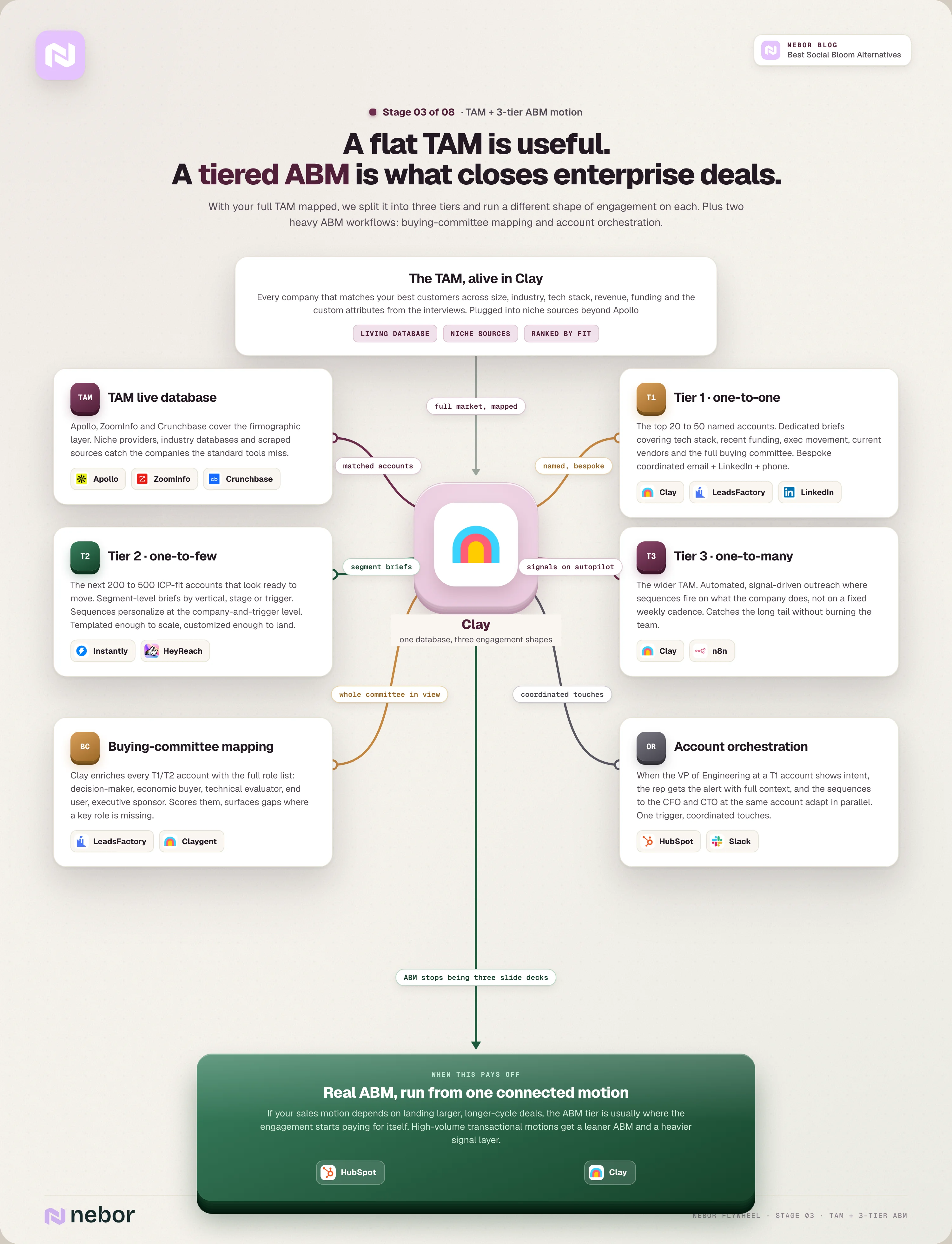
By this point we have locked your ICP, cleaned and redesigned your CRM, and started a first wave of warm-cohort campaigns.
We have seen which segments respond and which ones do not. The next stage of the build is scale, and the way we scale is by mapping your full TAM and layering an account-based motion on top of it.
Building the TAM as a live database in Clay
We build the TAM inside Clay as a living database of every company that matches your best customers. Not a one-off list, not a CSV we hand over and forget. The TAM gets defined across the variables that actually matter for your business.
Company size and employee count
Industry and sub-vertical
Technology stack and tooling fingerprint
Revenue signals and funding history
The custom attributes we pulled from the stakeholder interviews
Then we plug Clay into the data sources that fit your specific ICP. The popular providers (Apollo, ZoomInfo, Crunchbase) cover the common firmographic layer.
For everything beyond that, we layer in niche providers, industry databases, and scraped sources, so the TAM picks up companies the standard tools miss.
You can pipe the whole TAM into your CRM if you want full visibility. Your team stops working off one-off campaign lists and starts working from a constantly updated, ranked database of prospects organized by fit and buying likelihood.
Our post on total addressable market (TAM) walks through how to build the TAM properly from the ground up.
Structuring ABM as a tiered motion across the highest-value accounts
A flat TAM is useful. A TAM segmented into ABM tiers is what closes enterprise deals.
The way we structure the ABM motion borrows from the playbook the strategic-account teams at the SaaS companies your founders came out of were already using. We wire it into the same Clay infrastructure that powers the rest of the flywheel.
We split the TAM into three tiers, and each tier gets a different shape of engagement.
Tier 1 (one-to-one). The top 20 to 50 named accounts. We build dedicated account briefs covering their tech stack, recent funding, executive movement, current vendor relationships, and the buying committee in detail.
Outreach to these accounts is bespoke, mapped to multiple roles inside the buying committee, and coordinated across email, LinkedIn, and phone. The goal is conversation quality, not volume.Tier 2 (one-to-few). The next 200 to 500 accounts that fit the ICP and look ready to move.
We build segment-level account briefs (by vertical, stage, or trigger), and we send sequences that personalize at the company-and-trigger level rather than the contact level.
The work is templated enough to be efficient and customized enough to land.Tier 3 (one-to-many). The wider TAM. We send automated, signal-driven outreach where the sequences trigger on what the company does, not on a fixed weekly cadence.
This is the layer that catches the long tail of the market without burning your team's time on it.
The two ABM workflows that do the heaviest lifting on Tier 1 and Tier 2 are buying-committee mapping and account orchestration.
For buying-committee mapping, Clay enriches (through LeadsFactory.io) every Tier 1 and Tier 2 account with the full list of relevant titles (decision-maker, economic buyer, technical evaluator, end user, executive sponsor), pulls verified contact details for each, scores them on engagement signals we are already collecting, and surfaces the gaps where a key role is missing from the account.
Your reps see the entire committee in one view, not a single contact card with no context. We cover the contact-finding layer in our piece on finding decision-makers automatically.
For account orchestration, the same trigger that sends outreach to a contact in a Tier 1 account also pings the assigned rep, updates the account view in HubSpot or Salesforce, and queues coordinated touches across the rest of the buying committee.
So when the VP of Engineering at one of your tier-1 accounts shows intent, the rep gets the alert with full context, and the sequence to the CFO and CTO at the same account adapts in parallel.
ABM stops being three slide decks and turns into something the rep can act on the same day.
If your sales motion depends on landing larger, longer-cycle deals, the ABM tier is usually where the engagement starts paying for itself.
If you have a high-volume, transactional motion, we keep ABM lean and put more of the build into the signal layer below.
Note: B2B lead generation is no longer what it used to be. Most lead generation agencies and experts now depend on Clay, automation and AI to do the work people used to do by hand.
What most of them will not tell you is that they keep those tools and workflows in house and sell you only the campaigns and results. When you stop paying, you are back at zero.
At Nebor, we are a GTM engineering and RevOps agency. We build the automated prospecting and lead generation that fills your pipeline, and we build it so you own it.
The difference shows up around month six. A lead generation agency is still charging you a retainer. With us, the workflows are already yours, so the only thing left to pay for is the software underneath them.
Book a 15-minute call and we'll show you what an automated lead generation motion would look like for your business.
We watch your TAM for buying signals and trigger personalized outreach in real time
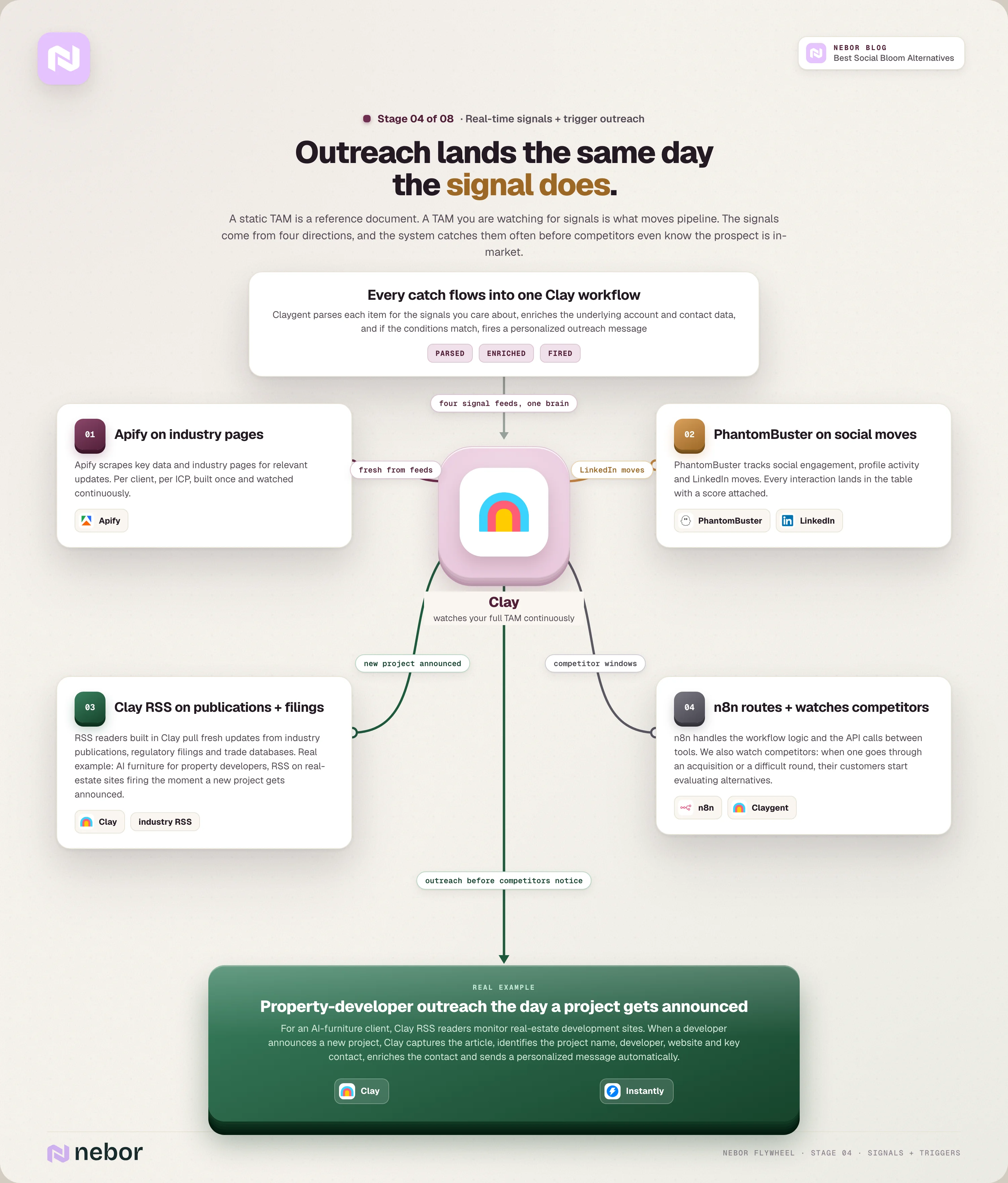
A static TAM is useful as a reference document. A TAM you are watching for signals is what actually moves the pipeline.
Because we have your full TAM mapped, we can monitor every company in it for signs that they are actively moving toward a purchase decision.
The moment a signal appears, the system catches it and triggers personalized outreach, often before your competitors even know the prospect is in-market.
This is the part of the engagement that separates real intent data from filtering by job title and company size, which is the version most agencies ship and label as targeting. We covered the distinction at length in our explainer on what intent data actually is.
Clay is the center of this layer. The signals come in from a few directions.
Apify scrapes key data and industry pages for relevant updates.
PhantomBuster tracks social engagement, profile activity, and LinkedIn moves.
Clay’s RSS readers pull fresh updates from industry publications, regulatory filings, and trade databases.
n8n.io/Clay handles the workflow logic and the API calls between tools.
We also watch your competitors closely at this stage. When a competitor goes through an acquisition, a difficult round, or a public issue, their customers start evaluating alternatives.
That is an interesting window for your business, and we set the system up to catch it the movement it opens.
Whenever a new article or update lands on one of the sources we are watching, it flows into a Clay workflow.
The workflow, through a Claygent, parses it for the signals you care about, enriches the underlying account and contact data, and if the conditions match, sends a personalized outreach message.
The first sign your reps see is usually a reply landing in their inbox.
Here is what this looks like with a real client.
One of our clients sells AI-powered furniture solutions to property developers, and we set up Clay’s RSS readers to monitor real estate and development sites.
When a developer announces a new project, the Clay workflow captures the article, identifies the project name, developer, website, and key contact, enriches the contact with email and LinkedIn, generates a personalized message, and sends it automatically.
They went from cold campaigns that were not working to inbound replies from developers who saw a relevant message land at exactly the moment they were planning their build-out.
Instead of chasing strangers or waiting for lists to refresh, you have a real-time engine that focuses your effort on the best-fit accounts at the exact moment they are most likely to buy. That is a level of speed and precision you cannot get from a manual, campaign-driven model.
We orchestrate multichannel outbound across email, LinkedIn, and phone
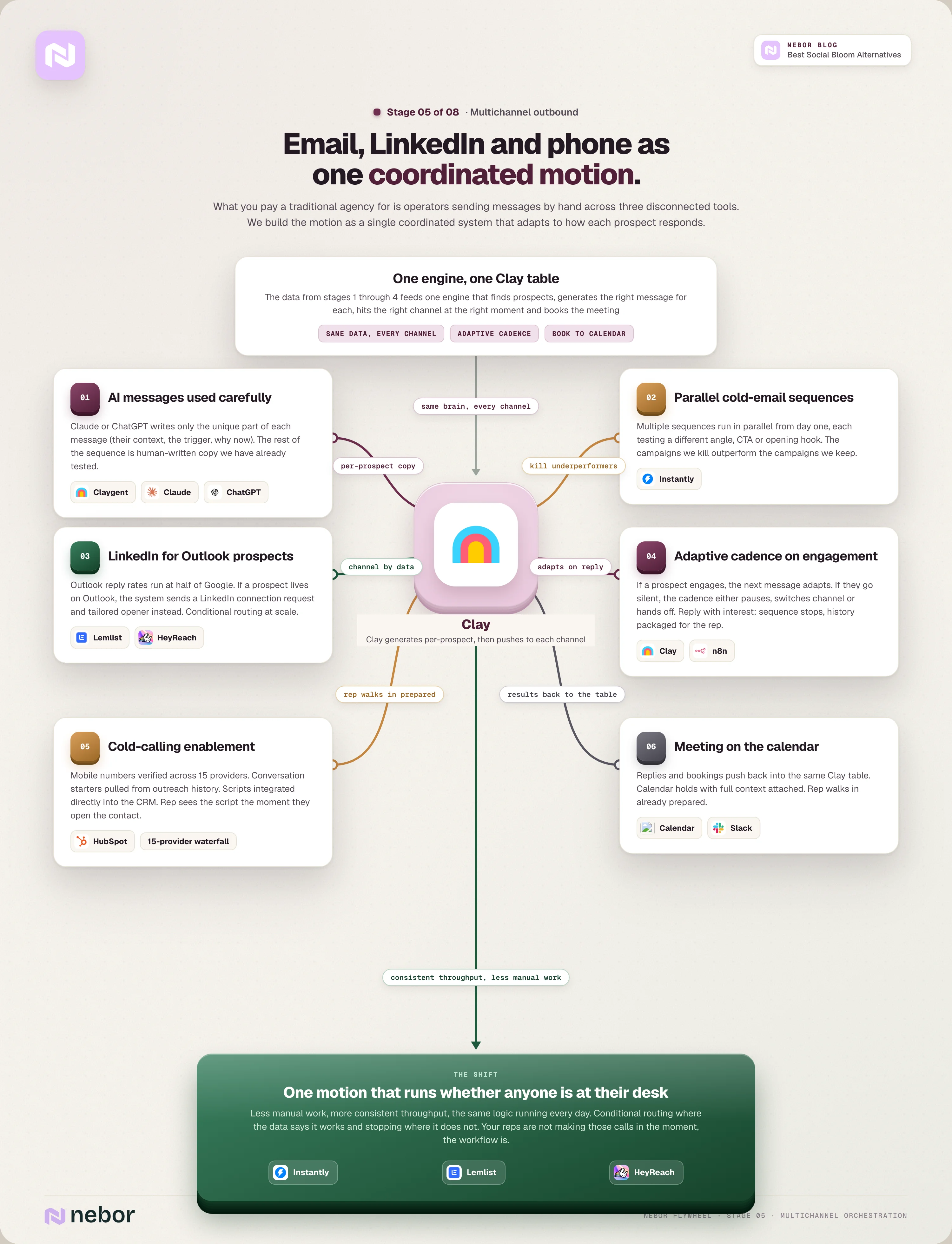
When you hire a traditional outbound agency like Social Bloom, what you actually pay for is a team of operators sending messages by hand.
Email goes through one tool, LinkedIn goes through another, calls happen on a third, and a junior account manager copies content between them.
The motion depends entirely on who is at their desk that day.
We build the motion as a single coordinated system.
The data we collected in stages one through four feeds into one engine that finds your prospects, generates the right message for each one, hits them on the right channel at the right moment, and books the meeting straight into your sales rep's calendar.
Less manual work, more consistent throughput, and the same logic applied every day whether anyone is paying attention or not.
The complete system has four moving parts.
AI-powered messages through Claygent, powered by ChatGPT and Claude
Cold email execution through Instantly
LinkedIn outreach through Lemlist or HeyReach
Cold calling enablement for the in-house team
The complete picture is one automation that hits your prospects across email, LinkedIn, and phone, with coordinated messaging that adapts based on how they respond and what the data tells us each week.
Keep in mind that there is a deliverability layer that keeps all of this landing in the inbox. It is its own discipline, and we covered it at length in our email deliverability guide.
We turn inbound traffic into qualified pipeline alongside outbound
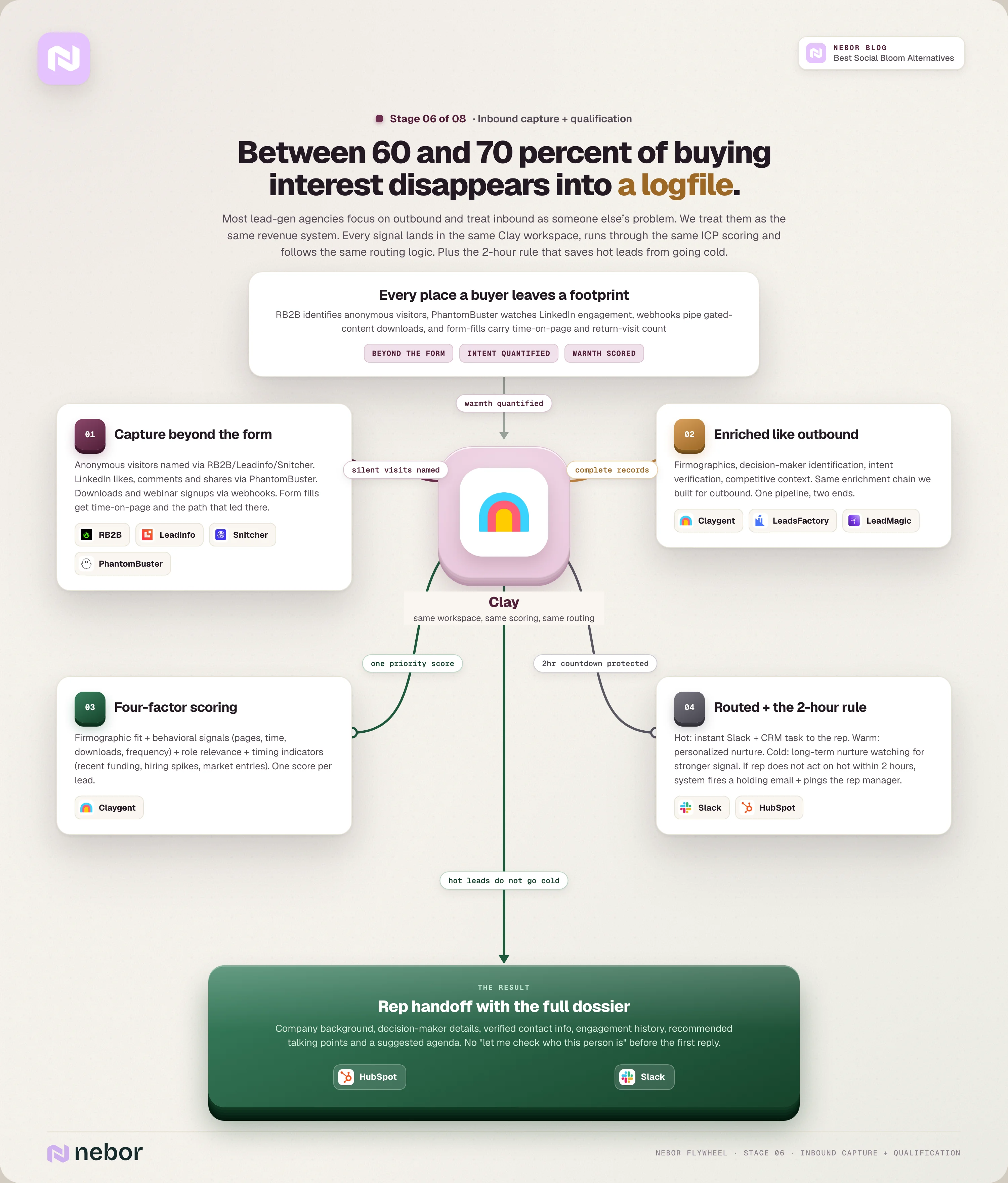
Most lead generation agencies, including Social Bloom, focus almost entirely on outbound. They send campaigns, book meetings, and move on.
Meanwhile, your business is taking inbound activity every single day. People visit your website, download your content, click through your ads, comment on your LinkedIn posts, attend your webinars.
Most of those signals never reach your sales team. We fix that.
We treat outbound and inbound as the same revenue system. Every signal lands in the same Clay workspace, passes through the same ICP scoring, and follows the same routing logic that powers the outbound engine.
A cold prospect opening an email and an account director from your TAM checking your pricing page are the same thing as far as the system is concerned. They are both prospects who just told you they are paying attention.
Capturing inbound signals well beyond the form fill
Qualifying inbound leads through the same Clay workflows that power outbound
Handing inbound to sales without making the rep do the research
The full effect of this layer is that the gap between marketing and sales closes. Inbound stops leaking, response times tighten, and your sales team only spends their day on prospects worth their time.
We instrument the system with reporting and attribution your team can read on a Monday
For us, the point of reporting is for any member on your team to log in on a random morning and know what is working, what is not, and where to spend the next five days.
So, we build the reporting layer the same way we build the rest of the system.
The dashboards live in the tools your team already opens every day, they pull from the data the system is already producing, and they are in front of the people who actually have to act on the numbers.
What the reporting actually covers
The dashboard set we build is intentionally small. Six views handle 90% of the questions a sales leader, a RevOps lead, or a founder will want to ask of the system in any given week.
Pipeline contribution by channel. How much pipeline came from email, LinkedIn, cold calling, and inbound capture in the period, by stage. Answers the question “what is actually working” without ambiguity.
ICP fit by source. What share of leads from each channel are landing inside the ICP versus outside it. Tells you whether a given channel is generating volume at the cost of fit.
Signal-to-meeting conversion. For every type of buying signal we are watching, the percentage of caught signals that converted to a booked meeting and then to an opportunity. Tells you which signals are worth keeping live and which ones are noise.
Message-to-reply by sequence. Reply rates segmented by sequence, ICP segment, and time-since-last-touch. The view that tells you which sequence to kill this week.
Inbound and outbound mix. The split of pipeline between motions, week over week. The number that tells a founder whether the engine is balanced or whether one side is carrying everything.
Calendar conversion by rep and territory. For multi-rep teams, the conversion rate from booked meeting to held meeting to qualified opportunity, broken out by rep. The view that tells a sales leader whether the meetings the system is booking are landing on a rep's calendar without falling through.
That set forms the operational reporting layer of the system, and it updates daily. It is the thing the team actually uses.
At the end, we hand over playbooks, training, and documentation so the system stays yours
Walkthroughs of every workflow we build
SOPs for the operator tasks that recur
Sales enablement assets tied to the data the system is producing
Live training sessions and a 30-day operating handover
Top 7 Social Bloom alternatives for B2B lead generation and pipeline building
Here are seven Social Bloom alternatives that come up most often in shortlists, each with its own model of how they source leads and book meetings.
If you want a wider sweep across the same category, we covered more of it in our piece on the 10 best SDR agencies in 2026 and in our roundup of the best B2B lead generation companies.
1. Nebor
We are a Clay-native sales automation agency that builds owned GTM systems for B2B companies. The full deep dive is above this section, so we will keep this short.
We use Clay as the command center, n8n for the workflow logic, Instantly for cold email, Lemlist, HeyReach, and PhantomBuster for LinkedIn, RB2B for inbound capture, and more.
The whole stack lives inside your accounts, on your billing, and the engagement ends with a structured handover so your team can operate it themselves.
Compared to Social Bloom. Social Bloom delivers qualified meetings on a subscription model. We build the system that generates those meetings continuously, then hand you the keys. The difference between renting results and owning the engine that produces them.
Best for: Companies that want to own their pipeline infrastructure, build a real ABM motion across their highest-value accounts, and build something that compounds across quarters rather than restarting every month.
2. Belkins.io
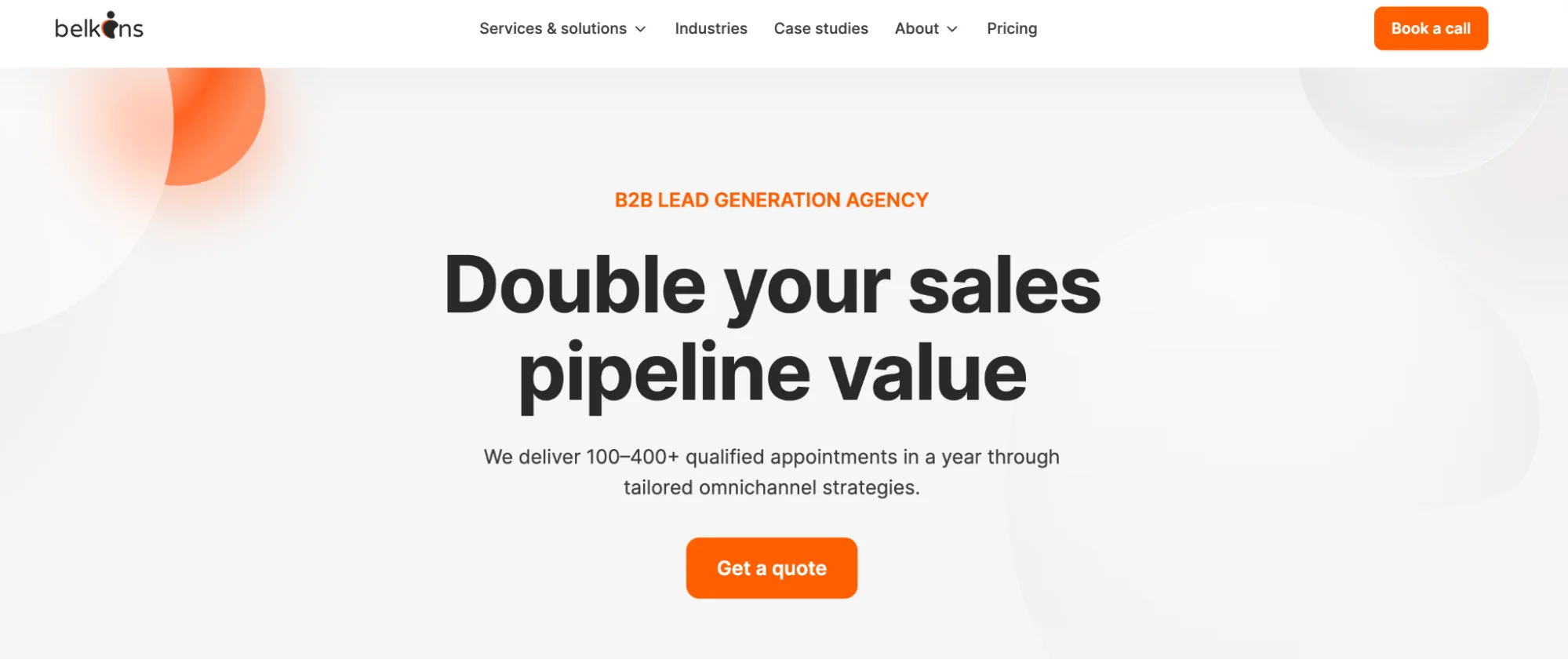
Belkins is one of the most established B2B appointment-setting agencies on the market, active since 2017 from the US with a global delivery footprint.
Compared to Social Bloom: Both work on similar done-for-you models with guaranteed meetings. Belkins leans more email-heavy, while Social Bloom emphasizes a multichannel mix. Belkins also tends to engage further upmarket, with longer engagements and larger account teams.
Best for: Companies that want a proven, established agency, do not mind paying ongoing retainers, and value a track record over agility. If you want a deeper read on the alternatives in this category, we covered them in our roundup of the best Belkins.io alternatives.
3. CIENCE
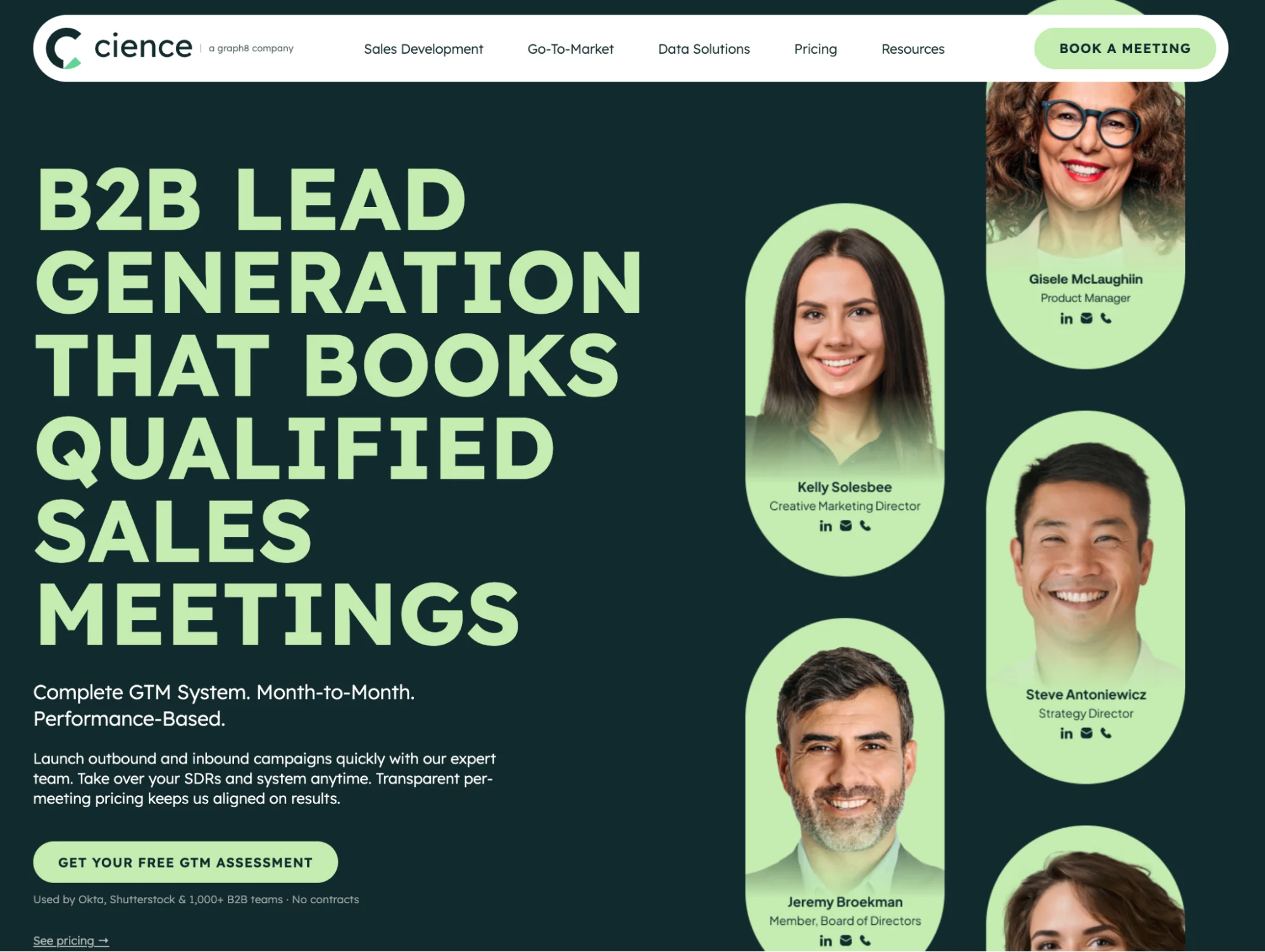
CIENCE positions itself as a blend of human SDRs and AI-powered tooling. The agency claims over 1,500 served clients, and the SDR team handles multichannel outreach across phone, email, LinkedIn, and chat.
Compared to Social Bloom. CIENCE typically lands at a higher price point and works better with larger companies handling complex sales processes. Both agencies guarantee qualified leads, but the CIENCE engagement is more high-touch and tends to stretch longer.
Best for: Mid-market to enterprise companies that want a combination of human SDR labor and tooling, and have the budget for a premium service. We compared them more directly in our roundup of the best CIENCE alternatives.
4. ColdIQ
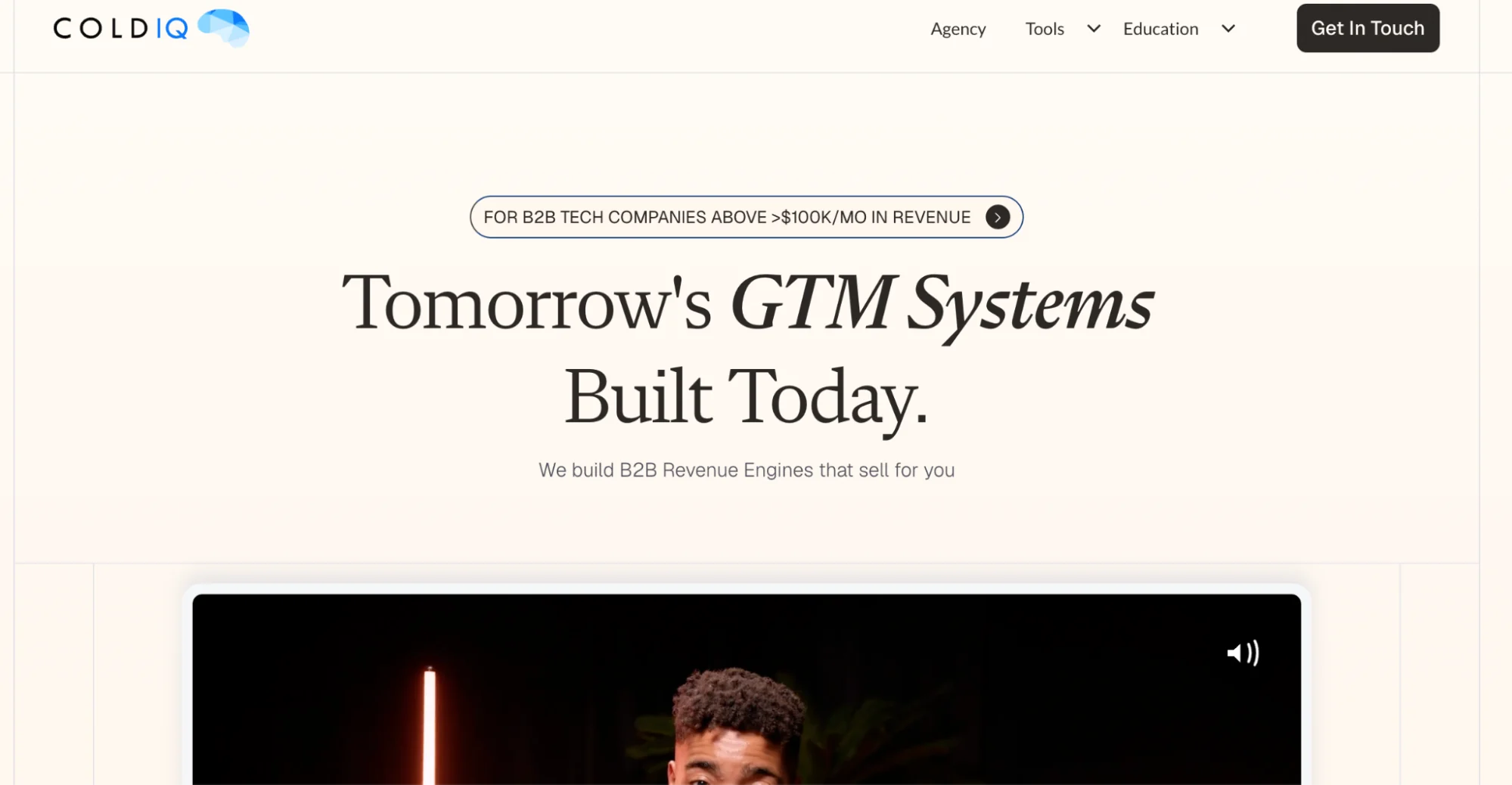
ColdIQ takes an AI-first, Clay-native approach to cold outbound. The team specializes in building end-to-end outreach systems using Clay, AI-driven personalization, and multichannel sequences.
Compared to Social Bloom. Social Bloom delivers the campaigns and keeps the playbook on its side. ColdIQ builds the system and shares the knowledge.
ColdIQ also leans more technical, attracting startups and B2B teams that already speak Clay and want a partner who fits that mindset.
Best for: Tech-savvy companies that want to learn the system while having experts build it, and eventually take ownership of the outbound motion. We covered the wider list in our roundup of the best ColdIQ alternatives.
5. Cleverly
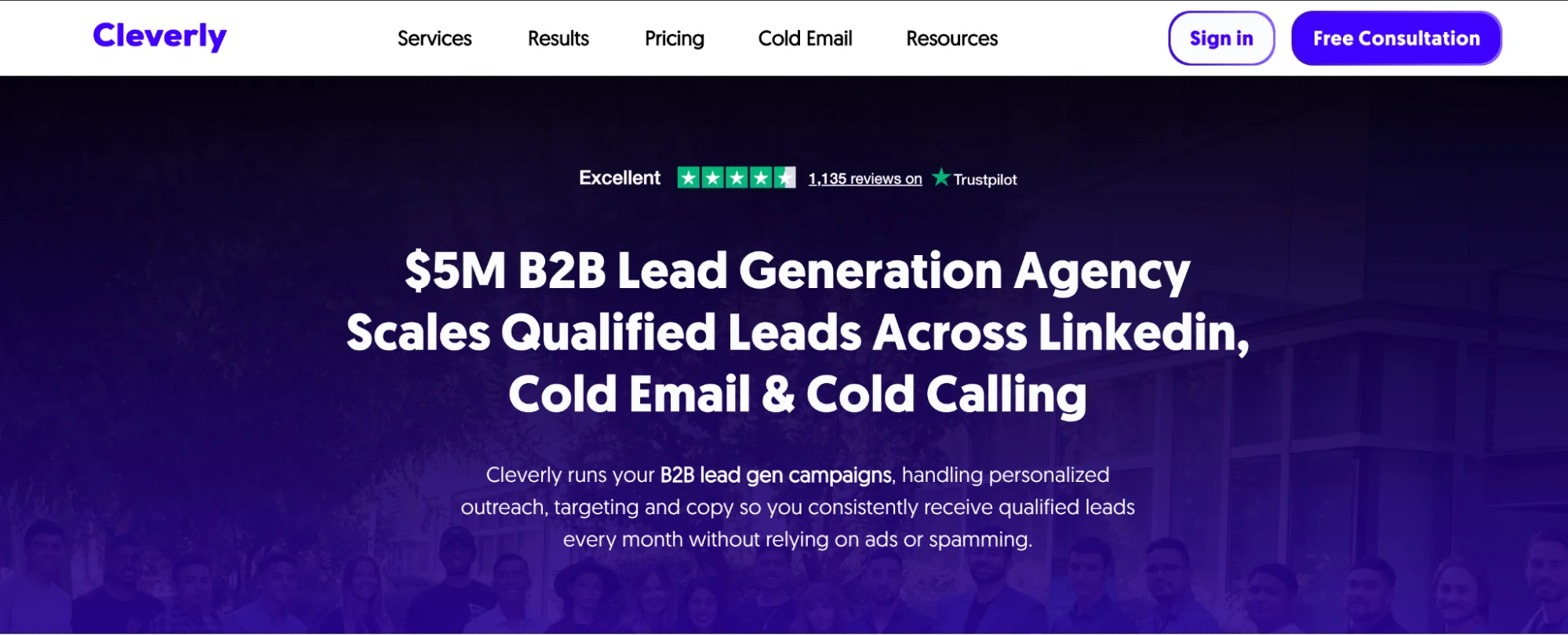
Cleverly is the LinkedIn shop. The offering centers almost entirely on LinkedIn-based outreach, with cold email available as an add-on and no phone work.
Compared to Social Bloom: Social Bloom uses email, LinkedIn, and phone in coordination. Cleverly does LinkedIn. If your buyers live on LinkedIn and you want a single-channel specialist, Cleverly fits the brief. If you need a broader motion, Social Bloom or others are better fits.
Best for: Companies whose ideal customers are active on LinkedIn and prefer a single-channel expert over a multichannel generalist. If you want to see who else is in this category, we wrote about it in our roundup of the best Cleverly alternatives.
6. Salesbread
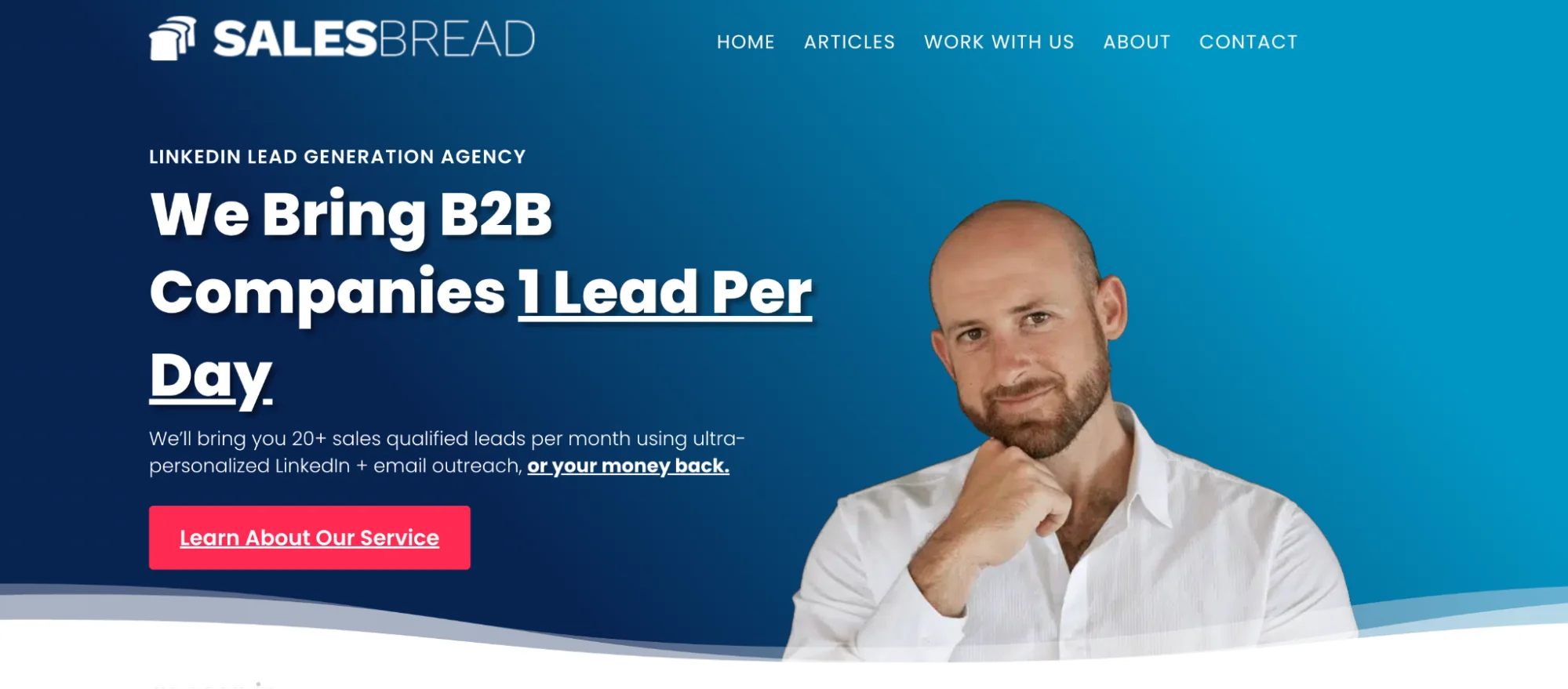
Salesbread focuses on cold email done right. The agency is boutique by design and prides itself on high-quality copywriting and email deliverability work.
Compared to Social Bloom. Social Bloom operates at a larger scale with guaranteed meeting volumes. Salesbread is smaller, more boutique, and focused on quality over quantity. They are better for companies that want thoughtful, well-crafted email campaigns rather than high-volume outreach across multiple channels.
Best for: Companies with complex value propositions that need custom messaging and storytelling, and where the email channel is the right place to start the conversation.
7. Martal Group
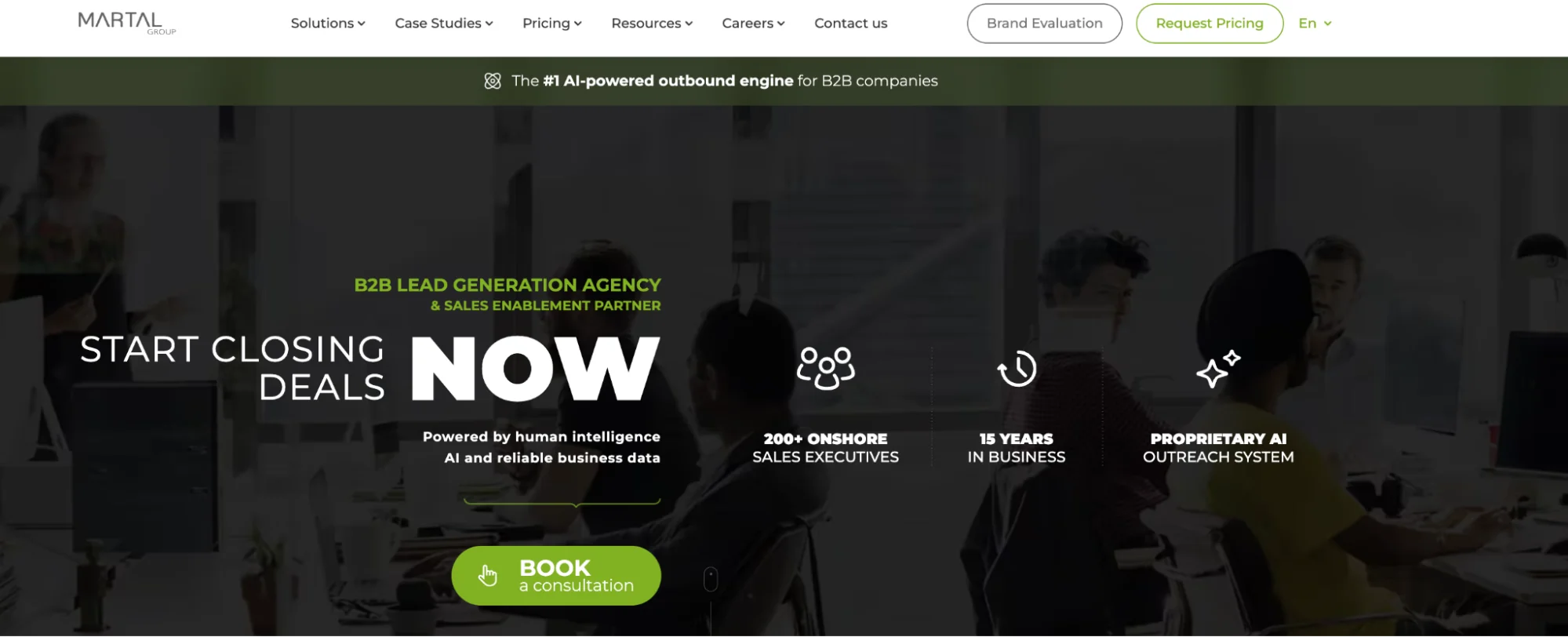
Martal is one of the larger, more established names in B2B outbound and appointment-setting, based in Oakville, Ontario, and serving B2B tech companies across North America, Europe, and LATAM.
Compared to Social Bloom: Both agencies are full-service, but Martal operates at a higher price point and offers more comprehensive sales support beyond just lead generation. Social Bloom is more focused on the top of the funnel, while Martal can handle the entire sales process if needed.
Best for: B2B tech companies with complex sales cycles that need dedicated sales professionals, not just appointment setters, and have the budget for a premium engagement. We compared them more directly in our roundup of the best Martal Group alternatives.
Work with Nebor, the Social Bloom alternative built around ownership
Each of the agencies above has carved out a real position. Generalists like Social Bloom and Belkins handle everything and guarantee meetings, single-channel shops like Cleverly and Salesbread go deep on one motion, and systems builders like ColdIQ and Nebor focus on what your team can keep going after the engagement ends.
The right choice depends on what you actually need right now. If you want someone to handle everything and deliver guaranteed SQLs on a subscription, Social Bloom, Belkins, or CIENCE will do that.
If you want to own the infrastructure and build something that lasts, talk to us or ColdIQ. And if you need specialists in LinkedIn or email, Cleverly and Salesbread are solid picks.
As you evaluate the options on this list, four questions are worth holding in mind.
Do you want to own the system after the engagement ends? You should be able to log into your data, edit your workflows, and keep the pipeline going without re-hiring anyone.
Do you need automation tied to actual buying signals? Systems that respond to real-time signals beat static campaign lists. The agencies that cannot show you their signal-to-meeting conversion are selling the latter.
Do you want transparency into the inner workings? Knowing what is working, what is converting, and why should not be a quarterly conversation. It should be a daily dashboard your team opens.
Do you want flexibility on what to test next? You should be able to swap channels, adjust targeting, and test strategy without rebuilding the foundation each time.
If those four questions describe what you are looking for, Nebor is purpose-built for that. We do quite a bit more than book meetings.
Note: B2B lead generation is no longer what it used to be. Most lead generation agencies and experts now depend on Clay, automation and AI to do the work people used to do by hand.
What most of them will not tell you is that they keep those tools and workflows in house and sell you only the campaigns and results. When you stop paying, you are back at zero.
At Nebor, we are a GTM engineering and RevOps agency. We build the automated prospecting and lead generation that fills your pipeline, and we build it so you own it.
The difference shows up around month six. A lead generation agency is still charging you a retainer. With us, the workflows are already yours, so the only thing left to pay for is the software underneath them.
Book a 15-minute call and we'll show you what an automated lead generation motion would look like for your business.


Related Articles


By clicking Sign Up you're confirming that you agree with our Terms and Conditions.