

In this post:
Most buyer personas are useless, and everyone involved knows it. They're slide decks full of stock photos and made-up names like Marketing Mary, listing her age, her hobbies, and the brand of coffee she drinks, none of which helps anyone sell anything.
The problem isn't the idea of a persona, it's how teams build them. A persona stuffed with demographic trivia gathers dust, while a persona built around how someone really buys becomes a tool you use every day.
A buyer persona is a semi-fictional profile of your ideal individual buyer, capturing their role, goals, pain points, and how they make decisions. It's a portrait of the person you're selling to, built to guide your messaging and outreach.
A good one matters because you sell to people even when you target companies. Knowing the company is a fit tells you who to pursue, but knowing the person tells you what to say, which is where deals are won or lost.
TL;DR
A buyer persona is a profile of your ideal individual buyer, focused on their role, goals, pains, objections, and how they decide, used to guide messaging and outreach.
You sell to people in the end, and a persona translates a target company into the specific human you're trying to reach, and that translation is what makes your message relevant.
The useful version focuses on buying psychology instead of demographics. What the person wants, what frustrates them, and what objections they raise matters far more than their age or hobbies.
The hard part is that personas have to be built from real evidence and genuinely used. A persona invented from assumptions and left in a slide deck does nothing, while one grounded in real buyers shapes everything you write.
What is a buyer persona, and what makes it more than a portrait?
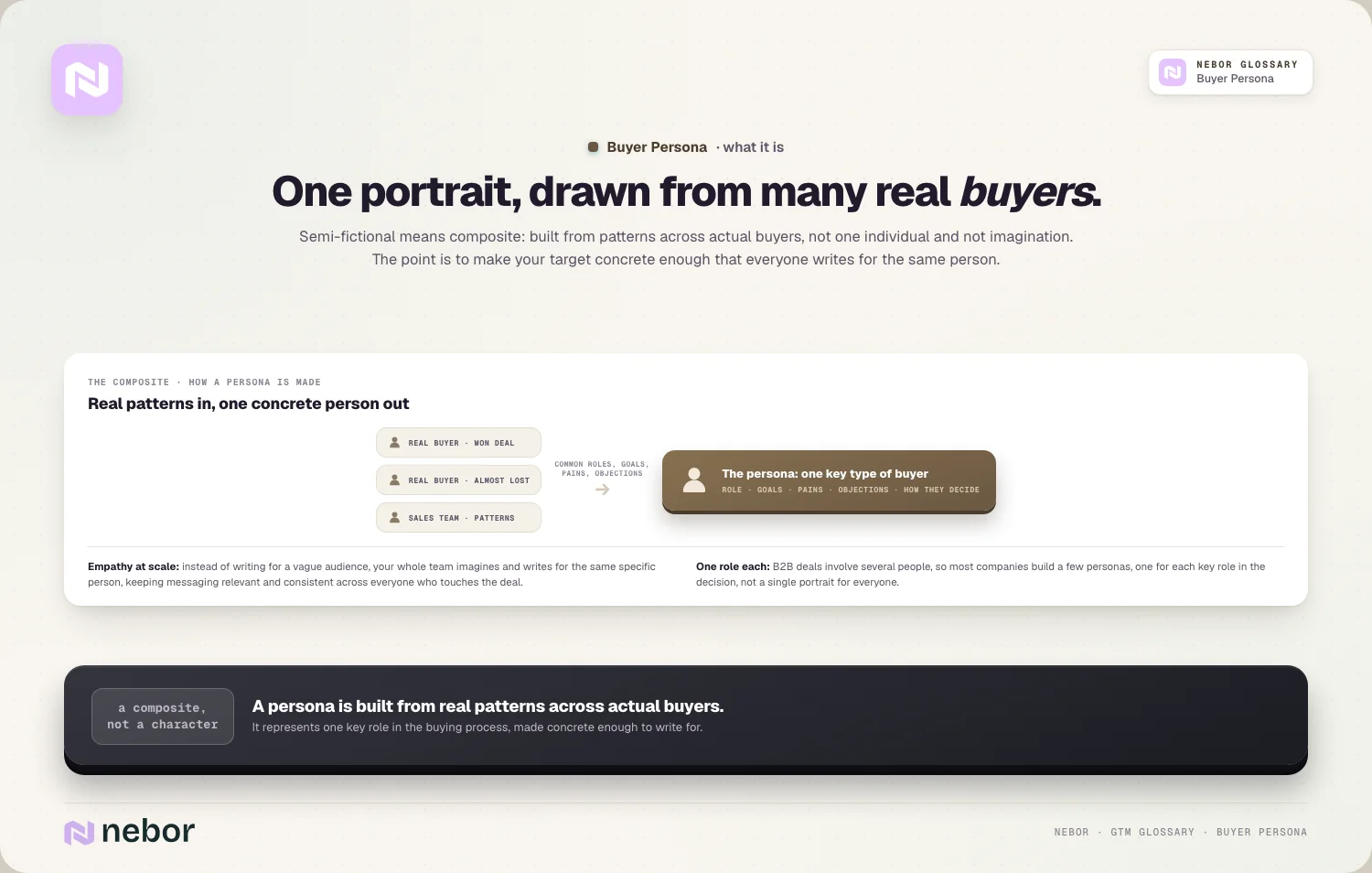
A buyer persona is a detailed profile representing a key type of person who buys from you. It's semi-fictional, meaning it's a composite built from real patterns across actual buyers rather than one specific individual.
The point is to make your target buyer concrete. Instead of writing for a vague audience, you write for a specific person whose role, goals, and frustrations you truly understand.
A strong persona captures what drives a buying decision. That means their job and responsibilities, the goals they're measured on, the pain points your product addresses, and the objections they'll raise.
It usually represents one role in the buying process. Since B2B deals involve several people, most companies build a few personas, one for each key role in the decision.
So a buyer persona is really a tool for empathy at scale. It lets your whole team imagine and write for the same specific person, which keeps your messaging relevant and consistent across everyone who touches the deal.
How is a buyer persona different from an ideal customer profile?
These two get confused constantly, so it helps to separate them clearly. They describe different levels of your target.
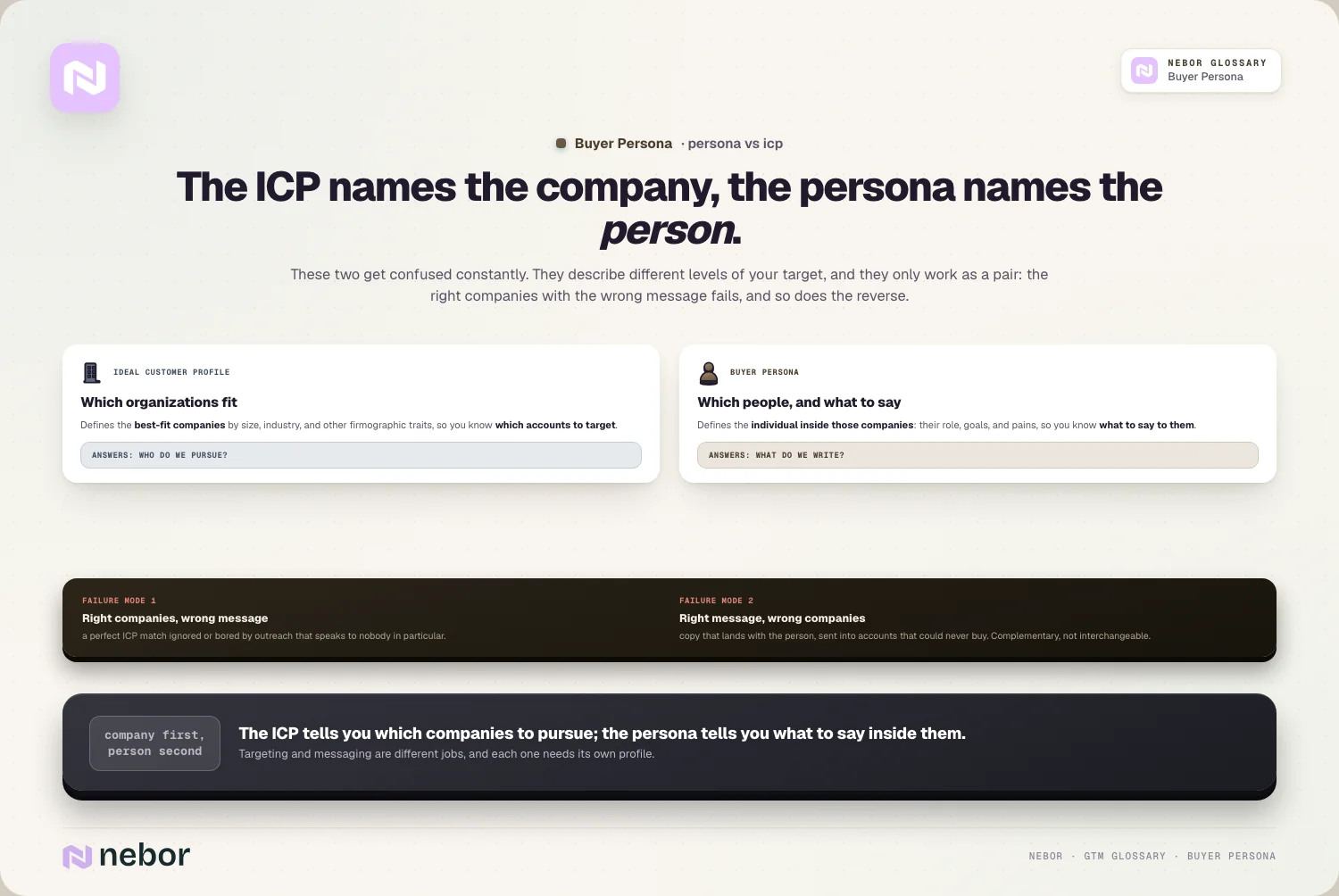
An ideal customer profile describes the company. It defines which organizations are the best fit, by size, industry, and other firmographic traits, so you know which accounts to target.
A buyer persona describes the person instead. It defines the individual inside those companies you're trying to reach, with their role, goals, and pains, so you know what to say to them.
The two work together as a pair. The ICP tells you which companies to pursue, and the persona tells you which people to reach within them and how to speak to each one.
So you need both of them in place. Targeting the right companies with the wrong message fails, and the right message to the wrong companies fails too, and that's the reason ICP and personas complement each other instead of substituting for each other.
Why do most buyer personas fail to change anything downstream?
Some bluntness helps here, because the failure is so common, and in our experience the mistake is almost always the same, focusing on the wrong information.
Most personas drown in demographics, listing age, gender, hobbies, and personal trivia that feel like detail but tell you nothing about why the person would buy.
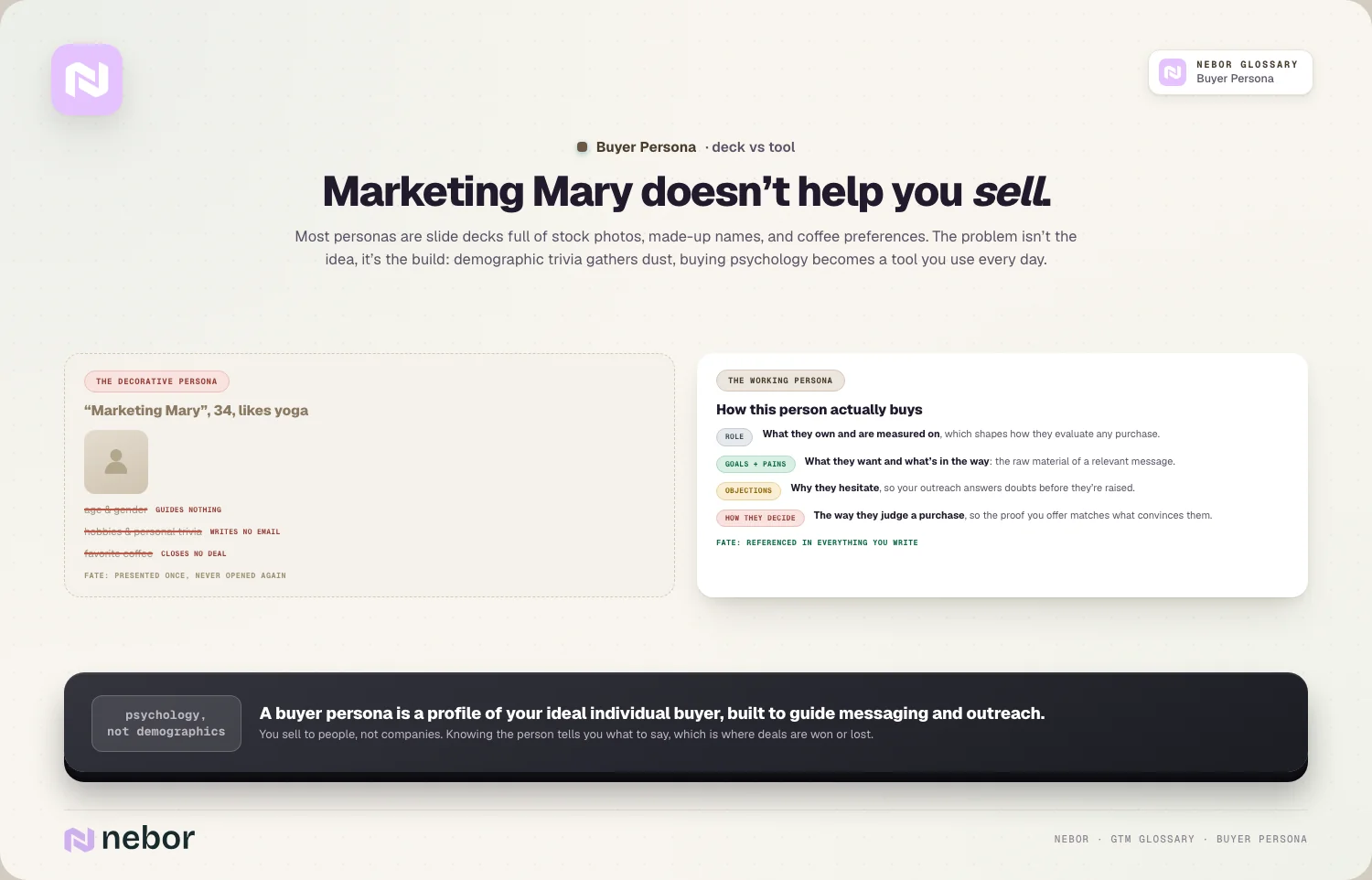
None of that trivia guides a single decision, because knowing your buyer's favorite coffee doesn't help you write a relevant email, so the persona becomes a decorative artifact instead of a working tool.
The result is a deck nobody opens. A persona built from assumptions and filled with irrelevant detail gets made once, presented, and then ignored, which is the fate of most of them.
So the failure isn't using personas, it's building them wrong. A persona only helps if it captures what drives the buying decision, and that's psychology instead of demographics.
What belongs in a useful buyer persona once the trivia is gone?
A persona starts pulling its weight when it's built around buying behavior, and in the personas we build for clients, a few elements do the real work.
The first is their role and responsibilities. What the person does, what they own, and what they're measured on shapes everything about how they evaluate a purchase.
The second is their goals and pains. What they're trying to achieve, and the specific frustrations standing in their way, are the raw material for any relevant message.
The third is the objections they raise. The reasons this person hesitates or pushes back let you prepare answers, so your outreach addresses doubts before they sink the deal.
The fourth is how they buy and where they pay attention. Knowing how they research, who they involve, and which channels they use shapes how and where you reach them.
How do buyer personas improve the messaging you send every day?
The whole point of a persona is sharper messaging, and the mechanics deserve a look, because a persona turns a generic pitch into a relevant one.
It gives you the angle to lead with, because knowing a persona's specific pain point tells you what to open on, so your cold email speaks to something the person actually feels.
It also tailors the message per role, since the same product solves different problems for different people, so personas let you write distinct messages for a finance buyer versus an end user.
And it lays the foundation for personalization, because personas define the segments that make personalization at scale and deeper hyper-personalization possible, with each one naming what you personalize around.
So personas are where relevant messaging starts. They turn your understanding of the buyer into the actual words you send, and those words are what make outreach land instead of bouncing off.
How do personas connect to the buying committee inside a deal?
In B2B, no single persona captures the whole decision, because personas map onto a committee instead of a single buyer.
A B2B purchase involves several distinct roles. There's usually an economic buyer, a champion, end users, and people who can block the deal, each with different goals, concerns, and ways of judging the decision.
Each of those roles is a persona. Building a persona per role lets you speak to each member of the committee in terms they care about, rather than one generic message for everyone.
This connects directly to multi-threading, because reaching the whole committee with role-specific messaging, the way complex deals get won, depends on having a persona for each key player.
So personas are how you sell to a group. They give you a distinct, relevant approach for each person whose vote matters, which is exactly what finding and engaging the decision makers in an account requires.
How do you build a buyer persona that's grounded in evidence?
Building a useful persona is a research exercise instead of an imagination exercise, and a clear process keeps it grounded.
You start with real buyers, talking to your best customers and your sales team to learn who buys, what they wanted, and what nearly stopped them, instead of inventing a profile.
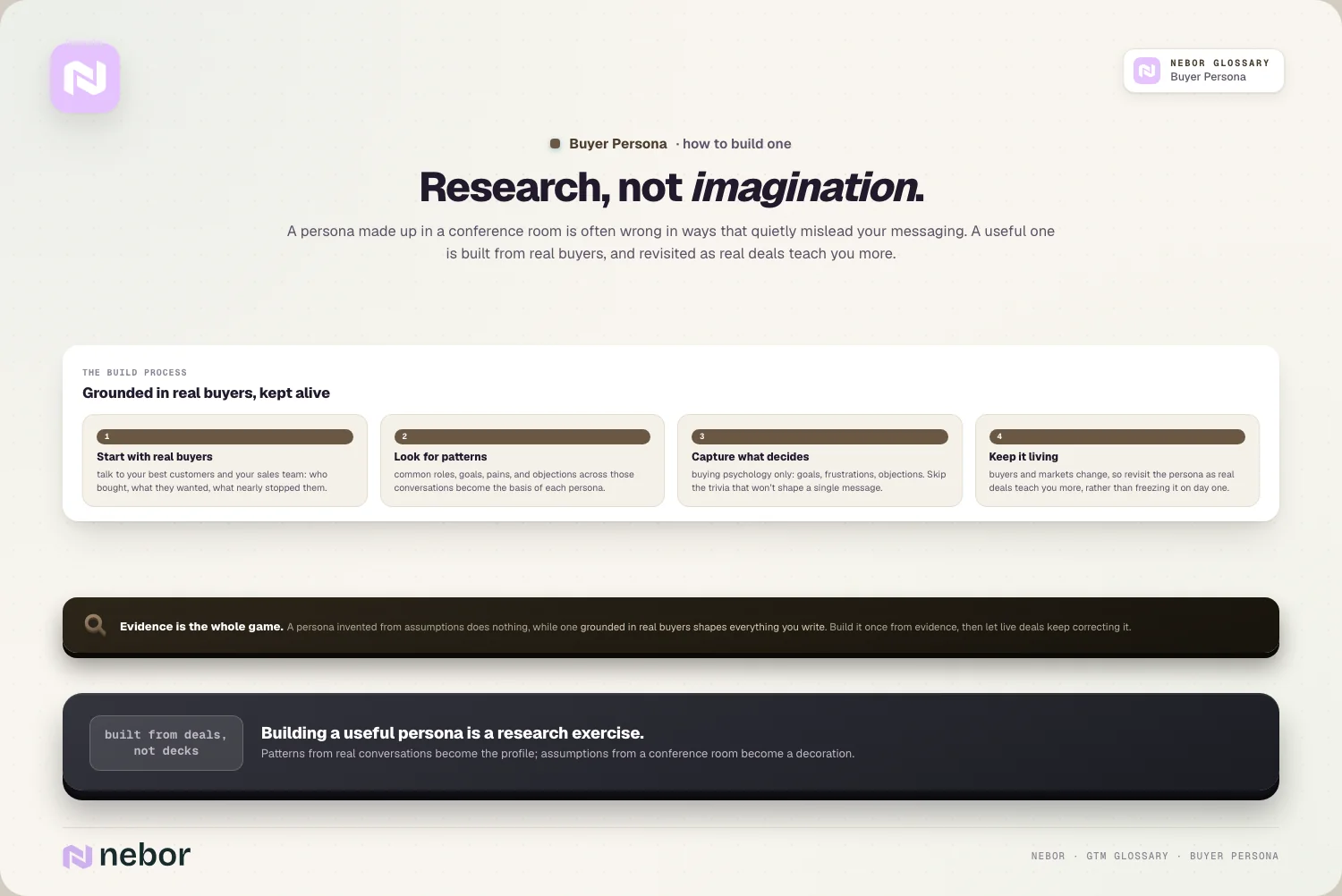
From there you look for the repeating patterns. Across those conversations, common roles, goals, pains, and objections emerge, and those patterns become the basis of each persona.
The focus stays on what drives decisions. You capture the buying psychology, the goals and frustrations and objections, and skip the demographic trivia that won't shape a single message.
And then you keep it living, because buyers and markets change, so a persona deserves revisiting as you learn more from real deals, instead of freezing the day it was first made.
How do personas fit into your wider go-to-market motion daily?
Personas never stay a standalone marketing artifact, because they thread through your whole motion and make several other things work.
They sharpen your targeting first, working with your ICP to guide your list building, so you reach the right people at the right companies instead of anyone with a matching title.
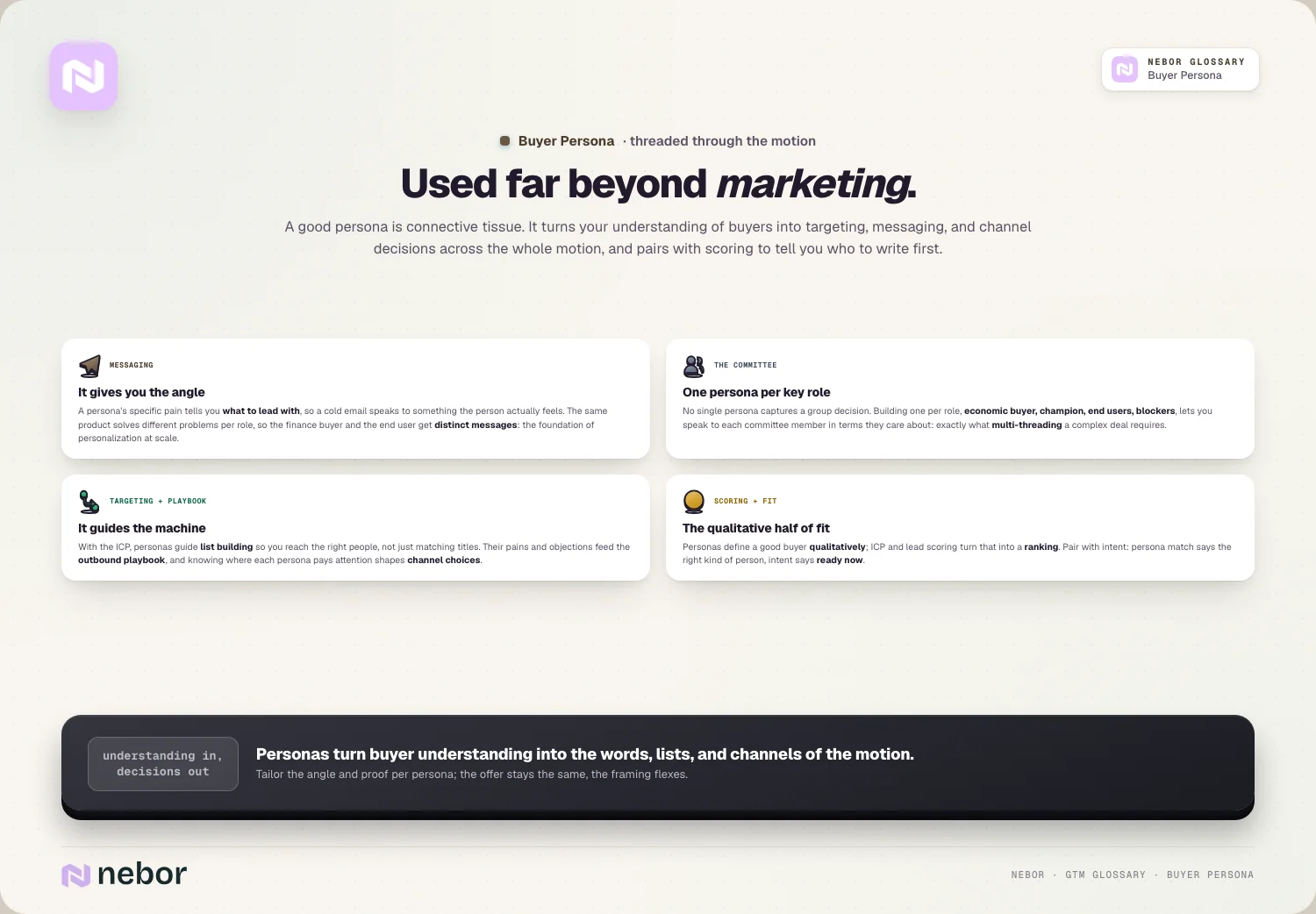
They belong in your playbook too, because a persona's pains and objections feed directly into your outbound playbook, giving reps the angles and answers for each type of buyer.
And they guide your channel choices, because knowing where each persona pays attention shapes your multi-channel outreach, so you reach them where they engage.
So personas act as connective tissue, turning your understanding of buyers into targeting, messaging, and channel decisions across the motion, and that's the reason a good one gets used far beyond marketing.
How do personas relate to your scoring and fit models overall?
Personas are about understanding a buyer, while scoring is about prioritizing them, and the two feed each other.
Personas define who a good buyer is qualitatively. They describe the role, goals, and pains that mark someone as a real prospect, which is the human side of fit.
Scoring turns that understanding into a ranking, where an ICP scoring model and lead scoring put numbers on how well a company or contact matches, so you can prioritize within your target audience.
Both pair with intent as well, because a persona match tells you a contact is the right kind of person, and the fit score versus intent score distinction reminds you to also check whether they're showing signs of being ready now.
So personas are the qualitative read and scoring is the quantitative one. Together they tell you both who to write to and how relevant and ready each contact is.
Does each persona need its own content and its own approach?
A natural question is whether different personas really need different treatment, and the honest answer is that the tailoring matters.
Each persona cares about different things, because a finance buyer worries about cost and risk, while an end user worries about whether the tool makes their day easier, so the same pitch lands differently.
That means your content should flex by persona, with the angle, the proof points, and even the channel shifting depending on who you're addressing.
It doesn't mean separating everything into silos. The underlying product is the same, so you adapt the framing and emphasis rather than building a completely different story for each role.
So personas work as a guide for tailoring instead of a mandate for total separation. You lead with what each persona cares about most, and that emphasis makes the same offer feel relevant to very different people.
What are the common buyer persona mistakes that turn them to decoration?
Personas go wrong in a few predictable ways. Avoiding them is the difference between a tool and a decoration.
The classic one is loading them with demographics, because personal trivia feels thorough but guides nothing, so the persona becomes a deck nobody uses.
Inventing them from assumptions is a close second, since a persona made up in a conference room instead of built from real buyers is often wrong in ways that mislead your messaging for months.
Making too many comes next, because a dozen overlapping personas is unusable, so most teams are better served by a few clear ones for their key roles.
And there's building them and forgetting them, where a persona lives in a slide deck and does nothing but make the project feel complete, when it only helps if it's referenced in real writing and targeting.
How many buyer personas should you keep before they blur together?
A common question is how many personas a team really needs. The honest answer is fewer than most teams build, but more than one.
One persona is rarely enough for B2B. Since deals involve several roles, a single persona forces you to write one generic message for people with very different concerns.
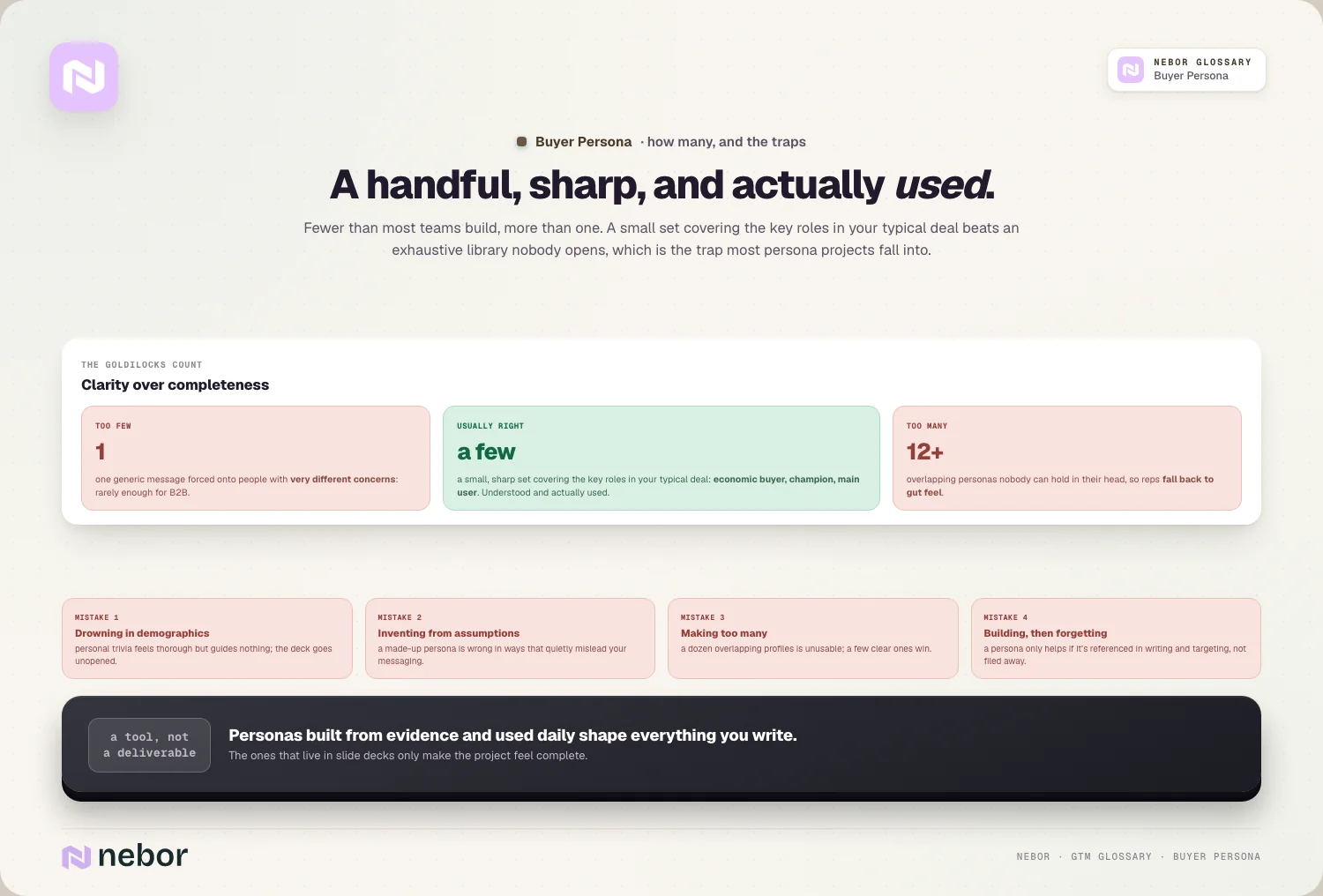
A dozen is far too many, because long lists of overlapping personas become unusable, so reps and marketers ignore them and fall back to gut feel, which defeats the purpose.
A few clear personas is usually the right number, and most of the teams we advise are well served by a small set covering the key roles in their typical deal, like the economic buyer, the champion, and the main user.
So the aim is clarity over completeness. A handful of sharp, well-understood personas that your team actually uses beats an exhaustive library that nobody opens, which is the trap most persona projects fall into.
Why a persona built on buying psychology beats one built on trivia
Buyer personas exist because companies sign the contract while people make the decision. Knowing a company fits your profile tells you who to target, but knowing the person tells you what to say, which is where outreach succeeds or fails.
The deeper point is that a useful persona is about buying psychology instead of demographics. What the person wants, what frustrates them, and what makes them hesitate is what shapes a relevant message.
The honest requirement is that personas be built from real evidence and then put to work. A profile invented from assumptions and left in a deck does nothing, while one grounded in real buyers guides everything you write.
So if your personas are gathering dust, the problem is in the content instead of the concept. When you build them around how your buyers decide and use them to shape every message, they stop being decoration.
That's how personas become one of the most practical tools in a modern go-to-market system. They matter even more as you automate sales prospecting, because that buyer understanding has to be baked into the system doing the outreach.
Share this post
Marketing
Prospecting
Glossary
Related glossary items
Understanding the core GTM concepts



Ready to build your pipeline











