
In this post:
An email sequence is a series of emails sent to a prospect over time, with set delays between them, designed to start a conversation or move someone toward an action. Instead of one email and hope, it's a planned set of touches that go out automatically.
Most of the value in a sequence comes from the part people neglect, the follow-ups. The first email rarely gets the reply, and the messages that come after it are usually what start the conversation.
For cold outreach, the sequence as a whole is the unit you design, and the single email is just one step inside it. If you get the structure, the spacing, and the value of each step right, the series will outperform any one-off message you could send.
TL;DR
An email sequence is an automated series of emails with timed gaps between them, built to earn a reply rather than close a sale. It's the backbone of how outbound and nurture email work day to day.
The follow-ups do most of the work. Most replies come from the second, third, or fourth email, so a sequence that gives up after one send leaves the majority of its results on the table.
A good sequence is short, well-spaced, and adds something new with every step, and it always stops the moment someone replies. The goal is a real conversation instead of a record number of emails sent.
So what is an email sequence, and how is it different from a single email?
An email sequence is a structured set of emails that go out to a prospect on a schedule, usually managed by a tool that handles the timing and the sending. Each email is a step, and the gaps between them are part of the design.
The difference from a single email is persistence and planning. One email is a single shot that either lands or doesn't. A sequence accepts that most people won't reply the first time, so it follows up in a deliberate way, over days or weeks, to catch them at a better moment.
That shift in mindset changes how you work. You stop polishing one perfect email and start designing a series where the steps cover for each other, and the thing you build and improve from then on is the sequence itself.
Why do your follow-ups matter more than your first email ever will?
This is the most important thing to understand about sequences, and it's the part most teams get wrong. The majority of replies don't come from the first email, they come from the follow-ups.
The reasons behind this are ordinary and human. Your first email arrives at a busy moment and gets forgotten, the prospect means to reply and doesn't, or they simply never notice it. A polite, well-timed follow-up catches the people who were never going to reply to the first one, which is most of them.
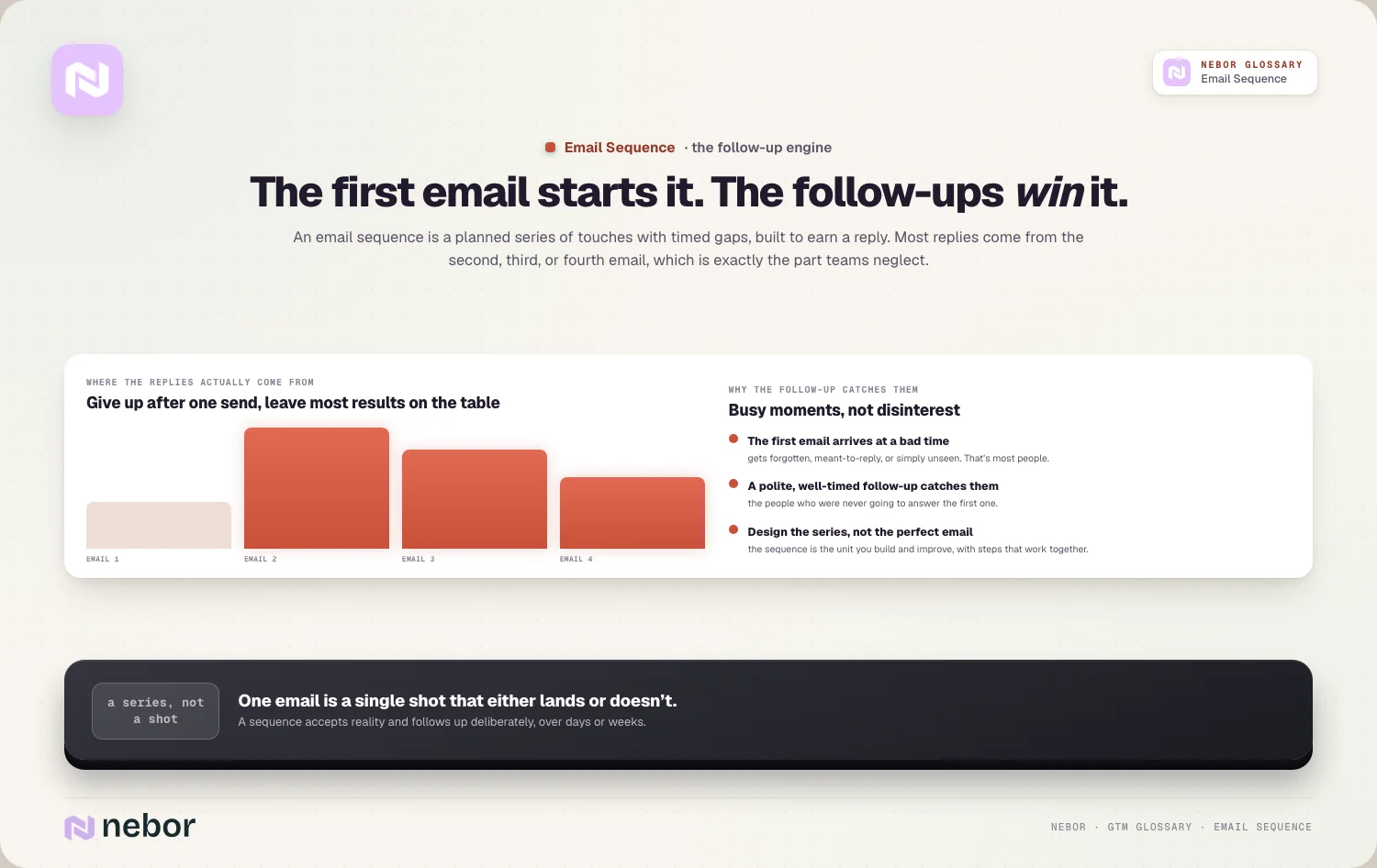
So a sequence that stops after one or two emails throws away most of its potential. The follow-ups aren't an afterthought, they're where the results live, and that's the reason designing a real follow-up sequence is half the job.
How many emails should a cold email sequence have before it stops?
This is where teams go to extremes, either giving up too early or hammering people forever. The right number lands in a sensible middle, and it depends on your audience and your offer.
For most of the cold outreach we send, a sequence of around three to five emails works well. That's enough to catch the people who needed a nudge, without crossing into the territory where you become the thing people block.
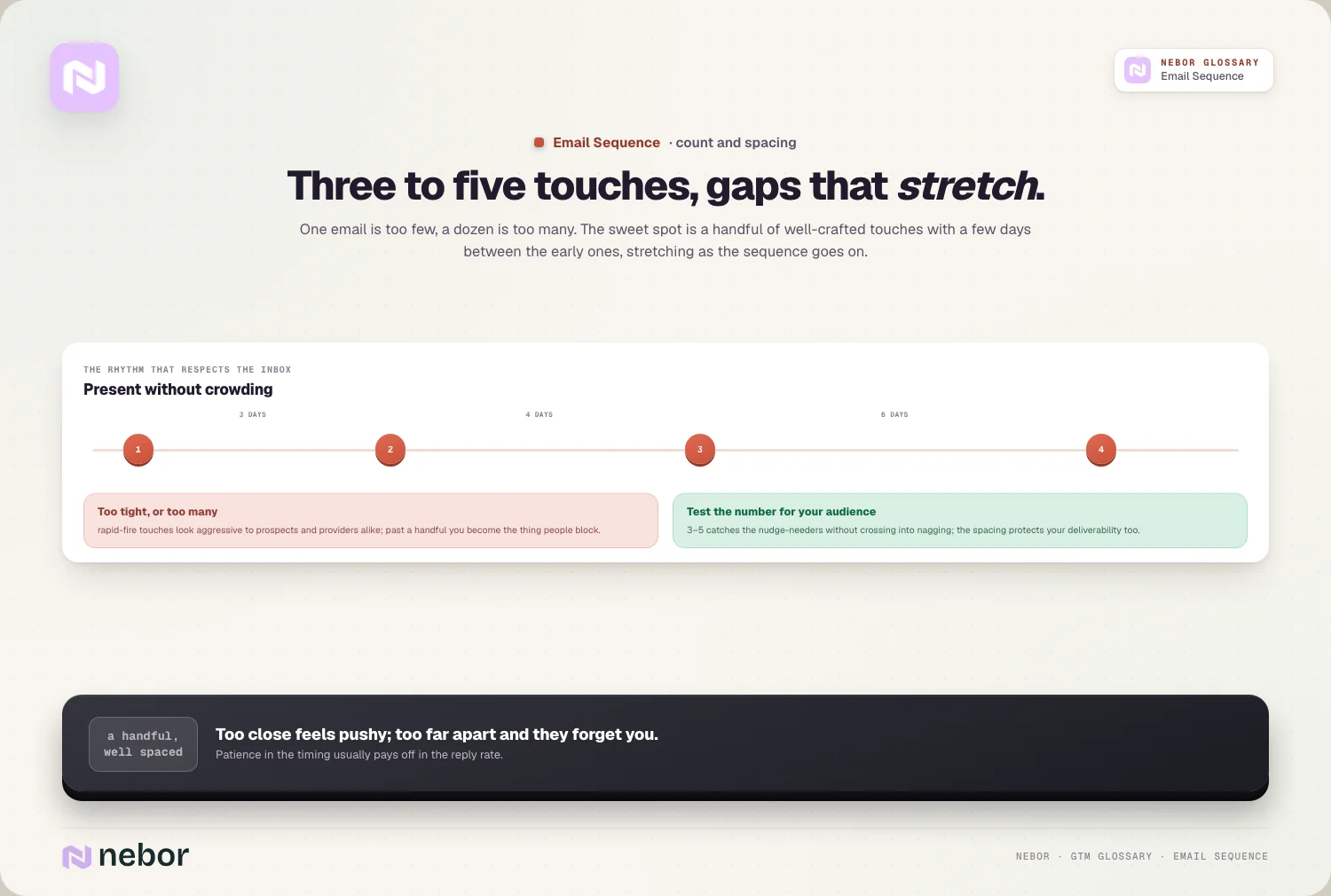
Anything fewer leaves replies on the table, and anything much longer starts damaging your reputation and your brand.
The honest answer is to test it for your own audience rather than copy a number. The point is that one email is too few and a dozen is too many, and the sweet spot is a handful of well-crafted touches that respect the person's inbox.
How should you space out the emails in a sequence so it feels human?
The timing between emails is as much a part of the design as the emails themselves. Too close together and you feel pushy, too far apart and the prospect forgets who you are.
A common rhythm is to leave a few days between the first couple of emails, then stretch the gaps a little as the sequence goes on. That keeps you present without crowding the inbox, and it gives your busy prospect time to actually see and consider your message between touches.
The spacing also protects the sending side of the equation. Sending several emails at the same person in quick succession looks aggressive to both the prospect and the mailbox providers, so sensible gaps help your deliverability as well as your reception. Patience in the timing usually pays off in the reply rate.
What makes each step of a sequence deserve its place in the inbox?
The biggest mistake in sequences is the empty follow-up, the email that just says "bumping this up" or "did you see my last note." Those add nothing, and they teach the prospect to ignore you.
Every step in the series should carry something the last one didn't. A follow-up can add a fresh angle, a relevant piece of proof, a useful resource, or a different way of framing the problem you solve.
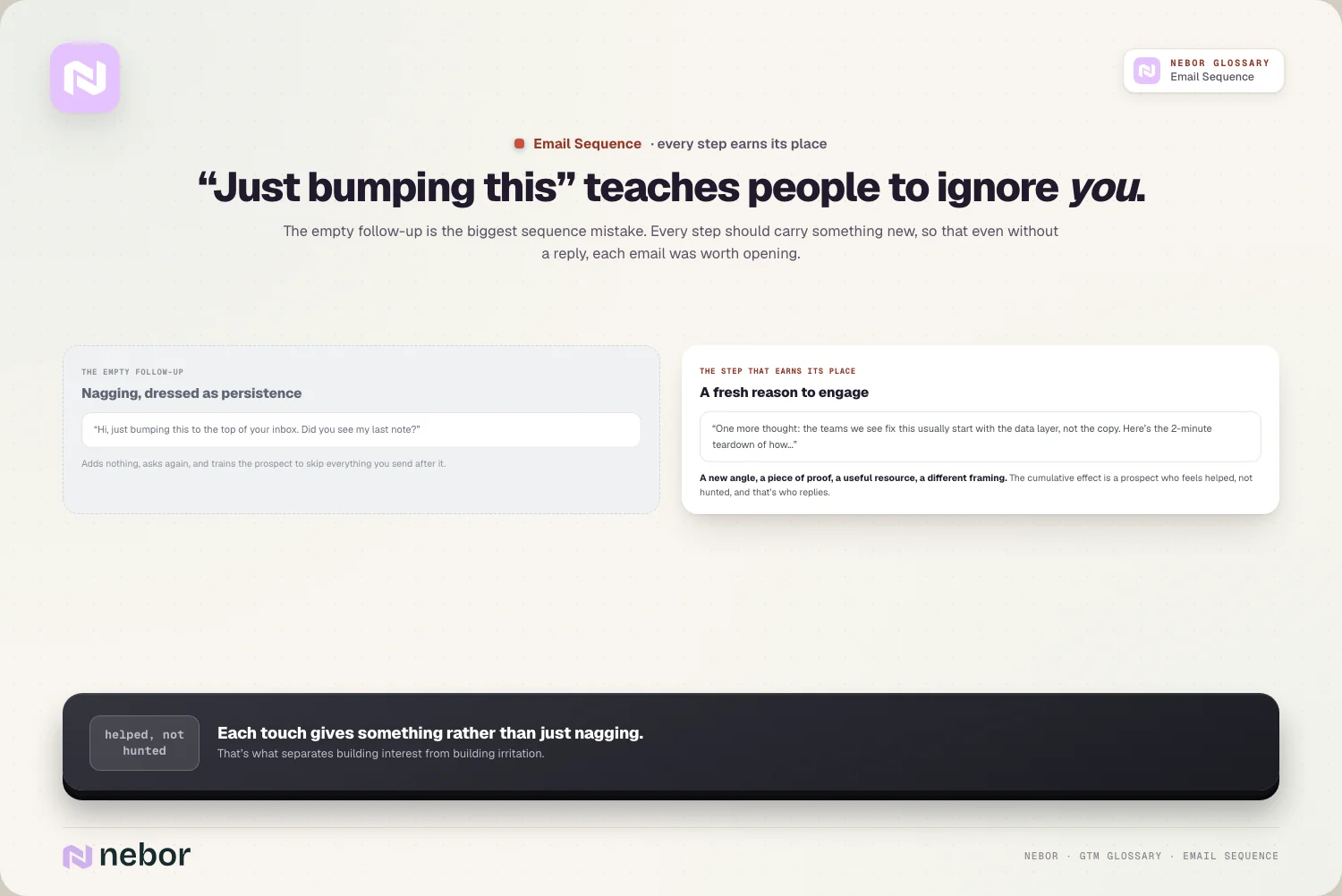
The test we apply is blunt, because even if someone never replies, each email should have given them something they didn't mind receiving.
This is what separates a sequence that builds interest from one that builds irritation. When every touch carries value, the cumulative effect is a prospect who feels helped instead of hunted, and that's the person who eventually replies.
How is an email sequence different from a full sales cadence?
These two terms get used interchangeably, but there's a useful distinction. An email sequence is usually email-only, a series of messages on one channel, while a sales cadence is the broader, multi-channel plan.
A cadence might combine emails with LinkedIn touches, calls, and other steps, all coordinated into one outreach plan. An email sequence is often the email portion of that, or a standalone email-only motion. So every email sequence can be part of a cadence, but a cadence is wider than just email.
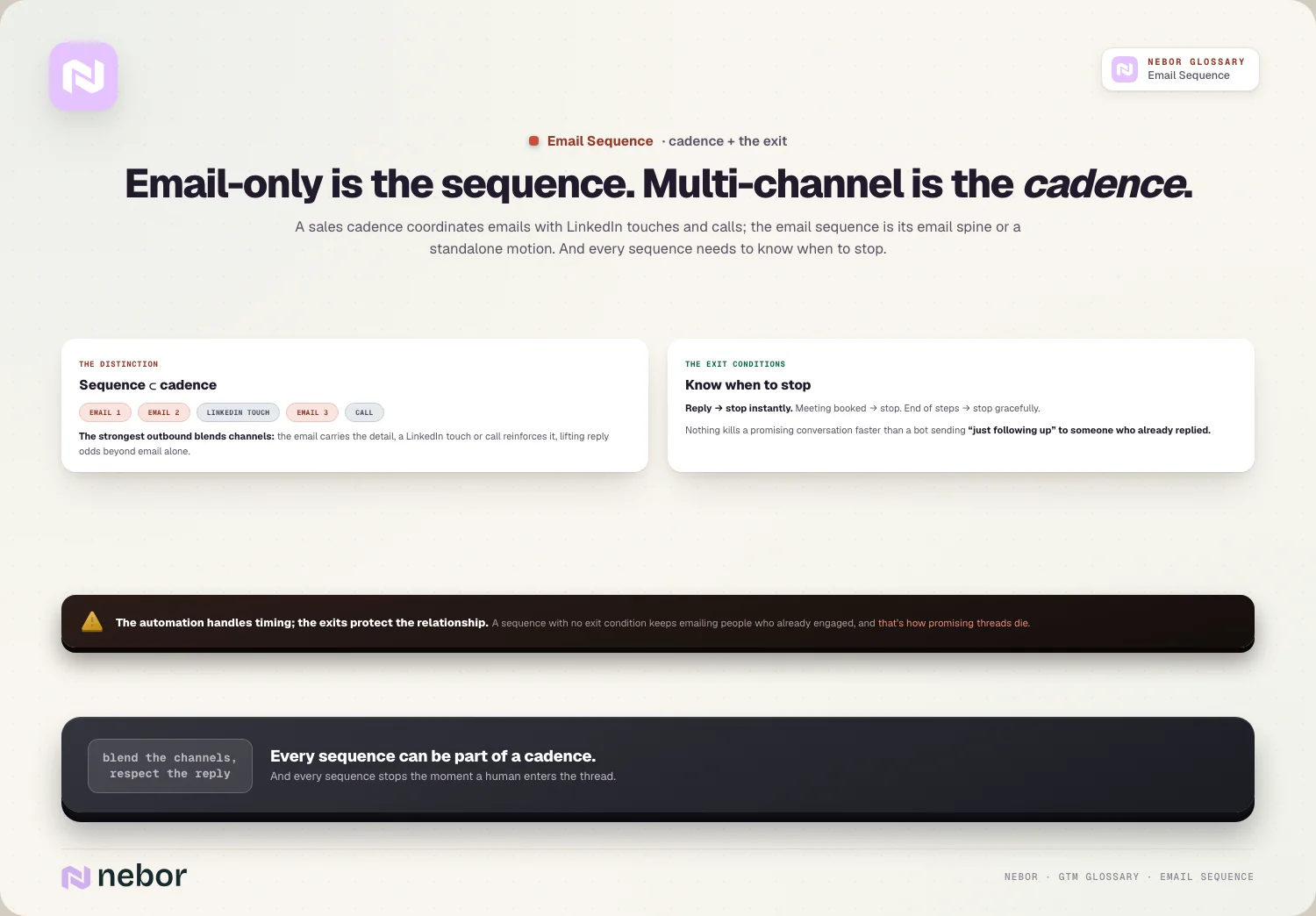
In practice the strongest outbound blends channels, so your email sequence works alongside multi-channel outreach instead of on its own. The email carries the detail, and a LinkedIn touch or a call reinforces it, which lifts the odds of a reply beyond what email alone can do.
Why does every email sequence need a clear exit condition built in?
Deciding what to send is only half a sequence, because knowing when to stop matters just as much, and this part is easy to get wrong with automation. Every sequence needs a clear exit condition.
The most important exit is the reply itself. The moment a prospect answers, the automated sequence has to stop, so they don't keep getting follow-ups after they've already engaged.
Nothing kills a promising conversation faster than a bot sending "just following up" to someone who already replied. Other exits include booking a meeting, or simply reaching the end of the steps without a response.
This is where careless automation embarrasses teams. A sequence with no exit condition keeps pushing into a thread someone already answered, which looks careless and damages trust. Building the exits in is a small step that protects every conversation the sequence starts.
How do you test and improve an email sequence as the replies come in?
A sequence is never finished, because there's always something to improve, and testing is how you find it. The goal is to learn what actually earns replies from your list.
The metric that matters is your reply rate, and especially positive replies, since that tells you the sequence is working as a whole.
You improve it through A/B testing, changing one thing at a time, like a subject line, an opening, or the number of steps, and seeing what moves the number.
Over time this turns into sequence optimization, a steady process of refining the steps based on real results instead of guesses. The teams that treat their sequences as living things, always being tested and tuned, end up beating whatever they started with by a widening margin.
How do email sequences affect the deliverability underneath them?
Sequences and deliverability are tightly linked, because your sequence is, by definition, more email going out. How you send it decides whether any of it reaches the inbox.
The risks come down to volume and repetition. Sending a high volume of near-identical emails across a sequence can trip spam filters, which is why senders vary their wording, sometimes with spintax, and keep their daily volume sensible.
A sequence that ignores deliverability can land every step in spam, and at that point the whole effort turns pointless.
So a good sequence respects the plumbing underneath it. Reasonable volume, varied content, clean lists, and proper authentication keep your sequence landing where people will see it. The best-written sequence in the world still fails if nobody ever gets the chance to see it.
Where do email sequences fit on the inbound versus outbound side?
Sequences work on both sides of the funnel, with different goals on each side. Knowing the difference helps you design each one well.
On outbound, a sequence is the cold motion, a series of touches built to earn a first reply from someone who's never heard from you.
On inbound, a sequence is usually a nurture or follow-up flow, sent to someone who already raised their hand, with the goal of moving them toward a meeting or a decision instead of starting from scratch.
The warm version can afford to be more direct, because the relationship already exists, while the cold version has to earn attention with every step. The mechanic stays the same even though the starting point differs, and both versions benefit from the same discipline of spacing, value, and clear exits.
What are the common email sequence mistakes that cost you replies?
Most underperforming sequences share the same handful of flaws, and they're all fixable. The most common is the empty follow-up that adds nothing and just nags, which trains people to ignore you.
Close behind is sending too many emails or spacing them too tightly, which tips you from persistent into annoying and hurts both your reputation and your brand.
Then there's the sequence with no exit condition, which keeps emailing people who already replied, and the one that ignores deliverability, so every clever step lands in spam.
The last quiet killer is never testing. A sequence you set up once and never touch slowly drifts out of date, while your competitors refine theirs. If you avoid these, you're already ahead of most of the cold email people receive.
What does a good cold email sequence look like, step by step?
It helps to make this concrete, so here's the shape we give the sequences we build, without any of the filler. The point is that each step has a distinct job.
The first email is short, leads with a specific reason for writing, and makes one clear, low-friction ask. A few days later, the second email adds a new angle or a piece of proof, so the thread moves forward instead of just getting bumped.
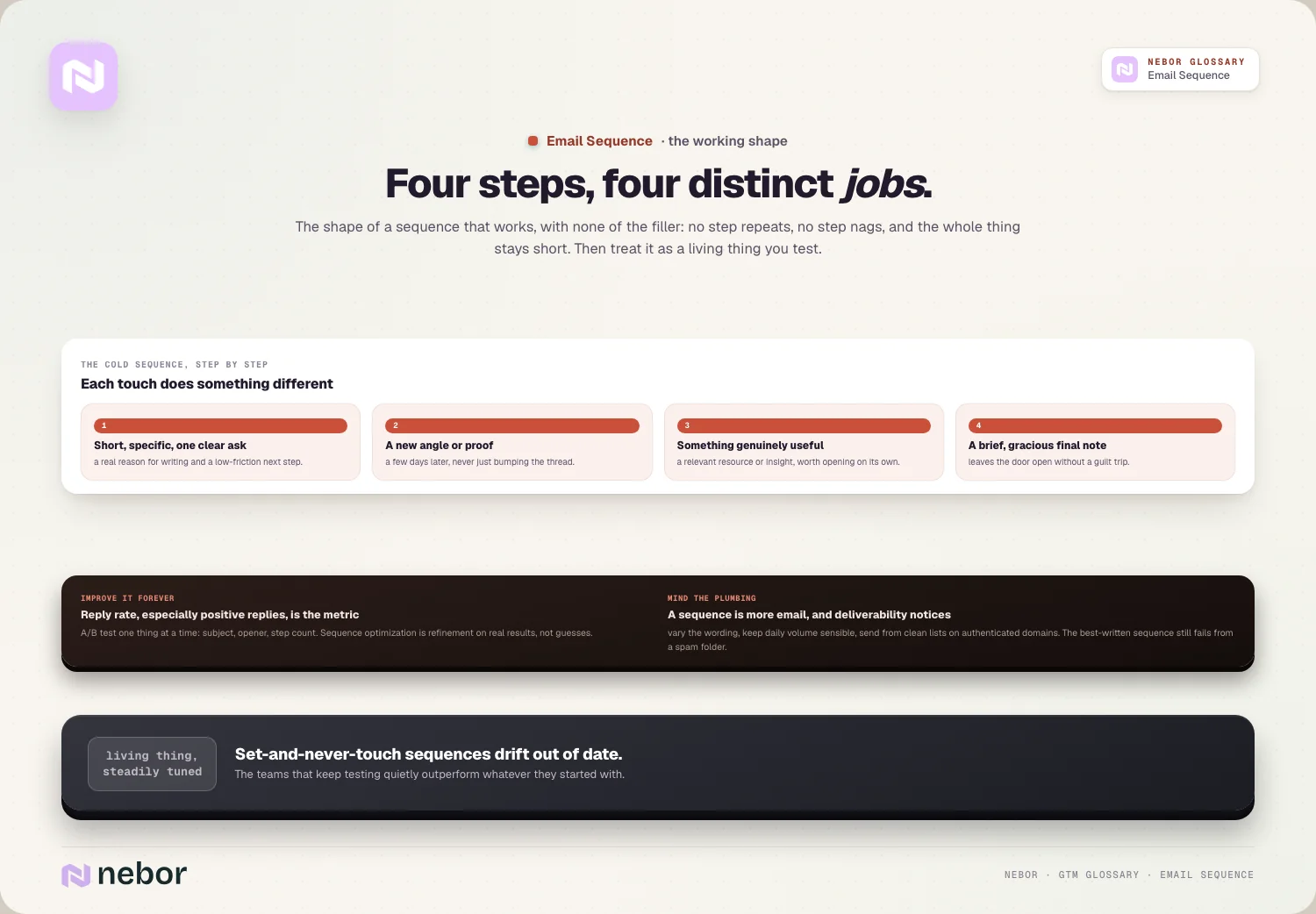
The third brings something genuinely useful, like a relevant resource or insight, and the fourth is a brief, gracious final note that leaves the door open.
Notice that none of the steps repeat, and none of them nag. Each one gives your prospect a fresh reason to engage, and the whole thing stays short. That's the difference between a sequence people reply to and one they report as spam.
Should you automate your whole sequence, or keep a human in it?
Sequences depend on automation, which raises a fair question about how much of them should be hands-off. The answer is that automation handles the sending, but judgment should stay human.
You let the tool handle the timing, the delays, and the mechanical follow-ups, because no person should be manually remembering to send a fourth email on day twelve.
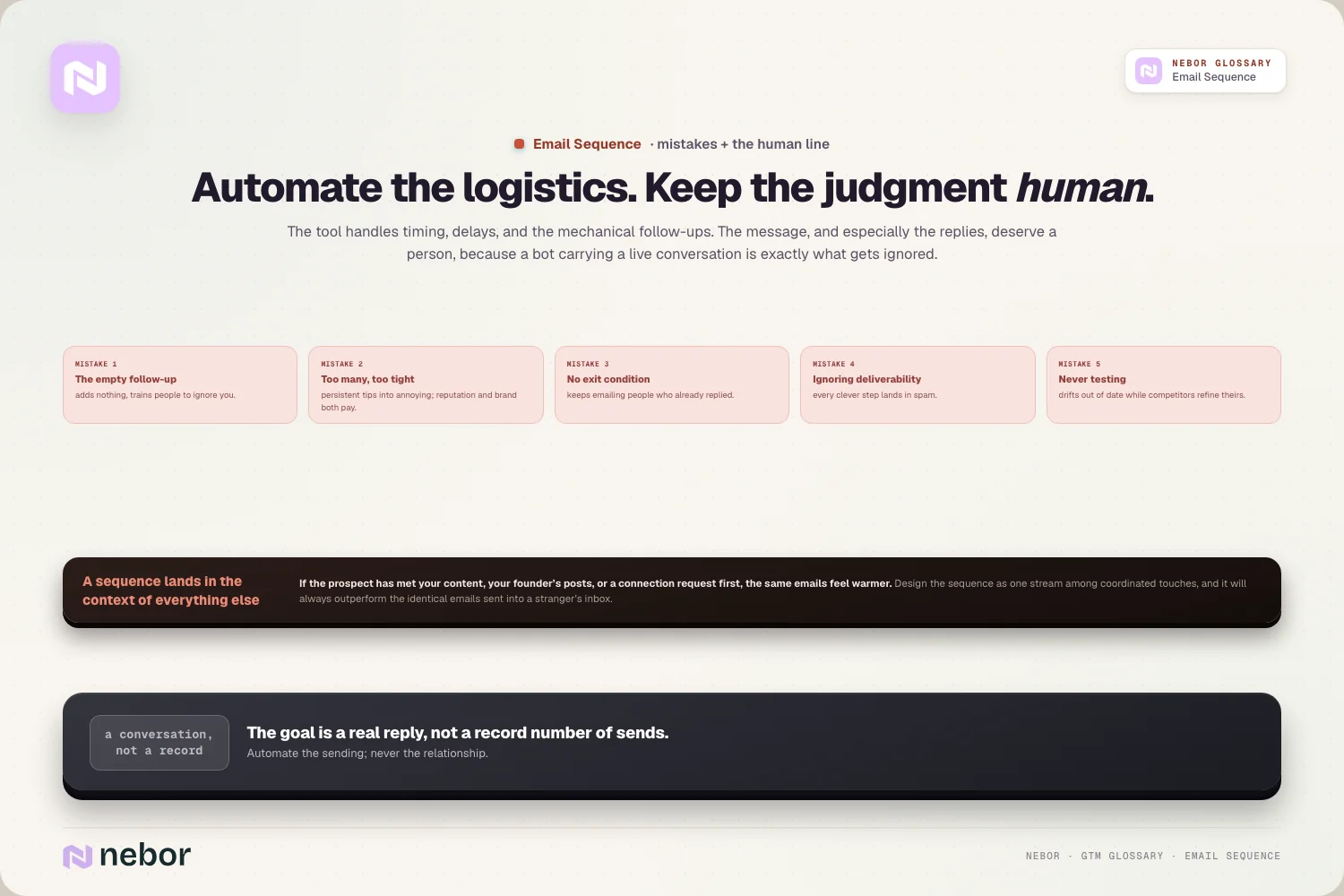
But the message itself, and especially the replies, deserve a human touch. AI and templates can draft and scale the steps through personalization at scale, but a person should make sure each one is relevant and on-brand.
The line we hold on every build is that automation owns the logistics, people own the judgment, and no bot ever carries a live conversation. The teams that blur that line end up with sequences that feel robotic, and robotic is exactly what gets ignored.
How does an email sequence fit with the other touchpoints you send?
It helps to see a sequence as one stream among the touchpoints a prospect gets from you. The emails don't exist in a vacuum, and they land differently depending on what else the person has seen.
If a prospect has come across your content, seen your founder on LinkedIn, or had a connection request before the sequence starts, your emails feel warmer and land better. The sequence works best as part of a coordinated set of touches rather than a cold stream on its own.
So when you design a sequence, the question to hold onto is what else the prospect is experiencing from you around it. A sequence that arrives alongside a little familiarity will always outperform the same emails sent into a complete stranger's inbox.
Share this post
Sequences
Glossary
Related glossary items
Understanding the core GTM concepts

Ready to build your pipeline











