

In this post:
A cold-to-warm pipeline is a system for turning cold prospects into warm ones before you ever ask them for anything. Instead of going straight from a cold list to a sales pitch, you spend time making those people familiar with you first.
By the time you reach out, the person already recognizes your name, has seen your content, or has shown some small sign of interest. The conversation starts from a bit of warmth instead of from a standing start.
It's the deliberate bridge between cold outbound and warm outreach, and it's one of the highest-impact things you can build in go-to-market.
TL;DR
A cold-to-warm pipeline is the path you build to warm up cold prospects before you sell to them. You start with a cold list, then create familiarity and interest, so your outreach lands on someone who already knows you.
Most teams skip this step and pay for it later. They take a cold list, send a cold pitch, and then wonder why the reply rate is low. If you warm people up first, the same outreach works far better, because you're no longer a complete stranger.
It's the opposite of untargeted mass outreach. Instead of pitching strangers, you move people from cold to warm on purpose, and you only reach out with a real ask once they're ready.
What a cold-to-warm pipeline actually is when you look under the hood
A cold-to-warm pipeline is a repeatable process that takes someone who's never heard of you and gradually makes them familiar, until they're warm enough to have a real conversation. The word pipeline matters, because this is a sequence of stages instead of a single touch.
You still start where outbound starts, with a cold list of the right people, built from your ICP. The difference is in what happens next, because instead of pitching right away, you put those people through steps designed to build recognition and interest first.
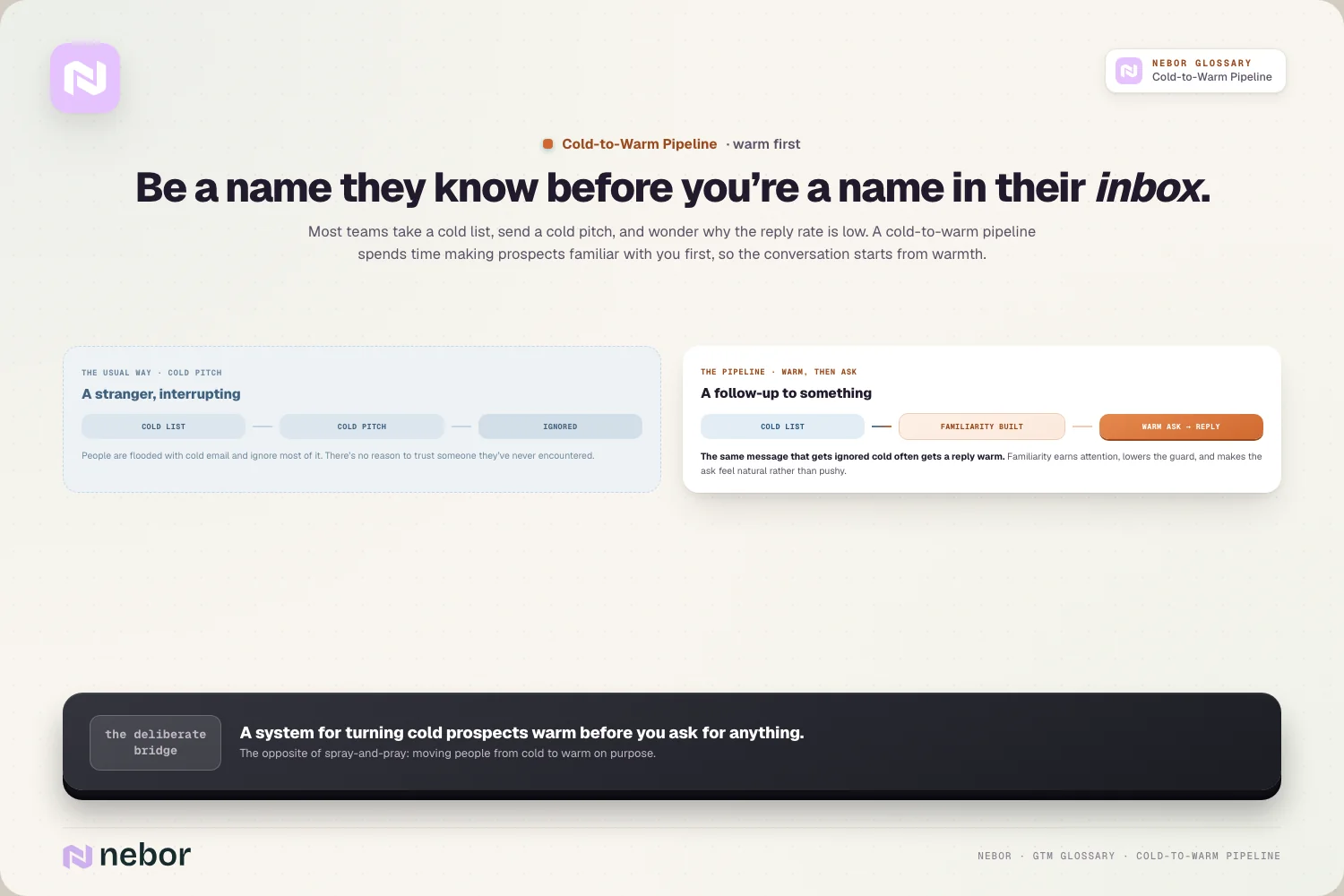
When you finally reach out with an ask, the person on the other end isn't a stranger anymore. They've come across you before, and that changes how they respond.
Why warming a prospect up first beats pitching them completely cold
Cold outreach to a total stranger is hard, and it's getting harder. People are flooded with cold emails and ignore most of them, because there's no reason to trust someone they've never encountered.
Warming someone up first removes a lot of that resistance. If a prospect has seen your content a few times, or recognizes your name from LinkedIn, your message lands differently. It feels like a follow-up to something instead of an interruption from nowhere.
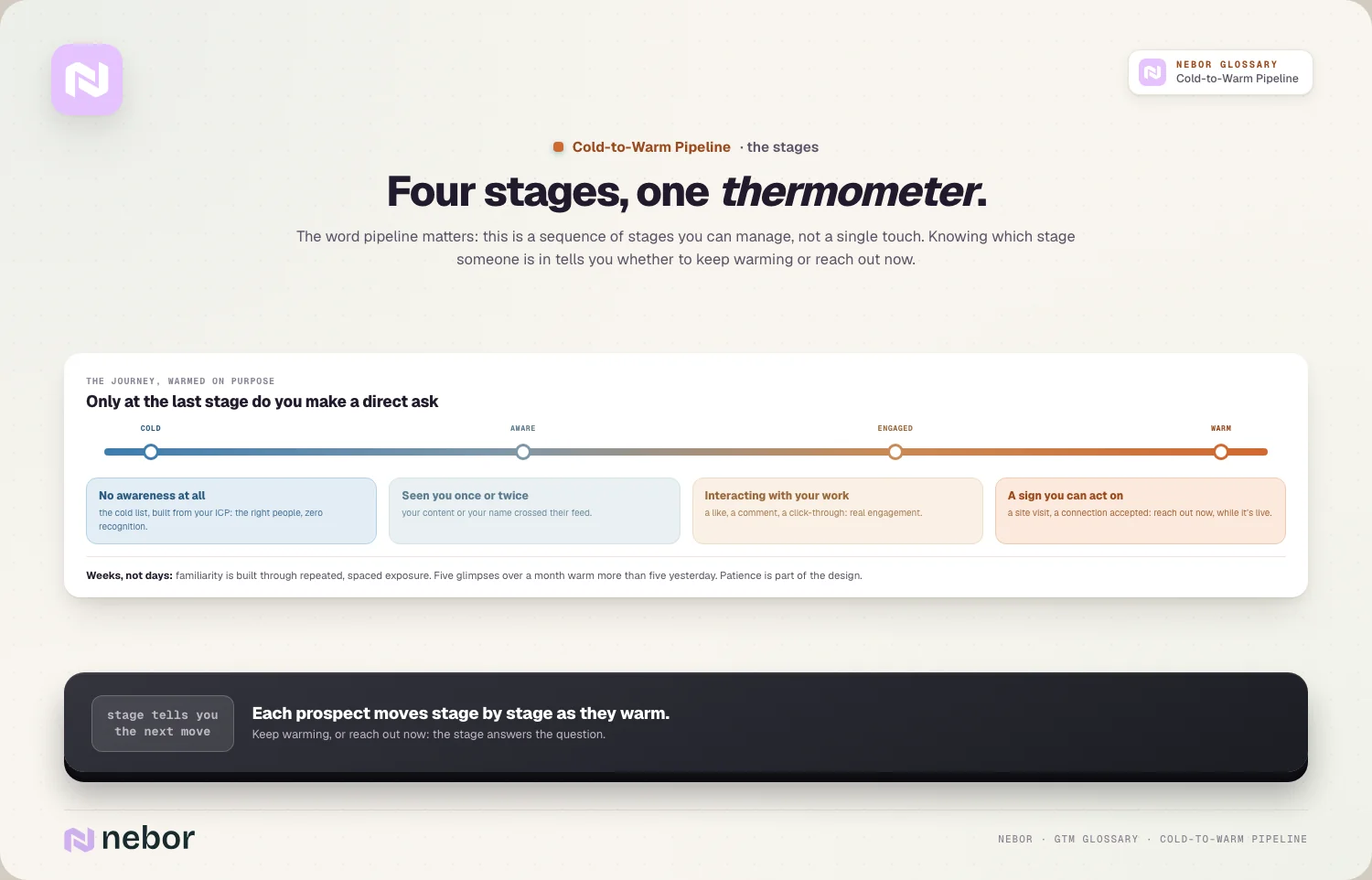
That familiarity does a lot of quiet work. It earns you a little attention, it lowers the prospect's guard, and it makes your eventual ask feel natural rather than pushy. The same message that gets ignored when it's cold often gets a reply once the person is warm.
How you turn a cold prospect into a warm one over a few weeks
Warming people up is its own craft, and there are a few reliable ways to do it. Most of them are about showing up in front of the right people, helpfully and repeatedly, before you ask for anything.
The most common way we see it done is content. If you publish useful things on LinkedIn and your target prospects keep seeing them, you become familiar over time, which is the heart of social selling and content-led outbound.
Light engagement helps too, like following a prospect, commenting on their posts, or reacting to their work before you ever send a message.
You can also warm people with retargeting ads, a newsletter, or a founder building an audience your buyers follow. The exact mix matters less than the principle. You're earning a little recognition and goodwill first, so your outreach isn't the first time they've heard from you.
There's a soft channel and a hard channel to all of this, and the best pipelines use both. The soft channel is broadcast warming, where your content, your founder's posts, and your ads put your name in front of a whole list at once without singling anyone out.
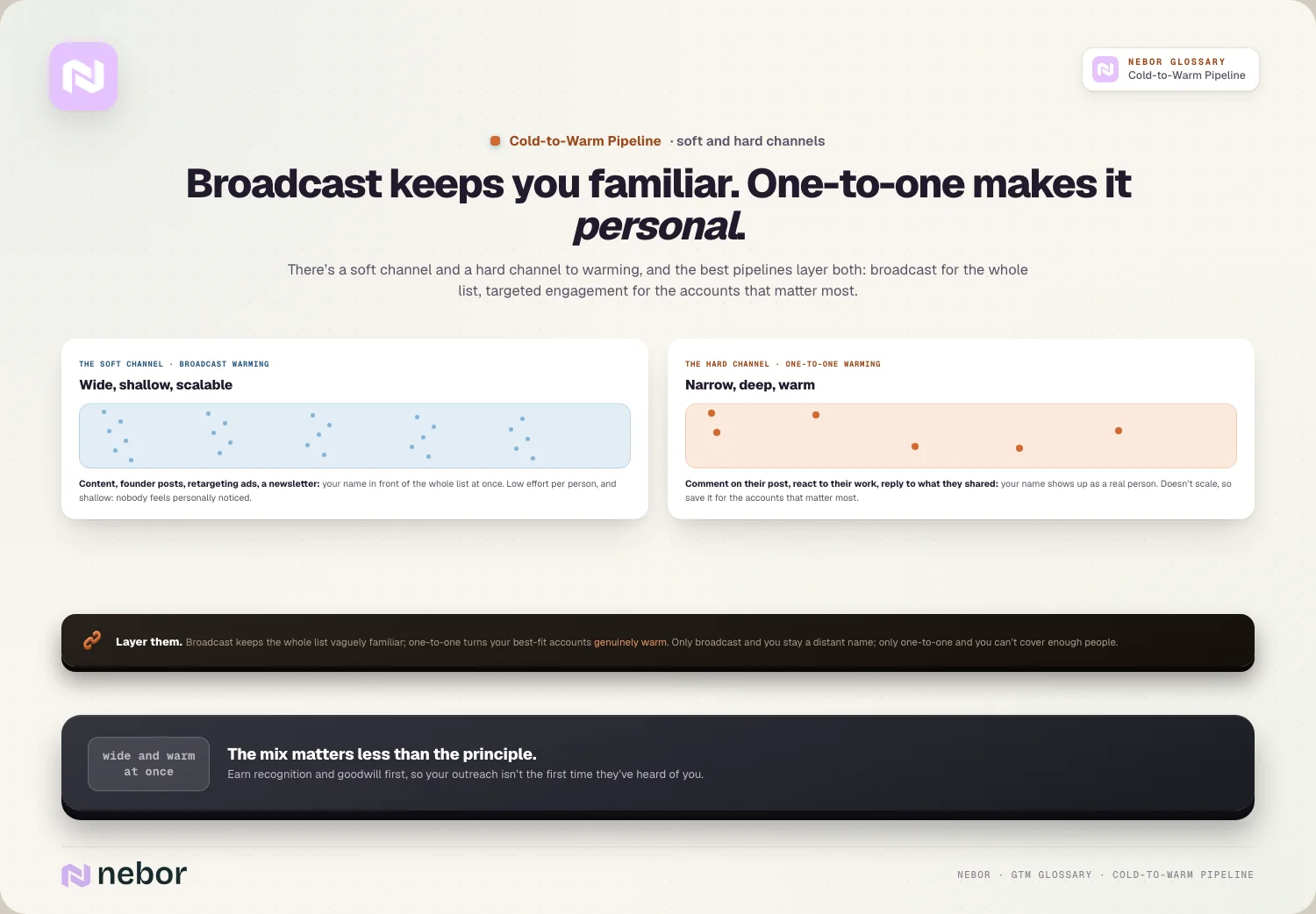
It's low effort per person and it scales, but it's shallow, because nobody feels personally noticed.
The hard channel is one-to-one warming, where you engage a specific prospect directly before you ever pitch. You comment on their post, you react to their work, you reply to something they shared, all so your name shows up in front of them as a real person.
It doesn't scale the way broadcast does, but it's far warmer, so you save it for the accounts that matter most.
The strength comes from layering the two. Broadcast warming keeps you familiar to the whole list, and targeted one-to-one warming turns your best-fit accounts properly warm.
If you only broadcast, you stay a vaguely familiar name, and if you only do one-to-one, you can't cover enough people. Together, they move a list from cold to warm at a scale you could never reach by hand.
The stages your prospects move through on their way from cold to warm
It helps to picture the journey as a few clear stages, because that's what makes it a pipeline you can manage on purpose. Each prospect moves from one stage to the next as they get warmer.
They start cold, with no awareness of you whatsoever. Then they become aware, having seen your content or your name once or twice. Next they become engaged, interacting with something you put out, and finally they become warm, showing a real sign of interest you can act on.
Only at that last stage do you make a direct ask. Knowing which stage someone is in tells you what to do next, whether that's keep warming them up, or reach out now because they're ready.
The reason stages matter is that they stop you from treating everyone the same. A cold prospect needs more exposure, an aware prospect needs a reason to engage, and a warm one needs a timely, relevant message before the interest fades.
If you tag where each person stands, the pipeline becomes something you can steer instead of a vague hope that people warm up on their own.
How buying signals tell you the moment a warm prospect is ready
The real trick is knowing the moment to switch from warming someone up to reaching out. That moment is usually marked by a signal.
When a prospect you've been warming visits your site, engages closely with a post, or hits a trigger like a relevant job change, that's a buying signal telling you they're ready. The warm-up created the familiarity, and the signal provides the timing.
This is where the pipeline really pays off. You can catch these moments with tools that show your team when a warmed prospect lands on your site, like the website visitor workflow we build, so you reach out while the interest is still fresh instead of guessing.
Why a cold-to-warm pipeline belongs right between outbound and inbound
A cold-to-warm pipeline is interesting because it doesn't fit neatly into either box. It starts like outbound, with a cold list you chose, but it works like inbound, by creating interest that pulls the prospect toward you.
The blend is exactly the point, because you use outbound targeting to decide who to warm, then generate inbound-style signals from those people, so your eventual outreach is really inbound-led outbound. It's a form of warm outbound that you manufacture on purpose.
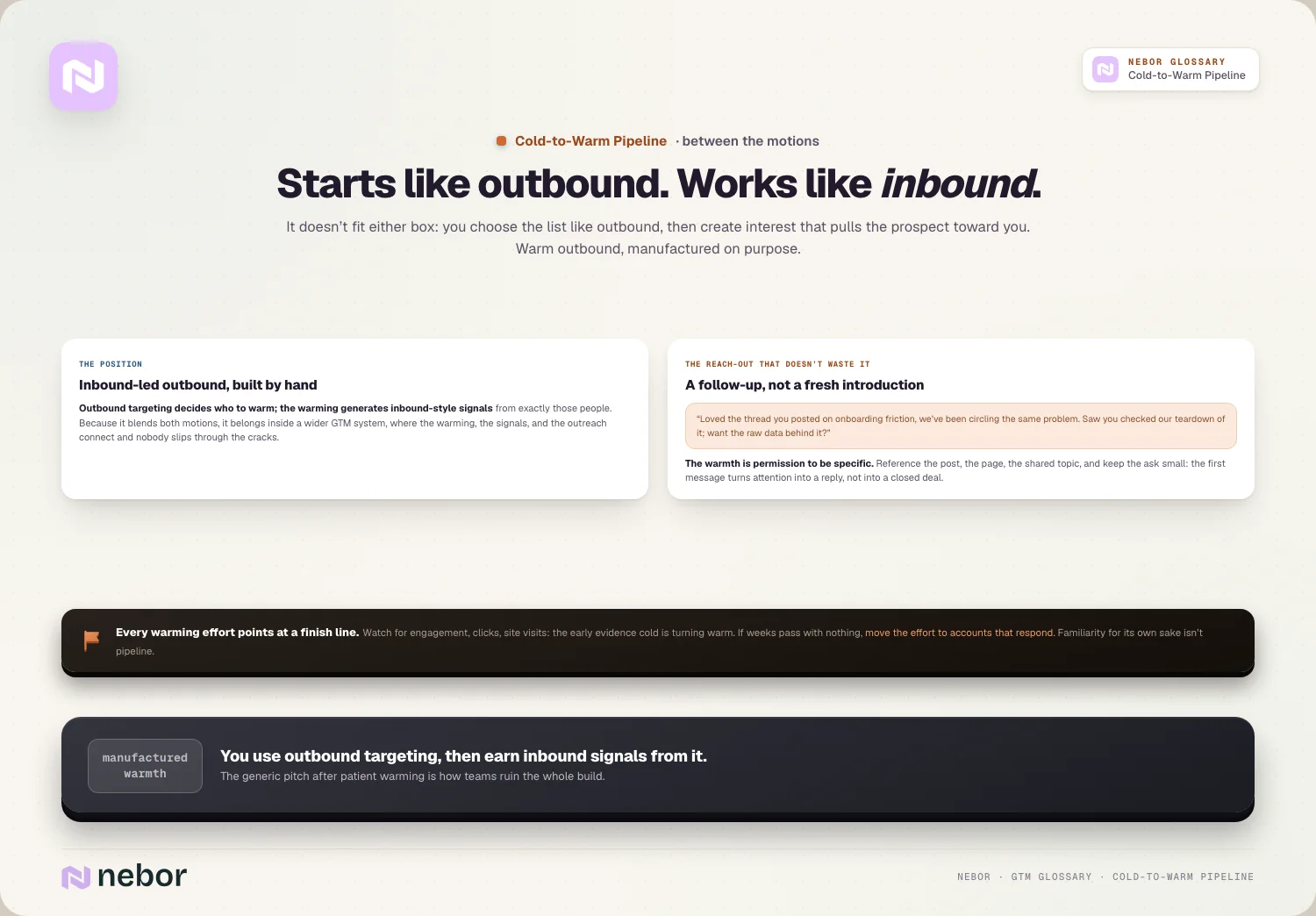
Because it blends both motions, it works best as part of a wider GTM system instead of a one-off campaign. The warming, the signals, and the outreach all need to connect, so a warmed prospect never slips through the cracks of your CRM.
How to reach out the right way once a prospect has finally gone warm
Warming people up is only half the pipeline. The other half is the reach-out, and a lot of teams do all the patient warming work and then ruin it with a generic pitch. The whole point of warming is that your message can now reference something real.
So your outreach should sound like a follow-up instead of a fresh introduction. You can mention the post they engaged with, the page they visited, or the topic you've both been circling, so the message connects to a shared thread.
The warmth you built is your permission to be specific, and a specific, relevant note from a name they recognize lands completely differently than a cold template.
Keep the ask small and easy to say yes to. A warm prospect doesn't owe you a meeting just because they've seen your content, so a soft, low-pressure opener usually beats a hard pitch. You earned a little attention, and the job of the first message is to turn that attention into a reply, and closing the deal can wait.
How long warming a prospect really takes and how to tell it's working
Clients ask us for a number on how long warming takes, and the honest answer is that it varies, but it's usually weeks rather than days.
Familiarity builds through repeated, spaced exposure, so a prospect who sees you a handful of times over a month is warmer than one who saw you five times yesterday. Patience belongs to the design itself here.
The way to know it's working is to stop guessing and watch for response. Are the prospects you've been warming starting to engage with your content, accept connection requests, click through, or land on your site?
Those small actions are the early evidence that cold is turning into warm, and they tell you which accounts are ready for the next step.
The mistake is to treat warming as an open-ended activity with no finish line. Every warming effort should be pointed at a moment where you reach out, so you're not building familiarity for its own sake.
If weeks pass and a prospect never warms up, that's useful information too, because it tells you to stop spending effort there and move it to accounts that respond.
How website deanonymization turns quiet warming into a clear signal
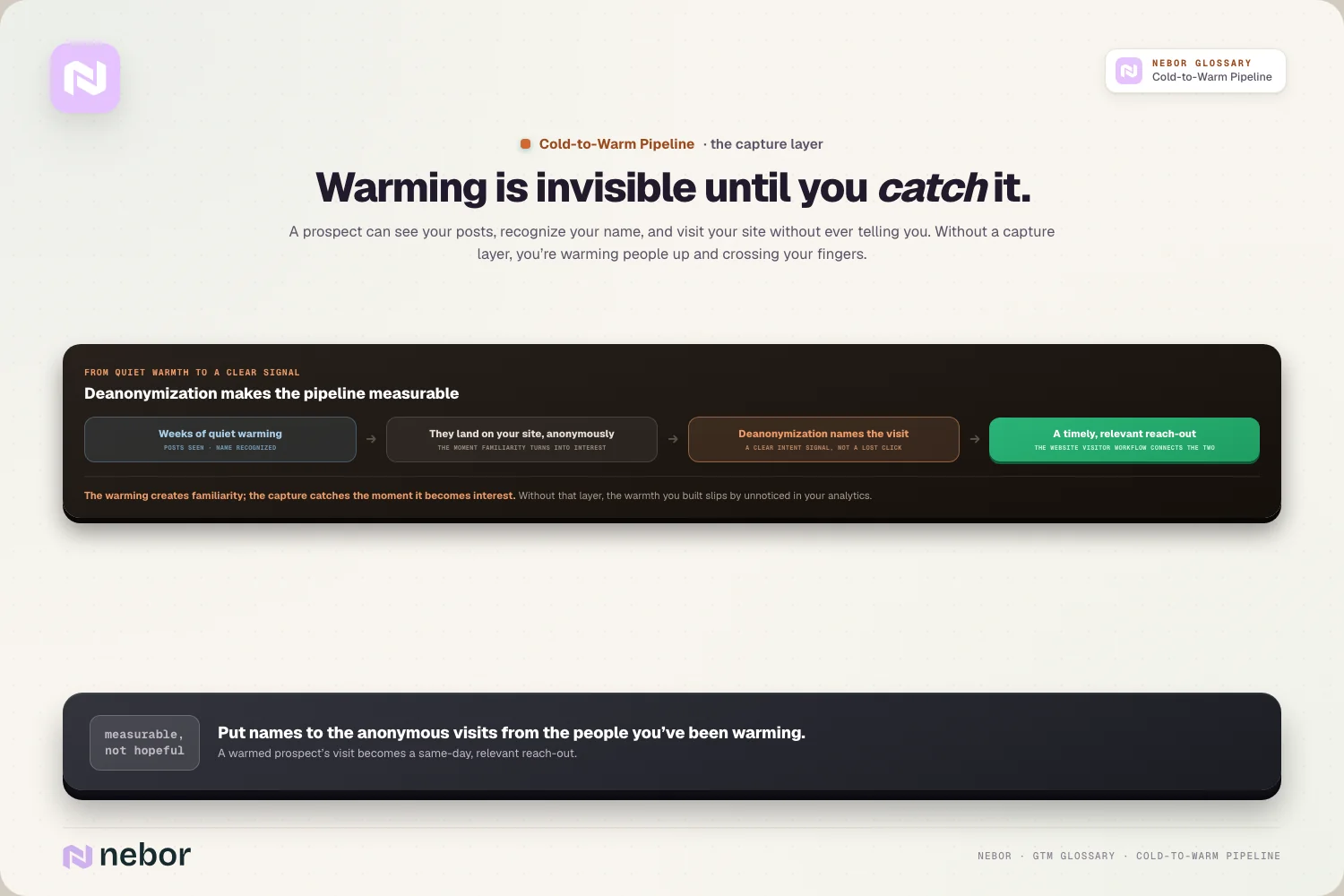
One of the quietest problems with warming is that a lot of it is invisible. A prospect can see your posts, recognize your name, and even visit your site without ever telling you they're interested, so the warmth you built can slip by unnoticed, and that's exactly where capturing signals changes the game.
Website deanonymization is how you put names to the anonymous visits, so when a prospect you've been warming lands on your site, you find out about it. That turns a quiet, invisible moment into a clear intent signal you can act on, instead of a click that disappears into your analytics.
This is the piece that makes the whole pipeline measurable instead of hopeful. The warming creates the familiarity, the deanonymization catches the moment that familiarity turns into interest, and our website visitor workflow connects the two.
Without that capture layer, you're warming people up and then crossing your fingers that you notice when they're ready.
The mistakes that keep your cold-to-warm pipeline stuck at cold
There are a few common ways this goes wrong, and most of them come from treating it as a slogan rather than a system. The biggest mistake is skipping the warming entirely and going straight to the cold pitch, which is just normal cold outreach with a nicer name.
Another is warming people up with no plan to ever reach out, so you build an audience but never turn it into pipeline, and the warming has to lead somewhere. A third is treating warm-up as just more touches, sending more cold messages instead of building real familiarity and goodwill first.
The last common mistake is missing the signal. If you warm people up but don't watch for the moment they're ready, you'll reach out at the wrong time, or not at all. The warming and the timing have to work together.
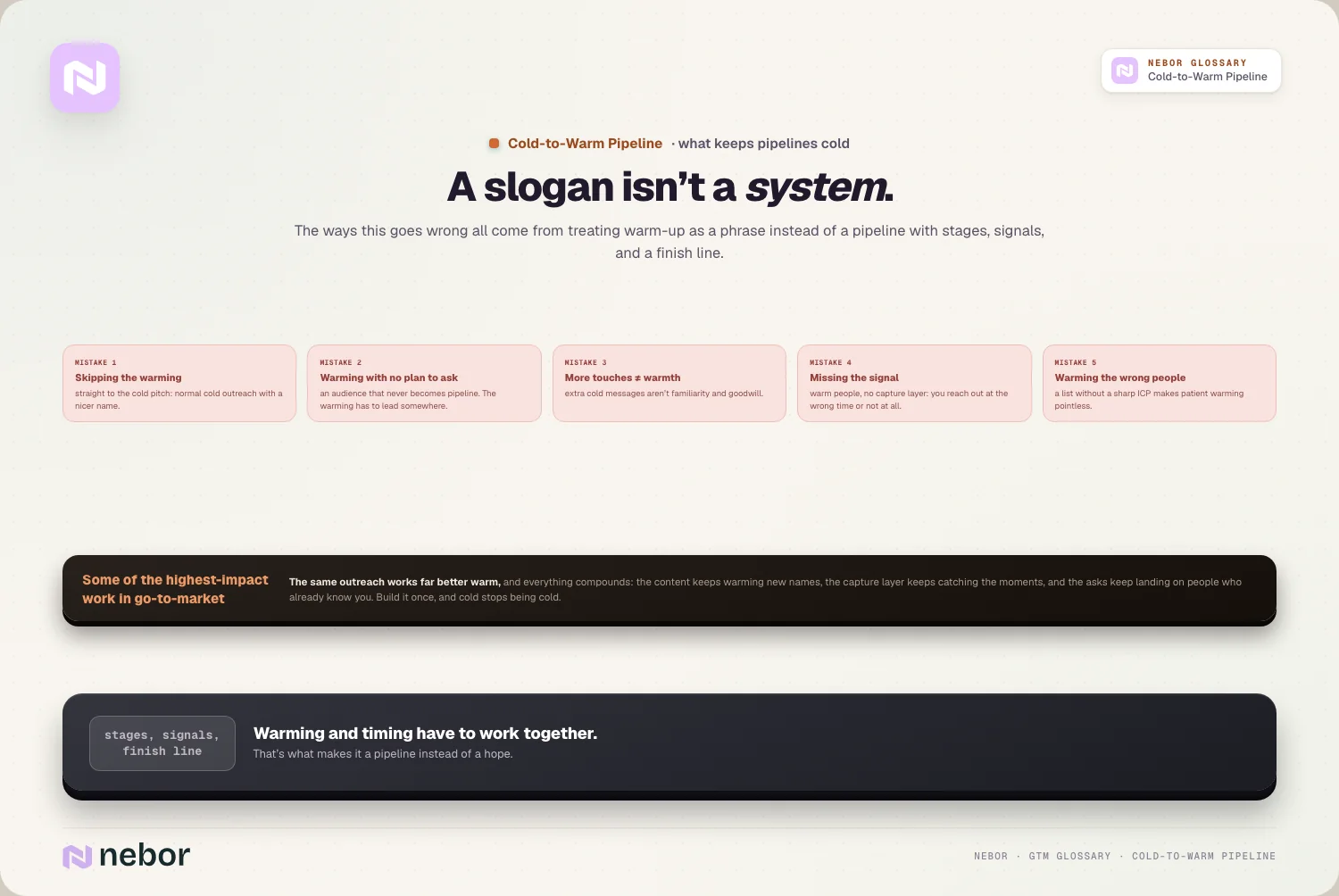
A subtler mistake is warming the wrong people. If your cold list isn't built from a sharp ICP, all that patient warming just makes the wrong accounts familiar with you, and familiarity with a bad-fit prospect is wasted effort. The pipeline only pays off if the people you warm are people who might really buy.
One more trap catches almost everyone, and it's impatience. Because warming takes weeks, it's tempting to cut it short and pitch before the familiarity has really set in, which gives you the worst of both sides.
You spent the effort, but you reached out too early to get the benefit, so the prospect still feels cold. If you start the pipeline, let it play out long enough to do its job.
Why a cold-to-warm pipeline is some of the highest-impact work in go-to-market
Underneath everything, a cold-to-warm pipeline is a bet on a simple truth. People respond to names they recognize, so the work of becoming recognized before you ask for anything pays off in every message that follows.
That's why the work pays off so widely. You do the warming once, across a list, and then every reach-out lands on someone who already knows you, so the same effort that used to get ignored now gets replies.
You're not working harder on the pitch, you're changing the conditions the pitch lands in, and that does far more for you than another round of subject-line tweaks.
The teams that win at this stop thinking of warming and outreach as separate jobs. They build one connected system where familiarity, signals, and the eventual ask all feed each other, so a warmed prospect never slips through and a ready prospect never gets reached too late.
If you build that loop and keep it alive, your outbound stops feeling like cold outbound at all, and starts feeling like people raising their hands because they already know who you are.
Share this post
Outbound
Intent
Glossary
Related glossary items
Understanding the core GTM concepts




Ready to build your pipeline











