In this post:
For years, go-to-market teams have argued about inbound versus outbound as if you had to pick a side. Inbound purists insist attracting buyers with content is the only sustainable path, while outbound believers swear by reaching out, and both defend a wall between two things that work far better together.
Allbound is the answer that stops treating them as rivals. Instead of choosing one motion, you build inbound and outbound into a single synchronized system, so the buyers your content attracts and the buyers your outreach targets feed the same engine, and each motion makes the other work better.
Allbound is a go-to-market strategy that combines inbound and outbound into one coordinated system, where every touchpoint feeds the next. Rather than keeping content and cold outreach in separate silos, it synchronizes them so attraction and proactive engagement reinforce each other across the buyer journey.
The reason it beats picking a side is that inbound and outbound each have real weaknesses the other fixes. Inbound is slow to build but sustainable, outbound is fast but easy to ignore, so blending them captures the strengths of both while canceling out the limitations that make either one frustrating alone.
TL;DR
Allbound is a strategy that treats inbound and outbound as one synchronized system instead of competing motions, so content attraction and proactive outreach feed and reinforce each other.
It exists because the inbound-versus-outbound debate is a false choice, because each motion has weaknesses the other covers, and the best teams use both together instead of betting on one.
The two connect in a loop, where inbound content warms up outbound targets and outbound engagement drives people back to your content, so every touchpoint makes the next one more effective.
It only works with shared data and coordination between marketing and sales, because the entire premise is that signals from one motion inform the other instead of the two working blind to each other.
What allbound is underneath the label and why it works as one system
Allbound is best understood not as a third tactic but as a way of organizing the two you already have. It takes inbound and outbound, which most companies keep as separate programs owned by separate teams, and integrates them into one motion where the activities are deliberately coordinated instead of parallel.
The synchronization is the whole point, because it turns isolated tactics into a feedback loop. When your SEO, ads, content, and cold outreach are wired together, each one produces signals and audiences the others can act on, so the motions stop competing for credit and start compounding each other's results.
This is a strategic reframe more than a new set of tactics. You're still doing inbound and outbound, but you're doing them as one connected system instead of two disconnected ones, making allbound a matter of coordination and shared purpose instead of any single new channel.
What inbound and outbound each are and where each one falls short
To see why allbound works, it helps to be clear on the two halves. Inbound marketing attracts buyers by publishing content, like blogs, podcasts, and whitepapers, that draws interested people in over time, which is the demand-creation side captured by demand generation.
Outbound is the opposite direction of initiation, where you reach out to prospects instead of waiting for them to find you. Cold email, calls, and targeted ads all start the conversation from your side, which lets you reach specific accounts on your timeline instead of hoping the right buyers discover your content.
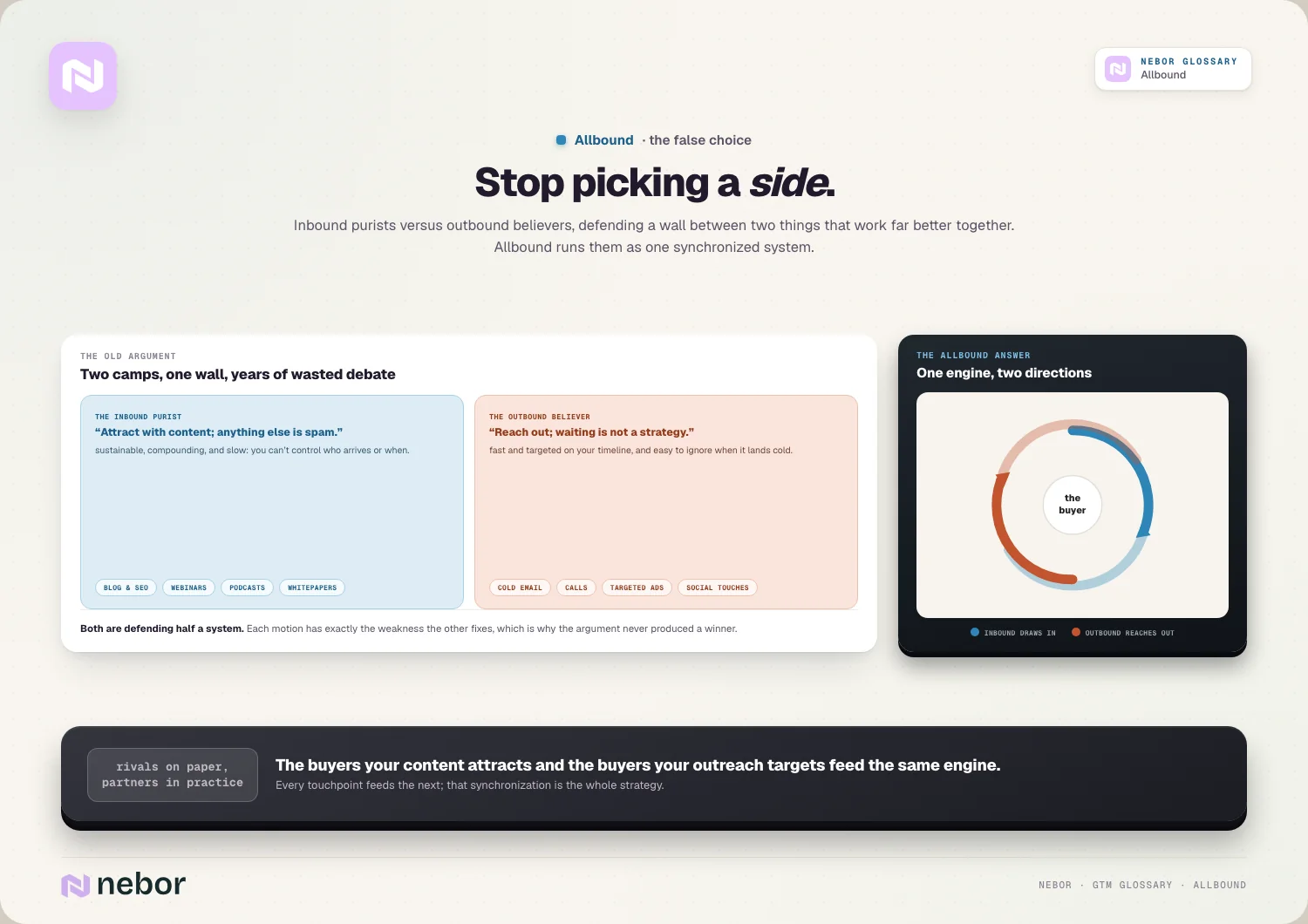
Each has a real weakness the other lacks. Inbound is slow to build and you can't control who it attracts or when, while outbound is fast and targeted but easy to ignore when it reaches someone cold, so leaning entirely on either one leaves a real gap that the other motion could fill.
Why pairing the two cancels out their individual weaknesses
The core argument for allbound is that inbound and outbound each amplify the other when combined. Outbound gives inbound the speed and targeting it lacks, while inbound gives outbound the credibility and warmth it lacks, so together they cover each other's blind spots instead of competing.
This is why the two motions produce more as a pair than as a sum. A prospect who has seen your content is far more receptive to your outreach, and a prospect you reach out to is far more likely to engage with your content, so each touch raises the return on the others instead of standing alone.
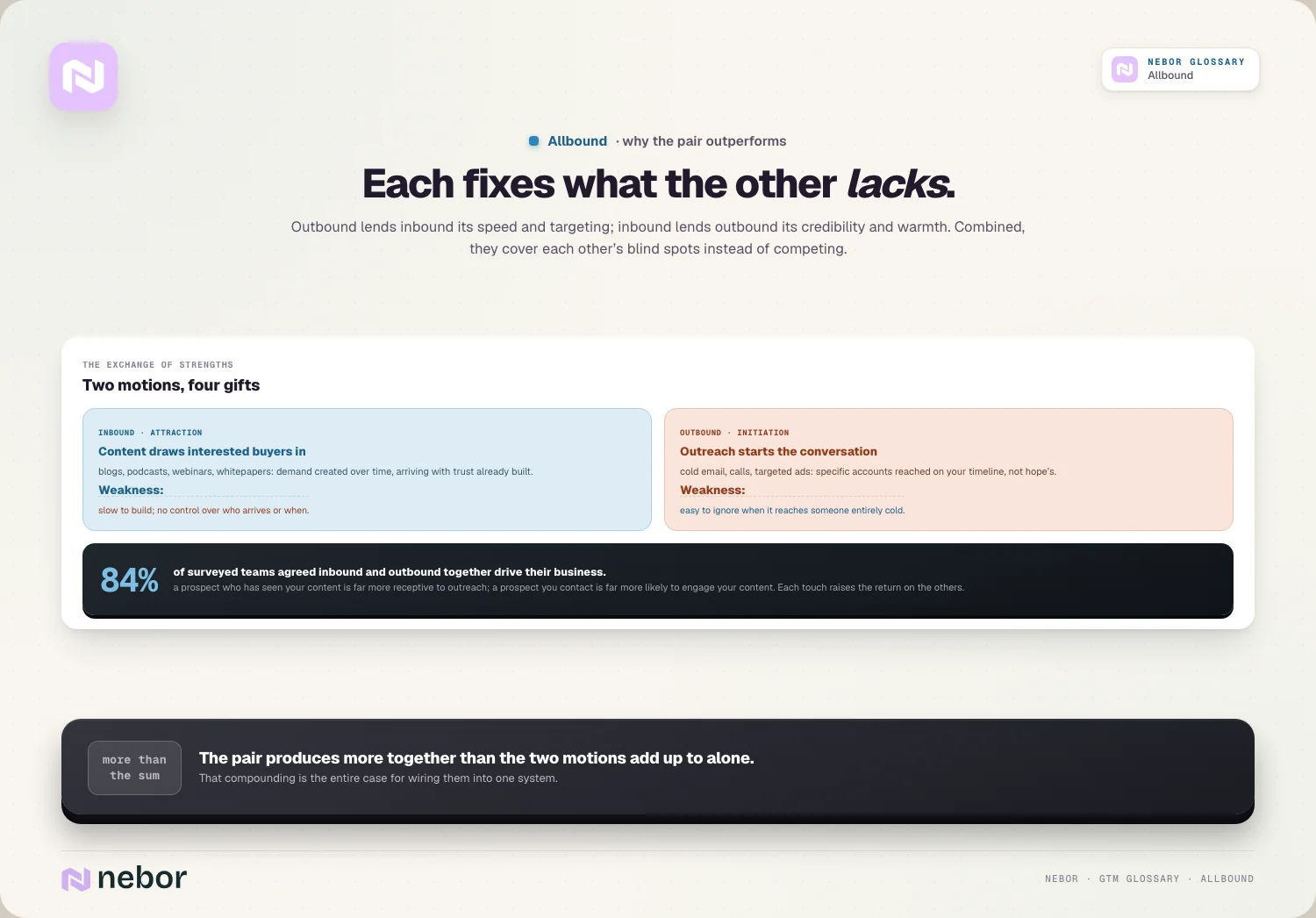
The evidence backs up the intuition, because teams that do both tend to outperform. One survey found that 84% of respondents agreed inbound and outbound tactics together drive their business, which reflects how rarely a modern go-to-market succeeds on a single motion alone.
How inbound and outbound feed each other in one continuous loop
The mechanics of allbound come to life in the loop between the two motions, where each one creates fuel for the other. A concrete example makes it clear: your team hosts a webinar or publishes a strong whitepaper, which is inbound attraction drawing interested people in.
An allbound strategy doesn't stop when the inbound piece is done. After the webinar, your sales team launches outbound plays targeting the people who attended, and even those who clicked the invite but didn't show, sending a follow-up that references the content and offers a one-on-one conversation.
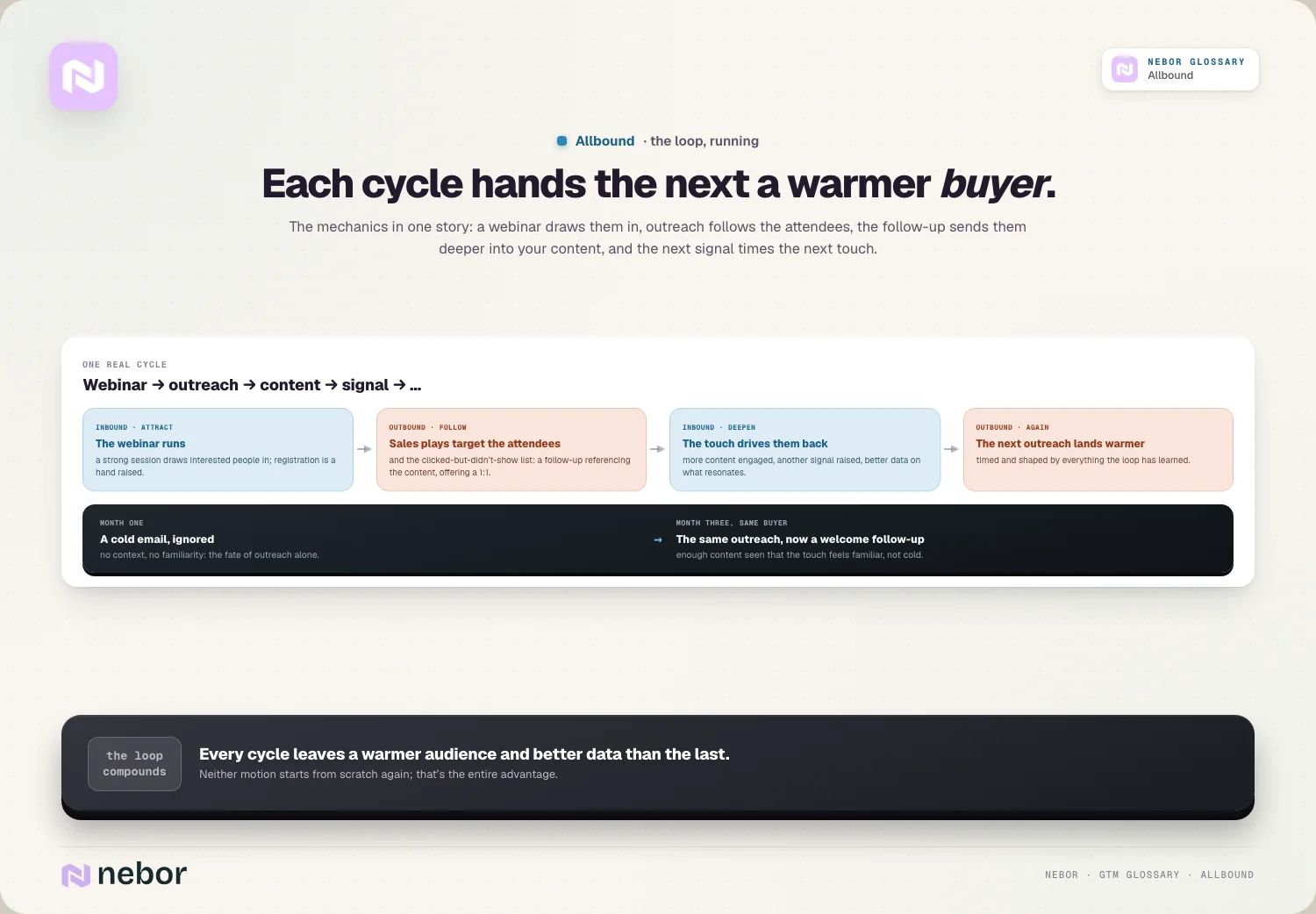
That outbound touch then drives people back into your inbound world, closing the loop. The prospect engages with more content, which raises another signal, which informs the next outreach, so the two motions keep handing each other warmer opportunities instead of each starting from scratch.
The longer this loop turns, the more it compounds. Each cycle leaves you with a warmer audience and better data on what resonates, so a buyer who might have ignored a cold email in month one has, by month three, seen enough of your content that the same outreach now lands as a welcome and familiar follow-up.
How allbound differs from inbound-led outbound as a broader strategy
Allbound is often confused with inbound-led outbound, but the two operate at different levels. Inbound-led outbound is a specific tactic, using an inbound signal like a content download to trigger a timely outbound touch, whereas allbound is the broader strategy of joining both motions into one integrated system.
The relationship is that inbound-led outbound is one play within an allbound approach. Triggering outreach off inbound signals is a powerful part of the loop, but allbound also includes outbound that drives people to inbound, pure inbound nurture, and cold outreach warmed by content, so it's the whole system.
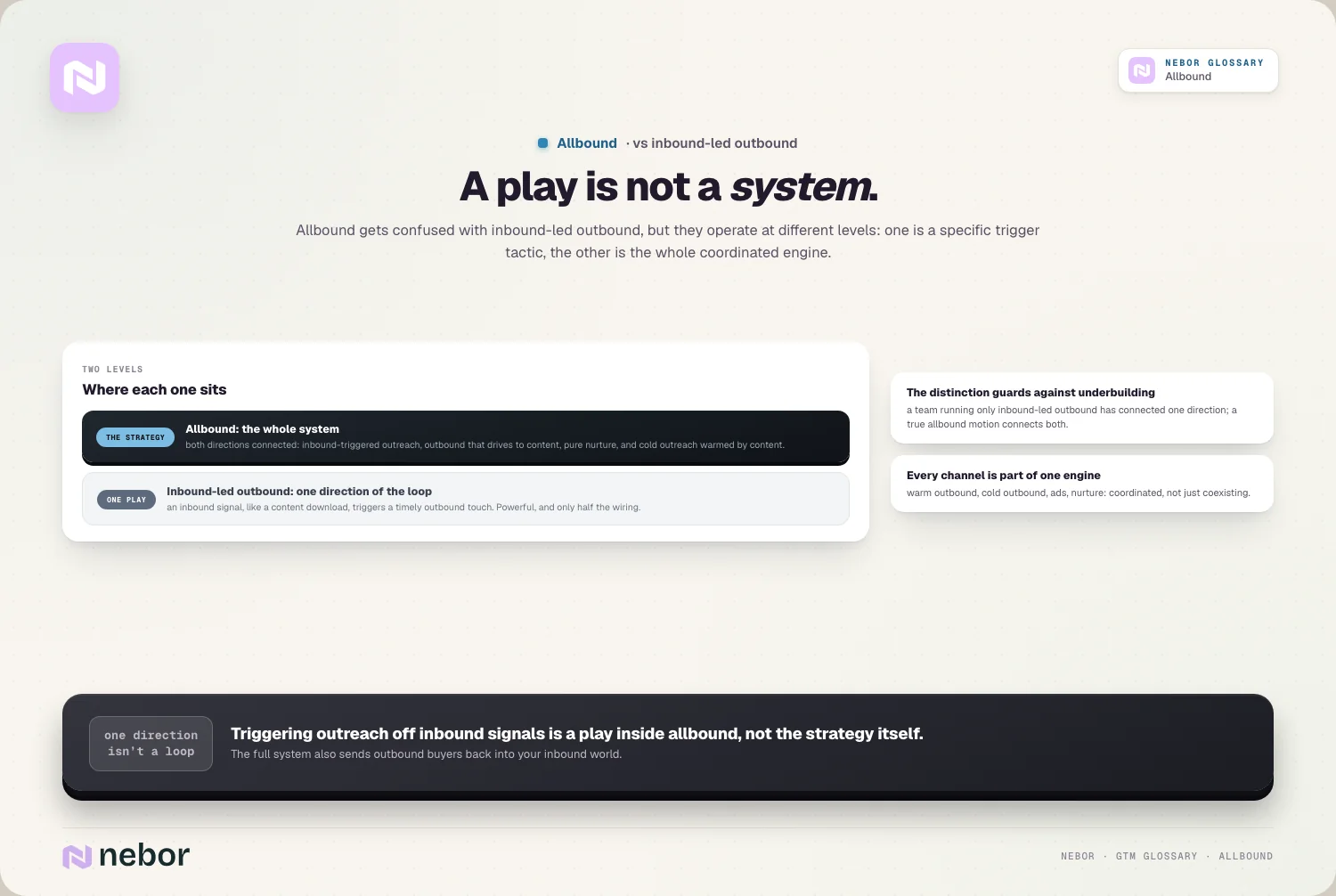
Seeing the distinction keeps you from underbuilding the strategy. A team that stops at inbound-led outbound has connected one direction of the loop, while a true allbound motion connects both directions and treats every channel, including warm outbound and cold, as part of one coordinated engine.
Why allbound depends on shared data and real coordination to work
Allbound only delivers if the two motions can see and act on each other, and we tell clients that visibility starts with shared data.
When marketing's inbound signals and sales' outbound activity live in separate systems, the loop breaks, so the whole strategy depends on both teams working from one connected view of each buyer.
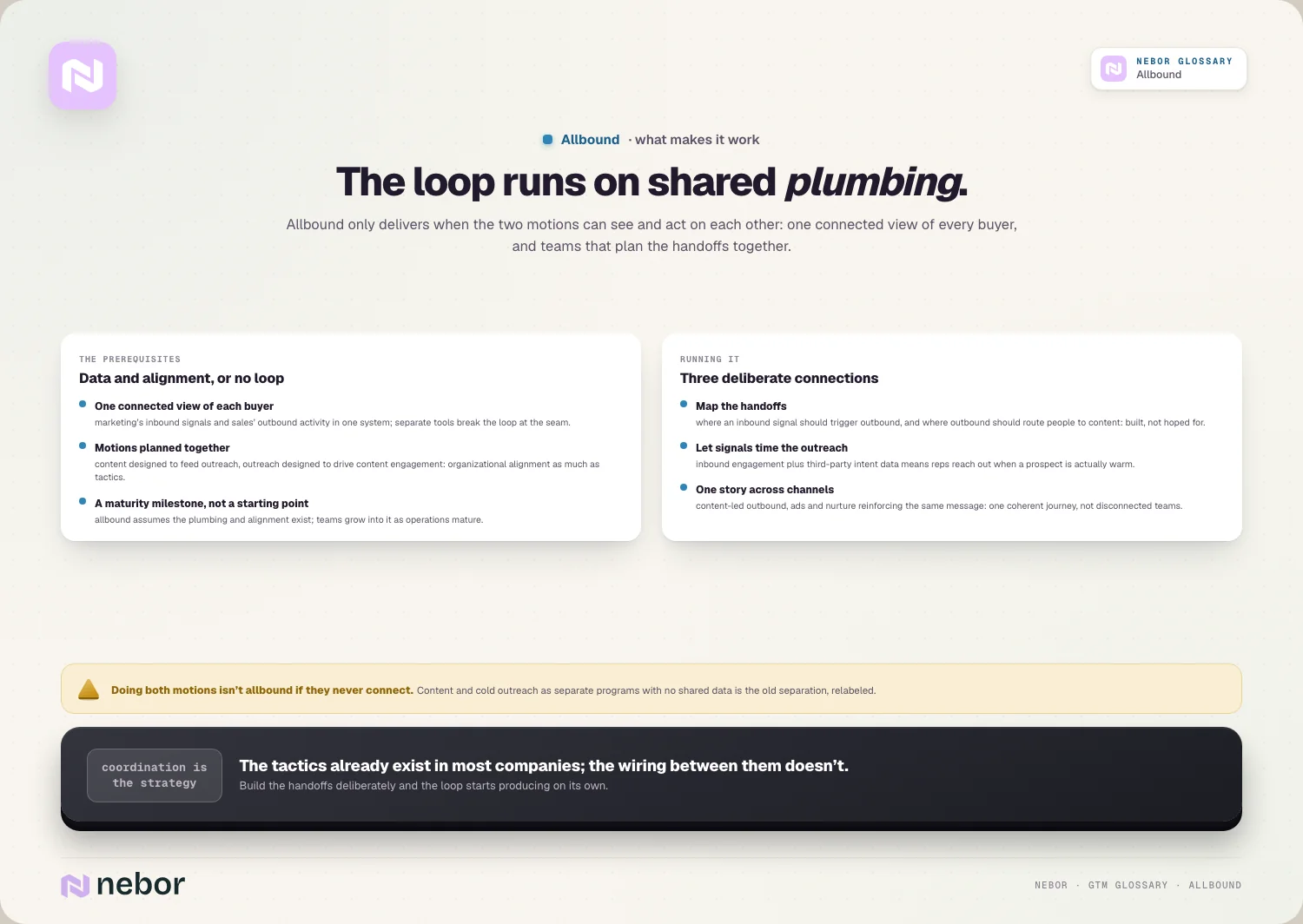
Coordination between marketing and sales is just as essential as the data. The motions have to be planned together, with content designed to feed outreach and outreach designed to drive content engagement, so allbound is as much organizational alignment as tactics, and it fails when the teams work in silos.
This is why allbound is a natural fit for a mature revenue engine instead of a starting point. It assumes the plumbing exists to pass signals between motions and the alignment exists to act on them, so teams often grow into allbound as their operations mature instead of launching with it fully formed.
How companies tend to build an allbound motion in day-to-day practice
Allbound done well starts with mapping how the two motions can feed each other instead of keeping them separate. You look for the handoffs, where an inbound signal should trigger outbound and where outbound should route people to content, and you build those connections deliberately instead of hoping they happen.
Using signals to time and target the outreach is the engine of the whole thing.
Feeding inbound engagement and third-party intent data into your outbound decisions means your reps reach out when a prospect is warm right now, and that timing is what turns coordinated allbound into far better results than either motion produces cold.
Coordinating the message across channels ties it together. When your content-led outbound, ads, and nurture all reinforce the same story across the multi-channel outreach a buyer sees, the buyer experiences one coherent journey instead of disconnected messages from teams that clearly aren't talking to each other.
Why allbound makes attribution harder and how teams handle the shift
One real cost of blending the motions is that attribution gets messier, because a single deal now touches both inbound and outbound in ways that are hard to untangle. When a buyer reads your content, gets an outbound email, attends a webinar, and then converts, no single channel deserves all the credit.
The honest response is to measure the system instead of fight over which channel won. Combining multi-touch attribution across the digital touches with self-reported attribution that asks buyers directly gives a far truer picture of how inbound and outbound worked together than crediting one touch.
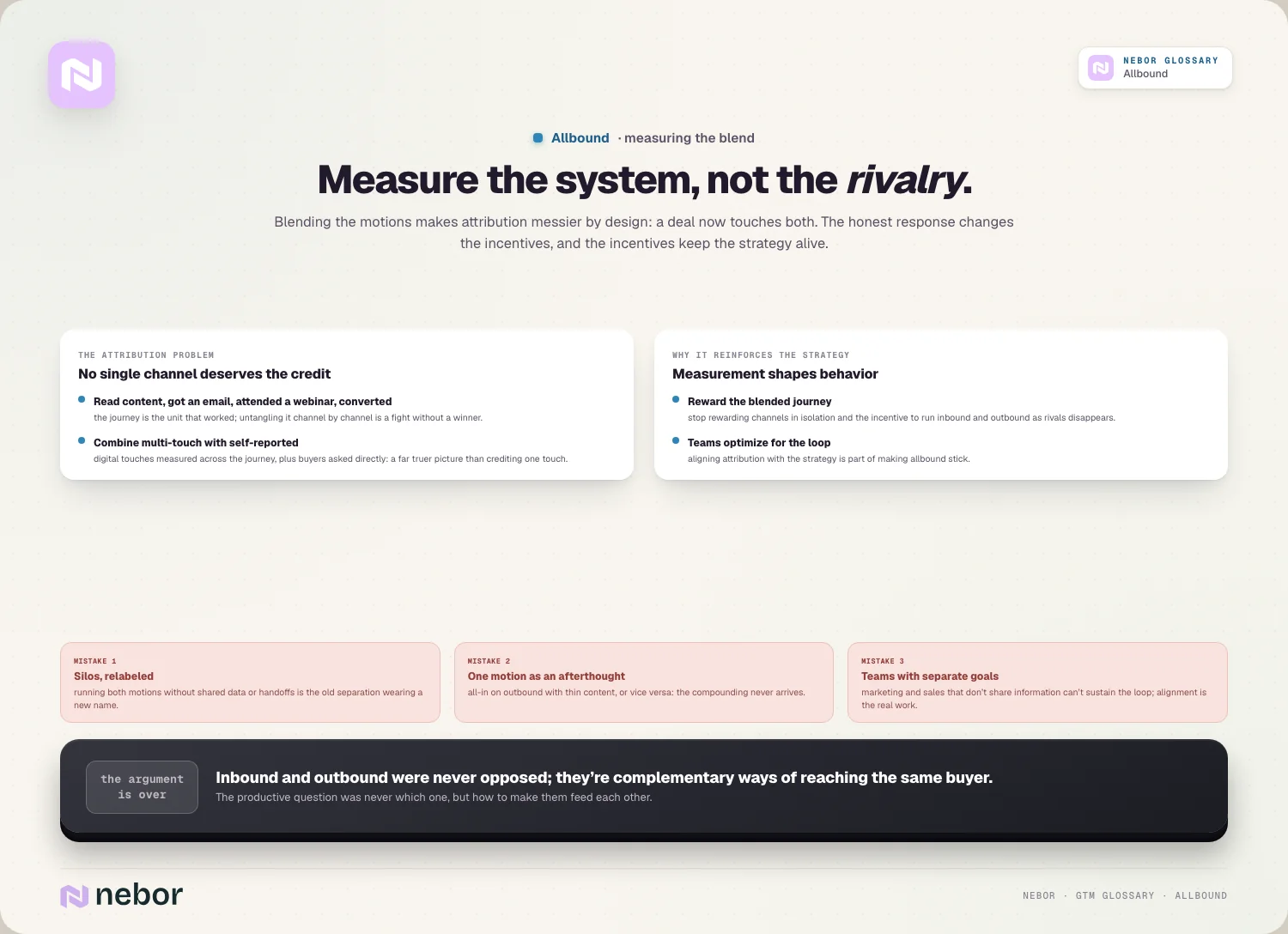
This shift in measurement reinforces the strategy in turn. Once you stop rewarding channels in isolation and start rewarding the blended journey, the incentive to pit inbound and outbound against each other disappears.
Instead, teams naturally optimize for the loop that allbound is built around instead of fighting over which channel gets the credit. The way you measure shapes the behavior you get more than any memo does, so aligning attribution with the strategy is part of making allbound stick.
The common mistakes teams make when they try allbound
The most common mistake, and the one our audits surface first, is calling something allbound while still keeping inbound and outbound in silos.
Simply doing both motions isn't allbound if they never connect, so a team with content and cold outreach as separate programs with no shared data or handoffs has just relabeled the old separation.
Another is over-indexing on one motion and treating the other as an afterthought. Allbound only works when both halves get real investment, so a company that pours everything into outbound while publishing thin content, or vice versa, misses the compounding effect that makes the strategy worthwhile.
The subtler mistake, in our experience, is failing to align the teams behind it.
Because allbound depends on marketing and sales coordinating closely, a company where the two functions have separate goals and don't share information can't sustain the loop, so the organizational work of alignment matters as much as the tactics themselves.
Why allbound is really about ending an argument that never made sense
The deepest value of allbound is that it retires a debate that was always a false binary. Inbound and outbound were never truly opposed, they're two ways of connecting with buyers that happen to have complementary strengths, and framing them as a choice cost teams the compounding benefit of having both.
Once you stop asking which motion to pick, the question becomes how to make them work together, a far more productive place to operate. The best go-to-market teams settled this long ago by building systems where every channel feeds the next, treating the whole thing as one flywheel instead of competing programs.
A modern go-to-market system is allbound by design, connecting attraction and outreach into one loop that grows stronger with every touch.
When the content you publish and the outreach you automate sales prospecting to send share one engine, each interaction makes the next warmer, and growth compounds from a system instead of a channel.
Share this post
Outbound
Inbound
Marketing
Glossary
Related glossary items
Understanding the core GTM concepts




Ready to build your pipeline